
Winter boots are built to endure snow, slush, and freezing temperatures—but they’re not designed to survive neglect. When the cold months fade and spring arrives, tossing your boots into a dark closet or damp basement is one of the fastest ways to shorten their lifespan. Cracking leather, stiff soles, mold growth, and misshapen uppers are common consequences of improper storage. The good news: with a few deliberate steps, you can preserve your investment and ensure your boots are ready for next winter—looking and performing like new.
Proper off-season boot care goes beyond just cleaning. It involves conditioning, correct drying, climate-appropriate storage, and thoughtful positioning. Whether your boots are made of full-grain leather, suede, rubber, or synthetic materials, each has unique needs. Understanding these differences and applying best practices now will pay dividends when temperatures drop again.
Why Winter Boots Crack—and How Storage Plays a Role
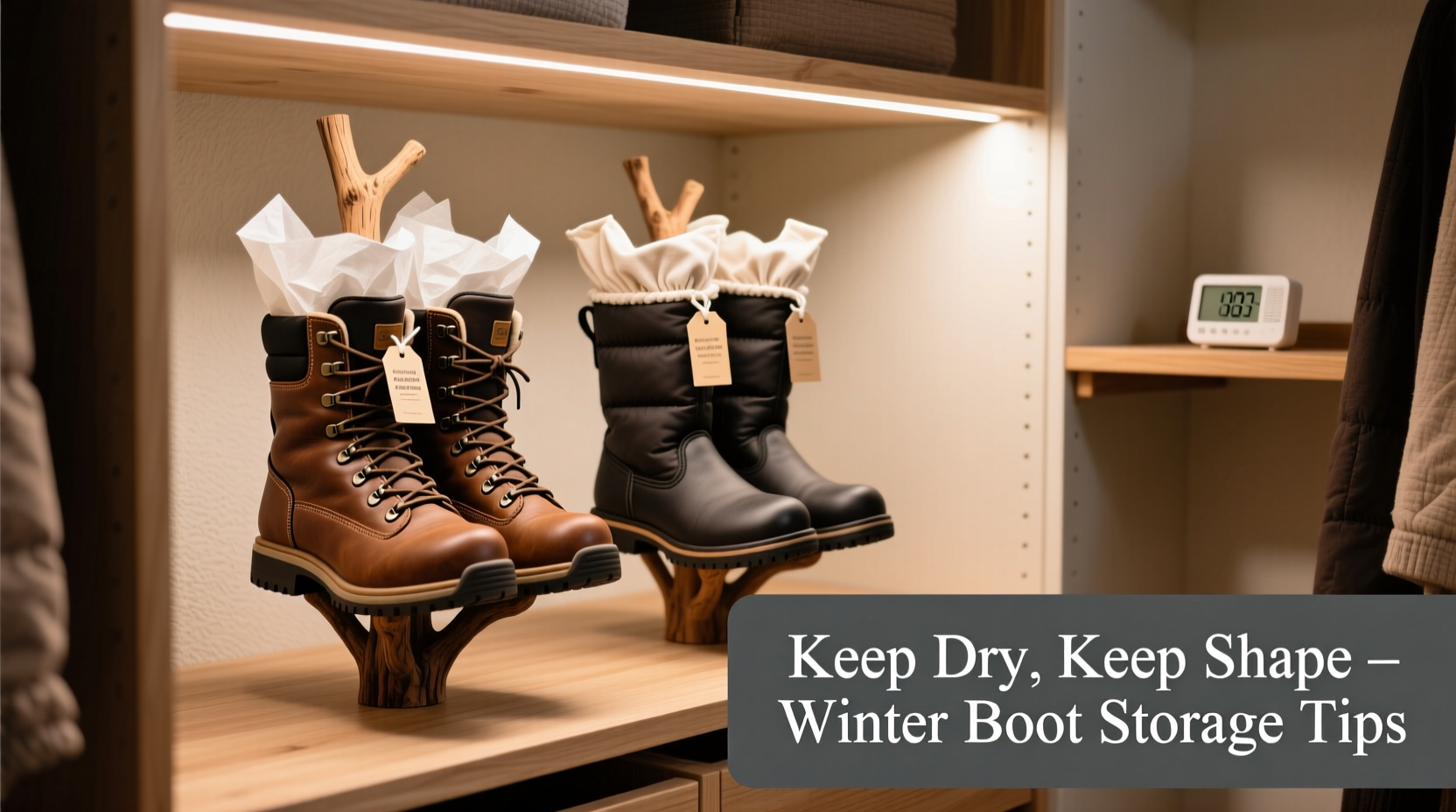
Cracking in winter boots most often begins at stress points: along the flex zones of the sole, around the heel counter, or across the toe box. While wear and tear contribute, environmental factors during storage accelerate deterioration. The primary culprits include:
- Dry air: Low humidity causes natural fibers and leather to lose moisture, becoming brittle over time.
- Excess moisture: Trapped dampness promotes mold and weakens adhesives, leading to delamination and cracks.
- Heat exposure: Storing boots near radiators, furnaces, or in hot attics dries out materials rapidly.
- Poor support: Leaving boots collapsed or stuffed haphazardly distorts their structure, creating permanent creases that turn into cracks.
Leather, especially, behaves like skin—it needs hydration. Without periodic conditioning and stable ambient conditions, it loses elasticity. Suede and nubuck are even more vulnerable due to their open-pored texture, which absorbs pollutants and moisture easily. Even rubber and synthetic uppers can degrade if exposed to UV light or ozone from nearby appliances.
“Improper storage accounts for nearly 60% of premature boot failure. It’s not the miles you log—it’s what happens when they’re idle.” — Marcus Reed, Footwear Preservation Specialist, Heritage Leather Co.
Step-by-Step Guide to Preparing Boots for Off-Season Storage
Storing winter boots correctly starts long before they go into a box or closet. Follow this timeline to ensure every step supports material integrity.
- Clean thoroughly after final use
Remove dirt, salt, and grime using tools appropriate for the material. For leather, use a damp cloth and pH-balanced cleaner. For suede, a brass brush and specialized eraser work best. Never use household detergents—they strip natural oils. - Allow complete drying
Air-dry boots at room temperature for 24–48 hours. Remove insoles and loosen laces to promote airflow. Avoid direct heat sources like hairdryers or heaters, which cause rapid moisture loss and warping. - Condition leather components
Apply a high-quality leather conditioner (e.g., beeswax-based or lanolin-infused) to shafts and uppers. Work it in with a soft cloth using circular motions. Let absorb for 1–2 hours, then buff lightly. This replenishes oils lost during winter exposure. - Treat suede and nubuck
Use a protective spray formulated for napped leathers. These add a water-resistant barrier without altering texture. Reapply every 6–12 months depending on use. - Replace or clean insoles
Odor-causing bacteria linger in footbeds. If removable, wash according to manufacturer instructions or replace with fresh ones. This prevents mildew and keeps interiors fresh. - Insert boot shapers or tissue paper
To maintain shape, stuff boots with acid-free tissue, rolled-up unprinted newsprint, or fabric boot trees. Avoid newspaper—the ink can transfer and damage light-colored materials.
Best Storage Conditions: Environment, Location, and Positioning
Where and how you store boots matters as much as preparation. Ideal storage mimics a museum archive: stable, dry, and protected.
Optimal Environmental Conditions
| Factor | Ideal Range | Risks of Deviation |
|---|---|---|
| Temperature | 60–70°F (15–21°C) | Heat accelerates aging; cold makes rubber brittle |
| Humidity | 45–55% | Below 40% causes cracking; above 60% invites mold |
| Light Exposure | Low or indirect | UV rays fade colors and degrade polymers |
| Airflow | Moderate ventilation | Stagnant air traps moisture; excessive drafts dry materials |
Recommended Storage Locations
- Interior closets away from exterior walls – Less prone to temperature swings and moisture infiltration.
- Under-bed storage with breathable containers – Keeps boots dust-free while allowing air exchange.
- Climate-controlled storage units – Ideal for collectors or those in humid regions.
What to Avoid
- Basements (unless dehumidified)
- Attics (heat buildup damages glue and leather)
- Garages (temperature extremes and chemical fumes)
- Plastic bags or sealed bins (trap moisture unless desiccants are used)
Do’s and Don’ts: Material-Specific Storage Guidelines
Different boot materials require tailored approaches. Use this guide to match your care routine to construction.
| Material | Do’s | Don’ts |
|---|---|---|
| Full-Grain Leather | Condition before storage; store upright with boot shapers; use cotton dust bags | Expose to direct sunlight; store in plastic; skip conditioning |
| Suede / Nubuck | Brush gently pre-storage; apply protector spray; store in breathable fabric | Use standard waterproofing sprays; compress under heavy items; store damp |
| Rubber (e.g., rain boots) | Wipe clean; store loosely folded or upright; avoid tight bends | Leave inside-out; expose to ozone sources (e.g., motors, HVAC units) |
| Synthetic Uppers | Spot clean only; store flat if foldable; keep away from solvents | Use abrasive cleaners; store near vinyl (chemical interaction risk) |
| Insulated Linings (e.g., Thinsulate™) | Ensure lining is fully dry; air occasionally during storage | Compress tightly; trap in non-breathable wraps |
“Suede boots stored in cedar-lined drawers last significantly longer—cedar repels moths and regulates humidity naturally.” — Lena Park, Textile Archivist, Pacific Northwest Museum of Craft
Real Example: A Seasonal Routine That Saved a Decade-Old Pair
When Sarah M., a schoolteacher in Vermont, inherited her father’s vintage Red Wing work boots, she wanted to preserve them despite seasonal use. Each April, she followed a strict protocol: cleaning with saddle soap, conditioning with mink oil, stuffing with tissue, and storing in a linen bag inside a closet drawer with cedar blocks. She checked them bi-monthly, airing them out briefly and replacing desiccant packs.
Twelve years later, the boots remain structurally sound—no cracks, no delamination. “People assume they’re new,” she says. “But it’s just consistency. Five minutes twice a year saves hours of repair—or replacement.” Her method demonstrates that longevity isn’t about expensive gear but disciplined habits.
Essential Checklist: Prepare & Store Boots in 7 Steps
- Remove laces and insoles for separate cleaning
- Wipe down all surfaces with appropriate cleaner
- Air-dry completely (minimum 24 hours)
- Condition leather or treat suede/nubuck
- Insert boot shapers or acid-free paper to maintain form
- Place silica gel packets inside each boot
- Store in breathable container in cool, dry, dark location
Frequently Asked Questions
Can I store winter boots in vacuum-sealed bags?
No. While vacuum bags save space, they compress materials unnaturally and trap any residual moisture, increasing the risk of mold. They also create deep creases in leather that may become permanent cracks. Use breathable fabric containers instead.
How often should I check stored boots?
Inspect every 6–8 weeks. Look for signs of mold, insect activity, or odor. Briefly air them in a shaded room for 30 minutes to refresh the interior. This also lets you catch issues early.
Is it okay to hang boots by their heels?
Only if they’re specifically designed for it (e.g., some equestrian styles). Most winter boots lack reinforced heel loops. Hanging can stretch the collar, distort the shaft, and weaken stitching. Always store upright or lying flat with support.
Conclusion: Protect Your Investment With Intentional Habits
Your winter boots face harsh conditions when in use—don’t let off-season neglect undo their resilience. Cracking isn’t inevitable; it’s preventable through informed care. By cleaning thoroughly, conditioning appropriately, and storing in a stable environment, you preserve both function and appearance. These steps take less than an hour per year but can double or even triple a boot’s usable life.
Think of storage not as an end to utility but as maintenance between seasons. Every time you condition leather, insert a shaper, or place a silica pack, you’re investing in future comfort and performance. Start this habit now, and next winter, you won’t be shopping for replacements—you’ll be stepping confidently into boots that still have years ahead.




 浙公网安备
33010002000092号
浙公网安备
33010002000092号 浙B2-20120091-4
Comments
No comments yet. Why don't you start the discussion?