
Holiday decorating should be joyful, not dangerous. Every year, thousands of people suffer falls from ladders while hanging Christmas lights—many with serious consequences. But climbing up isn’t the only way to illuminate your home. With smart techniques and the right tools, you can string outdoor Christmas lights safely from the ground. Whether you're managing gutters, eaves, trees, or railings, this guide delivers practical, tested solutions that eliminate the need for unstable platforms.
Why Avoiding Ladders Matters
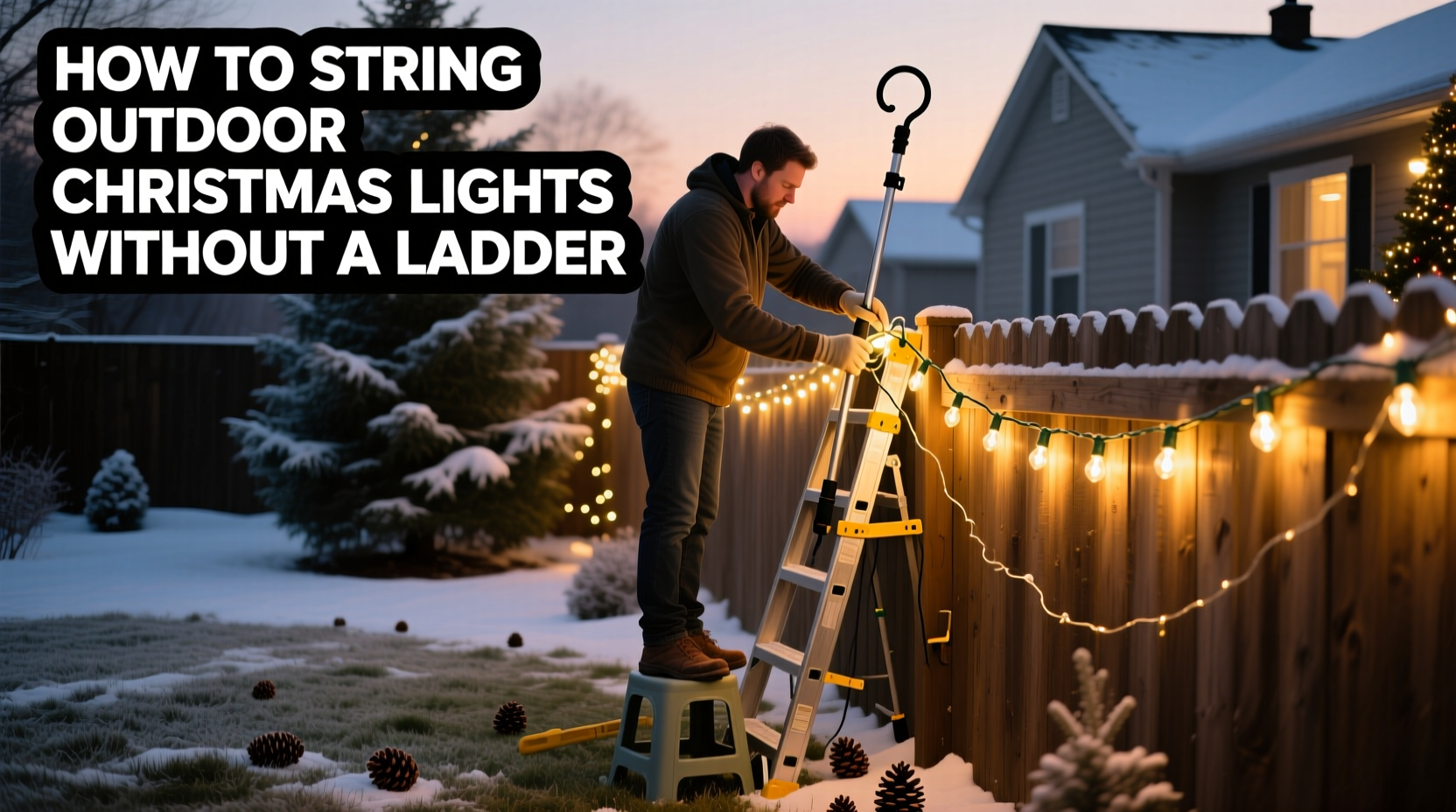
The U.S. Consumer Product Safety Commission reports over 100,000 ladder-related injuries annually during the holiday season. Many occur during light installation. The risks include slipping on icy surfaces, misjudging balance on uneven ground, or losing grip while handling wires. For older adults or those with mobility concerns, even a short fall can lead to long-term injury.
Beyond safety, avoiding ladders saves time. Setting up, securing, and moving a ladder repeatedly slows down the process. Ground-level work is often faster, more precise, and less physically taxing. It also allows for easier adjustments and troubleshooting when lights don’t connect or strands flicker.
“Eliminating the ladder doesn’t mean compromising on results. In fact, it often leads to cleaner, more consistent light placement.” — Mark Thompson, Residential Lighting Designer & Holiday Decor Specialist
Essential Tools for Ladder-Free Light Installation
Success starts with preparation. The right equipment makes all the difference when working from the ground. These tools are designed specifically for overhead tasks and are widely available at hardware stores or online.
| Tool | Purpose | Best For |
|---|---|---|
| Light Pole Hook (Adjustable) | Reaches high areas to drape or hook lights | Gutters, eaves, roof lines |
| Magnetic Hangers | Attaches to metal gutters or flashing without nails | All gutter types, especially aluminum |
| Suction Cup Hooks | Temporary hold on windows or glass doors | Vertical surfaces, second-story windows |
| Cable Ties / Zip Ties | Secures lights once in place | Permanent attachment points |
| Extension Pole with Clip Attachment | Places clips or hangers precisely | Hard-to-reach corners or angled roofs |
Step-by-Step Guide: Hanging Lights from the Ground
Follow this sequence to decorate your home efficiently and safely, no ladder required.
- Plan Your Layout
Sketch a rough outline of your house’s perimeter. Note where outlets are located and decide which areas you want to highlight—roofline, windows, porch columns, shrubs. This helps determine how many strands you’ll need and where to start. - Choose the Right Lights
Opt for lightweight LED strands with built-in connectors. They’re safer to handle with poles and generate less heat. Waterproof-rated (UL listed for outdoor use) is essential. Consider warm white for classic appeal or multicolor for festive energy. - Install Hangers First
Using an extension pole, place magnetic clips along metal gutters every 12–18 inches. For non-metal surfaces, use adhesive-backed plastic clips or suction cups on windows. Press firmly and allow 24 hours for adhesives to cure if possible. - Feed the Lights from the Ground
Attach the first strand to the nearest outlet. Use a light pole hook to gently lift the plug end and feed it into the first clip. Continue guiding each bulb into position by raising the pole incrementally. Work left to right or right to left—don’t zigzag. - Connect Strands Securely
Most sets allow linking up to three or four strands. Check manufacturer limits to avoid overloading circuits. Test each section as you go by plugging in temporarily before finalizing placement. - Secure and Conceal Wires
Once positioned, fasten strands with zip ties where clips may loosen. Route excess wire behind downspouts or under trim using small staples (if permitted) or adhesive clips. Keep cords away from walkways to prevent tripping. - Final Inspection
Walk around the property and view from multiple angles. Adjust any sagging sections using the pole. Ensure no bulbs are missing or flickering. Turn off during daylight to check visibility at night.
Alternative Methods for Different Home Features
Not all homes have easy access points. Here’s how to adapt based on your architecture.
Two-Story Homes
Second-floor lighting is where most people reach for ladders—but alternatives exist. Suction cup hooks attached via extension poles work well on upper windows. For rooflines, use strong magnetic clips if gutters are metal. If not, consider removable adhesive hooks rated for outdoor use and cold weather. Test one first to ensure it holds in winter conditions.
Trees and Shrubs
Wrap trees from the ground by walking around them. Start at the base and spiral upward, using an extension pole with a soft hook to guide lights into higher branches. For tall evergreens, attach strands to a weighted line (like a fishing sinker tied to twine) and toss it over thick limbs. Pull the light string through carefully.
Fences and Railings
These are easiest to decorate without elevation. Simply drape lights along the top rail, securing every few feet with twist ties or insulated staples. For stair railings, follow the contour and use adhesive clips to maintain even spacing. Solar-powered options eliminate the need for extension cords altogether.
Real Example: Decorating a Colonial-Style Home Safely
Jean Miller, a homeowner in Vermont, used to spend two full days—and one trip to urgent care—hanging her family’s Christmas lights. After a fall from a slippery ladder in 2021, she committed to finding a safer method. Her home has steep gables, two chimneys, and a wraparound porch—classic but challenging.
In 2022, she invested in a 16-foot telescoping pole with magnetic and suction attachments. She began by marking clip locations with chalk from the ground. Over two afternoons, she installed 18 magnetic clips along the gutters and used the pole to thread five strands of warm-white LEDs. She connected everything to a single outdoor-rated power strip controlled by a smart timer.
The result? A brighter, more evenly lit display than in previous years—and zero climbing. “It took less effort, looked better, and I didn’t risk breaking my neck,” she said. “Now I look forward to decorating instead of dreading it.”
Checklist: Ladder-Free Light Installation
- ☐ Sketch your lighting plan and measure distances
- ☐ Buy UL-listed outdoor LED lights (preferably with spare bulbs)
- ☐ Purchase magnetic clips, suction cups, or adhesive hangers
- ☐ Get a telescoping pole with multiple attachments
- ☐ Acquire zip ties, twist ties, or insulated staples
- ☐ Test all light strands before installation
- ☐ Install hangers using the pole
- ☐ Feed lights into clips from ground level
- ☐ Connect strands within circuit limits
- ☐ Secure wires and hide excess cord
- ☐ Perform a nighttime test run
- ☐ Set up a timer or smart plug for automatic operation
Common Mistakes to Avoid
Even with the best tools, errors can undermine your efforts. Watch out for these pitfalls:
- Overloading circuits: Connecting too many strands trips breakers or damages wiring. Stick to the manufacturer’s limit—usually 3–4 sets per run.
- Using indoor lights outdoors: Indoor-rated strings aren’t sealed against moisture and pose fire hazards.
- Ignoring wind exposure: In windy areas, lights can flap and detach. Use extra zip ties or opt for heavier-duty clips.
- Starting at the wrong end: Always begin near an outdoor outlet. Running cords across lawns invites damage and tripping.
- Skipping the test phase: Testing after full installation means dismantling sections if something fails. Test each strand as you go.
“Prevention beats repair every time. Taking 10 extra minutes to secure a wire properly can save hours of rework—or worse, an electrical issue.” — Luis Mendez, Licensed Electrician & Holiday Lighting Consultant
FAQ
Can I use these methods on rental properties?
Yes—with caution. Avoid permanent alterations like drilling or stapling. Instead, rely on magnetic clips, suction cups, and removable adhesive hooks. Always check your lease agreement, and when in doubt, choose temporary solutions like draped garlands with battery-powered lights.
How do I prevent lights from sagging over time?
Sagging usually occurs due to temperature changes and wind. Prevent it by spacing hangers closer together (every 12 inches), using UV-resistant zip ties, and avoiding over-stretching strands during installation. LED lights are lighter and less prone to drooping than incandescent ones.
Are there smart systems that help with ground-level control?
Absolutely. Smart plugs and Wi-Fi-enabled light controllers let you turn displays on/off, schedule times, or change colors via smartphone. Pair them with voice assistants for hands-free control. Some systems even detect outages and notify you.
Conclusion: Light Up the Holidays—Safely and Smartly
Stringing outdoor Christmas lights without a ladder isn’t just safer—it’s smarter. Modern tools and thoughtful planning make it possible to achieve professional-quality results from solid ground. You protect your health, save time, and often end up with a neater, more durable display.
This holiday season, skip the climb. Embrace innovation, prioritize safety, and enjoy the peace of mind that comes with knowing your decorations won’t cost you a hospital visit. With the right approach, your home can shine brighter than ever—without leaving the sidewalk.




 浙公网安备
33010002000092号
浙公网安备
33010002000092号 浙B2-20120091-4
Comments
No comments yet. Why don't you start the discussion?