
Curtain bangs have become a defining feature in modern hairstyling—soft, face-framing, and effortlessly chic. Unlike blunt or heavy bangs, they grow out gracefully and suit a wide range of face shapes. But their signature shape—a gentle curve that parts slightly in the center—requires more than just a haircut. To achieve that polished, voluminous look daily, styling is essential. The good news? You don’t need a salon appointment every time. With the right heat tools and technique, you can recreate this look at home consistently and confidently.
The key lies in understanding your hair’s natural texture, choosing the appropriate tools, and mastering a few precise movements. Whether you’re working with fine, thick, curly, or straight hair, the principles remain the same: control, direction, and finishing. This guide breaks down exactly how to style curtain bangs using only common heat tools—primarily a flat iron and a blow dryer—with no professional assistance required.
Understanding Curtain Bangs: Shape and Structure
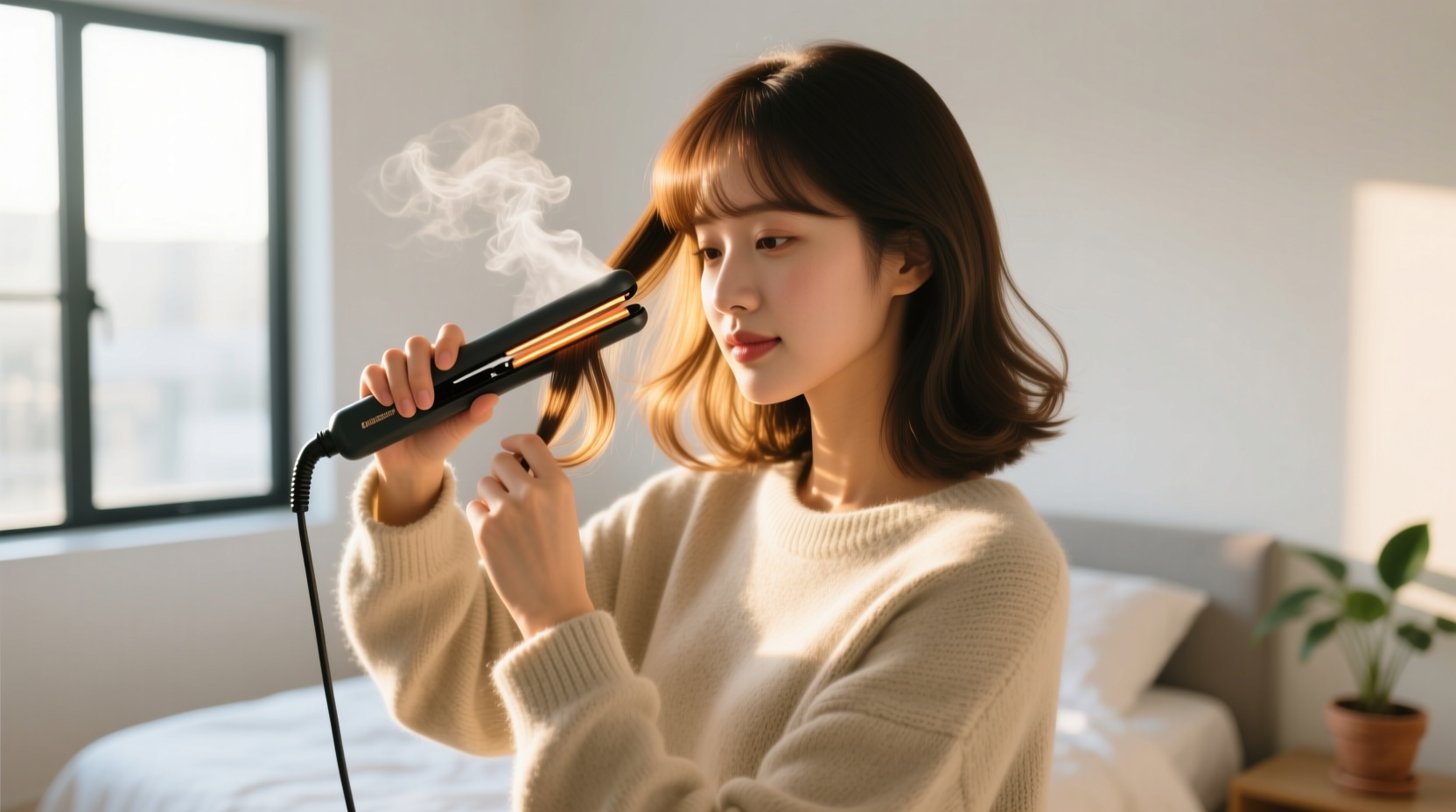
Curtain bangs are characterized by longer lengths on the sides that gradually shorten toward the center, creating a parted, feathered effect that frames the forehead and cheekbones. Their versatility comes from the way they interact with the rest of the hairstyle—whether worn with loose waves, sleek bobs, or updos. However, this shape doesn’t maintain itself naturally through daily wear. Without proper styling, the ends may flip outward, lose volume, or appear flat against the scalp.
The goal when styling is to enhance the natural parting while adding soft bends near the ends. This requires directional tension during drying and controlled heat application. The ideal result is a smooth root lift with a subtle curl that turns under or away from the face, depending on preference. Understanding this desired outcome helps inform the techniques used throughout the process.
“Curtain bangs are all about movement and balance. The trick is not to over-style them. A little imperfection adds to their charm.” — Lena Torres, Celebrity Stylist and Educator
Essential Heat Tools and Prep Products
To style curtain bangs effectively at home, you’ll need two primary tools: a blow dryer and a flat iron. Optional but highly recommended accessories include a round brush and heat protectant spray. Each plays a critical role in achieving long-lasting results.
| Tool/Product | Purpose | Recommended Specs |
|---|---|---|
| Blow Dryer | Dries hair while setting initial shape and volume | Ionic technology, cool shot button, concentrator nozzle |
| Flat Iron | Refines ends, creates soft bends, smoothes flyaways | 0.5–1 inch plates, adjustable temperature (300°F–400°F) |
| Round Brush | Adds lift at roots and directional tension during drying | Small to medium barrel (1.5–2 inches), vented bristles |
| Heat Protectant | Shields hair from thermal damage | Silicone-free, lightweight formula for fine hair |
Before applying any heat, always start with clean, towel-dried hair. If your bangs tend to get oily quickly, consider using a dry shampoo at the roots to absorb excess sebum and add grip. Apply a dime-sized amount of heat protectant evenly through the bang section, focusing on mid-lengths to ends where exposure to high temperatures is most intense.
Step-by-Step Guide to Styling Curtain Bangs at Home
Follow this timeline-based method to style your curtain bangs efficiently and consistently. With practice, the entire process should take less than 10 minutes.
- Section the Hair: Use a tail comb to isolate your bangs. The ideal width extends from the outer edge of one eyebrow to the other. Clip away the remaining hair.
- Apply Heat Protectant: Mist or apply a lightweight serum to the bang section. Distribute evenly using fingers or a fine-tooth comb.
- Begin Blow Drying: Attach a concentrator nozzle to your blow dryer. Set it to medium heat with high airflow. Hold the dryer above your head, pointing downward.
- Use a Round Brush: Place the brush under the bangs at the root area. Pull slightly upward and backward as you dry. Focus on lifting the roots while guiding the hair into a gentle “S” curve.
- Direct the Part: As you dry, encourage the natural part by angling the brush and airflow toward the sides. Spend extra time on the center triangle where the part forms.
- Cool Shot: Once the bangs are fully dry, switch the dryer to cool air for 15 seconds. This sets the shape and reduces frizz.
- Flat Iron Preparation: Set your flat iron to 320°F for fine hair or 375°F for thicker textures. Allow it to fully heat up.
- Smooth the Mid-Lengths: Clamp the flat iron near the roots and glide slowly down to the ends. Do not pull straight—angle the iron slightly outward on each side to enhance the curtain effect.
- Create Soft Bends: For the final 1–2 inches, rotate the iron 90 degrees so the ends gently tuck under or flick outward. Alternate directions slightly for a natural look.
- Finish with Fingers: Run your fingertips through the bangs to break up any stiffness. Avoid brushing, which can disrupt the shape.
This routine works whether your hair is freshly washed or on day two. Consistency in technique leads to muscle memory, making the process faster over time.
Common Mistakes and How to Avoid Them
Even with the right tools, small errors can compromise the final look. Awareness of these pitfalls improves results significantly.
- Overheating the roots: Applying direct heat too close to the scalp can cause discomfort and damage. Always maintain a slight distance and use tension from the brush instead.
- Using too much product: Heavy serums or sprays can weigh down fine bangs. Opt for micro-doses and emulsify between palms before applying.
- Ignoring natural parting: Forcing bangs to part opposite their growth pattern creates unnatural bends. Work with your hair’s grain, not against it.
- Skipping the cool shot: Heat sets shape, but cold locks it in. Never skip the final blast of cool air after blow-drying.
- Over-flat-ironing: Running the iron multiple times flattens volume. One slow pass per section is enough.
Real-Life Example: From Flat to Flattering in 8 Minutes
Sarah, a 28-year-old graphic designer, cut curtain bangs six weeks ago but struggled to style them daily. She found them either too flat or too puffy, often resorting to clips or headbands. After learning the blow-dry-and-flat-iron method, she adjusted her routine.
She began sectioning her bangs precisely and invested in a small round brush. Using her existing ionic dryer and a dual-voltage flat iron, she followed the step-by-step guide every morning. Within three days, she noticed improved lift and shape retention. By week two, she was styling them in under eight minutes. Now, her bangs maintain their soft frame throughout the workday, even in humid conditions.
Her biggest breakthrough? Using the cool shot after drying. “It made such a difference,” she said. “They don’t deflate by lunchtime anymore.”
Checklist: Daily Curtain Bang Styling Routine
Keep this checklist handy for quick reference each morning:
- ☑ Section bangs from the rest of the hair
- ☑ Apply heat protectant to damp bangs
- ☑ Use concentrator nozzle and round brush to blow-dry with lift
- ☑ Direct airflow along the natural part
- ☑ Finish drying with cool shot for 15 seconds
- ☑ Set flat iron to appropriate temperature
- ☑ Smooth mid-lengths with slight outward angle
- ☑ Rotate iron at ends for soft bend
- ☑ Finger-style to soften and blend
- ☑ Store tools safely and clean plates weekly
Following this list ensures you never miss a critical step, especially on rushed mornings.
Frequently Asked Questions
Can I style curtain bangs if I have curly hair?
Absolutely. Curly hair can achieve beautiful curtain bangs. Start by detangling damp curls with a wide-tooth comb. Use a diffuser to dry the bangs in their natural shape, then lightly smooth with a flat iron only at the roots and mid-shaft. Avoid straightening the entire length to preserve curl definition. The contrast between textured curls and soft-framed bangs can be striking.
How often should I trim my curtain bangs?
Every 4 to 6 weeks is ideal for maintaining shape. Without regular trims, the ends may lose their gradient and begin to resemble uneven fringe. Even minor adjustments at home—like dusting the very tips—can extend the time between salon visits. Use sharp hair-cutting scissors and trim only when hair is dry and hanging naturally.
Is it safe to use heat tools every day?
When used correctly, daily heat styling is safe. The key is consistent use of heat protectant, proper temperature settings, and avoiding repeated passes over the same strand. Consider incorporating air-drying with finger-coiling on lower-priority days to reduce cumulative stress. Modern tools with ceramic or tourmaline plates also minimize damage compared to older models.
Final Thoughts and Encouragement
Styling curtain bangs at home isn’t reserved for professionals or those with years of experience. With a clear understanding of the structure, the right tools, and a repeatable method, anyone can master this look. The process becomes second nature with repetition, turning what once seemed daunting into a seamless part of your morning ritual.
Remember, perfection isn’t the goal—consistency and confidence are. Some days your bangs will fall perfectly; others may require a quick midday refresh. That’s normal. What matters is showing up for yourself, experimenting with angles and techniques, and enjoying the transformation a few inches of hair can bring.




 浙公网安备
33010002000092号
浙公网安备
33010002000092号 浙B2-20120091-4
Comments
No comments yet. Why don't you start the discussion?