
Navigating airline policies can feel like walking through a maze—especially when you’re faced with a non-refundable ticket and an unexpected change in plans. While airlines label certain fares as “non-refundable,” that doesn’t always mean the money is lost forever. With the right approach, timing, and persistence, many travelers have successfully recovered at least part—or even all—of their fare.
The key lies in understanding the nuances of airline contracts, leveraging customer service channels effectively, and knowing when exceptions apply. This guide breaks down actionable steps, real-life scenarios, and insider tactics to improve your chances of securing a refund—even when the fine print says otherwise.
Understanding 'Non-Refundable' Doesn't Always Mean 'No Refunds'
The term “non-refundable” is often misunderstood. It typically means you won’t receive a cash refund under normal circumstances if you cancel voluntarily. However, most airlines still offer credits, waivers, or refunds in specific situations—especially those beyond your control.
Airlines operate under Department of Transportation (DOT) regulations in the U.S. and similar consumer protection frameworks globally. According to the DOT, passengers are entitled to a full refund if they cancel within 24 hours of booking (for flights departing more than seven days later), regardless of fare type. Beyond that window, options narrow—but don’t disappear.
Additionally, events such as illness, death in the family, airline schedule changes of significant magnitude, or global emergencies may trigger exceptions. The crucial factor is how you frame your request and what documentation you provide.
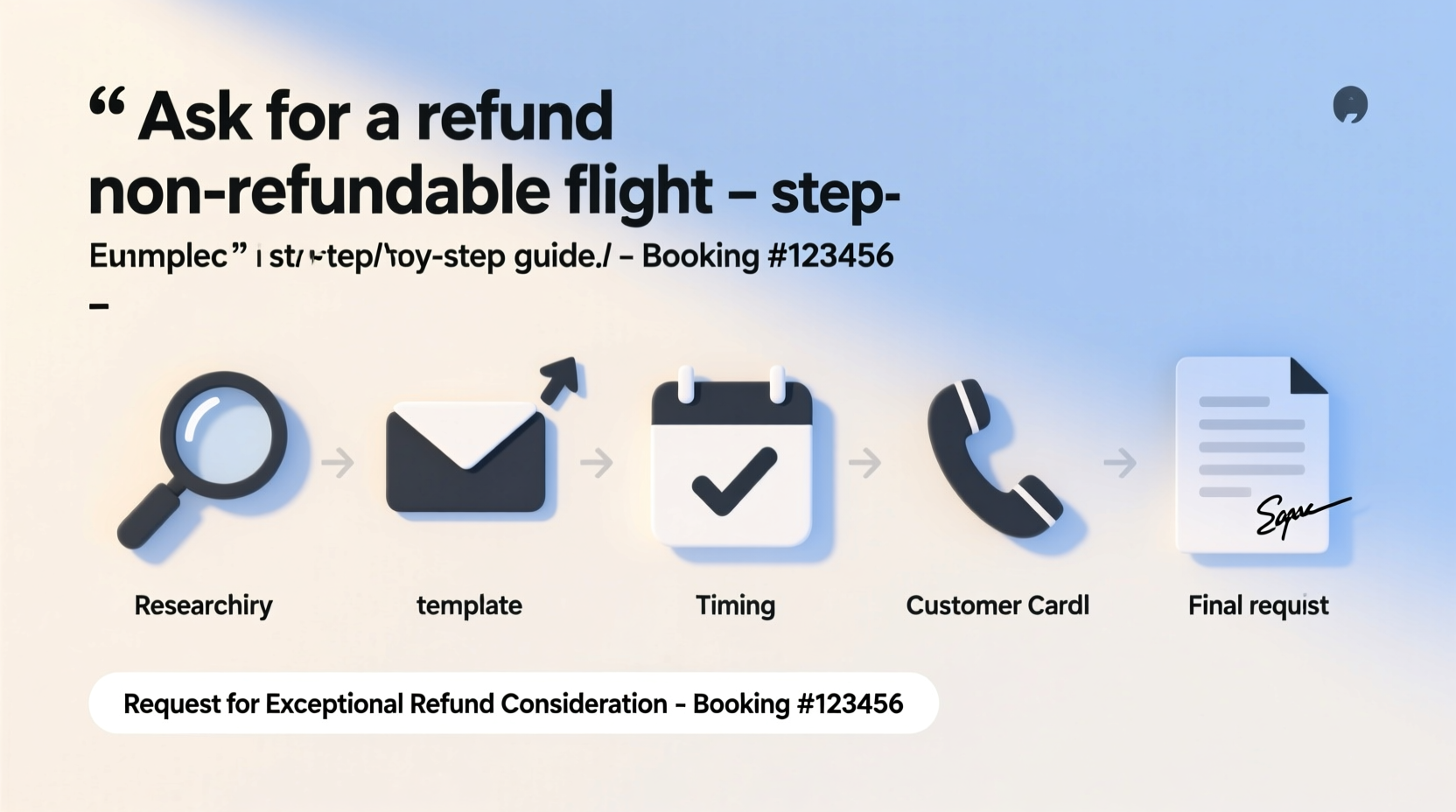
Step-by-Step Guide to Requesting a Refund
Success often comes down to preparation and persistence. Follow this structured process to maximize your odds:
- Review the Airline’s Policy and Contract of Carriage
Start by locating the airline’s official terms. Search “[Airline Name] contract of carriage” online. Look for sections on refunds, cancellations, and force majeure events. Some carriers allow fee-free changes or future travel credits even on non-refundable tickets. - Determine Eligibility Based on Circumstances
Ask yourself: Did something unforeseen occur? Common qualifying reasons include:- Sudden illness or medical emergency (yours or immediate family)
- Death of a close relative
- Job loss or mandatory relocation
- Major flight disruptions (e.g., cancellation, delay over 3+ hours)
- Government-mandated restrictions (e.g., border closures)
- Gather Supporting Documentation
Evidence strengthens your case. Collect relevant documents such as:- Doctor’s note or hospital discharge summary
- Obituary or death certificate
- Employer layoff notice
- Proof of flight change from the airline
- Contact Customer Service Strategically
Avoid automated systems. Call the airline directly during off-peak hours (early morning or late evening) to reach a live agent faster. Be polite but firm. Use phrases like:\"I understand this is a non-refundable ticket, but due to an unforeseen medical emergency, I’m unable to travel. I’d appreciate any flexibility you can offer.\"
- Escalate If Necessary
If the first agent denies your request, politely ask to speak with a supervisor. Sometimes higher-level representatives have more discretion. Mention that you’ve reviewed the contract of carriage and believe there may be grounds for an exception. - Follow Up in Writing
After speaking with an agent, send a formal email summarizing your situation and attaching documentation. Include your booking reference, departure date, and desired outcome (refund, credit, etc.). Keep the tone respectful and professional.
When Exceptions Apply: Real Scenarios That Worked
Not all refund requests succeed, but many do—especially when compelling circumstances are involved. Here's a real example:
Mini Case Study: Recovering a Non-Refundable Fare After Illness
Sarah booked a non-refundable round-trip flight from Chicago to Lisbon six weeks in advance. Two days before departure, she was hospitalized with pneumonia. Her doctor advised against air travel for at least four weeks.
She called the airline immediately and explained her situation, providing a signed letter from her physician. Initially denied, she asked to escalate the issue. A supervisor reviewed her case and issued a full travel credit—waiving the usual $200 change fee—due to documented medical incapacity.
Sarah later converted the credit into a partial cash refund by canceling the new booking during the 24-hour risk-free period, a tactic some travelers use strategically.
“Passengers often don’t realize that airlines have internal discretion to make exceptions, especially for health-related issues. A well-documented case can open doors.” — Mark Tran, Former Airline Customer Relations Manager
Do’s and Don’ts When Asking for a Refund
| Do’s | Don’ts |
|---|---|
| Provide clear, factual explanations for cancellation | Blame the airline unnecessarily |
| Remain calm and courteous during calls | Yell, threaten, or demand aggressively |
| Cite specific policy clauses if applicable | Misrepresent facts or falsify documents |
| Follow up via email with attachments | Rely solely on phone conversations without written record |
| Check for third-party protections (credit card, insurance) | Assume nothing can be done after purchase |
Leveraging Additional Protections
You’re not alone in this process. Several external avenues can support your claim:
- Credit Card Chargebacks: If the airline refuses a refund and you believe the service wasn’t rendered (e.g., flight canceled without adequate re-accommodation), contact your credit card issuer. Under Section 75 of the UK Consumer Credit Act or Fair Credit Billing Act in the U.S., you may dispute the charge.
- Travel Insurance: Policies purchased at the time of booking may cover trip cancellations due to illness, injury, or other covered perils. File a claim promptly with required paperwork.
- Third-Party Booking Platforms: If you booked through Expedia, Kayak, or similar, contact them too. Some platforms offer enhanced refund policies compared to direct airline rules.
Checklist: Actions to Take Before & After Requesting a Refund
- ✅ Review the airline’s contract of carriage
- ✅ Confirm eligibility under 24-hour cancellation rule
- ✅ Gather medical, legal, or employment documentation
- ✅ Call customer service and speak to a live agent
- ✅ Escalate to a supervisor if initial request is denied
- ✅ Send a follow-up email with evidence and booking details
- ✅ Explore travel insurance or credit card reimbursement options
- ✅ Document all interactions (dates, names, reference numbers)
Frequently Asked Questions
Can I get a refund on a non-refundable flight if I cancel within 24 hours?
Yes. U.S. Department of Transportation rules require airlines operating flights to, from, or within the U.S. to allow passengers to cancel or change a reservation within 24 hours of booking—free of charge—as long as the flight departs at least seven days later. This applies even to non-refundable fares.
What if the airline changes my flight significantly?
If the airline makes a “significant schedule change”—typically defined as a delay of over three hours, departure time shift of several hours, or routing alteration—you may be eligible for a full refund, even on non-refundable tickets. This is mandated under DOT guidelines. Always check your rights before accepting rebooking.
Will travel insurance cover non-refundable flights?
It depends on the policy. Comprehensive travel insurance often covers trip cancellation due to sickness, accidents, job loss, or natural disasters. However, \"cancel for any reason\" (CFAR) policies offer broader coverage but cost more and usually reimburse 70–75% of expenses. Always read the fine print before purchasing.
Final Tips for Success
Persistence pays. Many refund approvals happen not on the first call, but after escalation and documentation. Agents are more likely to help when presented with empathy, clarity, and proof.
Timing also matters. During widespread disruptions (storms, pandemics), airlines may proactively issue refunds or waive fees. Monitor news related to your route—if the airline is altering schedules en masse, your chances increase.
Finally, remember that goodwill gestures happen. Airlines want loyal customers. By approaching the situation respectfully and professionally, you position yourself not as a complainer, but as a valued traveler deserving of consideration.
“We once processed over 12,000 refund exceptions during a single winter storm event—not because policy changed, but because human judgment prevailed.” — Lisa Nguyen, Airline Operations Consultant
Take Action Today
Don’t assume your non-refundable ticket is a sunk cost. Whether it’s a last-minute emergency or an unavoidable life change, you have options. Use the steps outlined here to build a strong case, communicate effectively, and advocate for yourself. Thousands of travelers recover funds every year by simply asking the right way, at the right time, with the right evidence.




 浙公网安备
33010002000092号
浙公网安备
33010002000092号 浙B2-20120091-4
Comments
No comments yet. Why don't you start the discussion?