
Birds are intelligent, sensitive creatures capable of forming deep bonds with their owners. However, teaching a bird—especially a new or rescued one—to step onto your finger can be challenging if not approached correctly. Biting is often a sign of fear, uncertainty, or lack of trust rather than aggression. The key lies in building confidence through patience, consistency, and positive reinforcement. This guide walks you through the science-backed, humane methods to help your bird willingly step up onto your finger—without force, fear, or frustration.
Understanding Why Birds Bite
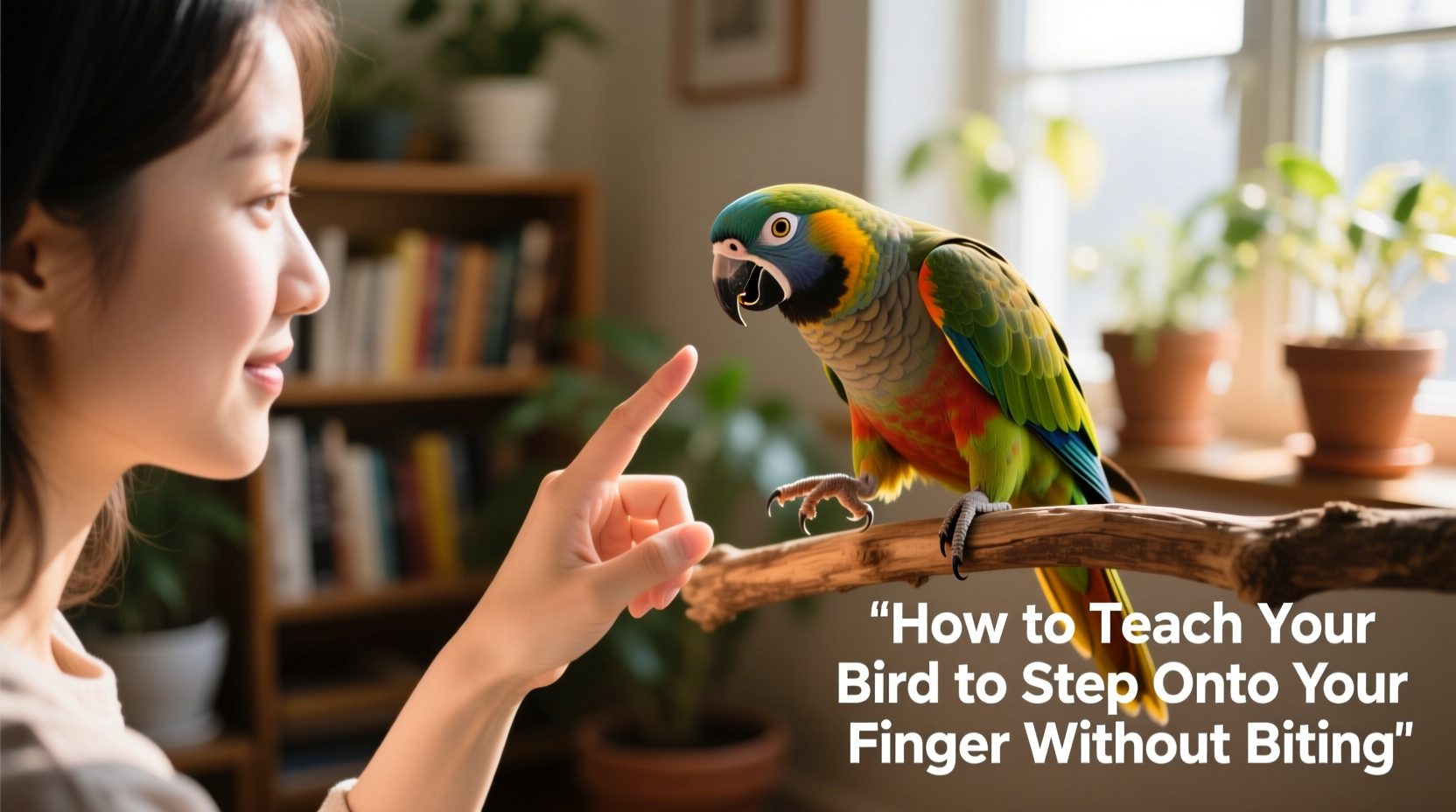
Before attempting to train your bird, it’s essential to understand what biting really means from a bird’s perspective. In the wild, birds rely on flight as their primary defense mechanism. When confined, such as in a home environment, they may feel vulnerable. A hand approaching from above can mimic a predator’s movement, triggering instinctive defensive behavior—including biting.
Other common causes of biting include:
- Fear of unfamiliar people or movements
- Lack of socialization during early development
- Poor past experiences with handling
- Hormonal changes, especially during breeding season
- Pain or illness causing irritability
Recognizing these triggers allows you to adjust your approach. Instead of viewing biting as defiance, see it as communication. Your bird is telling you it doesn’t yet feel safe.
“Birds don’t bite out of malice—they bite because they’re scared or confused. Our job is to replace fear with trust.” — Dr. Laurie Hess, Avian Veterinarian and Author
The Step-Up Training Process: A Timeline
Teaching your bird to step onto your finger is not a single event but a gradual process that unfolds over days or weeks, depending on the bird’s temperament and history. Below is a realistic timeline based on proven behavioral principles used by avian trainers and veterinarians.
- Days 1–3: Observation and Bonding
Spend time near the cage without making direct demands. Talk softly, offer treats through the bars, and let your bird observe you. Goal: Establish presence without pressure. - Days 4–7: Target Introduction
Use a wooden dowel or stick (called a target stick) to gently encourage forward motion. Reward any interaction with praise or a small treat. Goal: Create positive associations with objects near the body. - Days 8–14: Hand Acclimation
Place your open hand flat against the side of the cage. Let the bird investigate at its own pace. Never force contact. Goal: Normalize the sight and smell of your hand. - Days 15–21: Touch and Retreat
Gently touch the bird’s lower chest or belly (just above the feet) with your index finger. If the bird leans into it, reward immediately. If it flinches, withdraw calmly. Goal: Teach gentle physical cues. - Days 22+: Step-Up Cue and Practice
Present your finger horizontally just in front of the bird’s chest while saying “Step up” in a calm tone. Apply light upward pressure. If the bird lifts a foot, reward instantly. Repeat in short sessions (3–5 minutes).
Essential Tools and Environment Setup
Success depends not only on technique but also on preparation. The right environment reduces stress and increases focus.
What You’ll Need:
- A quiet room with minimal distractions
- High-value treats (e.g., millet spray, sunflower seeds, or fruit bits)
- A perch or play stand at a comfortable height
- A target stick (optional but helpful for beginners)
- Gloves? Only in rare cases involving large parrots with a history of severe biting—and even then, use cautiously to avoid reinforcing fear.
Avoid training during noisy times, such as when appliances are running or family members are moving about. Choose a consistent time each day, ideally after feeding when your bird is alert but not hungry or agitated.
Positioning Matters
When presenting your finger:
- Keep it horizontal, mimicking a perch
- Approach from slightly below chest level—not from above
- Apply gentle upward pressure behind the bird’s legs to trigger a natural stepping reflex
- Never grab or chase the bird
“Think like a perch, not a predator. Your hand should feel like a safe place to go, not a threat.” — Barbara Heidenreich, Certified Animal Behavior Consultant
Do’s and Don’ts During Training
| Do | Don't |
|---|---|
| Use a consistent verbal cue like “Step up” every time | Yell, jerk your hand away, or show frustration if the bird bites |
| Reward progress—eye contact, leaning forward, lifting a foot | Force the bird onto your hand; this breaks trust |
| Keep sessions short (3–5 minutes) and frequent (2–3 times daily) | Train when you're stressed or in a hurry |
| Let the bird retreat to its cage if overwhelmed | Hold the bird longer than it tolerates—this leads to fear biting |
| Clean your hands before training to remove food or chemical scents | Wear strong perfumes or lotions that might scare the bird |
Real Example: Training a Rescued Cockatiel
Sarah adopted a 3-year-old cockatiel named Milo from a shelter. He had been rehomed twice and showed signs of anxiety—frequent head bobbing, feather plucking, and biting when approached. Sarah followed a structured plan over six weeks:
- Week 1: Sat near the cage reading aloud, offering millet through the bars.
- Week 2: Introduced a blue popsicle stick as a target. Milo learned to touch it for a treat.
- Week 3: Held her hand still beside the cage. Milo began preening near her fingers.
- Week 4: Lightly touched his lower chest. First attempt resulted in a nip—she withdrew calmly and tried again later.
- Week 5: Used the verbal cue “Up” with finger pressure. On day three, Milo lifted one foot onto her finger.
- Week 6: Full step-up achieved. Now, Milo steps up willingly for short periods on her finger or shoulder.
Sarah credits success to patience and refusing to rush. “I stopped counting days and started celebrating inches,” she said. “Now he chirps when I enter the room.”
Checklist: How to Teach Step-Up Without Biting
Follow this actionable checklist to ensure steady progress:
- ✅ Observe your bird’s body language daily (fluffed feathers = discomfort, eye pinning = alertness)
- ✅ Begin bonding without physical contact—use voice and treats
- ✅ Introduce a target stick to build confidence with objects
- ✅ Present your hand passively near the cage for acclimation
- ✅ Use a consistent verbal cue (“Step up”) with every attempt
- ✅ Apply gentle upward pressure behind the legs to prompt stepping
- ✅ Reward immediately with a treat or praise upon compliance
- ✅ Keep sessions under 5 minutes and stop on a positive note
- ✅ Never punish or react strongly to a bite—remain calm and disengage
- ✅ Gradually increase duration and locations (cage, stand, room)
Frequently Asked Questions
How long does it take to teach a bird to step up?
It varies widely. A well-socialized young bird may learn in a few days. A fearful or previously mishandled bird may take several weeks or months. Progress isn’t linear—expect setbacks. Focus on consistency, not speed.
My bird bites every time I offer my finger. What am I doing wrong?
You may be approaching too quickly or from above, which feels threatening. Try lowering your hand below the bird’s level and moving slowly. Also, assess whether your bird is in pain or hormonal. Consult an avian vet if biting is sudden or severe.
Can I train an older bird that’s never been handled?
Absolutely. Age isn’t a barrier to learning. Older birds may take longer due to established habits, but they are fully capable of change with patient, reward-based training. Many senior parrots form strong bonds later in life.
Conclusion: Building Trust One Step at a Time
Teaching your bird to step onto your finger without biting isn’t about dominance—it’s about partnership. Every successful step-up is a testament to the trust you’ve built. There will be days when your bird hesitates, pulls back, or even nips. These aren’t failures; they’re feedback. Respond with empathy, not frustration.
Remember, your bird doesn’t need to perform. It needs to feel safe. When safety becomes the foundation, cooperation follows naturally. With clear cues, gentle persistence, and genuine respect for your bird’s boundaries, you’ll create a relationship that goes far beyond simple commands. You’ll earn a companion who chooses to come to you—not because it has to, but because it wants to.




 浙公网安备
33010002000092号
浙公网安备
33010002000092号 浙B2-20120091-4
Comments
No comments yet. Why don't you start the discussion?