
Parrots are among the most intelligent birds in the animal kingdom, capable of mimicking human speech with remarkable clarity. However, turning that potential into clear, recognizable words requires more than just repetition—it demands patience, consistency, and an understanding of avian psychology. Unlike passive exposure, structured daily training sessions create strong neural pathways that help your parrot not only mimic sounds but associate them with context and reward. This guide breaks down the science-backed methods for teaching your parrot to speak clearly, emphasizing the role of routine, reinforcement, and environment in successful vocal training.
The Science Behind Parrot Speech Learning
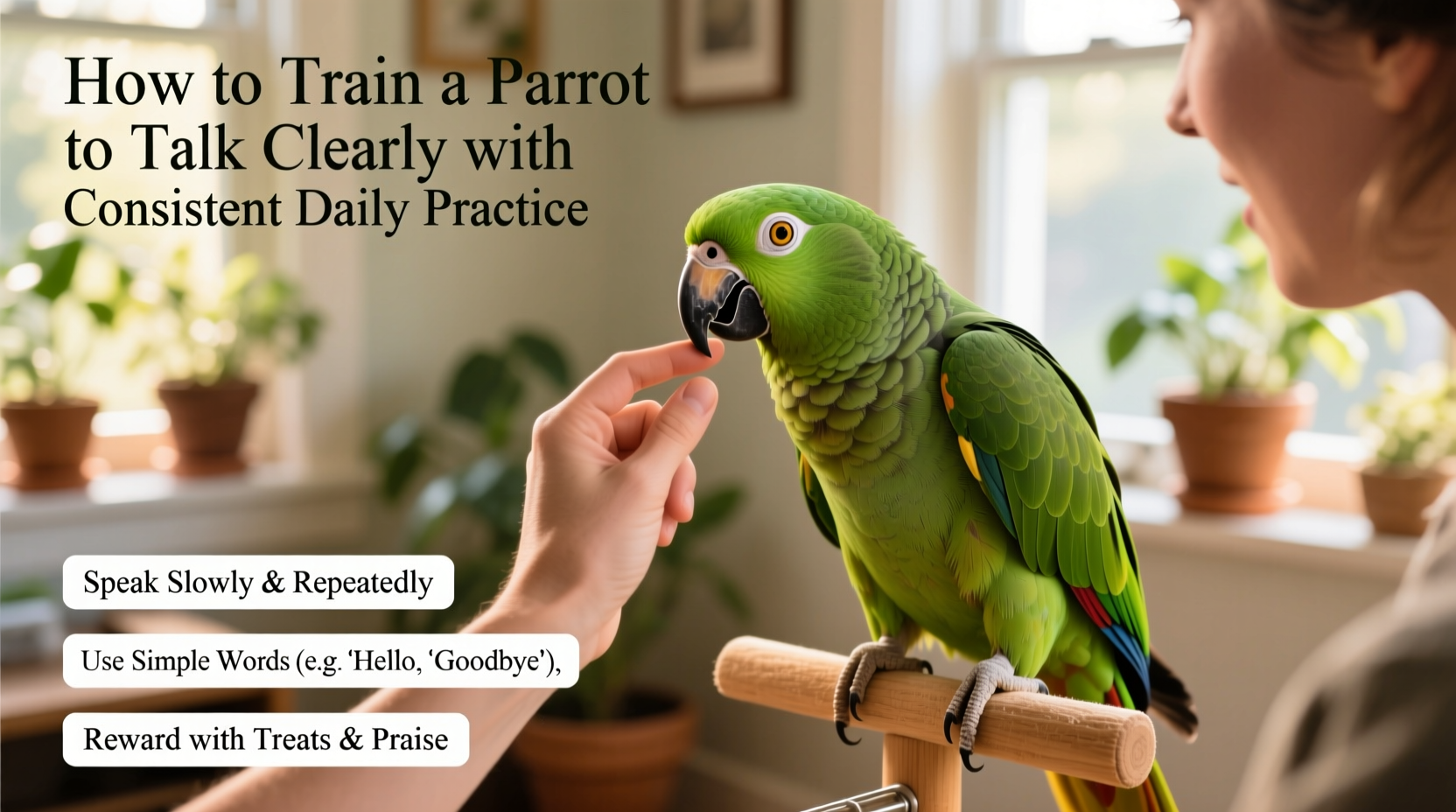
Parrots don’t “understand” language the way humans do, but they excel at auditory learning and social mimicry. In the wild, they use vocalizations to maintain flock cohesion, identify individuals, and signal danger. Captive parrots transfer this instinct to human households, viewing their owners as part of their social group. When a parrot imitates speech, it’s often an attempt to bond or gain attention.
Species such as African Greys, Amazon parrots, and Budgerigars have demonstrated advanced vocal mimicry abilities. According to Dr. Irene Pepperberg, a renowned avian cognition researcher, \"Grey parrots can associate sounds with meanings, respond appropriately to questions, and even grasp simple concepts like color, shape, and quantity.\" While full linguistic comprehension remains limited, this cognitive foundation makes targeted speech training highly effective.
“Consistency is the key to unlocking a parrot’s vocal potential. Daily interaction builds trust and reinforces learning far more than sporadic training ever could.” — Dr. Jane Peterson, Avian Behavior Specialist
Creating the Ideal Training Environment
A conducive environment sets the stage for successful speech development. Parrots are sensitive to noise, distractions, and emotional cues. Training in a chaotic or stressful setting can hinder progress or cause regression.
Choose a quiet room where you and your parrot can interact without interruptions. The space should be familiar to the bird, well-lit, and free from sudden loud noises. Keep the training area separate from high-traffic zones like kitchens or laundry rooms. A dedicated perch near a window—where natural daylight enters but direct sun doesn’t overheat the bird—is ideal.
Ensure your parrot is healthy and alert before beginning. Signs of stress—fluffed feathers, rapid breathing, or avoidance—indicate it’s not ready to learn. Wait until the bird appears calm and engaged.
Step-by-Step Training Timeline (First 30 Days)
Effective speech training unfolds in stages. Rushing the process leads to frustration for both owner and bird. Follow this phased approach to build confidence and clarity gradually.
- Days 1–5: Bonding & Sound Exposure
Spend 10–15 minutes daily talking softly to your parrot. Use simple words like “hello,” “good bird,” or its name. Repeat each word slowly, clearly, and with exaggerated mouth movements. Reward any vocal response—even non-words—with praise or a small treat. - Days 6–14: Target Word Repetition
Select one phrase to teach first (e.g., “Hello, Sam”). Say it clearly three times in succession during each session. Immediately follow with a treat if the bird attempts a sound. Conduct two 10-minute sessions per day—at morning feeding time and evening calm hours. - Days 15–21: Reinforcement & Imitation
Introduce slight variations (“Hi there!”) only after the initial phrase is consistently attempted. If the bird repeats a syllable (“hel…”), celebrate enthusiastically. Use a clicker or verbal cue like “Good!” to mark correct attempts. - Days 22–30: Clarity Refinement
Focus on pronunciation. Slow down your speech and exaggerate vowels. Record your parrot’s attempts and compare them weekly. Replace unclear phrases only after mastery; introduce new ones no faster than one per week.
Essential Training Techniques for Clear Speech
Not all repetition is equally effective. How you deliver words matters as much as frequency. Use these evidence-based techniques to maximize clarity and retention.
- Modeling with Emphasis: Speak in a slightly higher pitch and slower tempo than normal. Parrots pick up tonal patterns more easily than rapid speech.
- Positive Reinforcement: Pair every vocal attempt with immediate rewards—verbal praise, head scratches, or favorite treats like millet sprays.
- Contextual Association: Say “Want water?” when offering a drink or “Good morning!” at sunrise. Over time, the parrot links the phrase with the action.
- Call-and-Response: After saying a word, pause expectantly. Lean forward slightly to encourage imitation. Avoid forcing or repeating excessively—this can trigger disengagement.
Common Mistakes That Hinder Progress
Even well-intentioned owners make errors that delay speech development. Recognizing and correcting these habits accelerates results.
| Mistake | Why It’s Harmful | Better Approach |
|---|---|---|
| Using background TV or recordings | Lacks social context; parrots learn best from live interaction | Speak directly to your bird daily |
| Teaching multiple words at once | Causes confusion and reduces focus | Master one phrase before adding another |
| Punishing incorrect sounds | Creates fear and suppresses vocalization | Ignore mistakes; reward approximations |
| Inconsistent schedule | Weakens memory retention | Train at the same times daily |
| Overloading with complex phrases | Discourages effort due to difficulty | Start with 1–2 syllable words |
Daily Practice Checklist
To ensure consistency and track progress, follow this actionable checklist every day:
- ✅ Spend at least 10–15 minutes in focused vocal training
- ✅ Use the same target word or phrase for the week
- ✅ Deliver treats immediately after vocal attempts
- ✅ Speak slowly and clearly, facing the parrot directly
- ✅ Record a short audio note of the session for comparison
- ✅ Avoid introducing new words until current ones are attempted regularly
- ✅ End on a positive note—even if progress is minimal
Real Example: Training Charlie the Congo African Grey
Sarah, a parrot owner in Portland, began training her 2-year-old Congo African Grey, Charlie, after months of sporadic attempts yielded only mumbled sounds. She committed to a 30-day plan involving two 12-minute sessions daily—one at 8 a.m. after breakfast, another at 7 p.m. during quiet time.
She started with “Hello, Charlie,” spoken slowly with a smile. Each time he made a sound resembling “hel” or “lo,” she responded with “Good boy!” and offered a sunflower seed. By day 10, he was stringing syllables together. On day 18, he said “Hello” clearly enough for visitors to recognize. By day 30, he used it spontaneously when someone entered the room.
Sarah attributes success to consistency: “I never skipped a day, even when he didn’t respond. I believe he knew I expected something from him—and eventually, he wanted to give it.”
Advanced Tips for Improving Clarity
Once your parrot begins speaking, refine pronunciation with these professional techniques:
- Isolate Sounds: Break words into phonetic parts. For “water,” say “wa” then “ter,” rewarding each segment before combining them.
- Mirror Training: Hold a mirror during sessions. Some parrots become more vocal when seeing their reflection, interpreting it as a companion.
- Vary Tone and Pitch: Use expressive intonation to make phrases memorable. Singing simple words to a tune can enhance recall.
- Use Name Tags: Label objects verbally. Point to a cup and say “cup” repeatedly. This builds associative vocabulary.
Frequently Asked Questions
How long does it take for a parrot to start talking clearly?
Most parrots begin making recognizable attempts within 4–8 weeks of consistent daily training. Full clarity may take several months, depending on species, age, and individual temperament. Younger birds typically learn faster than those over five years old.
Can older parrots learn to talk?
Yes, though progress may be slower. Older parrots benefit from shorter, more frequent sessions and stronger motivational rewards. Even birds previously unexposed to training can develop speech later in life with patient, structured interaction.
What if my parrot isn’t trying to mimic at all?
Lack of vocalization may stem from shyness, health issues, or insufficient bonding. First, rule out medical causes with an avian vet. Then increase social time—talk, sing, and play near the cage daily. Some parrots observe silently for weeks before attempting sounds. Trust the process.
Conclusion: Building a Voice Through Daily Commitment
Training a parrot to speak clearly isn’t about quick tricks or overnight results. It’s a gradual, deeply relational process built on trust, repetition, and mutual engagement. Every syllable your parrot masters is a testament to the time you’ve invested and the connection you’ve nurtured. Consistent daily practice transforms random squawks into meaningful communication, enriching your bond and unlocking your bird’s intellectual potential.
The difference between a silent parrot and a clear speaker often comes down to one factor: regularity. Whether you have ten minutes or twenty each day, show up with intention. Celebrate small victories. Listen closely. Respond warmly. Over time, you’ll hear not just words—but a voice that knows your presence matters.




 浙公网安备
33010002000092号
浙公网安备
33010002000092号 浙B2-20120091-4
Comments
No comments yet. Why don't you start the discussion?