
Cats are naturally curious, agile, and intelligent animals. Their instinct to paw at objects, explore heights, and test their environment often leads them to knock items off tables, shelves, and counters. While this behavior might seem playful or even mischievous, it can be frustrating—and sometimes dangerous—if fragile or valuable items are involved. Rather than resorting to punishment, which can damage trust and increase anxiety, the most effective and humane solution is positive reinforcement training. This approach encourages desired behaviors by rewarding your cat, strengthening your bond, and creating a calmer household.
Understanding Why Cats Knock Things Over
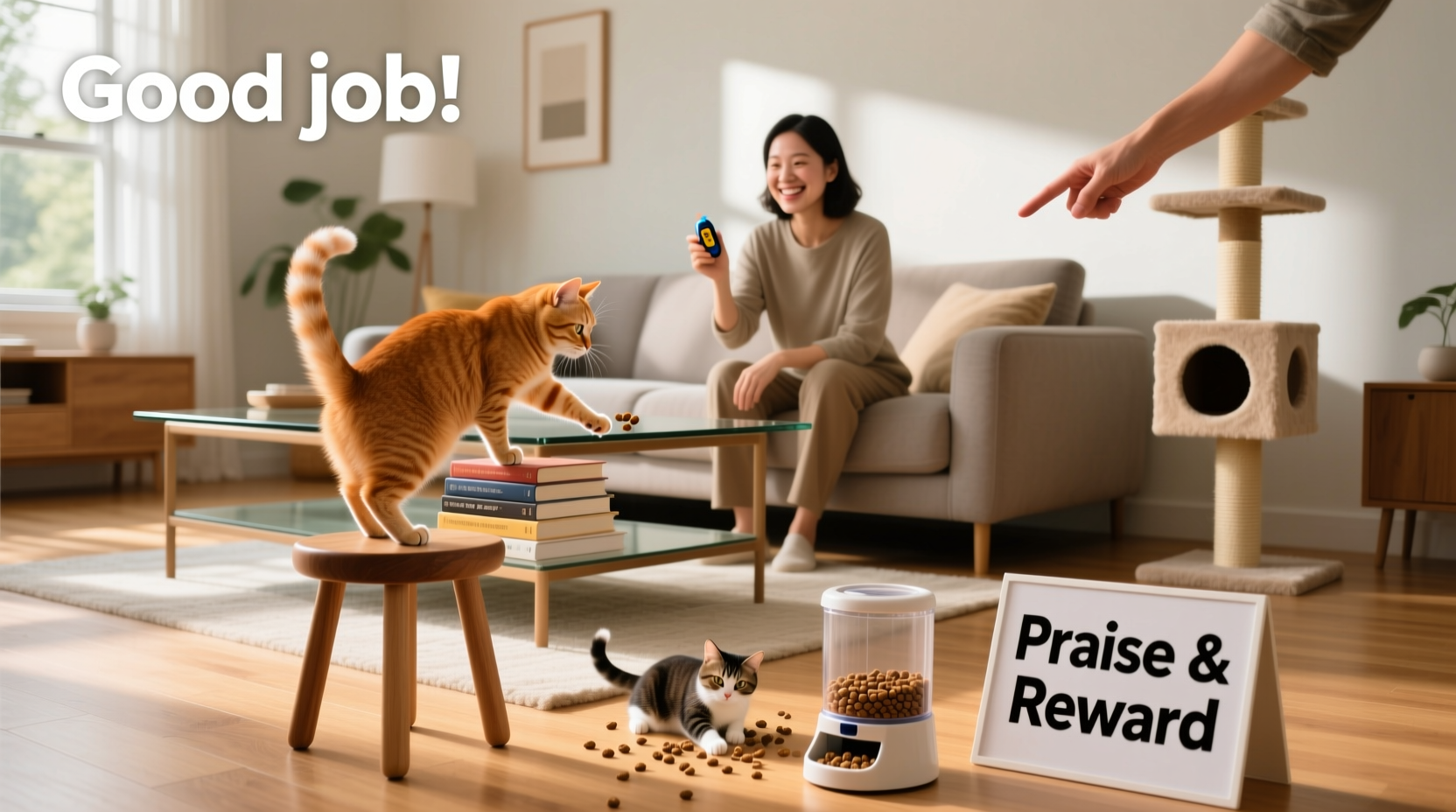
Cats don’t knock things off surfaces out of spite. Their actions stem from deeply rooted instincts and environmental cues:
- Hunting simulation: Pouncing on moving or dangling objects mimics capturing prey.
- Sensory exploration: Cats use their paws to investigate texture, movement, and weight.
- Attention-seeking: If knocking something down gets a reaction, they’re likely to repeat it.
- Play behavior: Swatting at objects is natural play, especially in young or under-stimulated cats.
- Height preference: Cats love elevated spaces and may bat at items while adjusting their position.
Recognizing these motivations is the first step toward addressing the behavior constructively. Punishment only creates fear and confusion. Positive reinforcement, on the other hand, redirects energy into acceptable outlets and teaches what *to do* instead of just what *not to do*.
The Principles of Positive Reinforcement Training
Positive reinforcement works by immediately rewarding a desired behavior, making it more likely to occur again. In cat training, rewards typically include treats, praise, affection, or access to toys. Timing is critical—the reward must follow the good behavior within seconds to create the association.
For example, if your cat looks at an object on the table but chooses not to touch it, you can quietly offer a treat. Over time, your cat learns that self-restraint leads to positive outcomes.
Key elements of successful positive reinforcement:
- Consistency: All family members should respond the same way to behaviors.
- Immediate feedback: Reward within 1–2 seconds of the desired action.
- High-value rewards: Use treats your cat truly loves (e.g., freeze-dried chicken).
- Short sessions: Train for 3–5 minutes daily to maintain focus.
- Patience: Behavior change takes time—weeks, not days.
“Cats learn best through repetition and reward. The key is to make the right choice more appealing than the wrong one.” — Dr. Sarah Ellis, Feline Behavior Scientist, University of Lincoln
Step-by-Step Guide to Training Your Cat
Follow this structured plan to reduce and eventually eliminate table-knocking behavior using positive reinforcement.
Step 1: Remove Temptation (Temporarily)
Start by clearing vulnerable surfaces. Remove breakable items, dangling cords, or anything that dangles off edges. This prevents reinforcement of the unwanted behavior while you train.
Step 2: Create a “Safe Zone” for Exploration
Designate a shelf or low table where you place safe, interactive items—a ping pong ball, crinkly toy, or feather wand. When your cat interacts appropriately with these, reward immediately.
Step 3: Teach “Leave It” Using Distraction and Reward
When your cat approaches an off-limits surface:
- Gently redirect their attention with a toy or treat held at ground level.
- Once they disengage from the table, say “Good!” and give the reward.
- Repeat multiple times per day.
Step 4: Reward Calm Behavior Near Tables
Anytime your cat sits or lies near a table without touching objects, quietly offer a treat. This reinforces passive presence over interaction.
Step 5: Introduce Controlled Practice
Place a non-breakable item (like a plastic cup) on the edge of a table. Observe. If your cat sniffs but doesn’t knock it over, reward immediately. If they do knock it, calmly remove them without scolding and try again later.
Step 6: Gradually Increase Difficulty
Over weeks, reintroduce more tempting objects while continuing to reward restraint. Success builds gradually.
Creating a Cat-Friendly Environment to Prevent Relapse
Even the best training can fail if the environment continues to encourage undesirable behavior. A well-designed space reduces temptation and satisfies your cat’s natural instincts.
| Problem | Solution | Positive Outcome |
|---|---|---|
| Cat knocks things off high surfaces | Provide vertical spaces with built-in toys (cat trees, wall shelves) | Redirects climbing and swatting to appropriate areas |
| Boredom or excess energy | Daily interactive play with wand toys (10–15 minutes, twice daily) | Reduces destructive play; satisfies hunting drive |
| Attention-seeking knocking | Schedule regular bonding time (brushing, feeding games) | Decreases need to act out for interaction |
| Lack of mental stimulation | Use food puzzles and rotating toys | Engages problem-solving skills, reducing idle mischief |
A stimulated cat is less likely to seek entertainment in risky ways. Rotate toys weekly to maintain novelty. Puzzle feeders also encourage focus on productive tasks rather than random swatting.
Mini Case Study: Luna the Curious Tabby
Luna, a 2-year-old tabby, lived with her owner Mia in a small apartment. Every morning, Mia found her keys, glasses, or coffee mug on the floor—pushed off the kitchen counter by Luna during her early exploration. Scolding didn’t help; in fact, Luna seemed to do it more when Mia reacted strongly.
Mia decided to try positive reinforcement. She began by removing fragile items and placing a soft mat beside the counter with a feather toy attached. Whenever Luna jumped up and looked at the toy instead of nearby objects, Mia used a clicker and gave a treat. Within two weeks, Luna started batting at the toy instead of household items. Mia also introduced daily 10-minute play sessions with a laser pointer before breakfast, which burned off Luna’s early-morning energy.
After four weeks, Luna stopped knocking things off entirely. The key was consistency and replacing the behavior with something equally engaging but acceptable. Mia noted, “I realized she wasn’t being ‘bad’—she just needed a better outlet.”
Common Mistakes to Avoid
Even with good intentions, some strategies backfire. Here are common pitfalls in training cats to stop knocking things over:
- Punishing after the fact: Cats don’t connect delayed consequences with their actions.
- Inconsistent responses: One person rewards calmness while another yells creates confusion.
- Overloading surfaces: Leaving too many tempting items out sets your cat up to fail.
- Neglecting playtime: An unstimulated cat will find its own entertainment, often destructively.
- Using deterrents as the only strategy: Sticky tape or aluminum foil may work short-term but don’t teach new behaviors.
Instead of focusing solely on stopping the bad behavior, shift your goal to teaching the good one. That’s where lasting change happens.
Checklist: How to Train Your Cat Successfully
Use this checklist to stay on track with your training plan:
- ✅ Remove breakable or hazardous items from edges of tables and shelves
- ✅ Identify high-value treats your cat responds to
- ✅ Set aside 3–5 minutes, 2–3 times daily for training sessions
- ✅ Use a marker word (“Yes!”) or clicker to signal correct behavior
- ✅ Reward calm or redirected behavior immediately
- ✅ Provide daily interactive play to burn excess energy
- ✅ Offer alternative enrichment (puzzle toys, cat trees)
- ✅ Involve all household members in consistent training
- ✅ Track progress weekly (note frequency of incidents)
- ✅ Be patient—behavior change takes 3–6 weeks
Frequently Asked Questions
Can older cats learn new behaviors?
Yes. While kittens are more adaptable, adult and senior cats can learn through positive reinforcement. Training may take longer, but motivation and consistency make it possible. Older cats often respond well to food-based rewards and quiet interaction.
What if my cat only does it when I’m not looking?
This suggests the behavior isn’t primarily attention-seeking. Instead, it may be exploratory or habitual. Focus on environmental management—remove tempting items and provide alternative outlets. Motion-activated deterrents (like a soft air burst) can interrupt the behavior without human involvement, but pair this with positive reinforcement when your cat chooses appropriate activities.
Is this behavior a sign of stress or anxiety?
Occasional knocking is normal play. However, if your cat is excessively destructive, hides frequently, over-grooms, or shows aggression, stress could be a factor. Environmental changes, lack of safe spaces, or underlying medical issues may contribute. Consult your veterinarian or a certified feline behaviorist if you suspect anxiety.
Conclusion: Building Trust Through Positive Change
Training your cat to stop knocking things off tables isn’t about control—it’s about communication. By using positive reinforcement, you’re not suppressing natural instincts but guiding them toward healthier expressions. This method fosters trust, reduces household tension, and deepens your relationship with your cat.
Success doesn’t come overnight. It requires patience, observation, and consistency. But every small victory—your cat pausing before swiping, choosing a toy over a vase, sitting calmly beside a countertop—is a step forward. With time, your home can remain both cat-friendly and clutter-safe.




 浙公网安备
33010002000092号
浙公网安备
33010002000092号 浙B2-20120091-4
Comments
No comments yet. Why don't you start the discussion?