
Dogs jump on guests out of excitement, not defiance. While it’s a natural expression of joy, it can be overwhelming for visitors—especially children or elderly individuals. The challenge lies in teaching your dog calm behavior without sending mixed signals. Many well-meaning owners accidentally reinforce the very behavior they want to eliminate by alternating between scolding and affection. To succeed, training must be consistent, clear, and rooted in positive reinforcement. This guide walks you through a structured, empathetic approach that respects your dog’s instincts while teaching them what is expected when people arrive.
Understanding Why Dogs Jump
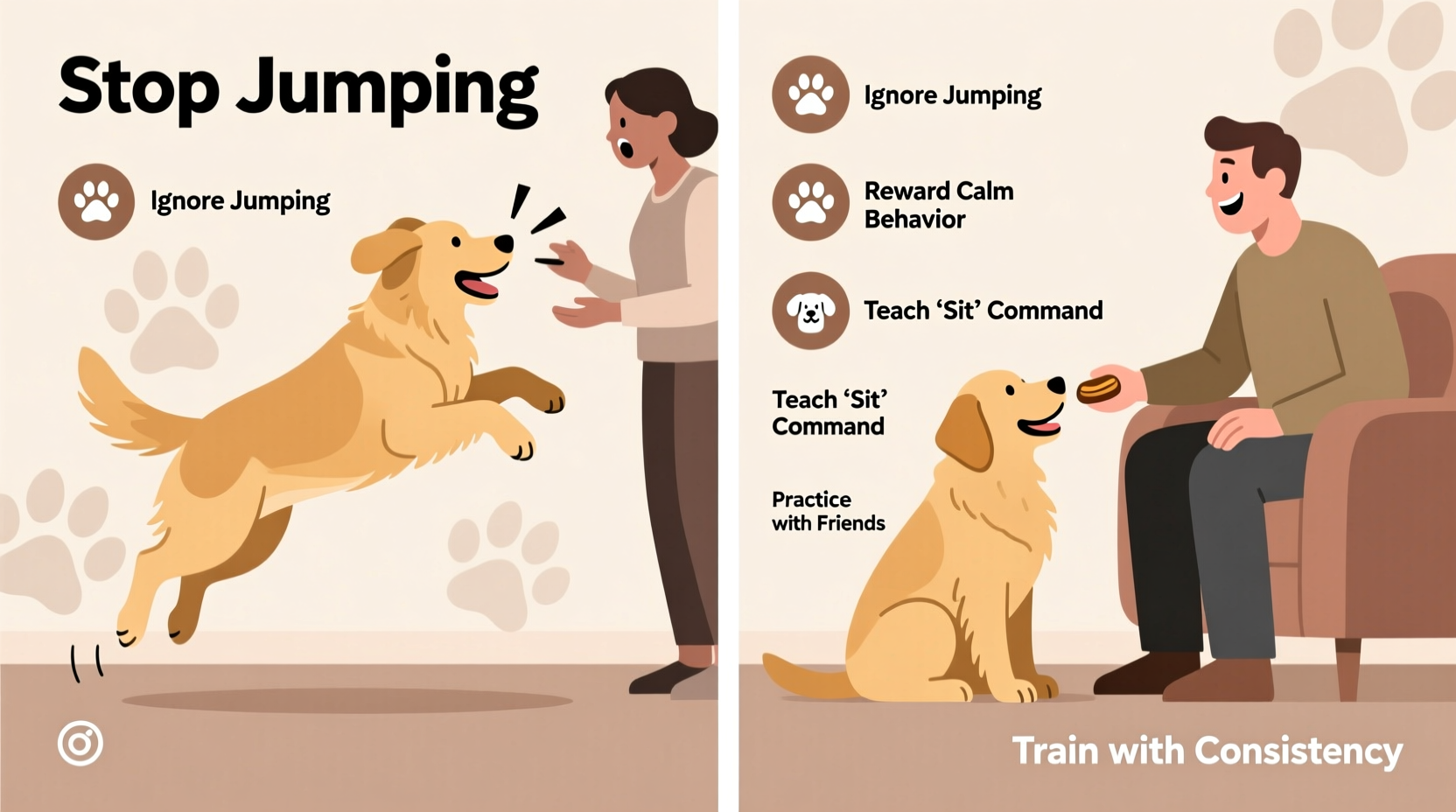
Dogs are social animals. When someone enters their space, especially after an absence, their instinct is to greet at face level—the way dogs greet each other nose-to-nose. A jumping dog isn’t trying to dominate; they’re attempting to reach your face to show affection. Excitement, lack of impulse control, and unintentional reinforcement all contribute to this behavior.
Consider this: every time a guest says, “Oh, he’s just excited!” while petting the dog mid-jump, they reward the action. Even pushing the dog down while laughing sends conflicting messages. Your dog learns that jumping gets attention—positive or negative—which reinforces the habit.
“Dogs live in a world of consequences. If a behavior gets them what they want—even occasionally—it will persist.” — Dr. Sophia Yin, DVM, Applied Animal Behaviorist
To change the behavior, you must change the outcome. That means no attention during jumping, and full attention only when all four paws are on the floor.
Step-by-Step Training Plan
Training your dog to remain calm around guests requires patience and repetition. Follow this timeline over 3–6 weeks for lasting results. Each phase builds on the previous one, ensuring your dog learns without confusion.
- Phase 1: Teach an Alternative Behavior (Days 1–7)
Choose a replacement behavior such as sitting or going to a mat. Practice this command daily in low-distraction environments. Use high-value treats like boiled chicken or freeze-dried liver to increase motivation. - Phase 2: Simulate Arrivals (Days 8–14)
Have a family member or friend act as a “guest.” Start with them standing outside the door. Open the door only when your dog is sitting or on their mat. Reward immediately for calm behavior. If your dog jumps, turn away silently and close the door. Repeat until success. - Phase 3: Gradual Exposure (Days 15–28)
Invite real guests over, but set boundaries. Ask them to ignore the dog completely until all four paws are on the ground. No eye contact, no talking, no touching. Once your dog sits, allow brief praise and a treat from you. - Phase 4: Increase Difficulty (Weeks 5–6)
Practice with more energetic visitors, multiple people, or during emotionally charged moments (e.g., reunions). Continue reinforcing calm behavior. If setbacks occur, return to earlier phases briefly. - Phase 5: Maintenance and Generalization
Apply the same rules at parks, pet stores, or friends’ homes. Consistency across environments ensures your dog understands the rule isn’t situational—it’s universal.
Do’s and Don’ts: What to Avoid During Training
Mistakes in communication are the biggest reason training fails. Below is a table outlining common pitfalls and better alternatives.
| Do’s | Don’ts |
|---|---|
| Require your dog to sit before greeting anyone | Allow greetings when your dog is standing or jumping |
| Use a leash indoors during training to manage momentum | Pull your dog down while saying “off”—this mimics physical interaction and can excite some dogs |
| Reward calm behavior immediately with treats and praise | Yell “no” or push your dog roughly—this increases arousal and damages trust |
| Ask guests to stand still and look away if the dog jumps | Let guests encourage jumping by petting or speaking during excitement |
| Practice regularly, even when no guests are present | Train only when problems arise—consistency is key |
A Real-Life Example: Transforming Max’s Greeting Habits
Max, a two-year-old Labrador mix, would leap onto guests, knocking over toddlers and leaving muddy paw prints on clothes. His owner, Sarah, loved his enthusiasm but worried about safety and social embarrassment. She began training using the method above.
First, she taught Max to go to a designated mat when the doorbell rang. She used clicker training to mark the exact moment he reached the mat and rewarded him with pieces of hot dog. After five days of practice, she invited her sister over.
The first attempt failed—Max ran to the door and jumped. Sarah quietly stepped in front of him, blocking access, and waited until he returned to the mat. Only then did she allow her sister to enter and acknowledge him. It took three tries that day, but by the second week, Max ran to his mat automatically when the bell rang.
Within a month, Max greeted guests calmly 90% of the time. The key was consistency: every visitor followed the same rules. No exceptions. Over time, Max learned that calmness led to attention, while jumping led to nothing.
Essential Tips for Preventing Confusion
Dogs thrive on predictability. Inconsistent responses create confusion and slow progress. Here are practical ways to keep your training clear and effective.
- Use a cue word like “Settle” or “Greet nicely” to signal expected behavior. Say it once, then wait. Don’t repeat commands—this teaches your dog to ignore the first instruction.
- Manage the environment by using baby gates or leashes during early training. Prevent rehearsal of unwanted behaviors.
- Involve everyone in the household. If one person allows jumping while others enforce rules, your dog receives mixed signals.
- Keep greetings brief at first. Long interactions can overexcite your dog. Gradually extend the duration as control improves.
- End on a positive note. If your dog stays calm for even three seconds, reward and conclude the interaction. Success breeds confidence.
Checklist: How to Prepare for Guest Arrivals
Follow this checklist every time someone visits during the training phase. Repetition turns good habits into automatic responses.
- Have treats ready near the entrance.
- Leash your dog if needed for control.
- Position your dog in a sit or on their mat before opening the door.
- Instruct guests to ignore the dog until calm.
- Reward your dog for maintaining position as the guest enters.
- Allow brief, controlled interaction only after calm behavior is demonstrated.
- If jumping occurs, end the greeting immediately and try again later.
- Practice this routine even with delivery personnel or neighbors stopping by.
Frequently Asked Questions
What if my dog only jumps on certain people?
This usually happens because those individuals have previously reinforced the behavior—perhaps by squealing with delight or petting the dog while jumping. Retrain consistently with those people. Have them withhold attention until your dog is calm, no matter how “cute” the jumping seems.
Is it too late to train an older dog?
No. While puppies learn faster, adult dogs are fully capable of changing behavior. The process may take longer due to established habits, but consistency and positive reinforcement work at any age. An eight-year-old dog can learn new rules with patience.
Should I use a shock collar or spray bottle to stop jumping?
No. Aversive tools create fear and anxiety, which can lead to aggression or generalized nervousness. They also damage the human-animal bond. Positive reinforcement produces reliable, stress-free results and strengthens trust.
Building a Calm Greeting Culture
The goal isn’t just to stop jumping—it’s to teach your dog how to interact politely in social situations. This skill enhances their quality of life, making them welcome in more places and reducing stress for everyone involved.
Create a “greeting protocol” your household follows religiously. Post it on the fridge if needed. Train as if every arrival is a test: same cues, same expectations, same rewards. Over time, your dog will anticipate the routine and choose calmness naturally.
Remember, your dog isn’t misbehaving—they’re communicating. By guiding them toward better ways to express excitement, you’re not suppressing their personality; you’re giving them the tools to succeed in human society.
“Training is not about obedience alone. It’s about helping dogs understand our world so they can live happily within it.” — Karen Pryor, Animal Trainer and Author
Final Thoughts and Call to Action
Stopping your dog from jumping on guests doesn’t require dominance or punishment. It requires clarity, consistency, and compassion. Every dog can learn to greet politely when given the right guidance. Start today—practice the alternative behavior, prepare your space, and align your household. Small steps compound into lasting change.




 浙公网安备
33010002000092号
浙公网安备
33010002000092号 浙B2-20120091-4
Comments
No comments yet. Why don't you start the discussion?