
As the crisp air settles in and humidity levels drop, your skin begins to send subtle signals—tightness after cleansing, flakiness along the cheekbones, or a dull complexion that no longer glows like it did under summer sun. These aren’t just seasonal inconveniences; they’re signs that your current skincare regimen is no longer meeting your skin’s evolving needs. Transitioning from summer to winter skincare isn't about overhauling everything overnight—it's about thoughtful adjustments that preserve moisture, strengthen the skin barrier, and prevent irritation caused by cold winds and indoor heating.
The shift between seasons presents one of the most critical moments in your skincare calendar. Summer routines often emphasize oil control, lightweight textures, and high SPF protection due to increased UV exposure. Winter demands richer hydration, enhanced barrier support, and more protective formulations. Ignoring this shift can lead to compromised skin integrity, increased sensitivity, and even long-term damage. By understanding what changes at a physiological level and adjusting accordingly, you can maintain resilient, radiant skin throughout the colder months.
Why Your Skin Reacts Differently in Winter
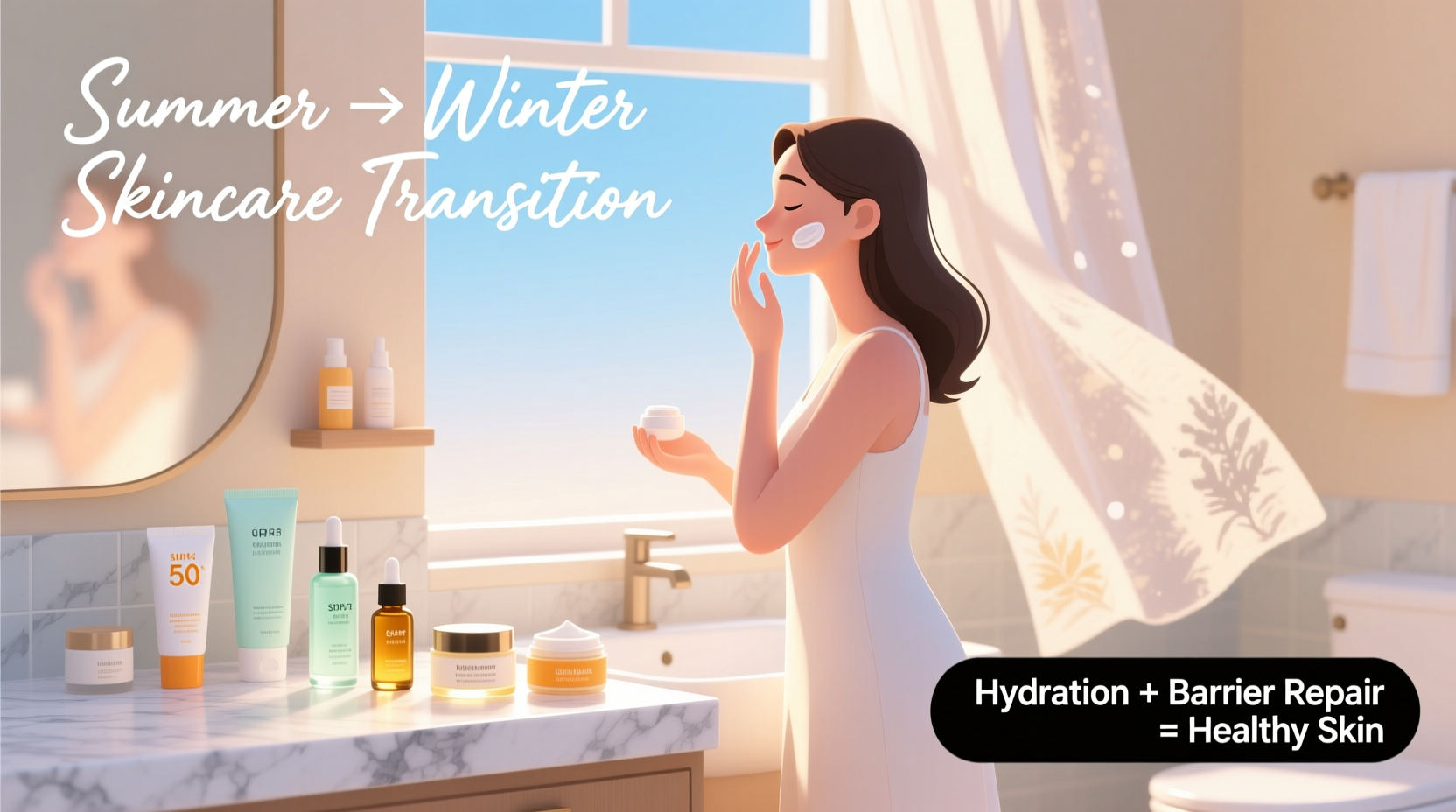
Human skin is highly responsive to environmental shifts. During winter, two primary factors disrupt its equilibrium: low outdoor humidity and artificially heated indoor environments. Cold air holds less moisture than warm air, leading to drier ambient conditions. Meanwhile, central heating systems further deplete indoor humidity, sometimes dropping relative levels below 30%—a desert-like environment for skin.
Under these conditions, the stratum corneum—the outermost layer of the epidermis—struggles to retain water. Transepidermal water loss (TEWL) increases significantly, weakening the skin barrier. This compromises its ability to fend off irritants, allergens, and microbes. As a result, many people experience symptoms such as:
- Tightness or discomfort shortly after washing
- Visible flaking or peeling, especially on forehead and cheeks
- Increased redness or reactivity
- Dull appearance due to slower cell turnover
- Cracking around lips, knuckles, or elbows
Additionally, sebum production naturally slows in cooler temperatures. While oily skin may seem like a summer-only issue, reduced natural oils in winter mean less intrinsic protection against dryness. Even those with combination or acne-prone skin aren’t immune to dehydration—a condition where skin lacks water, not oil.
“Seasonal transitions are when the skin is most vulnerable. A proactive approach—not reactive—makes all the difference in preventing inflammation and maintaining balance.” — Dr. Lena Patel, Board-Certified Dermatologist
Key Changes to Make in Your Routine
Transitioning your skincare doesn’t require buying an entirely new lineup. Instead, focus on strategic swaps and additions that address winter-specific challenges. Below are the core areas to evaluate and adjust.
1. Cleanser: Switch from Foaming to Cream-Based
Foaming cleansers popular in summer often contain sulfates or high concentrations of surfactants designed to cut through sweat and sunscreen. In winter, these can strip essential lipids and leave skin feeling tight or squeaky clean—never a good sign.
Opt instead for creamy, milky, or balm-based cleansers enriched with ceramides, fatty acids, or glycerin. These maintain the skin’s natural oils while still removing impurities.
2. Exfoliation: Reduce Frequency and Shift to Softer Acids
Chemical exfoliants like glycolic or salicylic acid help shed dead cells during humid months when skin tolerates stronger treatments. In winter, over-exfoliation exacerbates dryness and sensitization.
Switch to lactic acid or polyhydroxy acids (PHAs), which offer mild exfoliation with added humectant properties. Limit use to once or twice weekly, depending on tolerance. Avoid physical scrubs unless formulated with fine, non-abrasive particles.
3. Hydration: Boost Humectants and Layer Actives
Humectants like hyaluronic acid draw moisture into the skin—but only if there’s moisture available. In dry winter air, they can pull water from deeper layers unless sealed properly.
Solution: Layer humectants on damp skin immediately after cleansing, followed by emollients and occlusives. Consider using a hydrating toner or essence rich in ingredients like panthenol, sodium PCA, or betaine.
4. Moisturizer: Upgrade Texture and Lipid Content
Your summer gel-cream likely won’t suffice when temperatures dip. Replace it with a denser cream containing ceramides, cholesterol, and fatty acids—key components of a healthy skin barrier.
For very dry or mature skin, add a facial oil (e.g., squalane, jojoba, or rosehip) before moisturizer to enhance lipid replenishment. At night, consider “slugging”—applying a thin layer of petroleum jelly or lanolin-based balm over moisturizer—to lock in hydration.
5. Sunscreen: Never Skip It
UV radiation remains potent year-round. Snow reflects up to 80% of UV rays, increasing exposure risk during outdoor activities. Continue daily broad-spectrum SPF 30+ application, ideally in a moisturizing base.
If your summer sunscreen feels too light or leaves a white cast under clothing, switch to a nourishing SPF formulation with added antioxidants like vitamin E or niacinamide.
Step-by-Step Guide: Transition Over Two Weeks
Rather than changing everything at once—which can overwhelm sensitive skin—phase in adjustments gradually. Follow this two-week timeline for a smooth, irritation-free shift.
- Week 1 – Assess & Prep: Take stock of current products. Identify which ones feel drying or insufficient. Begin introducing a hydrating toner or serum after cleansing to prep skin for richer formulas.
- Day 3: Swap out foaming cleanser for a cream version. Use both morning and night.
- Day 5: Reduce exfoliation frequency. If using AHA/BHA three times a week, cut back to once. Try substituting with lactic acid.
- Day 7: Apply moisturizer to slightly damp skin. Add a few drops of facial oil into your palm and mix before applying.
- Week 2 – Build & Protect: Replace daytime moisturizer with a thicker formula. Test overnight hydration methods like slugging once per week.
- Day 10: Confirm SPF usage every morning—even on cloudy days. Reapply if spending extended time outdoors.
- Day 14: Evaluate results. Look for improved suppleness, reduced tightness, and fewer flakes. Adjust based on response.
Do’s and Don’ts: Winter Skincare Comparison Table
| Do | Don’t |
|---|---|
| Use lukewarm water when washing your face | Wash with hot water—it strips natural oils and worsens dryness |
| Layer hydrating products on damp skin | Apply actives or creams to dry skin—this reduces absorption and efficacy |
| Incorporate ceramide-rich moisturizers | Use alcohol-heavy toners—they increase TEWL and irritation |
| Humidify your bedroom at night | Sleep near exposed radiators or heating vents |
| Reapply lip balm frequently | Lick chapped lips—it temporarily soothes but accelerates cracking |
A Real-Life Example: Sarah’s Winter Skin Rescue
Sarah, a 34-year-old graphic designer in Chicago, always dreaded winter. Each December, her combination skin turned patchy and reactive—especially across her nose and chin. She blamed it on “bad luck” until she consulted a dermatology nurse practitioner who reviewed her routine.
Her summer regimen included a charcoal foam cleanser, 10% glycolic acid toner five nights a week, a matte gel moisturizer, and mineral SPF. All effective in July, but disastrous by November.
With guidance, she phased in changes: switched to a milk cleanser, reduced exfoliation to once weekly with lactic acid, layered a hyaluronic acid serum on damp skin, and upgraded to a ceramide cream. Within three weeks, her flaking subsided, and she reported feeling “comfortable in my own skin again.”
Her biggest insight? “I thought ‘oil-free’ meant healthier. But my skin wasn’t oily—it was dehydrated and overcompensating. Now I understand the difference.”
Essential Checklist: Winter Skincare Readiness
Before fully committing to winter mode, ensure you’ve covered these foundational steps:
- ✅ Replaced harsh cleanser with a non-stripping alternative
- ✅ Reduced chemical exfoliation frequency or changed to gentler acids
- ✅ Added a humectant-rich serum (e.g., hyaluronic acid, glycerin)
- ✅ Upgraded moisturizer to a richer texture with barrier-supporting ingredients
- ✅ Introduced facial oil or occlusive for nighttime sealing (optional)
- ✅ Confirmed daily SPF use regardless of weather
- ✅ Installed a humidifier in main living/sleeping area
- ✅ Scheduled professional skin assessment if persistent issues occur
Frequently Asked Questions
Can I still use retinoids in winter?
Yes, but with caution. Retinoids increase photosensitivity and can be drying. If using prescription tretinoin or over-the-counter retinol, buffer it by applying moisturizer first, then the retinoid (“sandwich method”). Start with twice weekly and build tolerance. Always follow with moisturizer and never skip SPF the next day.
My skin feels oily but also dry—is that possible?
Absolutely. This is known as \"dehydrated oily skin.\" The surface may appear shiny due to excess sebum, but underneath, the skin lacks water. You might notice congestion alongside flakiness. Focus on lightweight hydration (like a water-based serum) and avoid stripping cleansers. Balance is key—don’t over-cleanse trying to remove oil.
Should I change my routine if I live in a mild climate?
Even in warmer regions, indoor heating creates microclimates that dry skin. While full product swaps may not be necessary, adding a hydrating mist, using a heavier night cream occasionally, and continuing SPF are still recommended. Monitor how your skin feels—not just looks—for clues.
Final Thoughts: Prepare, Don’t Repair
Smooth seasonal transitions come down to anticipation, not reaction. Waiting until your skin cracks or reddens means you've already lost ground. By starting early—ideally in late fall—you give your skin time to adapt without distress.
Think of winter skincare as fortification. It’s not about covering flaws but reinforcing resilience. Every layer applied mindfully contributes to a stronger, more responsive barrier capable of withstanding environmental stressors.
Remember, consistency trumps complexity. You don’t need ten new products—just the right few used correctly. Pay attention to how your skin feels in the morning, how it reacts to temperature changes, and whether your makeup applies evenly. These small cues guide smarter choices far better than trends ever could.




 浙公网安备
33010002000092号
浙公网安备
33010002000092号 浙B2-20120091-4
Comments
No comments yet. Why don't you start the discussion?