
Berries are a seasonal delight—bursting with flavor, rich in antioxidants, and packed with nutrients. But their delicate nature makes them highly perishable. Without proper handling, strawberries, blueberries, raspberries, and blackberries can spoil within days of purchase. The good news is that with the right techniques, you can extend their shelf life significantly, whether you plan to enjoy them fresh, frozen, or preserved. This guide reveals the most effective methods to keep your berries tasting vibrant and nutritious for weeks—or even months.
Selecting Berries for Maximum Longevity
The preservation process begins long before you reach your kitchen. How you choose berries at the store or farmers market sets the foundation for how well they’ll last. Always inspect each container carefully. Look for firm, plump berries with consistent color and no signs of mold, mushiness, or juice leakage. Avoid containers with condensation, as moisture accelerates decay.
Berries should be harvested at peak ripeness but not overripe. Overripe fruit emits ethylene gas, which speeds up the ripening—and spoiling—of nearby produce. For example, storing ripe bananas near your strawberries can cause the berries to deteriorate faster.
Immediate Post-Purchase Handling
Once home, resist the urge to wash berries immediately. Moisture trapped on the surface promotes mold growth. Instead, transfer them to a breathable container lined with paper towels to absorb excess humidity. Place them in the crisper drawer of your refrigerator, ideally in the coldest zone (typically 32–36°F or 0–2°C).
For an extra layer of protection, some experts recommend a vinegar bath. A solution of 3 parts water to 1 part white vinegar can kill mold spores and bacteria. Soak berries for 5–10 minutes, rinse under cold water, then dry thoroughly using a salad spinner or clean towel before refrigerating.
“Washing berries only when you’re ready to eat them is one of the simplest yet most effective ways to prolong freshness.” — Dr. Linda Harris, Food Safety Specialist, UC Davis
Step-by-Step Guide to Preserving Berries
To maximize shelf life, follow this comprehensive timeline based on your intended use:
- Day of Purchase: Inspect and discard any damaged or moldy berries. Do not wash unless using the vinegar method.
- After Vinegar Soak (Optional): Rinse and air-dry completely on a rack or towel.
- Storage Prep: Line a shallow container with paper towels. Arrange berries in a single layer if possible.
- Refrigeration: Store in the high-humidity crisper drawer. Consume within 5–7 days for optimal quality.
- Freezing (Before Spoilage): If not consumed within a week, freeze for long-term storage.
Freezing Berries Properly
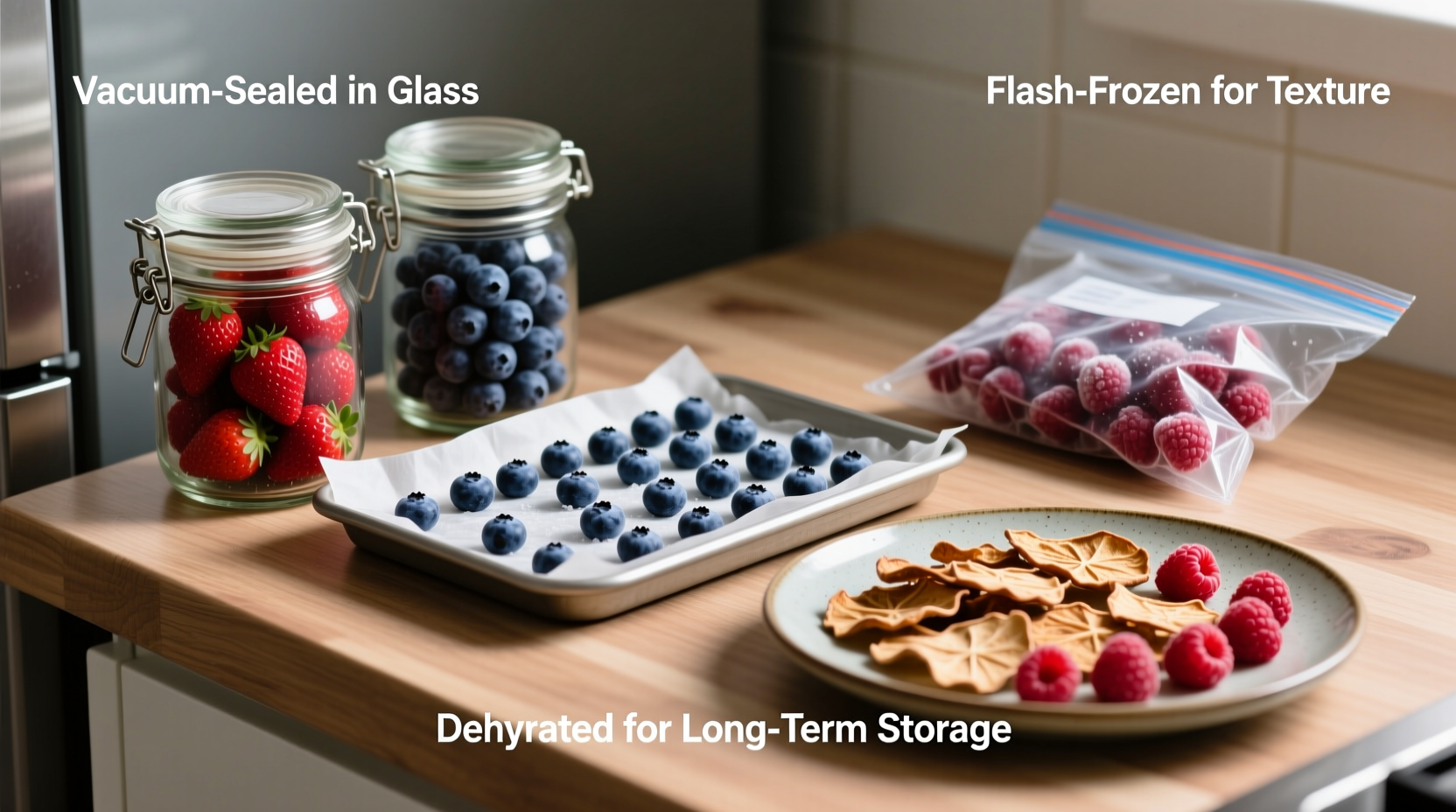
Freezing is the most reliable method for preserving berries beyond a week. To prevent clumping and freezer burn:
- Wash and dry berries thoroughly.
- Spread them in a single layer on a parchment-lined baking sheet.
- Flash-freeze for 2–3 hours until solid.
- Transfer to airtight freezer bags or vacuum-sealed containers.
- Label with date; most berries retain quality for 8–12 months.
Drying and Alternative Preservation Methods
Dehydrating berries concentrates their sweetness and extends shelf life without requiring freezer space. Use a food dehydrator or oven set to the lowest temperature (ideally 135°F or 57°C). Slice larger berries like strawberries evenly for uniform drying. The process takes 6–12 hours depending on moisture content.
Dried berries can be stored in airtight glass jars in a cool, dark pantry for up to 6 months. For added protection against oxidation, include an oxygen absorber packet.
Another traditional method is making berry syrup or compote. Simmer berries with sugar and lemon juice, then pour into sterilized jars and process in a water bath canner. Properly canned preserves can last 12–18 months unopened.
| Method | Shelf Life | Best For |
|---|---|---|
| Refrigerated (fresh) | 5–7 days | Immediate consumption, salads, snacking |
| Flash-frozen | 8–12 months | Baking, smoothies, sauces |
| Dried | 6 months | Trail mix, granola, desserts |
| Canned (compote/syrup) | 12–18 months | Pancakes, yogurt topping, gifts |
| Fermented (e.g., shrubs) | 6 months (refrigerated) | Cocktails, vinaigrettes, drinks |
Real Example: A Farmer’s Market Surplus
Sarah, a home cook in Oregon, buys 6 pints of organic raspberries every summer during peak season. In the past, she lost nearly half to mold before she could use them. After learning about the vinegar soak and flash-freezing method, she changed her routine. She now soaks the berries upon arrival, dries them overnight on a cooling rack, and freezes them in portioned bags. Throughout the winter, she uses them in oatmeal, baked goods, and homemade jam. “I used to feel guilty wasting berries,” she says. “Now I enjoy summer flavor all year without waste.”
Checklist: Best Practices for Berry Preservation
- ☑ Select firm, dry, mold-free berries
- ☑ Avoid washing until ready to use
- ☑ Use vinegar soak to eliminate mold spores
- ☑ Dry completely before storage or freezing
- ☑ Store in ventilated containers with paper towels
- ☑ Freeze in single layers before bagging
- ☑ Label frozen or dried batches with dates
- ☑ Keep away from ethylene-producing fruits
Frequently Asked Questions
Can I store different types of berries together?
It's best to store berries separately, especially if one type shows signs of spoilage. Mold spreads quickly. Raspberries and blackberries are particularly fragile and should be isolated from sturdier varieties like blueberries.
Why do my strawberries always go bad so fast?
Strawberries are highly porous and absorb moisture easily. They also carry mold spores from the field. Washing them early or storing them in sealed plastic without ventilation accelerates decay. Using the vinegar method and storing them in a breathable container dramatically improves longevity.
Are frozen berries as nutritious as fresh?
Yes. Studies show that frozen berries retain most of their nutritional value, including vitamin C, polyphenols, and anthocyanins. In some cases, frozen berries may even have higher antioxidant levels due to being frozen at peak ripeness.
Conclusion: Make Every Berry Count
Preserving berries doesn’t require special equipment or advanced skills—just attention to detail and consistency. Whether you refrigerate, freeze, dry, or can, each method offers a practical way to enjoy these delicate fruits long after harvest season ends. By choosing the right berries, handling them properly, and using science-backed techniques, you reduce waste, save money, and elevate your meals year-round.




 浙公网安备
33010002000092号
浙公网安备
33010002000092号 浙B2-20120091-4
Comments
No comments yet. Why don't you start the discussion?