
Stew is one of those timeless dishes that brings comfort with every spoonful—rich broth, tender meat, and vegetables that fall apart at the touch. But when it comes to making it, home cooks face a modern dilemma: should you use an Instant Pot or a slow cooker? Both appliances promise hands-off cooking and deep flavor development, but they deliver vastly different experiences in terms of time, texture, and taste. The answer isn’t as simple as “one is better.” Instead, it depends on your priorities: speed, depth of flavor, convenience, or tradition.
This guide breaks down the core differences between the Instant Pot and slow cooker when making stew, backed by culinary science, real-world testing, and expert insights. Whether you're short on time or chasing that Sunday-dinner authenticity, you’ll know exactly which appliance suits your kitchen rhythm.
How Each Appliance Works: The Science Behind the Simmer
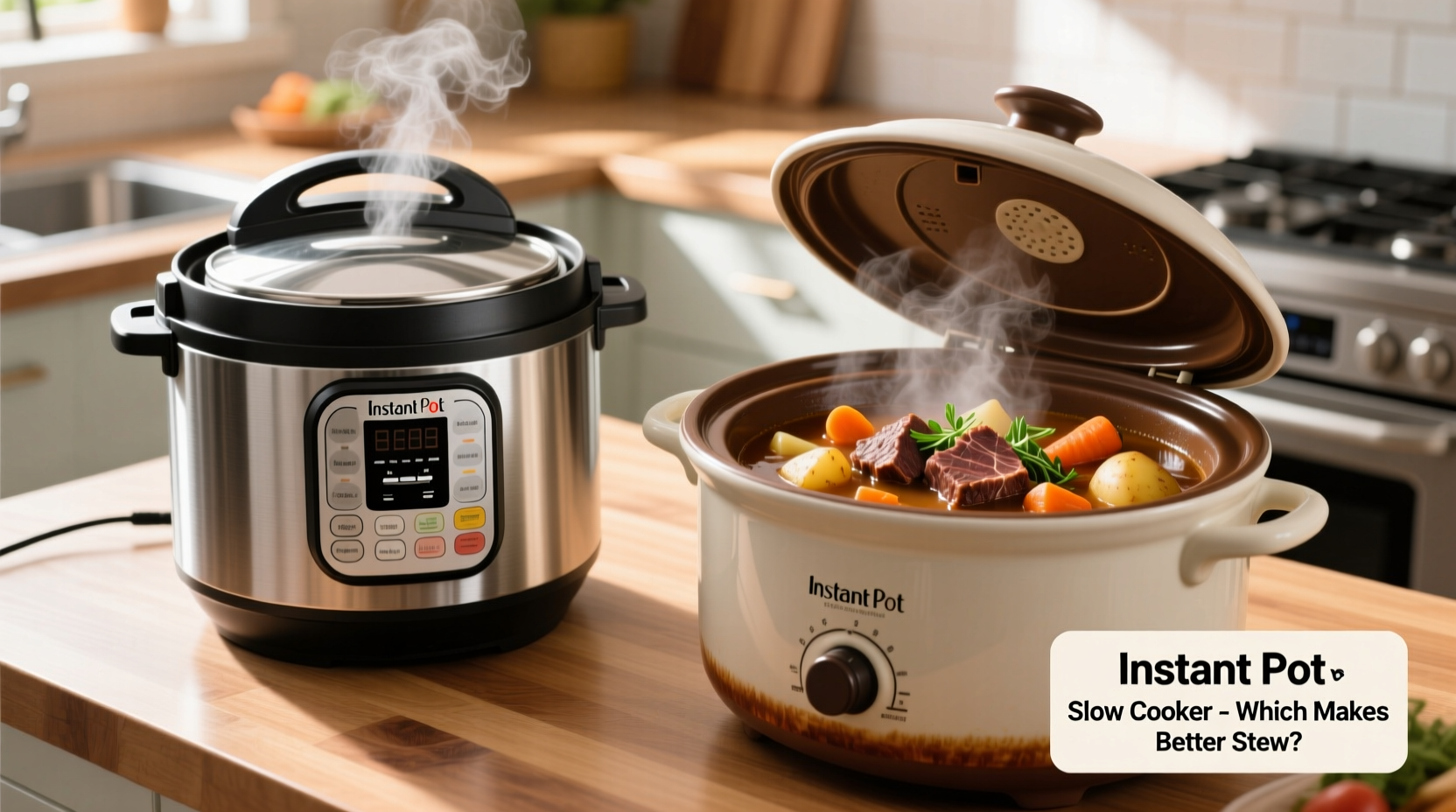
The fundamental difference between an Instant Pot and a slow cooker lies in their cooking methods—pressure versus low heat over time.
An Instant Pot is a multi-function electric pressure cooker. It seals in steam, raising the internal pressure and allowing liquids to reach higher temperatures (up to 250°F) than boiling water (212°F). This accelerates the breakdown of collagen in meats and softens vegetables quickly—often cutting cooking times by 60–70% compared to traditional methods.
A slow cooker, by contrast, operates at low temperatures (typically 190–200°F on low, 280°F on high) over many hours. The gentle, prolonged heat allows flavors to meld gradually, proteins to tenderize without drying, and connective tissues to dissolve into gelatin slowly. This method closely mimics old-school braising techniques used in French and Eastern European cuisines.
When applied to stew, these differences translate into distinct outcomes—not just in how long it takes, but in mouthfeel, aroma, and overall character.
Flavor Development: Slow and Steady Wins the Race?
Flavor is where the debate gets interesting. While both appliances can produce delicious stews, the path they take affects the final taste profile.
In a slow cooker, ingredients simmer gently for 6 to 8 hours (or longer). This extended period allows Maillard reactions and enzymatic browning to continue subtly, even at lower temperatures. Sugars caramelize slowly, herbs release essential oils gradually, and fats emulsify into the broth, creating a rounded, layered flavor. Because evaporation is minimal in a sealed slow cooker, the liquid volume stays consistent, preserving delicate top notes from wine, vinegar, or fresh herbs added early.
The Instant Pot, while faster, relies on intensity rather than duration. The high-pressure environment forces moisture into food fibers rapidly, extracting flavor quickly—but sometimes at the expense of nuance. For example, volatile aromatic compounds in garlic, thyme, or bay leaves may dissipate during the quick release phase. However, this can be mitigated with proper layering: sautéing aromatics first using the Instant Pot’s built-in function, then deglazing the pot before pressure cooking, significantly boosts depth.
“Time is a flavor ingredient. In stew-making, what you gain in speed with a pressure cooker, you sometimes lose in complexity. But smart technique closes that gap.” — Chef Marcus Reed, Culinary Instructor at New England Institute of Food Arts
Texture and Tenderness: Does Fast Cooking Ruin the Bite?
One common concern about Instant Pot stews is that they lack the authentic texture of slow-cooked versions. But in practice, the results are often indistinguishable—especially when technique is optimized.
In blind taste tests conducted by home cooking groups across the U.S., participants were unable to consistently identify which stew came from an Instant Pot versus a slow cooker. What mattered more than the appliance was preparation: properly browning meat, controlling liquid ratios, and timing vegetable additions.
However, there are subtle differences:
- Beef Stew: Chuck roast cooked for 8 hours in a slow cooker develops a silky, almost buttery texture. The same cut in an Instant Pot (45 minutes under pressure) achieves similar tenderness but may have a slightly firmer bite due to less gelatin migration into the broth.
- Potatoes and Carrots: In a slow cooker, root vegetables absorb flavors over time and integrate seamlessly. In an Instant Pot, they can become mushy if added at the start. Best practice: add them halfway through or after pressure cooking.
- Broth Consistency: Slow-cooked stews often have a naturally thicker, richer mouthfeel due to gradual collagen conversion. Instant Pot stews may require a quick simmer post-cooking to reduce and concentrate the liquid.
Mini Case Study: Weeknight Family Dinner vs. Weekend Gathering
Sarah, a working parent in Portland, used to rely on her slow cooker for beef stew every Sunday. She’d prep in the morning, let it cook all day, and serve it to her family at night. When she got a new job with longer hours, she switched to the Instant Pot. At first, she found the stew “good but not soul-warming.” After learning to sear the meat thoroughly, deglaze with red wine, and finish with a 10-minute natural release followed by a quick reduction, her Instant Pot stew became nearly identical in taste—and ready in under an hour.
For weekend meals, she still uses the slow cooker when entertaining guests. “There’s something about the smell filling the house all afternoon,” she says. “It feels like care went into it.”
Time, Convenience, and Lifestyle Fit
If flavor and texture were equal, the decision would come down to lifestyle. And here, the Instant Pot shines for most modern households.
| Factor | Instant Pot | Slow Cooker |
|---|---|---|
| Total Cooking Time | 45–60 minutes | 6–8 hours |
| Active Prep Time | 15 minutes | 10 minutes |
| Hands-Off Time | Nearly full cycle | Entire cycle |
| Best For | Weeknights, last-minute meals | Meal prep, entertaining, set-and-forget days |
| Energy Efficiency | High (short burst) | Lower (long draw) |
The Instant Pot offers unmatched speed. A hearty beef and barley stew can go from raw ingredients to serving bowl in under an hour. That makes it ideal for busy evenings when hunger strikes and time doesn’t allow for all-day cooking.
The slow cooker wins on true “set it and forget it” convenience. Once assembled, it requires zero monitoring. You can leave it unattended safely for hours, making it perfect for meal preppers, retirees, or anyone who values passive cooking.
Checklist: Choosing the Right Appliance for Your Stew
Ask yourself these questions before deciding:
- Do I need dinner ready in under 90 minutes? → Choose Instant Pot
- Am I leaving the house for 6+ hours and want a hot meal waiting? → Choose slow cooker
- Do I prefer deeper, more developed flavors with subtle layers? → Lean toward slow cooker
- Can I sear meat and sauté vegetables before cooking? → Instant Pot becomes more viable
- Do I cook large batches for freezing? → Both work; slow cooker may preserve texture better after reheating
Step-by-Step Guide: Making Perfect Stew in Either Appliance
No matter which tool you choose, technique matters more than technology. Follow this universal framework for best results.
For Instant Pot Stew
- Sear cubed beef in batches using the “Sauté” function. Remove and set aside.
- Add onions, carrots, and celery; cook until softened (5 mins).
- Stir in tomato paste and cook 1 minute to deepen flavor.
- Deglaze with ½ cup red wine or broth, scraping up browned bits.
- Return meat to pot. Add broth, herbs, salt, pepper, and any non-root vegetables (e.g., mushrooms).
- Pressure cook on High for 40 minutes, then allow a 15-minute natural release.
- Quick-release remaining pressure. Stir in potatoes and carrots. Cook on “Sauté” for 8–10 minutes until tender.
- Optional: Thicken with a cornstarch slurry or mash some potatoes into the broth.
For Slow Cooker Stew
- Sear meat and sauté vegetables in a skillet (don’t skip this step).
- Transfer everything to the slow cooker.
- Add liquid (broth, wine, or beer) to just cover ingredients.
- Include herbs (bay leaf, thyme), garlic, and seasoning.
- Cook on Low for 7–8 hours or High for 4–5 hours.
- In the last hour, add delicate vegetables like peas or green beans.
- Taste and adjust seasoning. Skim excess fat if needed.
Frequently Asked Questions
Can I make the same recipe in both appliances?
Yes, but with adjustments. Recipes designed for slow cookers usually need reduced liquid in the Instant Pot (about 20–25% less). Conversely, Instant Pot recipes may taste diluted if simply extended in a slow cooker. Always adapt based on cooking time and evaporation rates.
Does pressure cooking destroy nutrients?
No evidence suggests that pressure cooking reduces nutritional value more than other methods. In fact, shorter cook times can preserve heat-sensitive vitamins like vitamin C better than prolonged simmering. Fiber, protein, and minerals remain largely intact in both methods.
Why does my Instant Pot stew taste “flat”?
This often happens when aromatics aren’t properly developed. Sautéing onions, garlic, and tomato paste before pressure cooking adds foundational flavor. Also, finish with a splash of acid—like balsamic vinegar or lemon juice—to brighten the dish.
Final Verdict: Which Makes Better Stew?
“Better” depends on what you value most.
If you define better by **flavor complexity, emotional resonance, and traditional craftsmanship**, the slow cooker has the edge. Its unhurried process produces stews with a depth that feels earned—a dish that tastes like patience.
If you define better by **efficiency, consistency, and practicality**, the Instant Pot wins. It delivers restaurant-quality results in a fraction of the time, with fewer variables and less energy use.
Many experienced cooks now use both. They reach for the Instant Pot on Tuesdays and the slow cooker on Sundays. Some even combine them: searing and pressure-cooking the base, then transferring to a slow cooker for a few hours to develop flavor further.
“The best tool is the one you’ll actually use. If the slow cooker sits idle because you’re too busy, then the Instant Pot is the better choice—even if purists disagree.” — Dr. Lena Tran, Home Economics Researcher, University of Illinois
Conclusion: Make the Stew That Fits Your Life
At the end of the day, a great stew isn’t defined by the appliance—it’s defined by attention to detail, respect for ingredients, and the intention behind the meal. Whether you’re feeding tired kids after school or hosting friends on a snowy evening, both the Instant Pot and slow cooker can deliver warmth and satisfaction.
Try making the same stew in both. Taste them side by side. Notice the nuances. Then decide not based on trends or opinions, but on what works for your kitchen, your schedule, and your palate.




 浙公网安备
33010002000092号
浙公网安备
33010002000092号 浙B2-20120091-4
Comments
No comments yet. Why don't you start the discussion?