
Introversion isn’t a flaw—it’s a way of processing the world. But when society prioritizes constant connection, social performance, and outward energy, introverts often push themselves beyond sustainable limits. Over time, this leads to a unique form of exhaustion: introvert burnout. Unlike general fatigue, this burnout stems from chronic overstimulation—too many interactions, too little downtime, and insufficient access to solitude. Recognizing the early signs is critical. More importantly, knowing how to reclaim your inner balance through intentional solitude can restore clarity, creativity, and emotional resilience.
The Hidden Toll of Chronic Overstimulation
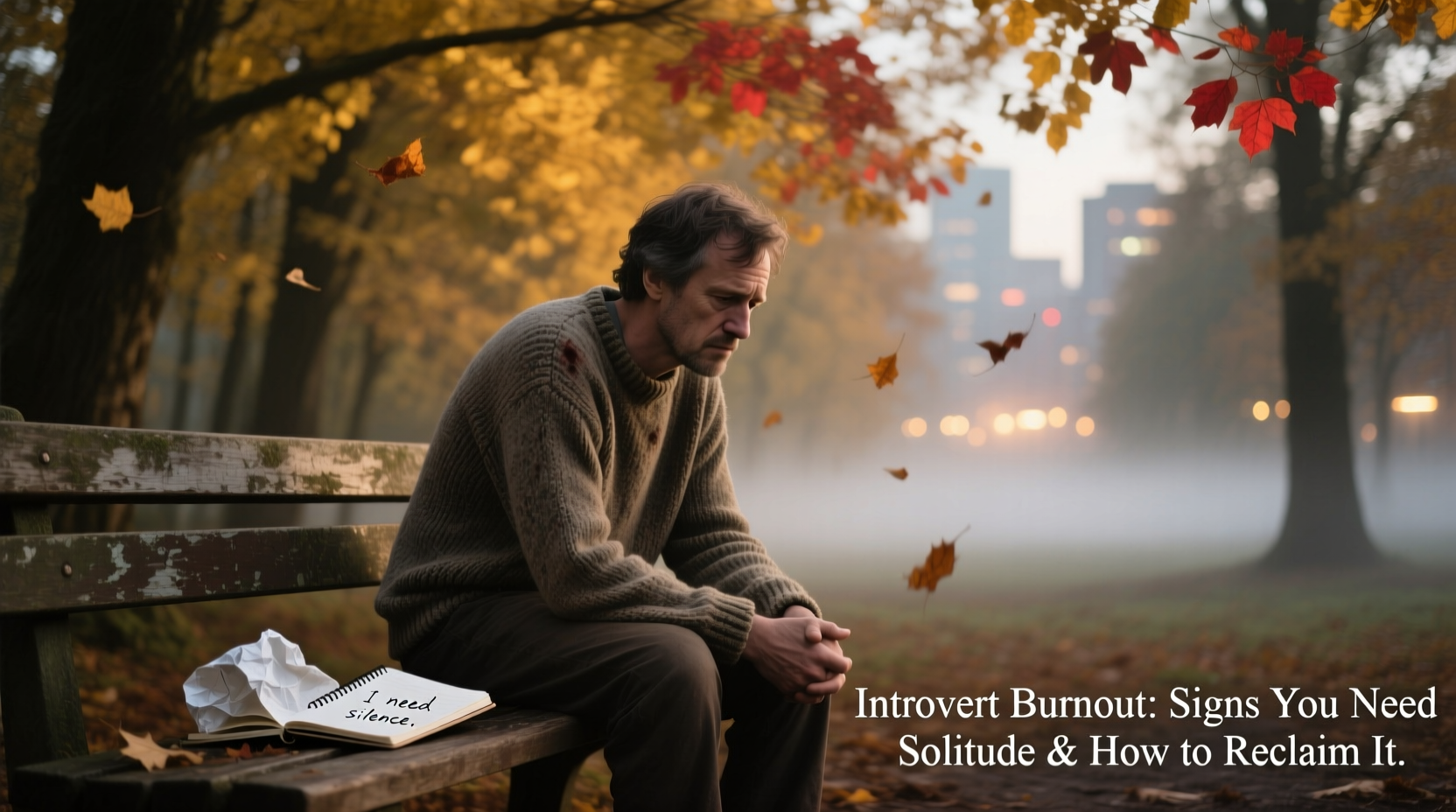
Introverts recharge by turning inward. Their nervous systems are wired to absorb information deeply, process emotions thoroughly, and respond thoughtfully. While extroverts gain energy from external stimulation, introverts deplete their reserves with it. This doesn’t mean introverts dislike people or avoid social life altogether—it means they require more recovery time afterward.
When solitude is consistently sacrificed—whether due to work demands, family obligations, or social expectations—the body and mind send warning signals. These signals are often subtle at first: mild irritability, difficulty concentrating, or a vague sense of being “off.” But left unaddressed, they escalate into full-blown burnout characterized by emotional numbness, physical fatigue, and a deep aversion to interaction—even with loved ones.
“Solitude is not about isolation; it’s about creating space where the self can breathe.” — Dr. Marta Vasquez, Clinical Psychologist & Author of *The Quiet Mind*
Six Key Signs You’re Experiencing Introvert Burnout
Burnout among introverts often goes unrecognized because its symptoms overlap with stress, anxiety, or depression. However, the root cause—prolonged lack of restorative solitude—is distinct. Watch for these six telltale signs:
- Emotional flatness: You feel emotionally drained, unable to muster enthusiasm even for activities you usually enjoy.
- Hyper-sensitivity to noise and light: Everyday sounds (e.g., office chatter, phone notifications) become grating or physically painful.
- Uncharacteristic irritability: Small inconveniences trigger disproportionate frustration or anger.
- Mental fog: Concentration wanes, decision-making feels overwhelming, and creative thinking stalls.
- Social withdrawal: You cancel plans last minute, avoid calls, or feel dread before meetings—even virtual ones.
- Physical symptoms: Headaches, muscle tension, disrupted sleep, or digestive issues without medical explanation.
These signs don’t appear overnight. They accumulate gradually, like water filling a cup. The moment you notice three or more occurring together, it’s time to pause and reassess your need for solitude.
Solitude vs. Isolation: Understanding the Difference
A common misconception is that seeking solitude is antisocial or indicative of depression. In reality, solitude is a proactive, nourishing practice. It’s chosen time alone used for reflection, restoration, and reconnection with oneself. Isolation, by contrast, is involuntary separation often accompanied by feelings of loneliness, shame, or helplessness.
Healthy solitude enhances well-being. It allows the brain to enter default mode network (DMN) activity—linked to creativity, memory consolidation, and self-awareness. Isolation suppresses these functions, increasing cortisol levels and risk of anxiety disorders.
The key difference lies in intention and outcome. If time alone leaves you feeling refreshed and centered, it’s solitude. If it deepens sadness or disconnection, it may be isolation—and professional support could be beneficial.
How to Reclaim Solitude: A Step-by-Step Guide
Reintroducing solitude into a busy life requires planning and boundary-setting. Here’s a practical timeline to rebuild your capacity for restorative alone time.
- Week 1: Audit Your Current Schedule
Map out your week hour by hour. Highlight every social interaction—meetings, calls, family time, commutes. Identify pockets where solitude could realistically fit (e.g., early mornings, lunch breaks, post-dinner wind-down). - Week 2: Start Small with Micro-Solitudes
Begin with 10–15 minutes daily. Sit quietly with tea. Walk without headphones. Journal one page. Protect this time fiercely—even if others don’t understand its importance. - Week 3: Communicate Boundaries Clearly
Inform household members or colleagues: “I need 30 minutes each evening to recharge. I’ll be unavailable unless urgent.” Use phrases like “This helps me show up better for everyone else.” - Week 4: Design a Solitude Ritual
Create a repeatable routine: lighting a candle, reading poetry, sketching, or meditating. Consistency trains the brain to recognize this as sacred downtime. - Month 2+: Expand Gradually
Add longer sessions—half-day retreats monthly, digital detox weekends, or solo nature outings. Treat them as non-negotiable appointments.
Practical Strategies to Protect Your Energy
Reclaiming solitude isn’t just about carving out time—it’s about designing a lifestyle that respects your introverted nature. Consider these actionable approaches:
| Strategy | Do | Avoid |
|---|---|---|
| Social Planning | Limit commitments to 1–2 per week; schedule recovery days after events | Saying yes to everything “to be polite” |
| Work Environment | Use noise-canceling headphones; request quiet workspace zones | Open-office seating without escape options |
| Digital Habits | Turn off non-essential notifications; batch message responses | Constantly checking emails or group chats |
| Family Life | Negotiate quiet hours; use visual cues (e.g., closed door = do not disturb) | Guilt-tripping yourself for needing space |
“Introverts aren’t broken extroverts. They operate on a different rhythm—one that thrives on depth, not volume.” — Susan Cain, Author of *Quiet: The Power of Introverts in a World That Can’t Stop Talking*
Real Example: Maya’s Turnaround After Burnout
Maya, a 34-year-old graphic designer, hit her breaking point after months of back-to-back client calls, team workshops, and networking events. She began waking up exhausted despite eight hours of sleep. Simple design tasks felt impossible. She snapped at her partner over minor issues and canceled coffee dates with friends—then felt guilty for doing so.
After consulting a therapist, she recognized the pattern: her job demanded constant collaboration, but she hadn’t taken a full day off alone in nearly six months. With guidance, she implemented changes:
- She negotiated remote Wednesdays to work in silence.
- She started waking an hour earlier to journal and drink tea before checking devices.
- She blocked Sunday afternoons on her calendar as “creative solitude”—no calls, no chores, just sketching or reading.
Within two months, her focus sharpened, her mood stabilized, and she reported feeling “like myself again.” Her productivity improved—not because she worked more, but because she allowed herself to rest properly.
Checklist: Reclaiming Your Solitude
Use this checklist to assess and improve your current solitude practices:
- ☐ I can identify at least three signs of overstimulation I’ve experienced recently.
- ☐ I have at least one protected solitude window scheduled this week.
- ☐ My household or coworkers know about my need for downtime.
- ☐ I’ve removed at least one recurring drain on my energy (e.g., unsubscribed from group chats, declined low-priority invites).
- ☐ I engage in a daily ritual that supports mental stillness (e.g., meditation, walking, journaling).
- ☐ I treat solitude as essential self-care, not a luxury or indulgence.
Frequently Asked Questions
Isn’t needing so much alone time unhealthy?
Not if it’s chosen and restorative. Everyone has different social thresholds. For introverts, regular solitude is as necessary as sleep or nutrition. Concern arises only if avoidance extends to all human contact or causes distress. When solitude supports functioning rather than hinders it, it’s healthy.
What if my job requires constant interaction?
Even high-contact roles allow for micro-moments of recovery. Use bathroom breaks, lunch periods, or short walks to reset. Advocate for flexible arrangements—many companies now recognize neurodiversity needs. Frame requests around performance: “I focus best after brief mental resets, which helps me deliver higher-quality work.”
Can introvert burnout lead to long-term issues?
Yes. Chronic overstimulation increases risks for anxiety disorders, insomnia, and autoimmune conditions due to prolonged stress response. Early intervention—especially restoring consistent solitude—can prevent escalation and support long-term resilience.
Conclusion: Honor Your Nature, Restore Your Balance
Introvert burnout isn’t a personal failure—it’s a signal. It tells you that your natural rhythm has been disrupted, and your psyche is demanding recalibration. Solitude isn’t escapism; it’s the soil in which introspection, insight, and authenticity grow. By learning to read your body’s warnings and prioritizing restorative alone time, you reclaim not just energy, but identity.
You don’t need to become more extroverted to succeed. You need to honor your wiring. Start small. Protect your mornings. Say no without apology. Let silence speak. In doing so, you won’t just recover—you’ll thrive on your own terms.




 浙公网安备
33010002000092号
浙公网安备
33010002000092号 浙B2-20120091-4
Comments
No comments yet. Why don't you start the discussion?