
The smartphone market evolves quickly, and if you're still using an iPhone 11—released in 2019—you might be wondering whether it's time to upgrade. The Samsung Galaxy S21, launched in early 2021, represents a significant leap in Android flagship design and capability. But does that mean it’s worth switching platforms or spending money now, especially in 2024? For many users, the decision isn’t just about specs—it’s about real-world usability, longevity, ecosystem loyalty, and cost-effectiveness.
This comparison dives deep into key areas including performance, camera quality, software support, battery life, and overall user experience to help you determine whether moving from the iPhone 11 to the Galaxy S21 makes sense today.
Performance and Hardware: A Clear Generational Leap
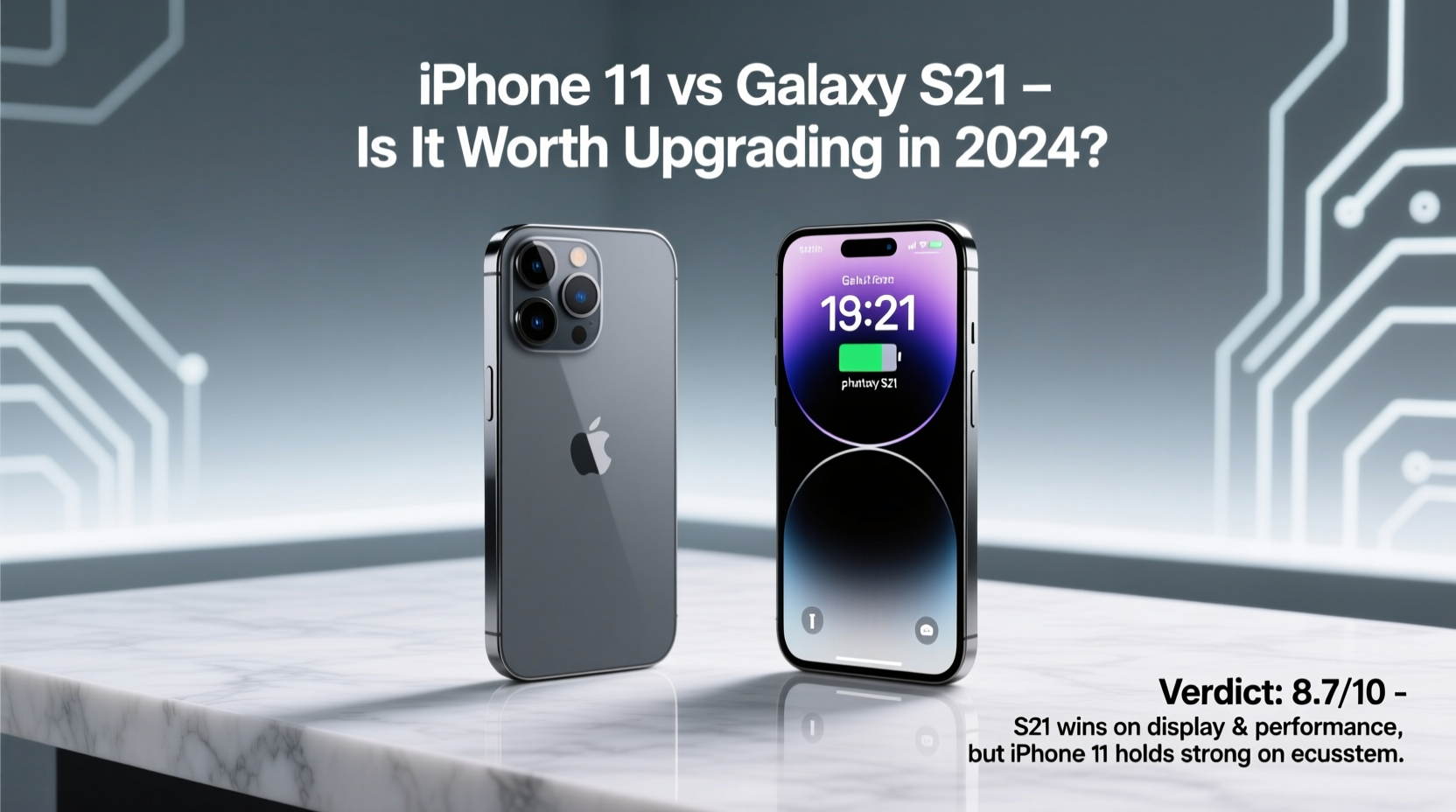
The iPhone 11 runs on Apple’s A13 Bionic chip, which was powerful in its day and still handles daily tasks smoothly. However, by modern standards, it shows its age when multitasking heavily or running graphics-intensive apps and games.
In contrast, the Galaxy S21 is powered by either the Exynos 2100 or Snapdragon 888 (depending on region), both built on more advanced architectures than the A13. While Apple’s chip remains efficient, the S21 offers faster RAM speeds, better GPU performance, and superior handling of high-refresh-rate displays (the S21 supports 120Hz versus the iPhone 11’s fixed 60Hz).
However, iOS optimization means the iPhone 11 still feels responsive for basic tasks like messaging, browsing, and social media. The real difference emerges under sustained load—such as video editing or app switching—where the S21 pulls ahead due to more RAM (8GB vs 4GB) and newer processing technology.
Camera Comparison: Different Strengths, Same Goal
Both phones offer capable camera systems, but they approach photography differently.
The iPhone 11 features a dual-camera setup: a 12MP wide lens and a 12MP ultra-wide. Apple’s computational photography excels in consistency, color accuracy, and dynamic range. Videos are particularly strong, with excellent stabilization and audio capture—ideal for vloggers and casual creators.
The Galaxy S21 ups the ante with a triple-lens system: 12MP wide, 12MP ultra-wide, and a 64MP telephoto with 3x hybrid zoom. This gives the S21 greater versatility, especially for zoomed shots and low-light scenarios where its larger sensor and AI processing shine.
“Samsung’s scene optimizer and night mode algorithms have closed the gap with Apple in recent years, making the S21 a compelling option for mobile photographers.” — David Lin, Mobile Imaging Analyst at TechPulse Weekly
That said, iOS continues to deliver more natural skin tones and consistent HDR balancing. The S21 sometimes oversaturates colors or over-sharpens details, though this can be adjusted manually in Pro mode.
Detailed Feature Comparison
| Feature | iPhone 11 | Galaxy S21 |
|---|---|---|
| Release Year | 2019 | 2021 |
| Processor | A13 Bionic | Exynos 2100 / Snapdragon 888 |
| RAM | 4GB | 8GB |
| Display | 6.1\", LCD, 60Hz | 6.2\", AMOLED, 120Hz |
| Rear Cameras | 12MP Wide + 12MP Ultra-Wide | 12MP Wide + 12MP Ultra-Wide + 64MP Telephoto |
| Front Camera | 12MP | 10MP |
| Battery Capacity | 3,110 mAh | 4,000 mAh |
| Charging | Wired (18W max), Qi Wireless | Wired (25W), Wireless, Reverse Wireless |
| Software Support (as of 2024) | iOS 17 (likely last major update) | Android 14, upgradable to Android 15 (One UI 7) |
| Water Resistance | IP68 (up to 2m for 30 min) | IP68 (up to 1.5m for 30 min) |
Battery Life and Charging: Practical Differences
The iPhone 11 delivers solid all-day battery life for moderate users, lasting around 10–12 hours of screen-on time. The Galaxy S21, despite a slightly larger battery and more power-efficient display tech, sees mixed results due to the energy-hungry 120Hz panel and less optimized background processes in Android.
In real-world usage, both phones last a full day, but the S21 offers faster charging (up to 25W vs Apple’s 18W) and wireless power sharing—a feature absent on iPhones. If you rely on quick top-ups during the day, the S21 has a clear edge.
Software and Long-Term Value in 2024
As of 2024, the iPhone 11 is nearing the end of its software lifecycle. It supports iOS 17, but future updates beyond that are unlikely. This means no new features, reduced app compatibility over time, and potential security risks down the line.
The Galaxy S21, while no longer receiving major OS upgrades after Android 15, still benefits from regular security patches until at least 2025. Samsung also provides longer support for One UI features and Google services integration.
If you value staying current with apps, security, and productivity tools, the S21 offers better longevity—even at this stage. However, if you’re deeply embedded in the Apple ecosystem (iCloud, AirPods, Mac, Apple Watch), switching may introduce friction that outweighs the hardware gains.
Mini Case Study: Sarah’s Upgrade Dilemma
Sarah has used her iPhone 11 since 2019. She loves how seamlessly it works with her MacBook and AirPods. By late 2023, she noticed slower app launches and occasional crashes in newer versions of Instagram and TikTok. Her battery degrades to 82% health, requiring a midday charge.
She considered the Galaxy S21 because of its sharper display, better zoom camera, and faster charging. After testing one at a store, she appreciated the fluid 120Hz screen but missed iMessage and FaceTime integration. Ultimately, she opted for an iPhone 13 instead—balancing improved performance with ecosystem continuity.
Sarah’s story reflects a common trade-off: raw hardware improvements versus seamless ecosystem synergy.
Is Upgrading Worth It? A Step-by-Step Decision Guide
Before making a move, consider these steps:
- Evaluate your current pain points: Is your iPhone 11 lagging, overheating, or failing to hold a charge?
- Assess your usage: Do you need better cameras, faster performance, or longer software support?
- Compare costs: Used Galaxy S21 models sell for $150–$200 in 2024. Is that savings worth platform switching?
- Test the alternative: Visit a retailer to try the S21. Pay attention to display smoothness, weight, and interface feel.
- Consider alternatives: Instead of switching brands, would a newer iPhone (like the 13 or 14) better meet your needs without breaking ecosystem ties?
Frequently Asked Questions
Can the Galaxy S21 last through 2025?
Yes. With Android 15 support and security updates expected into 2025, the S21 remains functional for most users. Performance may degrade slightly over time, but it’s still capable for everyday tasks.
Will my iPhone accessories work with the Galaxy S21?
Most wired headphones and chargers will work via USB-C, but proprietary Apple accessories like MagSafe wallets or Lightning earbuds won’t be compatible. You’ll need to invest in new peripherals.
Is the camera really better on the S21?
In daylight and zoom scenarios, yes. The S21’s telephoto lens and AI enhancements give it an edge. However, for video recording and natural color reproduction, the iPhone 11 still holds up well, especially in portrait mode.
Final Verdict: Who Should Upgrade?
For users frustrated with the iPhone 11’s aging battery, lack of high refresh rate, or limited camera flexibility, the Galaxy S21 offers tangible improvements—at a reasonable price point in the used market. Its modern display, versatile camera system, and extended software support make it a compelling upgrade for Android-curious iPhone users.
However, if you prioritize ecosystem cohesion, reliable long-term iOS updates, or prefer Apple’s more restrained photo processing, sticking with your iPhone 11—or upgrading within the iPhone lineup—may be wiser.
The upgrade is worth it not because the S21 is objectively “better,” but because it serves different needs. In 2024, the decision hinges less on raw power and more on lifestyle fit.




 浙公网安备
33010002000092号
浙公网安备
33010002000092号 浙B2-20120091-4
Comments
No comments yet. Why don't you start the discussion?