
For many iPhone users, the decision to upgrade isn’t just about new features—it’s about real-world value. If you’re still using an iPhone X or even an iPhone XS (commonly mistaken as “X Pro”), you might be wondering whether jumping to the iPhone 11 makes a meaningful difference. At first glance, both devices share similar design language and core functionality, but beneath the surface, Apple made significant upgrades in 2019 that could impact your daily experience.
This isn’t just a spec sheet showdown. It’s about how these phones perform in your pocket, how long they last on a charge, how well they capture memories, and whether the jump is justified for someone already invested in the iPhone ecosystem.
Design and Build: Subtle Shifts, Same Feel
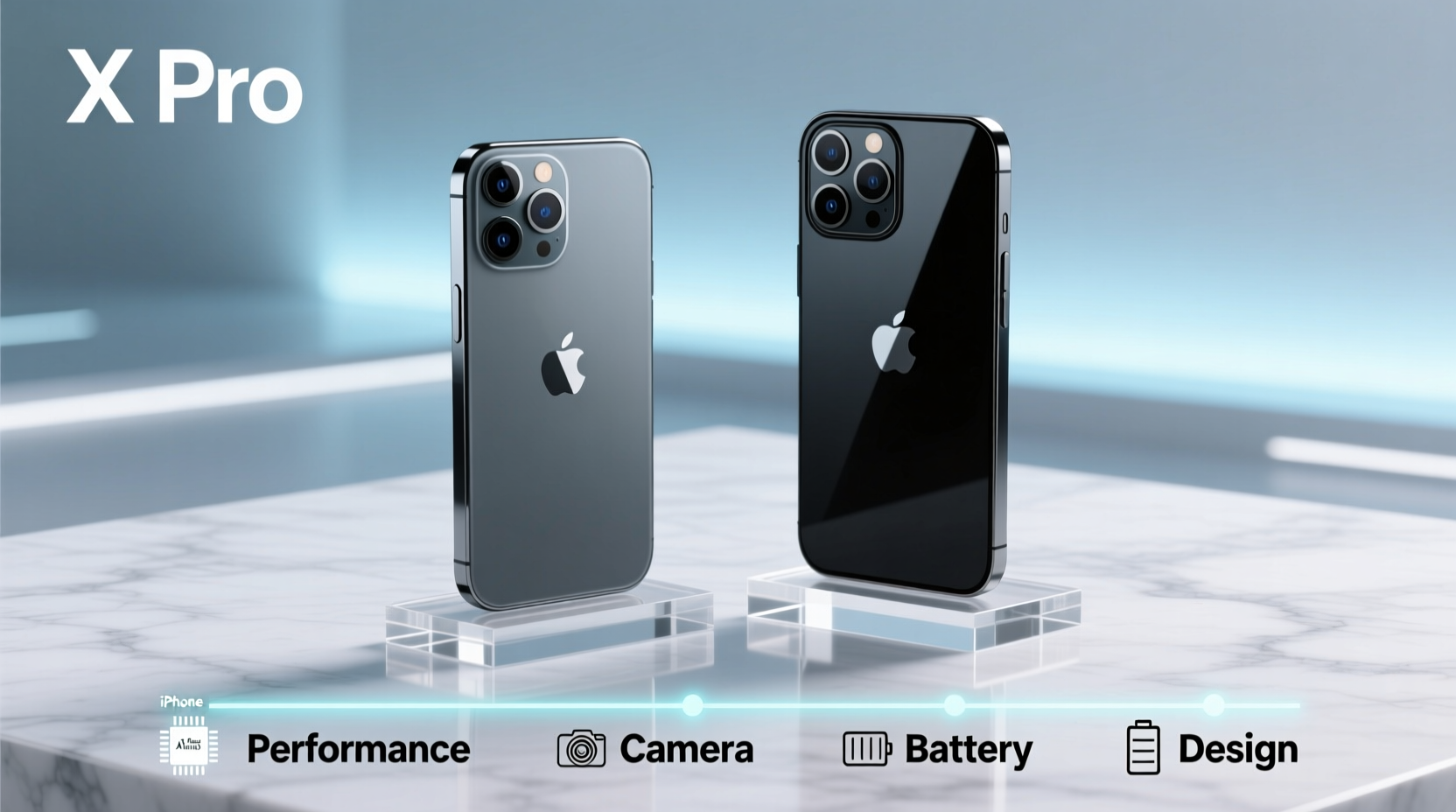
The iPhone X introduced the modern all-screen front with Face ID, eliminating the home button. The iPhone 11 retained this design almost unchanged—same glass-and-stainless-steel build on the XS, versus aluminum on the iPhone 11. That’s one immediate distinction: the iPhone 11 uses a more durable matte glass back but pairs it with an aluminum frame instead of stainless steel, making it slightly lighter and less premium-feeling in hand.
Both have IP68 water resistance, though the iPhone 11 technically improved the rating from 2 meters for 30 minutes (X) to 4 meters (11). In practice, this means marginally better protection against accidental drops in water—but don’t test it intentionally.
Performance: A Generational Leap
Under the hood, the differences become much clearer. The iPhone X runs the A11 Bionic chip; the iPhone 11 uses the A13 Bionic—the same processor found in the iPhone 11 Pro. This isn’t a minor update. The A13 brought roughly 20% faster CPU performance and up to 30% better GPU efficiency over the A11.
What does that mean day-to-day? Apps launch faster, multitasking is smoother, and augmented reality or graphics-heavy games run noticeably better. More importantly, the A13 gives the iPhone 11 stronger long-term software support. As iOS evolves, older chips struggle earlier. By 2025, the A11 in the iPhone X may begin showing its age with app compatibility or sluggishness, while the A13 in the iPhone 11 remains capable.
“Performance isn’t just about speed today—it’s about longevity. Two years down the line, the A13 will still handle updates gracefully.” — David Lin, Mobile Hardware Analyst at TechPulse Insights
Camera Comparison: Night Mode and Dual Lenses
This is where the iPhone 11 pulls ahead decisively. The iPhone X has a single 12MP rear camera with optical image stabilization and portrait mode via software tricks. The iPhone 11 adds a second ultra-wide lens (12MP, f/2.4), giving you more creative control and wider shots without moving backward.
But the bigger advancement is computational photography. The iPhone 11 introduced Night Mode—a game-changer for low-light photos. The X has no such feature. In dim lighting, the 11 automatically activates Night Mode and captures dramatically brighter, clearer images with accurate colors. The difference is night and day—literally.
| Feature | iPhone X | iPhone 11 |
|---|---|---|
| Rear Cameras | 12MP Wide (f/1.8) | 12MP Wide (f/1.8) + 12MP Ultra-Wide (f/2.4) |
| Night Mode | No | Yes |
| Front Camera | 7MP (f/2.2) | 12MP (f/2.2) with 4K video & Slofies |
| Slo-Mo Video | 1080p at 240fps | 1080p at 240fps + extended dynamic range |
| Deep Fusion | No | Yes (enhances texture and detail) |
The front-facing camera also saw a major upgrade. The iPhone 11’s TrueDepth camera shoots 4K video and supports “Slofies”—slow-motion selfies—which became a cultural staple. Plus, better dynamic range and HDR mean more balanced selfies in tricky lighting.
Battery Life: From \"Good\" to \"All-Day Reliable\"
One of the most consistent complaints about the iPhone X was battery life. Rated for around 12–13 hours of mixed use, it often fell short by evening for heavy users. The iPhone 11 improved this significantly, offering up to 17 hours of video playback—roughly 4–5 extra hours of real-world usage.
You can go a full day, including social media, navigation, streaming, and photo-taking, without panicking about finding a charger. This is especially valuable if you travel, commute, or work remotely. While neither phone supports fast charging out of the box (you need a $19 adapter), the iPhone 11 charges slightly faster thanks to internal optimizations.
Real Example: Sarah’s Upgrade Decision
Sarah had been using her iPhone X since 2018. By 2022, she noticed apps like Instagram and Google Maps were lagging, and her battery barely lasted until lunchtime. She considered the iPhone 13 but found a refurbished iPhone 11 for $349. After switching, she immediately noticed her phone didn’t heat up during video calls, her photos looked sharper (especially at concerts), and she only charged every other day. For her, the upgrade wasn’t flashy—but it restored reliability.
Display and Audio: Nearly Identical Experience
Here’s where the two phones are almost indistinguishable. Both use OLED displays with 1125x2436 resolution and excellent color accuracy. The iPhone 11’s screen is rated at 625 nits peak brightness, compared to the X’s 625 nits typical and 1200 nits for HDR. In direct sunlight, the difference is negligible.
Audio quality is equally strong on both: stereo speakers with wide soundstage, great for podcasts and music. Neither has a headphone jack, so AirPods or Bluetooth remain essential.
Checklist: Should You Upgrade?
- ✅ Your iPhone X battery drains before bedtime
- ✅ You take lots of photos, especially in low light
- ✅ Apps feel slower or crash occasionally
- ✅ You want better future-proofing (iOS updates through 2026+)
- ✅ You value dual cameras for travel or creativity
- ❌ You're satisfied with current performance and rarely shoot photos
- ❌ You plan to upgrade again within 12 months
Is It Worth Upgrading? The Verdict
Are the iPhone 11 and iPhone X basically the same? No—they belong to different generations of Apple’s mobile strategy. The iPhone X was revolutionary in design; the iPhone 11 refined that vision with tangible improvements in camera, battery, and processing power.
If you’re clinging to an iPhone X in 2024 or beyond, upgrading to the iPhone 11 delivers measurable benefits. You gain longer battery life, vastly better low-light photography, a second camera lens, and a processor that handles modern apps with ease. It’s not a radical redesign, but it’s a substantial evolution.
However, if you own an iPhone XS or XS Max (Apple’s true “Pro” models from that era), the case weakens. Those phones already had the A12 chip, dual/triple cameras, and stainless steel builds. The leap from XS to 11 is smaller than from X to 11.
Frequently Asked Questions
Can the iPhone 11 run the latest iOS versions smoothly?
Yes. As of iOS 17, the iPhone 11 runs all features without noticeable lag. Apple optimized the OS for A12 and later chips, so performance remains strong. Expect support through at least 2026.
Is the ultra-wide camera on the iPhone 11 useful?
Absolutely. It excels in tight spaces (like indoors), landscapes, architecture, and group photos. While you won’t use it 80% of the time, when you need it, it’s invaluable.
Should I wait for a newer model instead?
If budget allows, consider iPhone 13 or 14 models for better performance, display, and camera systems. But if you're seeking a cost-effective upgrade from the iPhone X, the iPhone 11 offers the best value in its class.
Final Thoughts
The iPhone 11 isn’t just a successor to the iPhone X—it’s a refinement that addresses its predecessor’s biggest weaknesses. For users still on the X, upgrading brings real improvements in battery, camera, and responsiveness. It may not look radically different, but it feels like a new phone in daily use.
Technology shouldn’t just impress—it should serve you better. If your current device is holding you back, even subtly, an upgrade can restore confidence in your tools. The iPhone 11 does exactly that: it doesn’t reinvent the wheel, but it rolls farther and smoother.




 浙公网安备
33010002000092号
浙公网安备
33010002000092号 浙B2-20120091-4
Comments
No comments yet. Why don't you start the discussion?