
The evolution of smartphone design has been marked by subtle yet meaningful shifts in form factor, display size, and ergonomics. When comparing the iPhone 12 and the iPhone X, two pivotal models in Apple’s transition to edge-to-edge displays, one question stands out: does size really matter? While both devices share a nearly identical footprint, small differences in dimensions, weight, screen technology, and build materials translate into distinct user experiences. Understanding these nuances helps clarify whether upgrading or choosing between them is worth it—especially for users who prioritize comfort, portability, or visual immersion.
Design and Physical Dimensions Compared
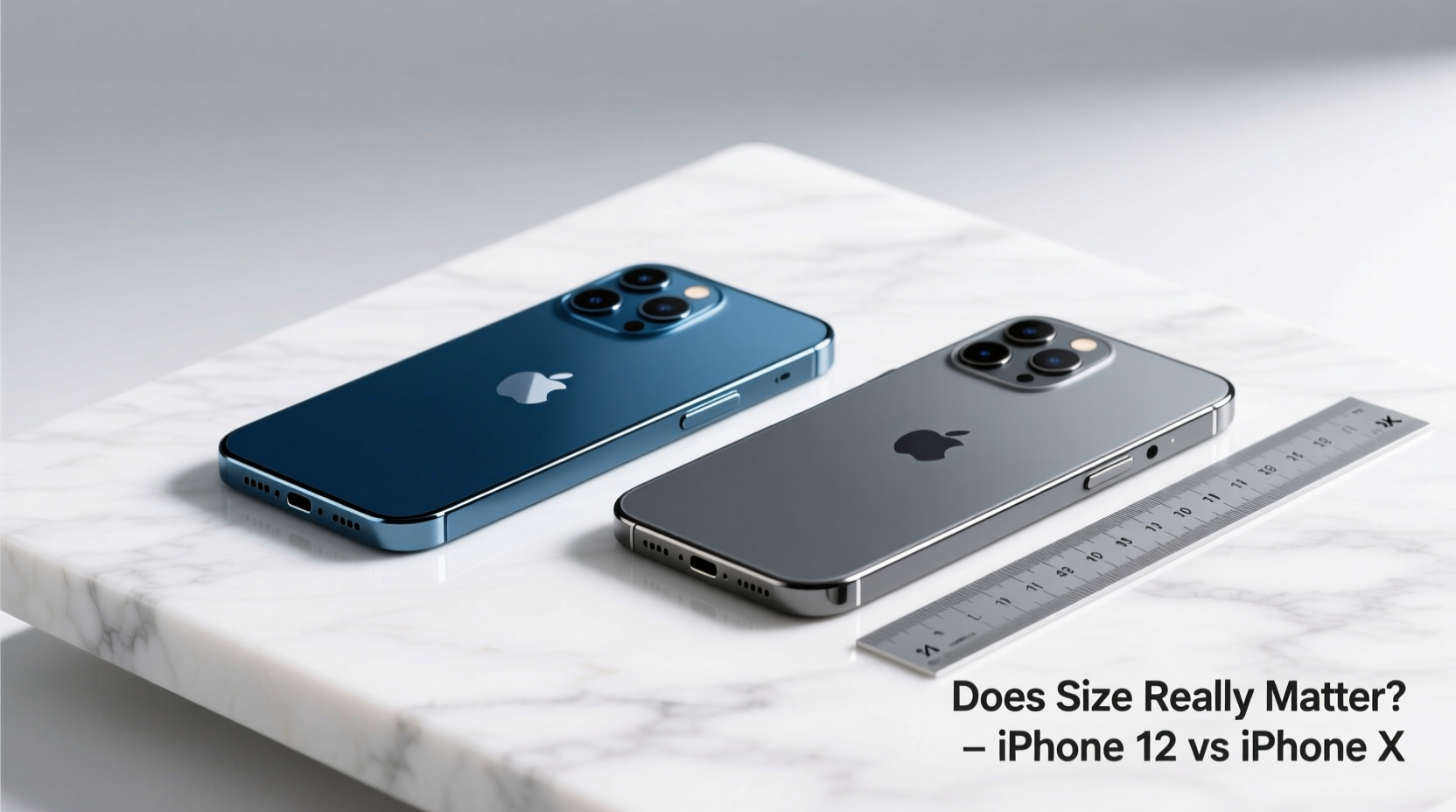
The iPhone X, released in 2017, was Apple’s first smartphone with a Super Retina OLED display and a notch. It set the template for future iPhones with its glass back, stainless steel frame, and Face ID integration. The iPhone 12, launched in 2020, followed a refined version of that same language but introduced a flatter, more angular design reminiscent of the iPhone 4 era.
At first glance, the two phones appear almost indistinguishable in size. However, precise measurements reveal key differences:
| Feature | iPhone X | iPhone 12 |
|---|---|---|
| Height | 143.6 mm (5.65 inches) | 146.7 mm (5.78 inches) |
| Width | 70.9 mm (2.79 inches) | 71.5 mm (2.82 inches) |
| Thickness | 7.7 mm (0.30 inches) | 7.4 mm (0.29 inches) |
| Weight | 174 grams (6.14 oz) | 164 grams (5.78 oz) |
| Display Size | 5.8 inches | 6.1 inches |
| Screen-to-Body Ratio | ~82.4% | ~86.5% |
| Build Material | Glass front/back, stainless steel frame | Glass front/back, aluminum frame |
Despite the iPhone 12 being slightly taller and wider, it’s actually lighter than the iPhone X—a surprising result given its larger display. This is due to the switch from a heavier stainless steel midframe to aerospace-grade aluminum, which reduces overall mass without sacrificing durability.
Display and Usability Impact
The jump from 5.8 to 6.1 inches might seem minor, but in practice, it offers more screen real estate for media consumption, multitasking, and gaming. Both phones use OLED panels with HDR support, delivering deep blacks and vibrant colors. However, the iPhone 12 benefits from improved brightness (up to 1200 nits for HDR) and better outdoor visibility thanks to Apple’s Ceramic Shield front cover, which enhances drop resistance.
The increased screen size on the iPhone 12 comes from thinner bezels and a more optimized layout, not a larger body. This means Apple managed to fit a bigger display into a device that only extends 3.1 mm longer and 0.6 mm wider than the iPhone X—making the upgrade remarkably efficient in terms of space utilization.
“Smartphone design today isn’t just about shrinking devices—it’s about maximizing screen space while maintaining ergonomic balance.” — David Kim, Mobile Design Analyst at TechForm Insights
Real-World User Experience: A Mini Case Study
Consider Sarah, a graphic designer who used her iPhone X daily for sketching, client calls, and social media management. After upgrading to the iPhone 12, she noticed immediate improvements—not because the phone was drastically larger, but because the extra 0.3 inches of screen made a difference when reviewing design mockups or editing photos in Lightroom.
She also appreciated the reduced weight. “My hand used to get tired after long sessions,” she said. “The iPhone 12 feels snappier and lighter, even though it looks similar. I didn’t think 10 grams would matter, but over a day, it really does.”
However, she did mention an adjustment period. The flat edges took some getting used to—her old silicone case hugged curves, whereas the iPhone 12’s corners pressed slightly into her palm. But within a week, she preferred the new design for its modern aesthetic and improved grip when placed on a table.
Ergonomics and One-Handed Use
For many users, especially those with smaller hands, one-handed operation remains a top priority. The iPhone X, with its slightly narrower width and shorter height, still holds an advantage here. Reaching across the screen to access the top-left corner (like pulling down the notification center) is marginally easier.
That said, Apple’s Reachability feature—activated by double-tapping the Home bar (on iPhone X) or the status bar (on iPhone 12)—brings the top of the screen down temporarily, mitigating much of the challenge. Still, physical comfort varies by individual.
- iPhone X: Slightly more compact, ideal for users seeking maximum control in one hand.
- iPhone 12: Larger display with minimal size increase, better for media and productivity.
- Pocketability: Both fit comfortably in most front pockets, though the iPhone 12’s sharper edges may be more noticeable.
Durability and Build Quality Differences
Beyond dimensions, build quality plays a crucial role in long-term satisfaction. The iPhone X’s stainless steel frame resists scratches better but adds weight. In contrast, the iPhone 12’s aluminum frame is lighter and more prone to scuffs, but its flat edges make it less likely to roll off surfaces.
Apple also enhanced drop performance on the iPhone 12 with Ceramic Shield, claiming it offers four times better drop protection than previous models. Independent tests by Consumer Reports and JerryRigEverything support this, showing the iPhone 12 surviving multiple drops onto concrete from waist height with minimal damage.
The iPhone X lacks this reinforcement, relying solely on glass strength. Over time, users reported higher rates of cracked screens after accidental drops—especially from standing height.
Checklist: Choosing Between iPhone 12 and iPhone X Based on Size & Feel
- ✅ Measure your hand span—if under 7 inches, consider trying the iPhone X for better one-handed reach.
- ✅ Prioritize screen size for video, reading, or creative apps? Lean toward iPhone 12.
- ✅ Want a lighter phone for all-day carry? iPhone 12 wins by 10 grams.
- ✅ Concerned about durability? iPhone 12’s Ceramic Shield offers better peace of mind.
- ✅ Already own accessories? Cases and wireless chargers are cross-compatible due to similar footprints.
- ✅ Need 5G? iPhone 12 supports it; iPhone X does not.
Frequently Asked Questions
Can I use my iPhone X case on an iPhone 12?
No, not reliably. Although the dimensions are close, the camera placement, button positioning, and flat vs. curved edges differ enough to cause fit issues. Always use model-specific cases.
Is the iPhone 12 harder to hold than the iPhone X?
Some users find the flat edges of the iPhone 12 less comfortable during prolonged use, especially compared to the smoother curves of the iPhone X. However, others prefer the firmer grip and modern look. Personal preference plays a big role.
Does the larger screen drain the battery faster?
While the iPhone 12 has a bigger display, its A14 Bionic chip is significantly more power-efficient than the iPhone X’s A11. Combined with iOS optimizations, battery life is actually longer on the iPhone 12 despite the screen increase.
Conclusion: Does Size Really Matter?
In the case of the iPhone 12 versus the iPhone X, size matters—but not in the way most expect. The physical footprint is nearly identical, yet Apple managed to deliver a larger, brighter, more durable display in a lighter package. That engineering refinement reflects how far smartphone design has come in just three years.
Ultimately, the choice isn’t just about millimeters or grams. It’s about how the device fits into your life: Do you value compactness over screen space? Are you willing to trade a sleek metal frame for improved drop resistance? For most users, the iPhone 12 represents a meaningful upgrade—not because it’s dramatically bigger, but because it uses every fraction of an inch more efficiently.




 浙公网安备
33010002000092号
浙公网安备
33010002000092号 浙B2-20120091-4
Comments
No comments yet. Why don't you start the discussion?