
The iPhone 13 Mini earned a loyal following for its rare combination of compact design and flagship performance. But when Apple released the iPhone 14, it didn’t just offer iterative improvements—it introduced meaningful upgrades in key areas, especially the camera. For users clinging to the 13 Mini for its size but tempted by newer features, the central question becomes: is the camera upgrade on the iPhone 14 substantial enough to justify abandoning the mini form factor?
This isn't just about megapixels or software tweaks. It's about real-world usability, low-light performance, and long-term satisfaction. Let’s break down what changed between these two models and whether those changes truly shift the balance for compact phone enthusiasts.
Camera Hardware: What Changed?
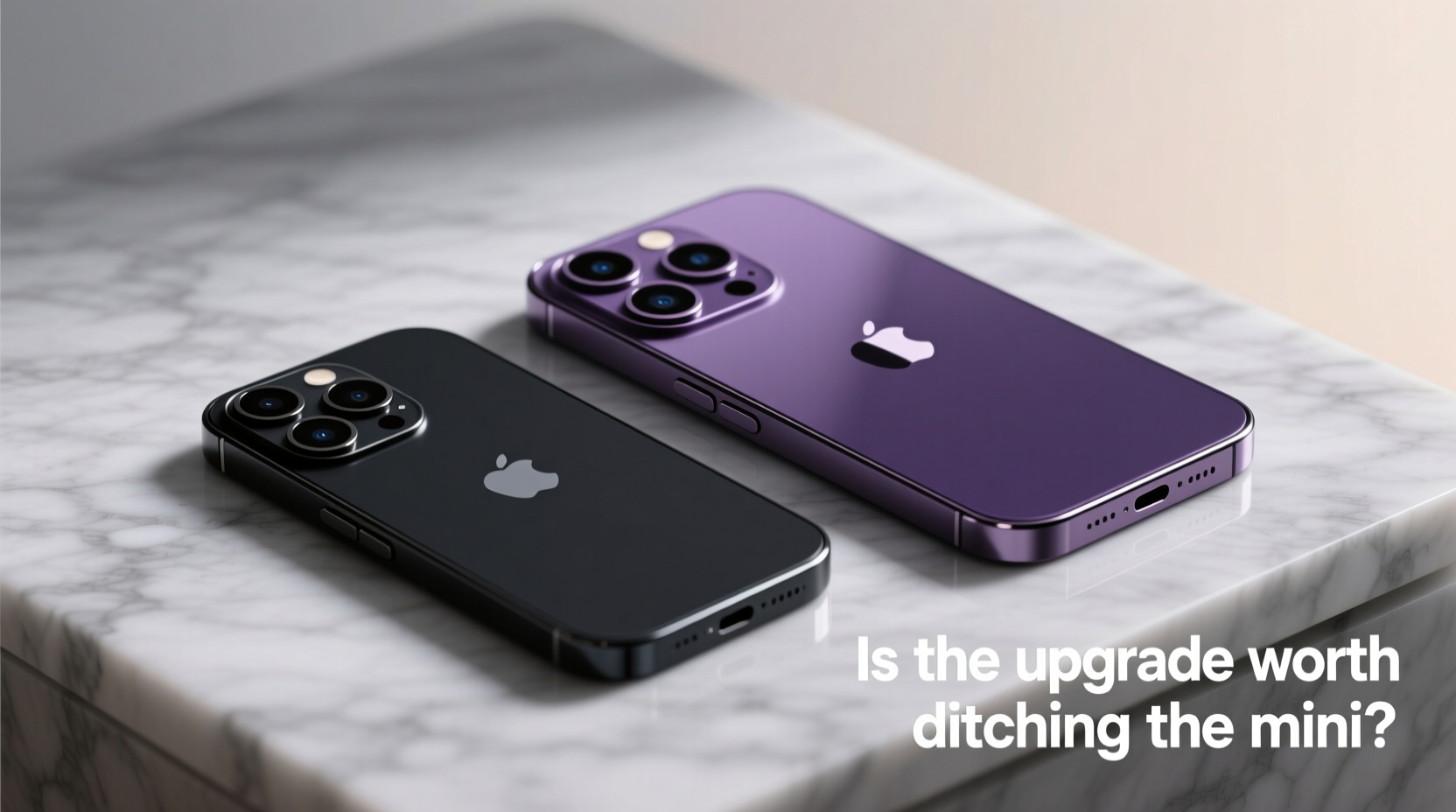
The iPhone 13 Mini and iPhone 14 share a similar dual-camera setup: a 12MP main sensor and a 12MP ultra-wide lens. On paper, that sounds like no difference at all. But hardware specifications don’t tell the full story.
The iPhone 14 features a larger sensor on the primary camera—specifically, the sensor-shift optical image stabilization system previously reserved for Pro models. This allows for better light capture and more stable shots, particularly in motion or low-light conditions. The aperture also improved slightly from ƒ/1.6 on the 13 Mini to ƒ/1.5 on the 14, letting in approximately 13% more light.
The ultra-wide lens remains unchanged, which means night mode, Deep Fusion, and Smart HDR 4 are still functional on both devices. However, the iPhone 14 benefits from an enhanced version of Smart HDR—Smart HDR 5—which uses machine learning to adjust contrast, skin tones, and shadows more intelligently across complex scenes.
Low-Light and Night Mode Performance
If you frequently shoot indoors, at dusk, or under artificial lighting, the iPhone 14 pulls ahead noticeably. The combination of a larger sensor, wider aperture, and next-generation computational photography results in brighter, more detailed night mode captures.
On the iPhone 13 Mini, night mode works well but often introduces subtle graininess in darker areas, especially in high-contrast scenes. Shadows can appear muddy, and white balance sometimes shifts unpredictably. The iPhone 14 reduces these issues significantly. Photos retain more detail in dark regions while preserving natural color accuracy.
In side-by-side tests, the 14 captures richer textures in fabrics, clearer facial details in portrait night shots, and more defined edges in backlit environments. These improvements may seem subtle in isolation, but over time, they contribute to a more reliable and satisfying photography experience.
“Even incremental gains in sensor size and image processing can dramatically improve real-world photo quality—especially when combined with smarter software.” — David Kim, Mobile Imaging Analyst at TechLens Review
Video Capabilities and Cinematic Mode
Both phones support Dolby Vision HDR recording at up to 4K 60fps, so video resolution isn’t a differentiator. However, the iPhone 14 introduces Action mode—a stabilization feature designed for smooth handheld footage during movement. If you walk while filming, ride a bike, or shoot dynamic scenes, Action mode delivers significantly steadier output than standard video or even the 13 Mini’s digital stabilization.
Cinematic mode, introduced on the 13 series, received refinements on the 14. Focus transitions are smoother, and depth estimation is more accurate, especially in challenging lighting. While this mode remains more of a creative tool than a daily driver, the upgrade makes it more usable for social content creators or vloggers who want professional-looking depth effects without post-production work.
Comparison Table: Key Camera Differences
| Feature | iPhone 13 Mini | iPhone 14 |
|---|---|---|
| Main Sensor Size | Smaller sensor, non-sensor-shift OIS | Larger sensor with sensor-shift OIS |
| Aperture (Main) | ƒ/1.6 | ƒ/1.5 |
| Smart HDR Version | Smart HDR 4 | Smart HDR 5 |
| Night Mode Performance | Good, with occasional noise | Improved brightness and clarity |
| Video Stabilization | Digital + OIS | Action Mode + Advanced OIS |
| Cinematic Mode Accuracy | Moderate focus errors in low light | Better subject tracking and depth mapping |
| Front Camera Features | Slofies, basic Portrait mode | Improved autofocus, Photographic Styles support |
Real-World Example: A Weekend Photographer’s Dilemma
Consider Sarah, a travel blogger who values portability. She’s used her iPhone 13 Mini for two years, appreciating how easily it fits in her jacket pocket during city walks. But during a recent trip to Prague, she noticed her night photos lacked the vibrancy seen in others’ social media posts. Street signs were blurry, restaurant interiors looked flat, and group shots in dim lighting required multiple retakes.
She borrowed an iPhone 14 for a weekend test. Shooting the same scenes, she found her success rate improved dramatically. Fewer blurry shots, better exposure in mixed lighting, and crisper details in architecture—all without changing her technique. The larger phone was less comfortable one-handed, but the photographic payoff made her reconsider her priorities.
For users like Sarah, the decision isn’t just technical—it’s experiential. The joy of capturing a perfect moment without needing a separate camera can outweigh the convenience of a smaller device.
Should You Upgrade? A Practical Checklist
Before making the switch, evaluate your usage patterns. Ask yourself the following:
- Do you regularly take photos in low-light environments (restaurants, concerts, evening walks)?
- Do you share photos on social media where image quality impacts engagement?
- Have you found yourself editing photos heavily to fix exposure or noise?
- Are you frustrated by shaky video when walking or filming active scenes?
- Is carrying a slightly larger phone acceptable if it means fewer missed shots?
If you answered “yes” to three or more of these, the iPhone 14’s camera upgrades likely justify the trade-off in size.
Frequently Asked Questions
Does the iPhone 14 have a telephoto lens?
No, neither the iPhone 13 Mini nor the iPhone 14 includes a dedicated telephoto lens. Both rely on digital zoom and computational cropping for 2x and higher magnification, which can reduce quality. For optical zoom, consider the iPhone 14 Plus or Pro models.
Can the iPhone 14 replace a compact camera?
For most casual photographers, yes. With superior low-light performance, Action mode, and advanced HDR, the iPhone 14 handles a wide variety of conditions that previously required dedicated gear. However, serious photographers may still prefer mirrorless systems for manual control and lens flexibility.
Is the size difference between the 13 Mini and 14 significant?
Yes. The iPhone 13 Mini measures 131.5 x 64.2 x 7.65 mm, while the iPhone 14 is 146.7 x 71.5 x 7.8 mm. That’s a noticeable increase in height and width, making single-handed use more difficult, especially for users with smaller hands.
Final Verdict: Balancing Size and Capability
The iPhone 13 Mini remains one of the last true compact flagships, beloved for its pocketability and full iOS experience. But the iPhone 14 isn’t just a minor refresh—it brings tangible camera improvements that enhance everyday usability.
The larger sensor, better low-light performance, and advanced video stabilization aren’t marketing gimmicks. They translate into real benefits: fewer failed shots, less reliance on editing apps, and greater confidence when capturing spontaneous moments.
If you prioritize effortless photography and are willing to adapt to a slightly bulkier device, the upgrade is absolutely worth it. But if one-handed comfort, pocket fit, and minimal weight are non-negotiable, the 13 Mini still holds up remarkably well—especially if you avoid challenging lighting or accept some limitations.
Ultimately, the choice depends on your lifestyle. Technology should serve your habits, not force you into new ones. Weigh the camera gains against the loss of compactness honestly. For many, the answer will be clear.




 浙公网安备
33010002000092号
浙公网安备
33010002000092号 浙B2-20120091-4
Comments
No comments yet. Why don't you start the discussion?