
In 2024, smartphones have evolved into powerful pocket computers capable of handling everything from AI-assisted photography to real-time translation and high-frame-rate gaming. Against this backdrop, using a Galaxy Note 8—released in 2017—might seem like clinging to ancient technology. But for some users, the Note 8 isn’t just nostalgia; it’s still their daily driver. Meanwhile, the iPhone 13 Pro Max, launched in 2021, represents Apple’s commitment to longevity, performance, and ecosystem integration. So, is it truly irrational to stick with a Note 8 today? Let’s break down the realities.
Performance: A Five-Year Gap in Processing Power
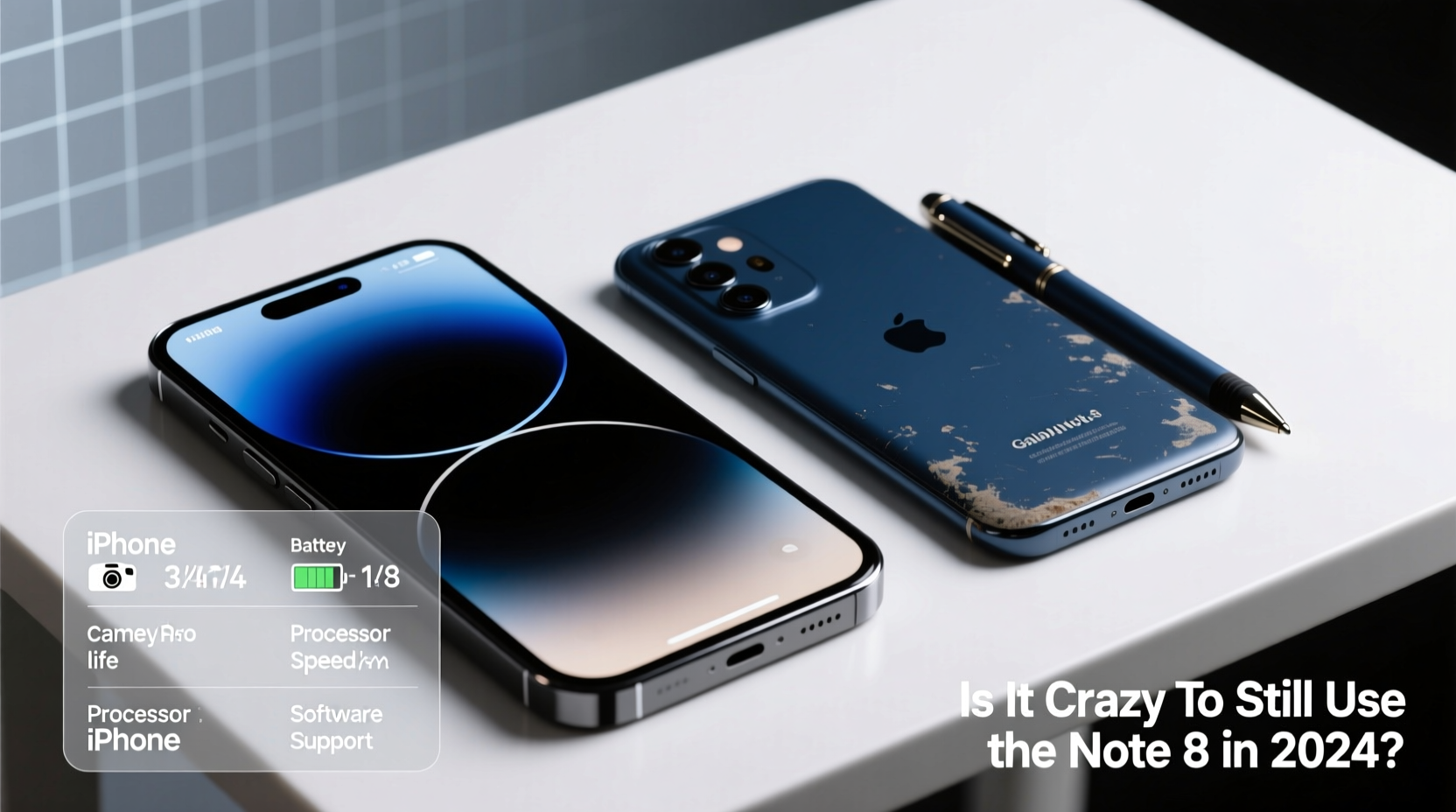
The hardware disparity between these two devices couldn't be starker. The Galaxy Note 8 runs on Qualcomm’s Snapdragon 835 (or Exynos 9810 in some regions), a chipset that was top-tier in 2017 but now struggles with multitasking and modern app demands. It has 6GB of RAM, which was generous at launch, but apps today routinely exceed that baseline for smooth operation.
In contrast, the iPhone 13 Pro Max features Apple’s A15 Bionic chip—a 5-nanometer processor with a 6-core CPU, 5-core GPU, and 16-core Neural Engine. This chip not only outperforms the Note 8 by over 300% in benchmarks but also enables advanced computational photography, AR experiences, and efficient background processing.
| Feature | Galaxy Note 8 | iPhone 13 Pro Max |
|---|---|---|
| Release Year | 2017 | 2021 |
| Processor | Snapdragon 835 / Exynos 9810 | A15 Bionic |
| RAM | 6GB | 6GB |
| Storage Options | 64/128/256GB (expandable) | 128/256/512/1TB (non-expandable) |
| Operating System | Android 7 → Upgradable to Android 9 | iOS 15 → Supported up to iOS 18 (expected) |
Software & Security: The Hidden Cost of Outdated OS
One of the most critical differences lies in software support. Samsung ended major OS updates for the Note 8 with Android 9 (Pie) and stopped security patches years ago. That means no protection against newly discovered vulnerabilities—a serious risk when handling banking apps, messaging, or personal data.
Apple, on the other hand, supports its devices for around five to six years. The iPhone 13 Pro Max will likely receive iOS updates through 2027, including regular security fixes. This long-term support makes a massive difference in safety and usability.
“Using an unsupported phone in 2024 is like driving a car without airbags. It might get you from point A to B, but the risks are far higher.” — Marcus Tran, Mobile Security Analyst at CyberShield Labs
Additionally, many popular apps—including banking platforms, social media, and productivity tools—are dropping support for older Android versions. Users report frequent crashes or outright incompatibility on the Note 8.
Battery Life & Charging: From All-Day to All-Morning
The Note 8 came with a 3,300mAh battery—respectable in 2017—but aging lithium-ion cells degrade over time. After six or seven years, even a well-maintained unit may retain only 60–70% of its original capacity. Fast charging is limited to 15W, and there’s no wireless charging option.
The iPhone 13 Pro Max packs a 4,352mAh battery (Apple doesn’t publish exact figures, but teardowns confirm this), offering up to 28 hours of video playback. It supports 20W wired fast charging, 15W MagSafe wireless charging, and optimized battery management that extends lifespan.
Real-world usage tells the story: a Note 8 user often needs midday charging, while the iPhone 13 Pro Max comfortably lasts a full day—even with heavy use.
Camera Comparison: Night and Day Literally
The Note 8 introduced Samsung’s first dual-camera system: 12MP wide and 12MP telephoto lenses. While it delivered excellent photos for its time, especially in daylight, low-light performance is weak by today’s standards. There’s no night mode, minimal HDR, and no computational photography.
The iPhone 13 Pro Max revolutionized mobile imaging with sensor-shift stabilization, Photographic Styles, Cinematic Mode, and industry-leading Smart HDR 4. Its triple-camera system (wide, ultra-wide, telephoto) captures stunning dynamic range and detail, even in near-darkness. Video recording reaches 4K at 60fps with Dolby Vision HDR—something the Note 8 can’t come close to.
- Note 8: No night mode, basic portrait effects, 4K@30fps video
- iPhone 13 Pro Max: Advanced night mode, deep learning-based bokeh, 4K@60fps with HDR
Real-Life Scenario: Can the Note 8 Still Function?
Meet David, a freelance writer who’s used his Galaxy Note 8 since 2018. He avoids social media, uses basic apps like Gmail and Chrome, and values the S Pen for taking handwritten notes. His phone works—but barely. Apps like Google Docs take 10 seconds to load. WhatsApp occasionally freezes during voice messages. He recently failed to join a Zoom call because the app wouldn’t open.
He upgraded to an iPhone 13 Pro Max and described the shift as “like switching from a bicycle to a sports car.” Tasks that once required patience now happen instantly. Battery life eliminated his anxiety about being away from a charger. Most importantly, he regained trust in his device’s reliability.
David’s experience illustrates a key truth: if your usage is extremely light and you accept limitations, the Note 8 can survive. But for anyone engaging with modern digital life, it’s increasingly impractical.
Checklist: Is Your Note 8 Still Viable in 2024?
Ask yourself the following before deciding to keep your Note 8:
- Do you rely on apps that require frequent updates (e.g., banking, work tools)?
- Have you noticed increased app crashes or slow loading times?
- Is your battery lasting less than half a day?
- Are you concerned about security or privacy risks?
- Do you want to use newer features like FaceTime, AR apps, or high-quality video calls?
If you answered “yes” to three or more, upgrading isn’t just smart—it’s necessary.
Why People Still Hold On—and When It Makes Sense
There’s emotional and practical value in holding onto older devices. Some users appreciate the compact size of the Note 8 compared to today’s oversized phones. Others cherish the physical S Pen slot or dislike iOS. And let’s not forget cost: replacing a phone is expensive.
However, longevity has limits. The average smartphone lifespan is now 4–5 years. Beyond that, diminishing returns set in: slower performance, compatibility issues, and rising repair costs. At seven years old, the Note 8 is well past retirement age.
Frequently Asked Questions
Can I still get the Galaxy Note 8 repaired?
Possible, but difficult. Official parts are no longer supplied, and third-party repairs vary in quality. Screen replacements and battery swaps exist, but expect inconsistent results and potential further instability.
Is the iPhone 13 Pro Max worth the upgrade from Note 8?
For most users, yes. You gain four additional years of performance, five years of software support, vastly superior cameras, and seamless integration with services like iCloud, Apple Watch, and AirPods. The investment pays off in daily usability.
Will my Note 8 stop working completely soon?
It won’t suddenly die, but functionality will continue degrading. App developers may drop support for Android 9, and connectivity issues (Wi-Fi, Bluetooth) could arise due to outdated drivers. Think of it as a gradual decline rather than a sudden failure.
Final Verdict: Is It Crazy?
“Crazy” might be too strong—but continuing to use a Galaxy Note 8 in 2024 is undeniably limiting. It’s like driving a vintage car without modern safety features: possible, even charming, but increasingly risky and inconvenient. The iPhone 13 Pro Max isn’t just faster; it’s more secure, more capable, and built for the way we use phones today.
That said, if your needs are minimal and you understand the trade-offs, there’s no shame in extending a device’s life. But for anyone who relies on their phone for communication, productivity, or creativity, upgrading isn’t indulgence—it’s necessity.




 浙公网安备
33010002000092号
浙公网安备
33010002000092号 浙B2-20120091-4
Comments
No comments yet. Why don't you start the discussion?