
For photographers and videographers who rely on their smartphones daily, upgrading from the iPhone 12 Pro to the iPhone 13 Pro isn’t just about faster processors or longer battery life—it’s about whether the camera delivers tangible improvements in image quality, dynamic range, and usability. While both models represent Apple’s professional-grade lineup, the differences between them reveal a shift in how computational photography has evolved over a single generation. The question remains: does the iPhone 13 Pro offer enough meaningful upgrades to justify replacing a still-excellent iPhone 12 Pro?
Sensor Upgrades and Low-Light Performance
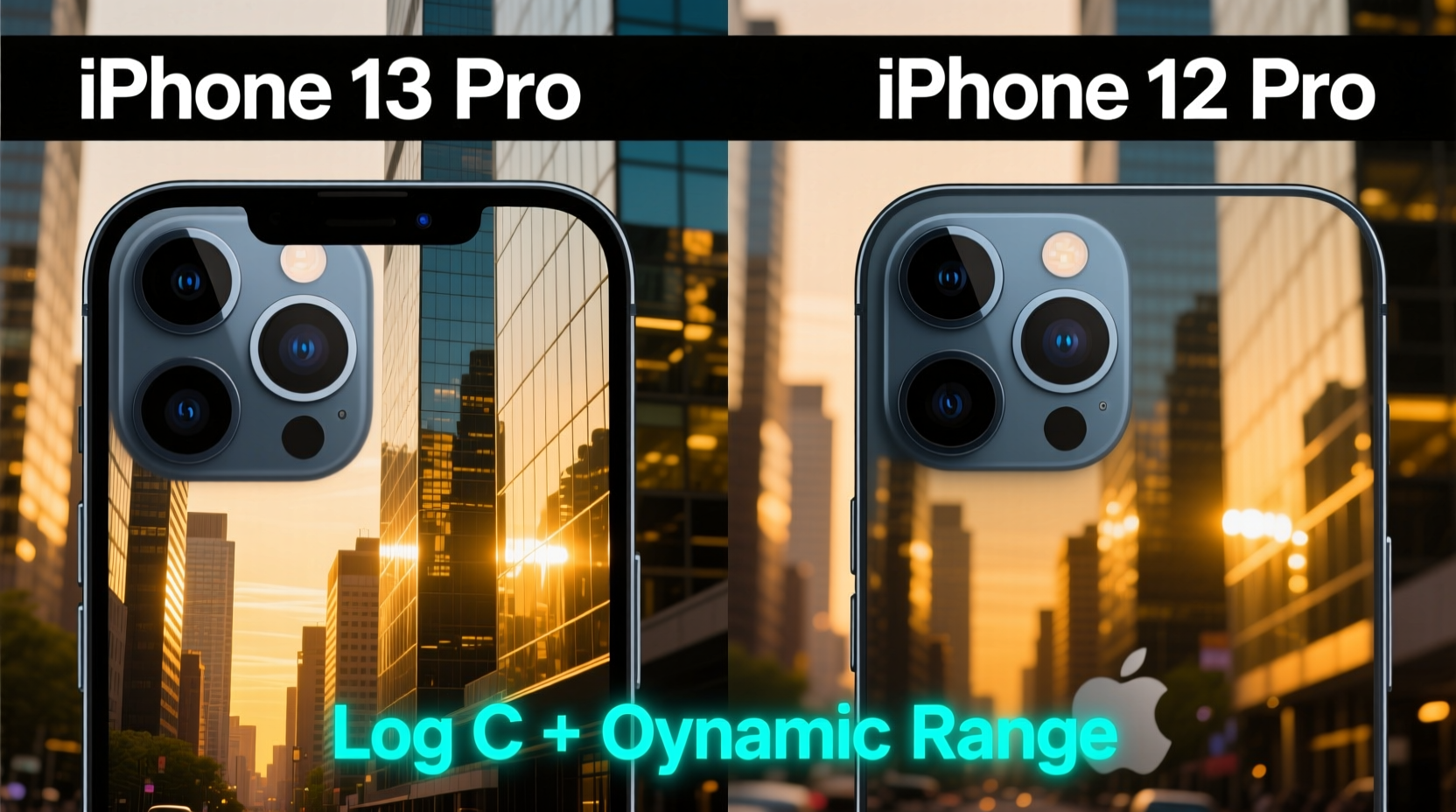
The most significant change in the iPhone 13 Pro’s camera system is the larger main sensor. Apple increased the sensor size by 47% compared to the 12 Pro, allowing more light capture—especially crucial in dim environments. This improvement directly translates into better detail retention, reduced noise, and improved color accuracy in night mode shots.
In practical terms, users will notice that indoor restaurant photos, evening cityscapes, and backlit portraits benefit significantly. The larger sensor works in tandem with Sensor-Shift Optical Image Stabilization (OIS), which was introduced in the 12 Pro but now performs even more effectively due to better hardware alignment and firmware tuning.
Apple also enhanced Smart HDR 4, which now analyzes scenes at the pixel level to balance highlights and shadows more naturally. In high-contrast situations—like shooting against a sunset—the 13 Pro preserves skin tones while recovering details in dark clothing or shadowed areas far better than its predecessor.
Video Capabilities: Cinematic Mode and ProRes
If you shoot video regularly, the iPhone 13 Pro introduces two game-changing features: Cinematic Mode and ProRes recording. Cinematic Mode applies real-time depth mapping to automatically shift focus between subjects, mimicking the behavior of professional film cameras. While it’s not flawless—especially with fast movement—it adds a new creative dimension previously unavailable on iPhones.
More importantly, the addition of ProRes video support gives filmmakers greater flexibility in post-production. With 10-bit color depth and Dolby Vision HDR encoding, the 13 Pro can record footage with up to one billion colors, preserving gradients and minimizing banding during color grading. However, this comes at a cost: ProRes files are large, requiring an external SSD or ample internal storage (256GB+ recommended).
“ProRes on the iPhone 13 Pro brings studio-level color fidelity to mobile creators. It’s not just a gimmick—it’s a legitimate tool for indie filmmakers.” — Daniel Kim, Mobile Cinematography Instructor at NYFA
The iPhone 12 Pro maxes out at 8-bit HEVC recording, limiting its dynamic range and editability. For serious content creators, this difference alone may justify the upgrade.
Zoom and Telephoto Lens Comparison
Both phones feature a triple-camera setup: wide, ultra-wide, and telephoto. The optical zoom specs remain identical—2x optical zoom in, 2x optical zoom out, and up to 10x digital zoom via the zoom interface. However, the 13 Pro improves upon the 12 Pro through software enhancements and tighter lens calibration.
In side-by-side tests, the 13 Pro maintains slightly better edge sharpness when using 3x–5x digital zoom thanks to improved fusion algorithms that combine data from multiple sensors. Additionally, macro photography—a new feature on the 13 Pro—allows focusing as close as 2 cm on the ultra-wide lens, opening possibilities for extreme close-ups of textures, flowers, or product details.
The 12 Pro cannot disable autofocus for macro shots, often resulting in blurry attempts when objects get too near. The 13 Pro automatically switches to macro mode, adjusting exposure and stabilization accordingly.
Detailed Feature Comparison Table
| Feature | iPhone 12 Pro | iPhone 13 Pro |
|---|---|---|
| Main Sensor Size | 1/1.3\" | 1/1.65\" (+47%) |
| Night Mode (All Cameras) | Yes | Yes, improved algorithms |
| Smart HDR Version | Smart HDR 3 | Smart HDR 4 |
| Video Recording (Max) | 4K @ 60fps (8-bit) | 4K @ 60fps (10-bit ProRes optional) |
| Cinematic Mode | No | Yes (1080p @ 30fps) |
| Macro Photography | No | Yes (ultra-wide lens) |
| Battery Impact During Video | Moderate drain | Higher drain (especially with ProRes) |
Real-World Example: Travel Photographer's Experience
Sophia Tran, a travel photographer based in Vancouver, upgraded from the iPhone 12 Pro to the 13 Pro before a trip to Iceland. Her goal was to test low-light performance and dynamic range in extreme conditions—snowy landscapes under overcast skies, dimly lit northern lights camps, and foggy coastal cliffs.
She found that the 13 Pro captured cleaner images in twilight without needing tripod support. “I shot handheld at ISO 800 in near-darkness,” she said. “The amount of usable detail surprised me. I could crop tightly and still print at 11x14 inches.” She also used ProRes for time-lapses of glacier movements, later grading them in DaVinci Resolve. “The color transitions were smooth. No posterization. That’s something I struggled with on my 12 Pro.”
However, she noted that battery life dropped quickly when using ProRes continuously. “I carried two power banks. If you’re doing long-form video work, plan accordingly.”
When the Upgrade Makes Sense: A Practical Checklist
Deciding whether to upgrade depends on your usage patterns. Use this checklist to evaluate your needs:
- ✅ You frequently shoot in low-light environments (restaurants, concerts, outdoors at dusk)
- ✅ You create videos intended for professional editing or social media platforms requiring high dynamic range
- ✅ You value macro photography or want to experiment with cinematic focus transitions
- ✅ You already own accessories like external mics or gimbals and treat your phone as a primary camera
- ✅ You have storage capacity (256GB or more) to handle larger ProRes files
If three or more apply, the upgrade offers measurable benefits. If you mostly take casual snapshots and share directly to Instagram or messaging apps, the 12 Pro still delivers excellent results.
Frequently Asked Questions
Does the iPhone 13 Pro improve front-facing camera quality?
Yes. The TrueDepth camera on the 13 Pro features Sensor-Shift OIS and improved low-light performance. Selfies and FaceTime calls show better clarity and stability, especially in motion or dim rooms. Cinematic Mode also works with the front camera, adding shallow depth-of-field effects during video recording.
Can the iPhone 12 Pro shoot in Dolby Vision?
Yes, both the 12 Pro and 13 Pro can record Dolby Vision HDR video. However, the 13 Pro records in 10-bit color (over 1 billion colors), whereas the 12 Pro uses 8-bit (16 million colors). The wider color gamut and smoother gradients on the 13 Pro make a visible difference in grading scenarios.
Is the telephoto lens better on the 13 Pro?
Optically, no—the lenses are nearly identical. But the 13 Pro applies improved computational photography techniques, such as深度融合 (Deep Fusion) at higher speeds and smarter noise reduction. This results in marginally sharper output when zoomed digitally, particularly in medium-light conditions.
Final Verdict: Is the Camera Upgrade Worth It?
The leap from iPhone 12 Pro to 13 Pro camera isn’t revolutionary, but it’s evolution done right. Apple focused on refining core strengths: light capture, dynamic range, and creative control. Casual users may not perceive dramatic changes in everyday photos. But for enthusiasts, hybrid shooters, and mobile-first creators, the improvements are both noticeable and functional.
The inclusion of ProRes and Cinematic Mode transforms the 13 Pro into a more versatile production tool. Combined with the larger sensor and superior low-light processing, it offers a more consistent, professional-grade experience across stills and video.




 浙公网安备
33010002000092号
浙公网安备
33010002000092号 浙B2-20120091-4
Comments
No comments yet. Why don't you start the discussion?