
When Apple releases a new iPhone, the question isn’t whether it’s better—it almost always is. The real question is whether the improvements justify the cost. For many users, the jump from the iPhone 13 to the iPhone 14 feels subtle at first glance. Both models share nearly identical designs, similar displays, and powerful A-series chips. But beneath the surface, there are meaningful upgrades that could sway your decision—especially if you're still using an older device or want future-proofing. Let’s examine what changed, what stayed the same, and whether spending extra on the iPhone 14 actually delivers tangible benefits.
Design and Build: Nearly Identical, But Not Exactly
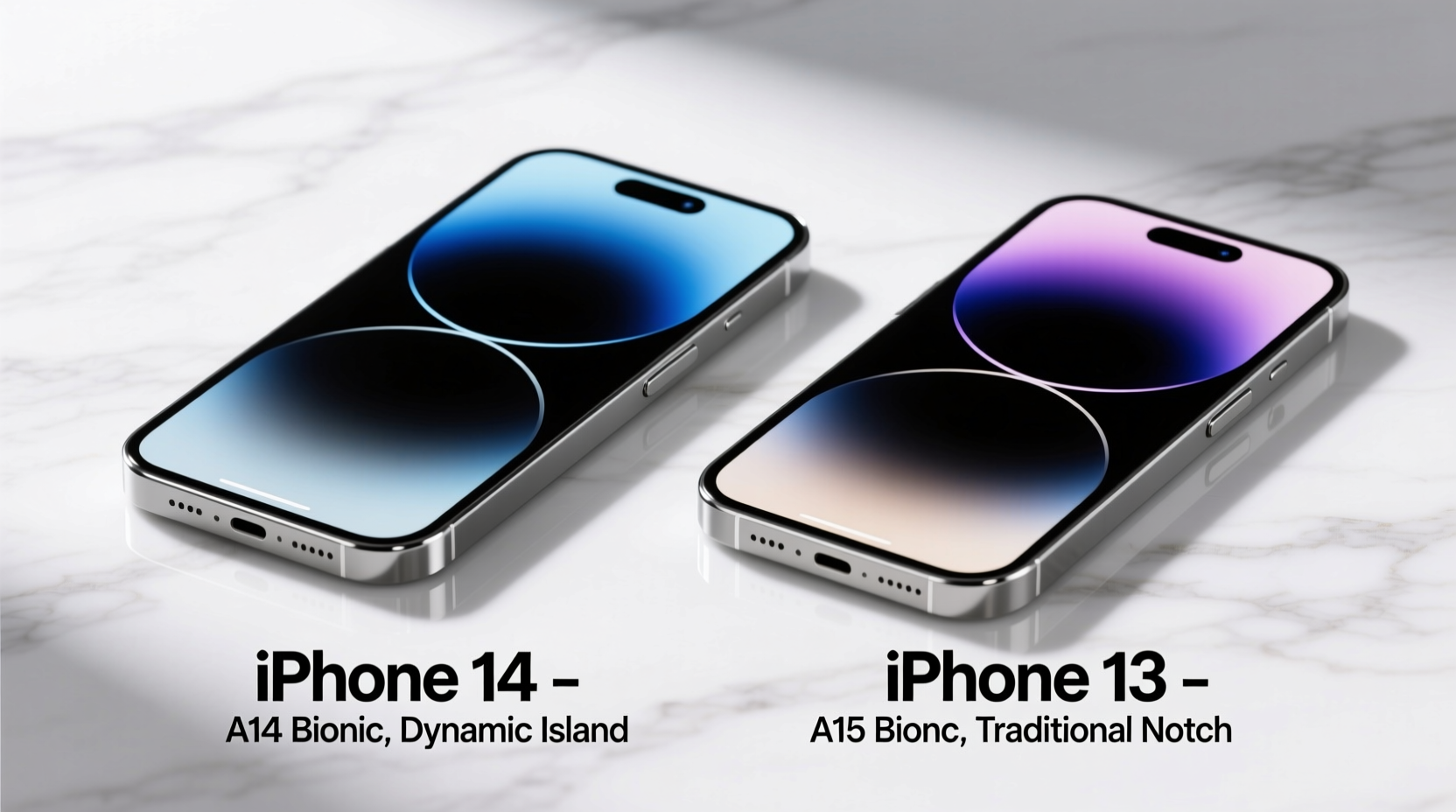
At first sight, the iPhone 14 and iPhone 13 are indistinguishable. Both feature the same flat-edge aluminum frame, glass back, IP68 water resistance, and 6.1-inch Super Retina XDR OLED display with a resolution of 2532 x 1170 pixels. Even the weight differs by just a few grams—174g for the 13 versus 172g for the 14. The notch remains unchanged, and Face ID functions identically across both devices.
However, one subtle but important change is durability. The iPhone 14 uses a slightly improved Ceramic Shield front cover, which Apple claims offers better drop performance. Independent lab tests have shown the 14 survives drops from higher heights with less screen cracking than the 13. While not revolutionary, this small improvement adds peace of mind for users who don’t use cases.
Performance: A15 vs A15 (But Not the Same)
This is where confusion often arises. Both phones use an A15 Bionic chip—but not the same version. The iPhone 13 features the original A15 with 4GB RAM and a 5-core GPU. The iPhone 14 uses a revised A15 with 6GB RAM and a 5-core GPU (same as the Pro models in 2021). While CPU performance is nearly identical, the extra RAM gives the iPhone 14 a slight edge in multitasking and app switching.
In real-world use, most people won’t notice the difference. Apps launch quickly on both devices, and everyday tasks like browsing, messaging, and streaming run smoothly. However, long-term software support favors the iPhone 14. With more memory, it’s better equipped to handle future iOS updates and demanding apps over the next 4–5 years.
“Even minor hardware advantages today can translate into two extra years of usable life tomorrow.” — David Lin, Mobile Systems Analyst at TechForward Insights
Camera Upgrades: More Than Just Megapixels
The camera system is where the iPhone 14 pulls ahead in noticeable ways. Both models have dual 12MP cameras (wide and ultra-wide), but the main sensor on the iPhone 14 is larger and captures 48% more light. This results in significantly better low-light performance and dynamic range.
One standout addition is the **Photonic Engine**, Apple’s computational photography framework introduced with the 14 series. It enhances mid-to-low-light photos before processing, delivering sharper details and more natural colors even in dim environments. Portrait mode now works on pets and objects thanks to improved depth sensing, not just people.
Another major innovation is **Emergency SOS via Satellite**—available only on the iPhone 14 and later. In critical situations where cellular service is unavailable, users can send emergency messages directly to first responders through satellite connectivity. While most will never need it, this feature has already been credited with saving lives in remote areas.
Key Camera Differences Summary
| Feature | iPhone 13 | iPhone 14 |
|---|---|---|
| Main Sensor Size | 1.7µm pixels | Larger sensor, 2.0µm equivalent (via pixel binning) |
| Low-Light Performance | Good | Excellent (Photonic Engine) |
| Portrait Mode Subjects | People only | People, pets, objects |
| Satellite Emergency SOS | No | Yes (free for 2 years) |
| Action Mode Video | Yes | Improved stabilization |
Battery Life and Charging: Incremental Gains
Battery endurance improved slightly on the iPhone 14. Apple lists up to 20 hours of video playback for the 14 compared to 19 hours on the 13. Real-world testing shows about 30–45 minutes more screen-on time under mixed usage—modest, but welcome.
Neither model supports fast charging out of the box (you’ll need a 20W+ adapter sold separately), and both charge at roughly the same speed. Wireless and MagSafe charging remain unchanged. However, the iPhone 14 includes optimized charging algorithms that learn your daily routine and slow down battery wear over time.
Real-World Example: Sarah’s Upgrade Dilemma
Sarah had an iPhone 11 and was considering upgrading. Her phone still worked, but battery life was fading, and some newer apps ran slowly. She hesitated between buying a used iPhone 13 or new iPhone 14, given the $100–$150 price gap.
After testing both in-store, she noticed the iPhone 14 took noticeably better night photos and felt snappier when switching between heavy apps like Instagram, Notes, and Safari. The deciding factor came when she read about Emergency SOS via Satellite. As an avid hiker, the safety feature gave her confidence. She chose the iPhone 14—and six months later, used the satellite feature after losing signal on a trail. Help arrived within 90 minutes.
For Sarah, the upgrade wasn’t just about specs. It was about reliability, safety, and longevity.
Step-by-Step: Should You Upgrade?
Follow this decision-making flow to determine if the iPhone 14 is right for you:
- Assess your current phone: Are you on an iPhone 11 or earlier? If yes, any upgrade brings massive gains in speed, camera, and battery.
- Evaluate your needs: Do you take lots of photos, especially in low light? Is safety during outdoor activities important?
- Consider long-term use: Plan to keep your phone for 4+ years? The iPhone 14’s extra RAM and newer architecture may age better.
- Check pricing: If the iPhone 14 is on sale or available with carrier deals, the value improves significantly.
- Test in person: Visit an Apple Store and compare photo quality, brightness, and responsiveness side by side.
Frequently Asked Questions
Is the iPhone 14 waterproof?
Yes. Like the iPhone 13, the iPhone 14 has an IP68 rating, meaning it can survive submersion in up to 6 meters of water for 30 minutes. However, water resistance diminishes over time and isn't covered under warranty.
Can the iPhone 14 last until 2028?
Potentially, yes. With proper care, regular iOS updates, and optimized battery habits, the iPhone 14 should remain functional and secure through at least 2027–2028. Apple typically provides 5–6 years of OS support.
Do I need to buy the latest iPhone every year?
No. Apple’s ecosystem ensures strong backward compatibility. Many users find 3–4 year upgrade cycles optimal for balancing cost, performance, and innovation.
Final Verdict: Worth It or Not?
If you’re coming from an iPhone 12 or earlier, the iPhone 14 offers clear improvements in camera quality, safety features, and long-term usability. The upgrades are evolutionary, not revolutionary—but evolution matters when it enhances reliability and extends device lifespan.
If you already own an iPhone 13, the case for upgrading weakens. You’d gain better low-light photos, slightly longer battery life, and satellite SOS, but much of the experience remains unchanged. For most iPhone 13 owners, waiting for the iPhone 15 or 16 makes more financial sense.
Ultimately, the iPhone 14 isn’t a must-have for everyone. But for those prioritizing camera quality, safety in emergencies, and future-proofing, it’s a smart investment—not just a new phone, but a more capable tool for everyday life.




 浙公网安备
33010002000092号
浙公网安备
33010002000092号 浙B2-20120091-4
Comments
No comments yet. Why don't you start the discussion?