
If you recently upgraded from an iPhone 13 to an iPhone 15 and noticed a subtle but distinct change in how the phone feels in your hand, you’re not imagining things. Many users report that the iPhone 15 feels noticeably lighter — more balanced, easier to hold for extended periods, and less fatiguing during one-handed use. But is this perception backed by actual specs, or is it just a psychological shift after switching devices? Let’s examine the real weight differences, the engineering behind them, and why even small grams can influence daily usability.
Weight Comparison: iPhone 13 vs iPhone 15
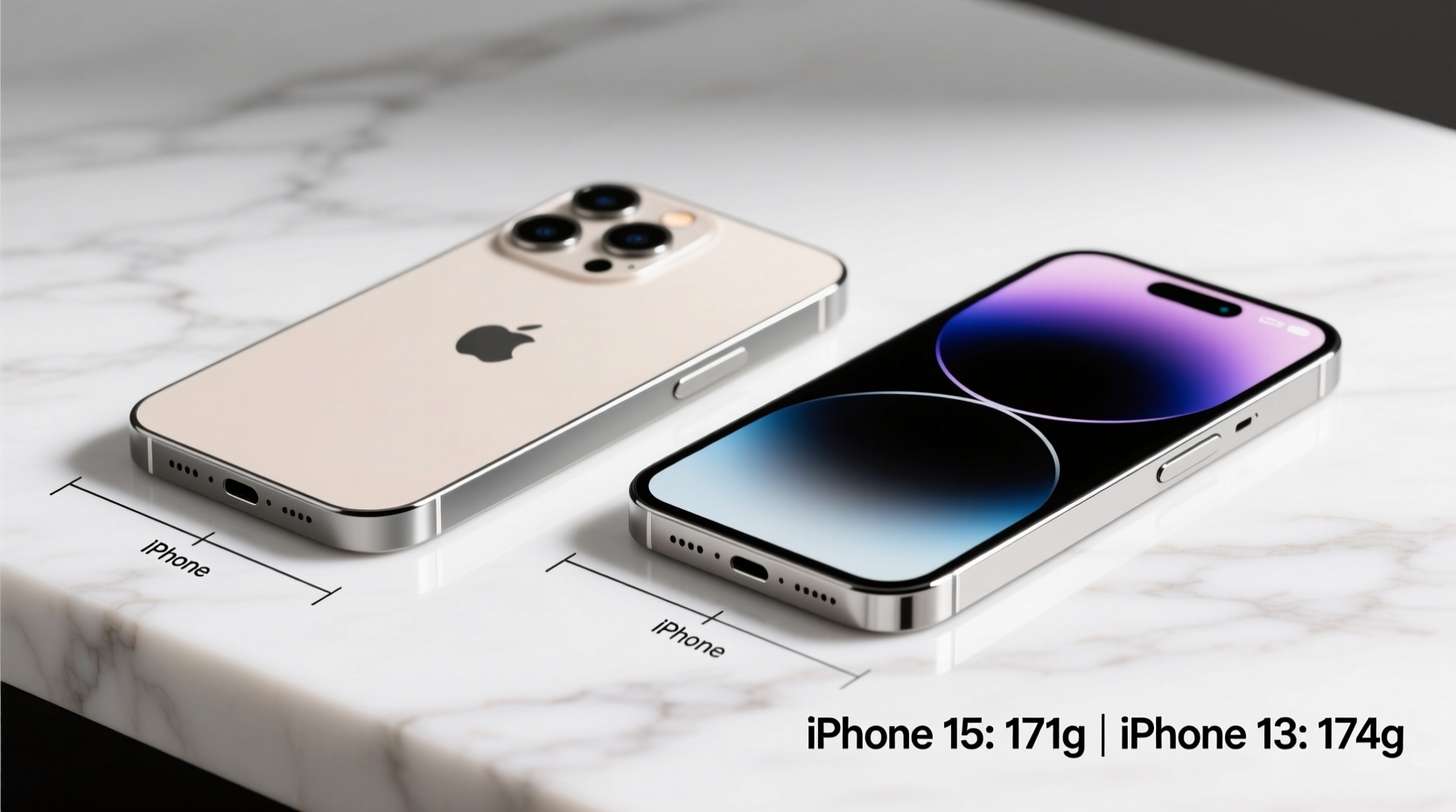
The most straightforward way to answer whether the iPhone 15 is lighter is to compare official Apple specifications. Below is a side-by-side breakdown of the weights across matching models in both generations.
| Model | iPhone 13 Weight | iPhone 15 Weight | Difference |
|---|---|---|---|
| iPhone 13 / iPhone 15 | 174 grams (6.1 oz) | 171 grams (6.0 oz) | –3g |
| iPhone 13 Pro | 204 grams (7.2 oz) | — | — |
| iPhone 13 Pro Max | 240 grams (8.5 oz) | — | — |
| iPhone 15 Plus | — | 201 grams (7.1 oz) | N/A |
| iPhone 15 Pro | — | 187 grams (6.6 oz) | –17g vs 13 Pro |
| iPhone 15 Pro Max | — | 221 grams (7.8 oz) | –19g vs 13 Pro Max |
As the table shows, while the base iPhone 15 is only 3 grams lighter than the iPhone 13, the Pro models show a much more significant reduction. The iPhone 15 Pro Max is nearly 20 grams lighter than its predecessor — equivalent to removing a small spoon or three AAA batteries from the device. That kind of difference isn’t just measurable; it’s palpable.
Why the iPhone 15 Feels Lighter — Beyond the Numbers
Weight alone doesn't tell the whole story. How mass is distributed, the materials used, and design refinements all contribute to perceived lightness. The iPhone 15, especially the Pro variants, benefits from several key changes:
- Titanium frame (Pro models): Replacing stainless steel with aerospace-grade titanium reduces density without sacrificing durability. Titanium is about 46% lighter than steel at comparable strength.
- Thinner bezels and refined ergonomics: The slightly tapered edges and smoother curvature on the 15 series improve grip and reduce pressure points, making the phone feel more compact despite similar dimensions.
- Balanced internal layout: Apple has optimized component placement to centralize weight, minimizing top-heaviness often felt when holding older iPhones vertically.
“Even a 5–10 gram reduction can enhance comfort significantly, especially during prolonged use like video calls or reading. Perceived weight is as important as actual weight.” — Dr. Lena Torres, Human Factors Engineer, UX Device Lab
Real-World Impact: A Mini Case Study
Consider Sarah, a freelance photographer who uses her phone extensively for client communication, editing, and social media posting. She upgraded from an iPhone 13 Pro Max to an iPhone 15 Pro Max and initially dismissed the weight spec as negligible. After two weeks, however, she realized something had changed.
She no longer experienced wrist fatigue after shooting events and reviewing photos on-site. Holding the phone one-handed while adjusting camera settings felt more natural. “It’s not just lighter,” she noted, “it feels like it sits better in my palm. I don’t have to squeeze it as hard to keep it steady.”
This anecdote reflects a broader trend: ergonomic improvements compound over time. Small reductions in weight, combined with better balance, translate into reduced strain — particularly valuable for professionals or heavy users.
Does Weight Difference Really Matter?
On paper, a 3–20 gram difference may seem trivial. But in practical terms, yes — weight matters, especially when considered across thousands of daily interactions. Here’s why:
- Ergonomic comfort: Less weight means less muscle engagement required to hold the phone, reducing long-term strain on fingers, wrists, and forearms.
- One-handed usability: Lighter phones are easier to operate with a single hand, improving accessibility and convenience.
- User retention: Physical comfort influences satisfaction. A phone that feels good to use is more likely to be carried, used, and recommended.
- Perception of quality: Counterintuitively, some users associate slight lightness with modernity and innovation — especially when paired with premium materials like titanium.
That said, there’s a trade-off. Some users miss the “heft” of older models, associating weight with sturdiness. However, advancements in materials science mean today’s lighter phones are often stronger and more durable than their heavier predecessors.
Actionable Checklist: Evaluating Phone Weight & Comfort
When upgrading or comparing smartphones, use this checklist to assess real-world usability beyond marketing specs:
- ✅ Hold both devices for at least one minute each to gauge immediate comfort.
- ✅ Test one-handed reach across the screen — can you comfortably tap the top corners?
- ✅ Simulate common actions: scrolling, typing, taking photos.
- ✅ Pay attention to balance — does the phone tilt forward or feel front-heavy?
- ✅ Consider your usage patterns — do you use your phone while standing, walking, or lying down?
- ✅ Factor in case weight — a bulky case can negate the benefits of a lighter phone.
Frequently Asked Questions
Is the iPhone 15 actually lighter than the iPhone 13?
Yes, though the difference varies by model. The base iPhone 15 is 3 grams lighter than the iPhone 13. The iPhone 15 Pro and Pro Max are significantly lighter — up to 19 grams less — due to the switch to a titanium frame and internal redesign.
Why does the iPhone 15 feel lighter even if the size is similar?
Beyond actual weight, factors like improved weight distribution, thinner bezels, curved edges, and the use of lighter materials (especially titanium in Pro models) contribute to a more balanced and comfortable feel in hand.
Does a lighter phone mean it’s less durable?
Not necessarily. The iPhone 15 Pro models use aerospace-grade titanium, which is both lighter and more corrosion-resistant than the stainless steel used in the iPhone 13 Pro. Durability is maintained through advanced alloys and structural design, not sheer weight.
Final Thoughts: Perception Meets Engineering
The feeling that the iPhone 15 is lighter than the iPhone 13 isn’t just in your head — it’s by design. Apple has made deliberate choices to reduce weight, especially in the Pro lineup, where every gram counts for professionals and power users. While the base model sees only a minor reduction, the cumulative effect of material upgrades, refined ergonomics, and smarter engineering makes the entire 15 series feel more agile and comfortable.
In a world where we spend hours every day interacting with our phones, seemingly minor improvements in weight and balance aren’t just technical footnotes — they’re meaningful enhancements to daily life. Whether you're holding your phone during a commute, capturing memories, or working remotely, that slight reduction in heft adds up to greater comfort, control, and confidence.




 浙公网安备
33010002000092号
浙公网安备
33010002000092号 浙B2-20120091-4
Comments
No comments yet. Why don't you start the discussion?