
In the high-stakes arena of flagship smartphones, few rivalries command as much attention as Apple’s iPhone and Samsung’s Galaxy series. For years, Android loyalists have championed the Galaxy S line for its customization, hardware innovation, and ecosystem flexibility. But with the upcoming iPhone 16 generating intense buzz—and the Galaxy S24 already on the market—questions are emerging: Are long-time Samsung users beginning to waver? Is there a quiet undercurrent of temptation pulling them toward Apple’s latest?
This isn’t just about camera specs or processor speeds. It’s about ecosystem inertia, user experience philosophy, and subtle shifts in consumer sentiment. As both brands push deeper into AI, privacy, and seamless device integration, the lines between platforms are blurring in ways that make switching less daunting than ever before.
The Loyalty Divide: Why Samsung Users Stay (and Why They Might Leave)
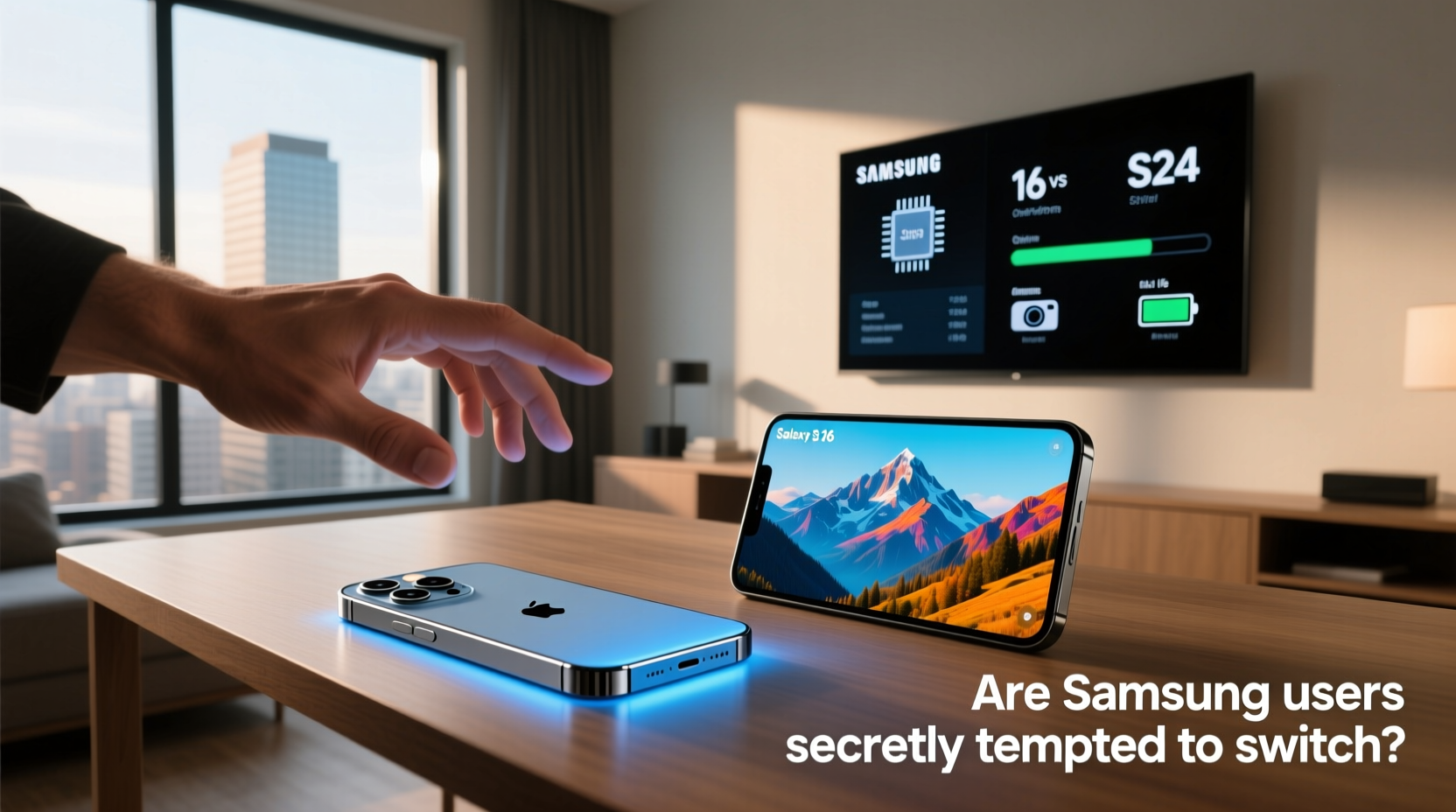
Samsung has built a formidable base of users who value openness, hardware variety, and deep Android customization. From DeX desktop mode to advanced multitasking and extensive file management, the Galaxy S24 offers features that feel tailor-made for power users. Yet, recent trends suggest cracks in this loyalty.
A 2024 Consumer Intelligence Research Partners (CIRP) report noted that iPhone ownership in the U.S. reached 60%, up from 53% just two years prior. While not all switchers come from Samsung, data shows an increasing number of Android-to-iOS migrations, particularly among professionals aged 30–45—many of whom previously used Galaxy flagships.
“There’s a growing perception that iOS offers a more cohesive, secure, and stress-free experience,” says tech analyst Lisa Wang.
“It’s not always about features—it’s about peace of mind. For many users, especially those managing work and personal lives across multiple devices, that simplicity is worth the premium.” — Lisa Wang, Senior Tech Analyst at GadgetInsight
iPhone 16: What’s Driving the Hype?
While official details remain under wraps, leaks and analyst forecasts paint a compelling picture of the iPhone 16. Expected upgrades include:
- A18 Pro chip with dedicated AI neural engine – enabling on-device generative AI features without relying on cloud processing.
- Camera Control Button 2.0 – refined haptic feedback and expanded functionality for photographers.
- Thermal dissipation redesign – addressing overheating issues seen in previous models during intensive tasks.
- Enhanced AR capabilities – rumored to support early spatial computing integrations ahead of the Vision Pro ecosystem expansion.
- USB-C with faster data transfer (USB 3.0) – finally matching Galaxy S24’s connectivity standard.
But beyond hardware, Apple’s strategic focus on AI-driven personalization—such as predictive text, intelligent photo curation, and proactive Siri actions—positions the iPhone 16 as more than a phone. It’s becoming a context-aware assistant embedded in daily life.
Galaxy S24: Strengths That Still Matter
The Galaxy S24, launched earlier in 2024, remains a powerhouse. Its Snapdragon 8 Gen 3 (or Exynos 2400 in select regions), 200MP main sensor, and industry-leading display brightness continue to impress. More importantly, Samsung has doubled down on AI with its Galaxy AI suite, offering real-time call translation, note summarization, and generative photo editing—all without sacrificing user control.
Yet, despite these strengths, some users report fragmentation in the experience. Updates arrive months after Google’s Pixel rollout, and regional variations in chipset performance create inconsistency. Additionally, while One UI is highly customizable, it can feel cluttered compared to iOS’s minimalist design language.
One area where Samsung still leads decisively is hardware versatility. The S24 Ultra supports the S Pen, appeals to creatives and note-takers, and offers expandable storage via microSD in select models. These may be niche advantages, but they matter deeply to specific user groups.
iPhone 16 vs Galaxy S24: Key Feature Comparison
| Feature | iPhone 16 (Expected) | Galaxy S24 |
|---|---|---|
| Processor | A18 Pro (3nm) | Snapdragon 8 Gen 3 / Exynos 2400 |
| Operating System | iOS 18 (AI-focused updates) | Android 14 with One UI 6.1 |
| AI Features | On-device generative AI, enhanced Siri | Galaxy AI: Translate, Edit, Note Assist |
| Camera | 48MP main + upgraded low-light | 200MP main + 5x optical zoom |
| Battery & Charging | ~4,000mAh, 27W wired | 4,000–5,000mAh, 45W fast charging |
| Ecosystem Integration | Tight with Mac, iPad, Apple Watch | Good with Windows, Galaxy Buds, Wearables |
| Customization | Limited (widgets, apps) | High (themes, gestures, DeX) |
Real User Scenario: When Ecosystem Trumps Hardware
Take Mark, a marketing director in Chicago. He used a Galaxy S23 Ultra for two years—loving the S Pen for brainstorming and the dual-SIM support for international travel. But when his company issued MacBooks to all senior staff, the friction became undeniable. File transfers were clunky, AirDrop didn’t exist, and iMessage group chats excluded him.
After testing an iPhone 15 Pro during a colleague’s vacation, he was struck by how seamlessly everything worked—Handoff, Universal Clipboard, FaceTime integration. “I didn’t realize how much mental energy I was spending juggling ecosystems,” he recalls. “Switching to iOS felt like removing static from my day.”
Mark hasn’t bought the iPhone 16 yet, but he’s pre-ordered it. His story reflects a broader trend: as Apple tightens cross-device synergy, professionals are increasingly valuing cohesion over standalone hardware prowess.
Checklist: Are You Ready to Switch from Galaxy to iPhone?
Before making the leap, consider these key steps:
- ✅ Audit your current apps: Identify Android-exclusive tools you rely on.
- ✅ Backup your data: Use Samsung Cloud or Google Drive for contacts, photos, and messages.
- ✅ Test iCloud: Create an account and sync a few files to gauge usability.
- ✅ Evaluate messaging needs: Understand the social cost of leaving SMS/Google Messages for iMessage.
- ✅ Try Sidecar or Continuity: If using a Mac, test how well your Galaxy integrates now.
- ✅ Check carrier compatibility: Ensure iPhone 16 supports your network bands (especially for mmWave 5G).
- ✅ Plan for app re-purchases: Some apps aren’t cross-platform or require rebuying.
The Role of Privacy and Longevity
Another quiet motivator for switching is perceived longevity. Apple promises five years of OS updates for iPhones; Samsung guarantees seven—but in practice, feature drops often lag. An iPhone 16 could run iOS 23 in 2029; a Galaxy S24 may stop receiving major upgrades by 2027.
Privacy also plays a role. While both companies tout security, Apple’s ad tracking restrictions and on-device processing resonate with users wary of data harvesting. A Pew Research study found that 68% of iPhone users cited “data protection” as a primary reason for brand preference, versus 52% of Android users.
Frequently Asked Questions
Can I transfer my data easily from Galaxy S24 to iPhone 16?
Yes. Apple’s “Move to iOS” app allows seamless transfer of contacts, messages, photos, calendars, and even WhatsApp chats over Wi-Fi. Just follow the setup prompts when activating your new iPhone.
Will I lose customization options switching to iPhone?
Significantly. While iOS 18 introduces improved widgets and app organization, it still lacks the level of UI control offered by One UI—such as icon packs, system-wide dark mode scheduling, or gesture remapping. This trade-off is central to the decision.
Is the iPhone 16 worth waiting for if I already own a Galaxy S24?
If you value AI integration, ecosystem unity, or plan to use an Apple Watch or Vision Pro, yes. But if you prioritize raw hardware flexibility, S Pen functionality, or fast charging, the S24 remains competitive. Wait for real-world reviews post-launch.
Conclusion: Temptation Is Real—But So Is Choice
The idea that Samsung users are “secretly tempted” to switch isn’t mere speculation—it’s supported by shifting usage patterns, ecosystem pressures, and evolving priorities. The iPhone 16 isn’t just another upgrade; it represents a vision of integrated, AI-augmented living that appeals to users tired of digital friction.
That said, Samsung still offers unmatched versatility for those who want control. The decision isn’t about which phone is objectively better, but which philosophy aligns with your lifestyle.




 浙公网安备
33010002000092号
浙公网安备
33010002000092号 浙B2-20120091-4
Comments
No comments yet. Why don't you start the discussion?