
For millions still holding onto an iPhone 6, the idea of upgrading to a modern flagship like the iPhone 12 Pro Max might feel both exciting and unnecessary. After all, the iPhone 6 still powers on, makes calls, and opens WhatsApp—so why spend hundreds now? But beneath that basic functionality lies a chasm of technological progress. In 2024, the gap between these two devices isn’t just about newer features; it’s about security, usability, longevity, and access to the digital world as it exists today.
The iPhone 6 was revolutionary in 2014. It introduced a larger screen, refined design, and iOS 8—all of which defined Apple’s direction for years. But nearly a decade later, its hardware struggles with modern apps, multitasking, and even essential updates. The iPhone 12 Pro Max, released in late 2020, remains capable in 2024, supporting the latest iOS versions, offering advanced cameras, 5G connectivity, and robust performance. So, is making the leap from iPhone 6 to iPhone 12 Pro Max worth it? The answer depends on your needs—but the evidence strongly leans toward yes.
Performance and Software: A Generational Leap
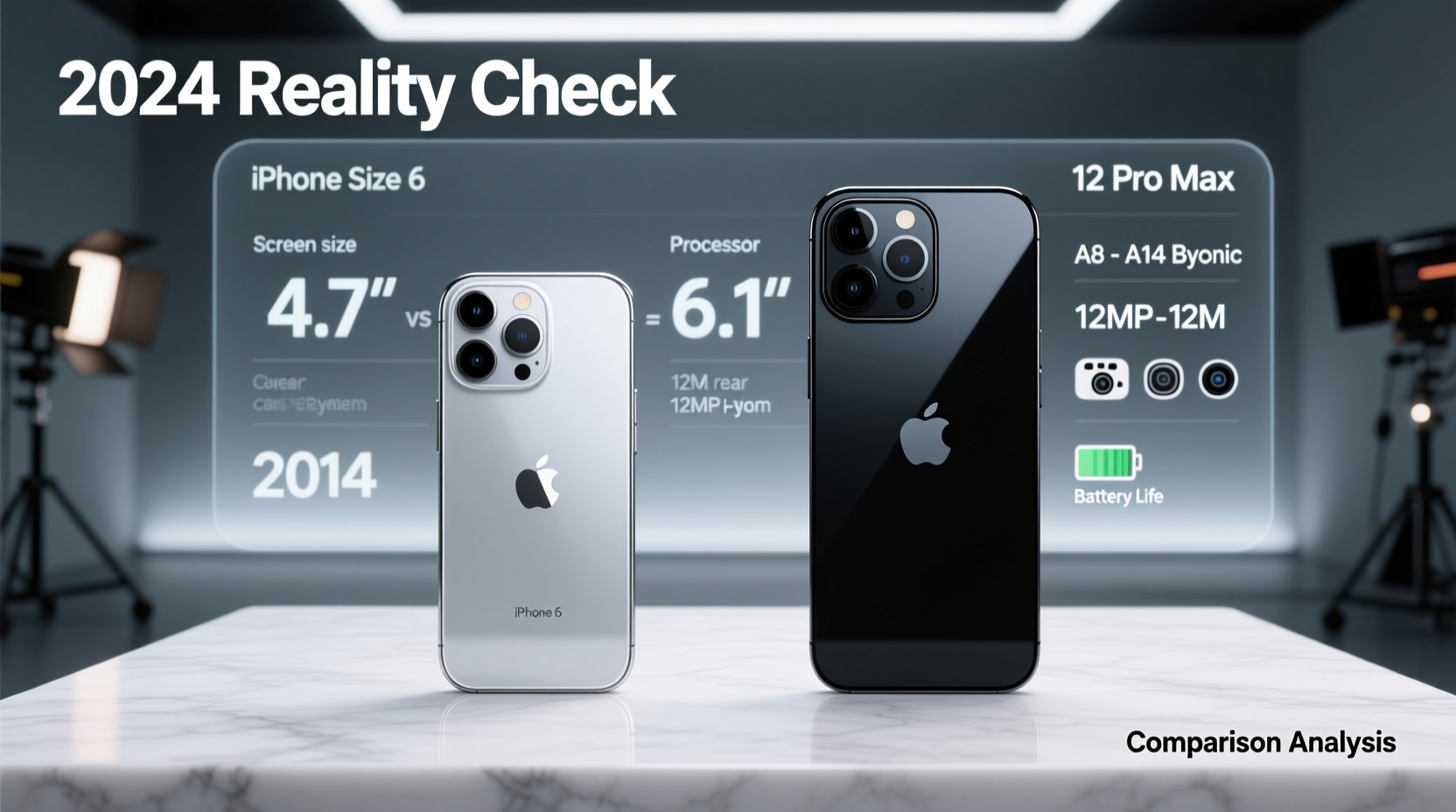
The core difference between the iPhone 6 and the iPhone 12 Pro Max lies in processing power and software support. The iPhone 6 runs on Apple’s A8 chip, a 1.4 GHz dual-core processor with 1GB of RAM. By today’s standards, this is severely underpowered. Even lightweight apps like Google Maps or Instagram load slowly, and multitasking often results in app reloads.
In contrast, the iPhone 12 Pro Max uses the A14 Bionic chip—Apple’s first 5nm processor at the time—with a six-core CPU, four-core GPU, and 6GB of RAM. This allows smooth operation of demanding applications, augmented reality experiences, and even mobile gaming at high settings. More importantly, the A14 supports iOS 17 and will likely receive updates into 2025, ensuring long-term security and compatibility.
Apple officially ended major iOS updates for the iPhone 6 with iOS 12. While it received minor security patches afterward, it no longer supports modern features like App Tracking Transparency, improved privacy permissions, or Face ID integration. Apps are increasingly optimized for newer hardware, meaning many no longer function properly—or won’t install at all—on older devices.
Camera Quality: Night and Day Difference
Photography has evolved dramatically since 2014. The iPhone 6 features an 8MP rear camera with no optical image stabilization (OIS), slow autofocus, and poor low-light performance. Video tops out at 1080p at 30fps. Compare that to the iPhone 12 Pro Max’s triple-lens system: 12MP wide, ultra-wide, and telephoto lenses, sensor-shift OIS, Night mode, Deep Fusion, and Dolby Vision HDR video recording at 4K/60fps.
In practical terms, this means photos taken in daylight are sharper and more detailed, while low-light shots are usable without a tripod. Portrait mode, introduced years after the iPhone 6, gives depth control and studio-quality lighting effects. For anyone who shares moments on social media, texts photos to family, or values memory preservation, the camera upgrade alone justifies the switch.
“Smartphone photography today is less about megapixels and more about computational imaging. The iPhone 12 Pro Max processes multiple frames in real time to deliver clarity the iPhone 6 simply can’t match.” — David Lin, Mobile Imaging Analyst at TechSight Review
Battery Life and Charging: From Frustration to Freedom
The iPhone 6 has a 1,810 mAh battery, which in 2024 typically lasts half a day with moderate use—even less if the battery has degraded over time (as most have). Fast charging wasn’t supported, and wireless charging required third-party accessories.
The iPhone 12 Pro Max packs a 3,687 mAh battery and delivers up to 20 hours of video playback. With optimized background activity and better efficiency from the A14 chip, users commonly get through a full day—and sometimes two—with mixed usage. It supports 20W fast charging and MagSafe wireless charging, allowing effortless top-ups without cables.
Design and Display: Modern Usability Matters
The iPhone 6’s 4.7-inch Retina HD display, while sharp for its time, feels cramped by today’s standards. With a resolution of 1334x750 and no true fullscreen experience, scrolling through websites, reading emails, or watching videos requires constant zooming and panning.
The iPhone 12 Pro Max boasts a 6.7-inch Super Retina XDR OLED display with 2778x1284 resolution, HDR support, and Ceramic Shield front cover for improved drop resistance. The larger screen enhances readability, reduces eye strain, and supports dynamic island-style interactions (though not technically Dynamic Island). Its flat edges return to a design reminiscent of the iPhone 6, but with modern materials and durability.
Additionally, the shift from Touch ID to Face ID brings faster, more secure authentication. In 2024, biometric security is essential for banking apps, password managers, and encrypted services—all of which expect facial recognition or modern fingerprint systems.
Detailed Comparison Table: iPhone 6 vs iPhone 12 Pro Max
| Feature | iPhone 6 | iPhone 12 Pro Max |
|---|---|---|
| Release Year | 2014 | 2020 |
| Chipset | A8 | A14 Bionic |
| RAM | 1GB | 6GB |
| Storage Options | 16/32/64/128GB | 128/256/512GB |
| Rear Camera | 8MP, f/2.2, no OIS | 12MP triple system, OIS, Night mode |
| Front Camera | 1.2MP | 12MP, TrueDepth, Night mode |
| Display | 4.7\" LCD, 1334x750 | 6.7\" OLED, 2778x1284 |
| Battery Life | ~10 hrs mixed use (new) | ~18–20 hrs mixed use |
| Charging | Lightsaber (slow) | Fast + Wireless + MagSafe |
| Network | 4G LTE | 5G (mmWave & Sub-6) |
| iOS Support (2024) | No updates beyond iOS 12 | Supports iOS 17, likely until 2025+ |
Real-World Example: Sarah’s Upgrade Journey
Sarah, a teacher from Portland, used her iPhone 6 daily for six years. She relied on it for grading, messaging parents, and taking student photos. By 2023, she noticed her phone freezing during Zoom calls, failing to upload assignments, and shutting down unexpectedly. Her school adopted a new LMS platform that required iOS 14—her phone couldn’t update.
She upgraded to a used iPhone 12 Pro Max in early 2024. The change was immediate: apps opened instantly, video calls were stable, and she could edit and share high-quality classroom videos. “It felt like I finally caught up with everyone else,” she said. “I didn’t realize how much I was missing until I had a phone that kept up.”
Is the Upgrade Worth It in 2024? Checklist
Ask yourself these questions before deciding:
- Can your iPhone 6 install iOS 15 or later? (If not, security is compromised.)
- Do apps frequently crash or reload when switching between them?
- Is your battery life less than 4–5 hours under normal use?
- Have you experienced difficulty using modern services like mobile banking, ride-sharing, or delivery apps?
- Are you unable to take clear photos or record stable videos?
If you answered “yes” to two or more, the upgrade is not just worthwhile—it’s necessary for staying connected and secure.
Frequently Asked Questions
Can I still use my iPhone 6 in 2024?
Yes, for basic tasks like calling, texting, and using offline apps. However, many modern apps no longer support iOS 12 or earlier, and security vulnerabilities remain unpatched. Using it for sensitive activities like online banking is risky.
Should I buy a new or used iPhone 12 Pro Max?
A certified refurbished model from Apple or a trusted retailer offers significant savings (often $400–$600) while including warranty and battery health guarantees. Given that the device launched in 2020, used units vary widely in condition—always check battery cycle count and activation lock status.
Will the iPhone 12 Pro Max get iOS 18?
While Apple hasn’t confirmed support yet, historical patterns suggest the A14 chip will likely support iOS 18, expected in fall 2024. This would extend its usable life into 2026, making it a smart long-term investment compared to the obsolete iPhone 6.
Final Verdict: Yes, the Upgrade Is Worth It
Moving from the iPhone 6 to the iPhone 12 Pro Max in 2024 isn’t just an upgrade—it’s a reintroduction to the modern smartphone experience. You gain reliability, security, photographic capability, and seamless integration with today’s digital ecosystem. The cost may seem steep initially, but when weighed against daily frustration, lost productivity, and security risks, the value becomes clear.
Technology evolves, and so do our expectations. The iPhone 6 served its generation well, but it’s time to let go. Whether you choose the 12 Pro Max or another modern alternative, stepping into current tech ensures you stay connected, protected, and capable in a world that no longer waits for outdated devices.




 浙公网安备
33010002000092号
浙公网安备
33010002000092号 浙B2-20120091-4
Comments
No comments yet. Why don't you start the discussion?