
Released within months of each other in 2018, the iPhone XS and Samsung Galaxy S9 Plus represented the pinnacle of smartphone engineering at the time. Both devices were flagship flagships—premium materials, top-tier specs, and cutting-edge features. But nearly six years later, how do they hold up? More importantly, if you're still using one of these phones, is it worth upgrading now? This deep dive compares their real-world longevity, software resilience, hardware durability, and overall value in 2024.
Design and Build Quality: Built to Last?
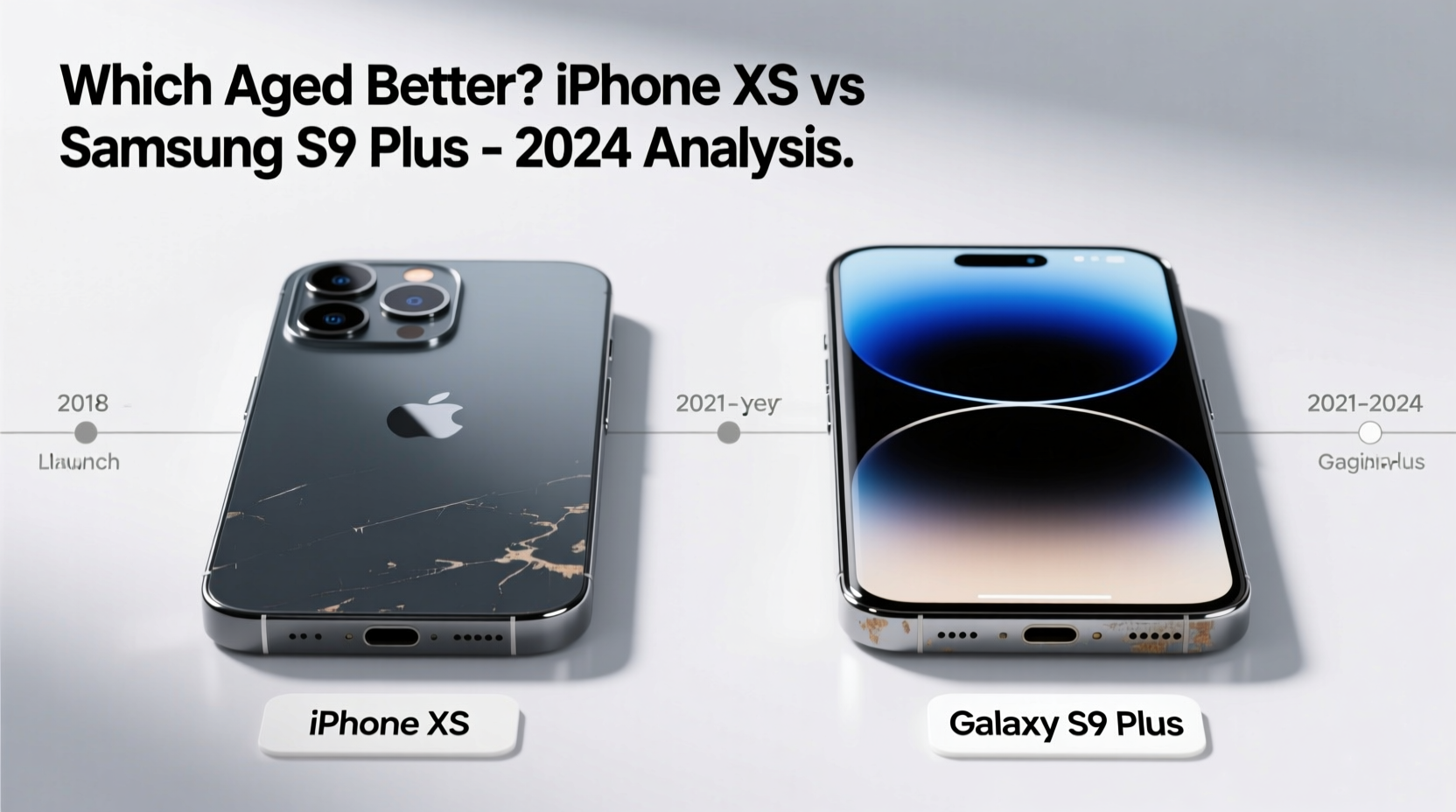
The iPhone XS and Galaxy S9 Plus both feature premium construction. Apple used surgical-grade stainless steel and glass on both sides, giving the XS a dense, luxurious feel. Samsung matched that with an aluminum frame and Gorilla Glass 5, though the S9 Plus was slightly lighter and more ergonomic due to its curved screen and rounded edges.
Over time, build quality impacts aging significantly. The iPhone XS’s stainless steel frame resists bending but shows micro-scratches easily—especially on gold and silver models. Meanwhile, the S9 Plus’s glass back chips more readily if dropped, but its IP68 rating (same as the XS) has proven reliable for water resistance even after years of use.
After six years, users report better long-term structural integrity from the iPhone XS, partly due to Apple’s tighter hardware-software integration and sturdier internal layout. However, battery degradation remains a universal issue—more on that later.
Performance and Software Longevity
This is where the paths diverge sharply. The iPhone XS runs on Apple’s A12 Bionic chip—a 7nm processor that was revolutionary in 2018. Even today, iOS 17 supports the XS, meaning it received **five major OS updates** and continues to function reasonably well for basic tasks like messaging, browsing, and email.
In contrast, the Galaxy S9 Plus launched with Android 8 (Oreo) and officially topped out at Android 10. Samsung’s update policy at the time capped security patches at two years, leaving the device unsupported since early 2021. While custom ROMs exist, most average users stopped receiving critical security fixes over three years ago.
“Software support is the single biggest factor in smartphone longevity. Without updates, even powerful hardware becomes vulnerable.” — David Lin, Mobile Security Analyst at TechShield Labs
In practical terms, this means the iPhone XS can still download apps from the App Store, receive iMessages, and sync with modern services. The S9 Plus struggles with newer versions of Google apps, frequent crashes, and compatibility issues—especially with banking or authentication apps requiring up-to-date encryption.
Real-World Example: Daily Use After Five Years
Consider Mark, a freelance photographer who used his iPhone XS as a secondary device until late 2023. He relied on it for notes, voice memos, and occasional shots. Despite a degraded battery (replaced once), he could still edit photos in Lightroom Mobile and upload via iCloud. When he tried switching to an old S9 Plus for the same role, he found app logins failing, GPS inaccuracies, and sluggish multitasking—even after a factory reset.
The difference wasn’t raw power; it was ecosystem continuity. Apple’s commitment to long-term support gave the XS functional relevance far beyond what Samsung offered at the time.
Camera Comparison: How Do They Hold Up?
In their prime, both cameras delivered excellent results. The iPhone XS featured dual 12MP rear shooters (wide + telephoto) with improved Smart HDR and depth control. The S9 Plus also had dual 12MP lenses, but with variable aperture (f/1.5–f/2.4)—a rare feature even today.
| Feature | iPhone XS | Samsung S9 Plus |
|---|---|---|
| Primary Sensor | 12MP f/1.8 | 12MP f/1.5–f/2.4 |
| Telephoto Lens | 12MP f/2.4 | 12MP f/2.4 |
| Front Camera | 7MP f/2.2 | 8MP f/1.7 |
| Low-Light Performance | Good (pre-Night Mode) | Excellent for its era |
| Video Recording | 4K@60fps, stereo audio | 4K@30fps, mono mic limitations |
| Current Usability (2024) | Still usable in daylight | Noticeable noise and lag |
Today, neither camera matches modern computational photography standards. But the iPhone XS benefits from ongoing iOS optimizations. Features like Photographic Styles and improved tone mapping help older images look more balanced. The S9 Plus lacks firmware updates, so its image processing feels dated—colors are oversaturated, dynamic range is limited, and autofocus slows dramatically in low light.
Battery Life and Hardware Degradation
Original batteries in both phones have a lifespan of about 500 charge cycles before dropping below 80% capacity. By 2024, any un-replaced unit will likely last only 4–6 hours under moderate use.
Apple provides battery health metrics in Settings > Battery, allowing users to monitor decline and schedule service. Third-party replacements are widely available and often restore near-original performance. Samsung never offered official battery health tools on the S9 series, making it harder to assess condition without diagnostic software.
- iPhone XS: Replaceable battery (~$50–$80), retains functionality post-replacement
- S9 Plus: Requires professional disassembly; adhesive seals degrade over time, increasing risk during repair
- Both suffer from slower charging speeds compared to modern fast-charging standards
Step-by-Step: Evaluating Whether to Upgrade
- Check current performance: Can you open apps without lag? Does multitasking fail frequently?
- Test security status: Are you receiving OS or app updates? Can you log into banking apps?
- Assess battery life: Does it die before bedtime with light use?
- Evaluate camera needs: Do photos meet your social or professional standards?
- Consider ecosystem: Are you locked into iCloud or Google services that no longer sync properly?
If three or more answers indicate limitations, upgrading is advisable—not just for features, but for security and usability.
Is It Worth Upgrading Now?
Yes, unless you’re using the device strictly as a backup or offline tool. Here’s why:
- Security risks: Unpatched Android and outdated iOS versions are vulnerable to malware and phishing.
- App incompatibility: TikTok, Instagram, WhatsApp, and Zoom have dropped support for older APIs.
- Poor connectivity: Neither phone supports Wi-Fi 6 or modern Bluetooth codecs like LE Audio.
- Limited storage: Base models (64GB) fill quickly with HD media and app caches.
Upgrading doesn’t mean buying the latest flagship. Mid-range 2024 phones like the iPhone SE (3rd gen), Google Pixel 7a, or Samsung Galaxy A54 offer all-day battery, modern cameras, five-year security promises (in some cases), and seamless cloud integration—all starting under $500.
Checklist: Before You Upgrade
- ✅ Back up your data (iCloud or Samsung Cloud)
- ✅ Remove SIM and SD cards
- ✅ Deactivate device tracking (Find My iPhone / Find My Mobile)
- ✅ Wipe the device completely
- ✅ Recycle or sell responsibly (use certified e-waste programs)
Frequently Asked Questions
Can I still use the iPhone XS in 2024?
Yes, but with caveats. Basic functions work, but expect shorter battery life, app slowness, and eventual loss of App Store compatibility. Apple may drop support with iOS 18, expected in fall 2024.
Why did the S9 Plus stop getting updates so early?
Samsung’s update policy in 2018 promised only two major Android upgrades and two years of security patches. That policy has since improved—current Galaxy flagships get seven years of updates.
Which phone holds resale value better?
The iPhone XS retains higher resale value due to longer software support and brand consistency. Even in 2024, a refurbished XS sells for $80–$120, while the S9 Plus fetches $40–$60.
Final Verdict: Which Aged Better?
The iPhone XS wins decisively in long-term usability. Its combination of extended software support, consistent performance, and robust ecosystem integration allows it to remain functional years after release. The Galaxy S9 Plus was innovative and powerful in 2018, but Samsung’s limited update policy left it obsolete much faster.
That said, neither phone meets modern expectations for speed, safety, or efficiency. If you're still relying on either device daily, upgrading isn't just beneficial—it's necessary for digital hygiene and productivity.




 浙公网安备
33010002000092号
浙公网安备
33010002000092号 浙B2-20120091-4
Comments
No comments yet. Why don't you start the discussion?