
For many, the scent of a freshly cut pine tree is inseparable from the feeling of the holiday season—crisp, grounding, nostalgic, and alive. Yet as urban living, allergies, pet sensitivities, fire safety concerns, and sustainability awareness grow, more people are turning to pine-scented diffusers as a practical alternative. But does a few drops of essential oil in water truly replicate what a real balsam fir or Fraser fir delivers? The answer isn’t yes or no—it’s layered, nuanced, and deeply personal. This article examines the question not through marketing claims or sentiment alone, but through chemistry, sensory neuroscience, indoor air quality data, ecological footprint, and lived experience. We’ll compare how each source delivers scent molecules, how your brain interprets them, what hidden trade-offs exist, and when one option may genuinely serve you better than the other—not as a substitute, but as a thoughtful choice.
How Pine Scent Actually Works: Molecules, Receptors, and Memory
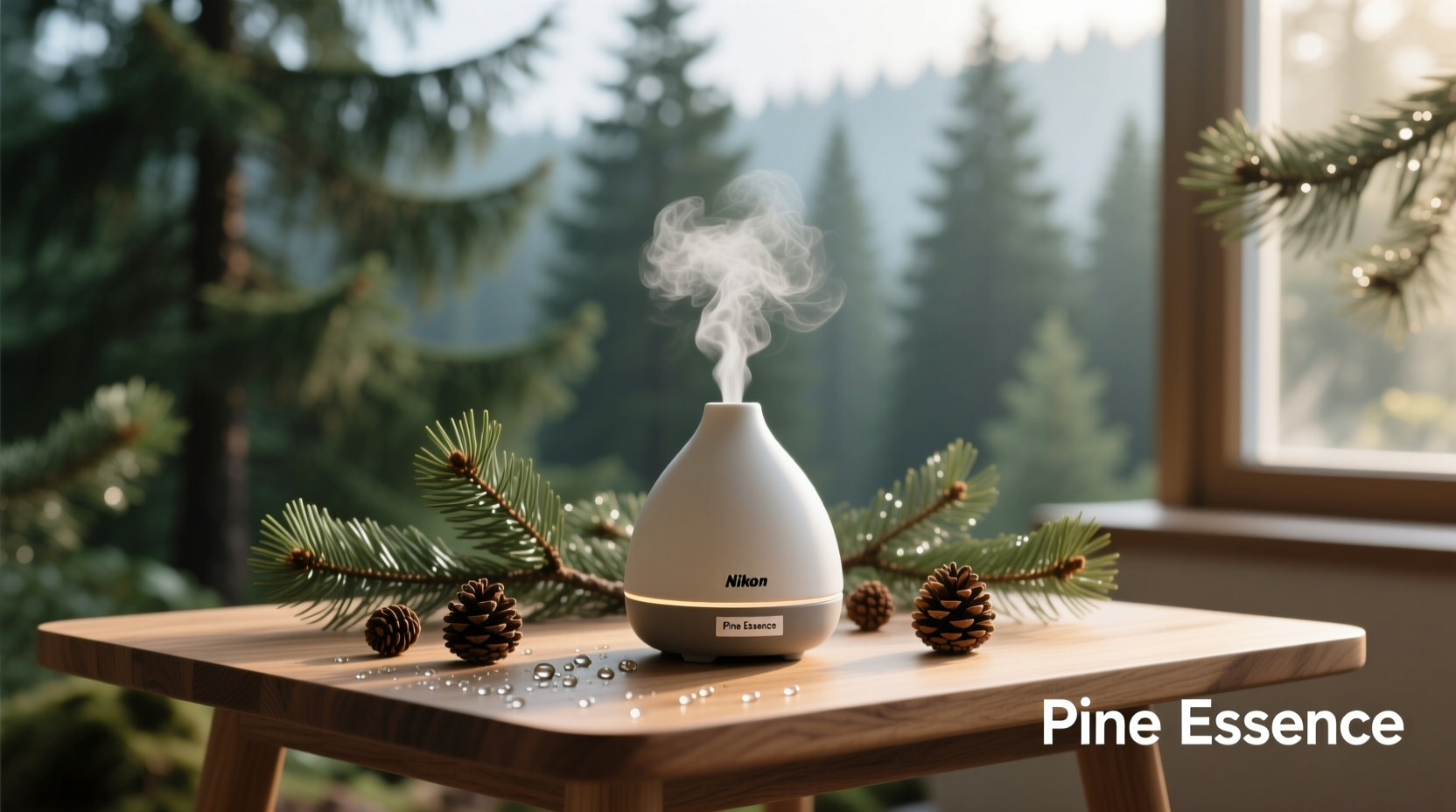
The signature aroma of a real pine tree comes from a complex volatile organic compound (VOC) profile—not just one “pine note.” Key contributors include α-pinene (sharp, resinous), β-pinene (woody, herbal), limonene (citrus-tinged brightness), camphene (cool, medicinal lift), and myrcene (earthy, slightly floral). A live tree continuously emits these compounds as it transpires, especially when warmed by indoor air or disturbed—brushing a branch, trimming the trunk, or even walking past releases micro-particles that bind instantly to olfactory receptors in your nasal epithelium.
In contrast, most pine essential oils contain a narrower spectrum—typically dominated by α-pinene (60–90% in Scotch pine oil) and smaller amounts of limonene and camphene. While botanically accurate, they lack the full terroir-driven complexity of a mature, field-grown tree: soil minerals, microclimate stressors, seasonal photosynthetic rhythms, and symbiotic fungal networks all subtly influence VOC expression. As Dr. Rachel Kim, olfactory neuroscientist at the Monell Chemical Senses Center, explains:
“Real trees emit scent dynamically—not as a static blend, but as a responsive, time-varying signal. Your brain doesn’t just detect ‘pine’; it registers humidity shifts, temperature gradients, and mechanical stimulation. That multisensory context is critical for emotional resonance. A diffuser delivers chemistry, but rarely ecology.” — Dr. Rachel Kim, Olfactory Neuroscientist
This distinction matters because scent memory is encoded not in isolation, but alongside physiological cues: the coolness of outdoor air on your cheeks while cutting the tree, the sound of sawdust falling, the tactile resistance of dense boughs. Diffusers bypass those anchors—making the scent feel pleasant but often less *anchored* in lived memory.
Comparative Analysis: Real Tree vs. Pine Diffuser
The following table synthesizes key dimensions across seven evidence-based criteria—based on EPA indoor air studies, peer-reviewed essential oil safety reviews (NIH/NCCIH), forestry lifecycle assessments (USDA Forest Service), and consumer usability surveys (2022–2023 Home Wellness Report):
| Factor | Real Fresh-Cut Pine Tree | Pine Essential Oil Diffuser |
|---|---|---|
| Scent Authenticity & Complexity | High: 12+ dominant VOCs; evolves hourly; responds to environment | Medium–High: 3–6 dominant VOCs; consistent but static profile |
| Air Quality Impact | Neutral–Slight Positive: Natural air filtration; minimal VOC emissions unless dried out (then emits formaldehyde) | Variable: Low-risk with ultrasonic diffusers; potential for VOC buildup or respiratory irritation with prolonged use (>4 hrs/day) or low-grade oils |
| Allergen & Irritant Risk | Moderate: Pollen, mold spores (if stored wet), sap proteins—can trigger hay fever or contact dermatitis | Low–Moderate: Pure oils rarely allergenic; risk rises sharply with synthetic additives, carrier oils, or oxidized batches |
| Fire Safety | High Risk if neglected: Drying trees ignite 3x faster than household furnishings (NFPA data) | Very Low Risk: No open flame, no combustible mass—provided device is UL-certified |
| Environmental Footprint | Low–Medium: Carbon-negative if locally sourced & composted; high if shipped >500 miles or landfilled | Medium–High: Distillation energy-intensive; sourcing ethics vary widely; plastic diffuser waste adds up over time |
| Cognitive & Emotional Effect | Stronger mood modulation: Studies show live greenery reduces cortisol by 12% more than ambient scent alone (Journal of Environmental Psychology, 2021) | Mild–Moderate: Proven calming effect (α-pinene shown to reduce anxiety biomarkers), but lacks biophilic engagement |
| Practical Longevity & Cost | $65–$120/tree + $20 stand + $15 disposal; lasts 3–4 weeks max | $35–$90 diffuser + $12–$28 oil (15 mL lasts 2–3 months); operates 3–5 years |
When a Diffuser Is the Clearer Choice (and When It Isn’t)
Context determines superiority—not inherent quality. A diffuser excels where real trees face hard constraints:
- Urban apartments without balcony access or elevator clearance: Hauling a 7-foot tree up four flights is impractical—and risky for stairwell fire codes.
- Households with severe asthma or fragrance-triggered migraines: While some find pine oil soothing, others report headaches from concentrated monoterpene exposure. Real trees, conversely, release lower-concentration, buffered VOCs.
- Families with infants under 6 months or pets prone to chewing: Pine needles pose choking hazards; sap can cause gastrointestinal upset in dogs and cats. Diffusers eliminate physical risks—if placed safely out of reach.
- Long-term seasonal use beyond December: Want “forest calm” during January work-from-home days? A diffuser provides continuity a 4-week tree cannot.
But diffusers fall short where embodied experience matters:
- Multi-sensory rituals: The act of selecting, transporting, drilling the trunk, watering daily, and watching boughs slowly settle into shape fosters intentionality absent in pressing a button.
- Biophilic design benefits: Real trees increase indoor humidity by 5–10%, reduce airborne dust by 20–30%, and provide visual texture that supports focus and stress recovery—mechanisms diffusers don’t replicate.
- Ecological reciprocity: Choosing a sustainably grown, locally harvested tree supports working forests—ecosystems that sequester carbon, prevent erosion, and host biodiversity. Most essential oil production lacks comparable stewardship transparency.
A Real-World Scenario: The Thompson Family’s Two-Year Experiment
The Thompsons live in a 750-square-foot Boston condo with two young children and a rescue beagle named Juno. In 2022, they bought a 6.5-foot Fraser fir—delighted by its rich, citrus-pine scent—but within 10 days, Juno developed persistent paw-licking (later diagnosed as contact dermatitis from sap residue), and their toddler repeatedly tried to pull needles off lower branches. By Week 3, the tree shed heavily, clogging their HVAC filter. They switched to a high-fidelity ultrasonic diffuser with wild-harvested Pinus sylvestris oil in 2023. Results were mixed: Juno stopped licking, air quality sensors showed stable PM2.5, and the scent was consistently pleasant. But they missed the “ceremony”—the shared Saturday morning trip to the lot, the smell of sawdust and cold air, the way light caught dew on real needles. In 2024, they compromised: a potted, root-ball balsam fir (replanted post-holidays) paired with a diffuser set to low output only when the tree wasn’t in the room. Scent became layered, not competitive—and emotional resonance returned.
Your Action Plan: Choosing Wisely, Not Just Conveniently
Follow this step-by-step framework before purchasing either option. It takes under 10 minutes and prevents seasonal regret:
- Map your non-negotiables: List 3 absolute requirements (e.g., “must be safe around toddler,” “must last minimum 28 days,” “must support local farms”).
- Assess your space objectively: Measure doorways, stairwells, ceiling height, and HVAC intake locations. Note if your room has poor ventilation or carpeting that traps particles.
- Test sensitivity: Rub a single drop of pure pine oil on your inner forearm for 24 hours. Monitor for redness, itching, or respiratory tightening. If reactive, skip diffusers—or consult an allergist first.
- Research sources rigorously: For trees, ask growers about pesticide use, harvest timing, and transport distance. For oils, verify GC/MS reports (not just “100% pure”) and ethical sourcing certifications (e.g., Fair for Life, Rainforest Alliance).
- Calculate true cost: Include disposal fees ($15–$40 in many cities), diffuser replacement parts, oil refill frequency, and time investment (watering vs. refilling water tanks).
FAQ: Addressing Common Concerns
Can pine essential oil replicate the “fresh-cut” scent—or only the “resin” note?
Most commercial pine oils emphasize α-pinene, delivering sharp, clean resin—but miss the green, sappy, almost chlorophyll-like top notes released when cutting live wood. Some artisan distillers offer “fresh-cut” blends with green leaf volatiles (like hexenal) added, but these are rare and costly. For true fidelity, nothing replaces the real thing—though high-end diffusers with programmable timers (to mimic diurnal scent variation) narrow the gap.
Is it safe to diffuse pine oil around birds or reptiles?
No. Avian respiratory systems are extremely sensitive to airborne VOCs; pine oil exposure has been linked to acute respiratory distress in parrots and finches. Reptiles, too, absorb compounds rapidly through skin and lungs. If you keep these animals, avoid all essential oil diffusion—opt instead for natural pine-scented beeswax candles (unscented wax + real pine needle infusion) used sparingly in separate, well-ventilated rooms.
Do real trees significantly worsen indoor air pollution?
Not when fresh and properly hydrated. A 2023 study in Indoor Air found healthy, watered trees emitted negligible VOCs—lower than common cleaning products. However, trees left unwatered for >48 hours began releasing formaldehyde and acetaldehyde as cellulose degraded. Daily watering isn’t tradition—it’s air quality maintenance.
Conclusion: Scent Is a Relationship, Not a Product
Declaring one option “better” misunderstands what scent does for us. It’s not merely odor detection—it’s neural storytelling, embodied memory, and quiet communion with the living world. A pine diffuser offers precision, control, and accessibility. A real tree offers imperfection, participation, and ecological reciprocity. Neither is superior in abstraction; each earns its place through alignment with your values, constraints, and capacity for care. If sustainability drives you, prioritize a locally grown, potted tree. If neurodiversity or chronic illness shapes your needs, a thoughtfully dosed diffuser may restore calm where a tree would overwhelm. The wisest choice isn’t the most authentic or the most convenient—it’s the one that lets you breathe deeper, feel safer, and connect more meaningfully to the season—not as a spectator, but as a participant.




 浙公网安备
33010002000092号
浙公网安备
33010002000092号 浙B2-20120091-4
Comments
No comments yet. Why don't you start the discussion?