
For decades, deep frying has been a go-to method for achieving crispy, golden foods—from French fries to chicken wings. But with growing health awareness and the rise of kitchen convenience, air frying has emerged as a popular alternative. Marketed as a healthier, cleaner way to enjoy fried favorites, air fryers now sit in millions of homes. But do they actually deliver on their promises? Specifically, is air frying healthier than deep frying, and does it really save time on cleanup? The answers are more nuanced than marketing slogans suggest.
This article breaks down the science behind both cooking methods, compares nutritional outcomes, evaluates real-world cleanup differences, and offers actionable advice for making informed decisions in your kitchen.
How Air Frying and Deep Frying Work
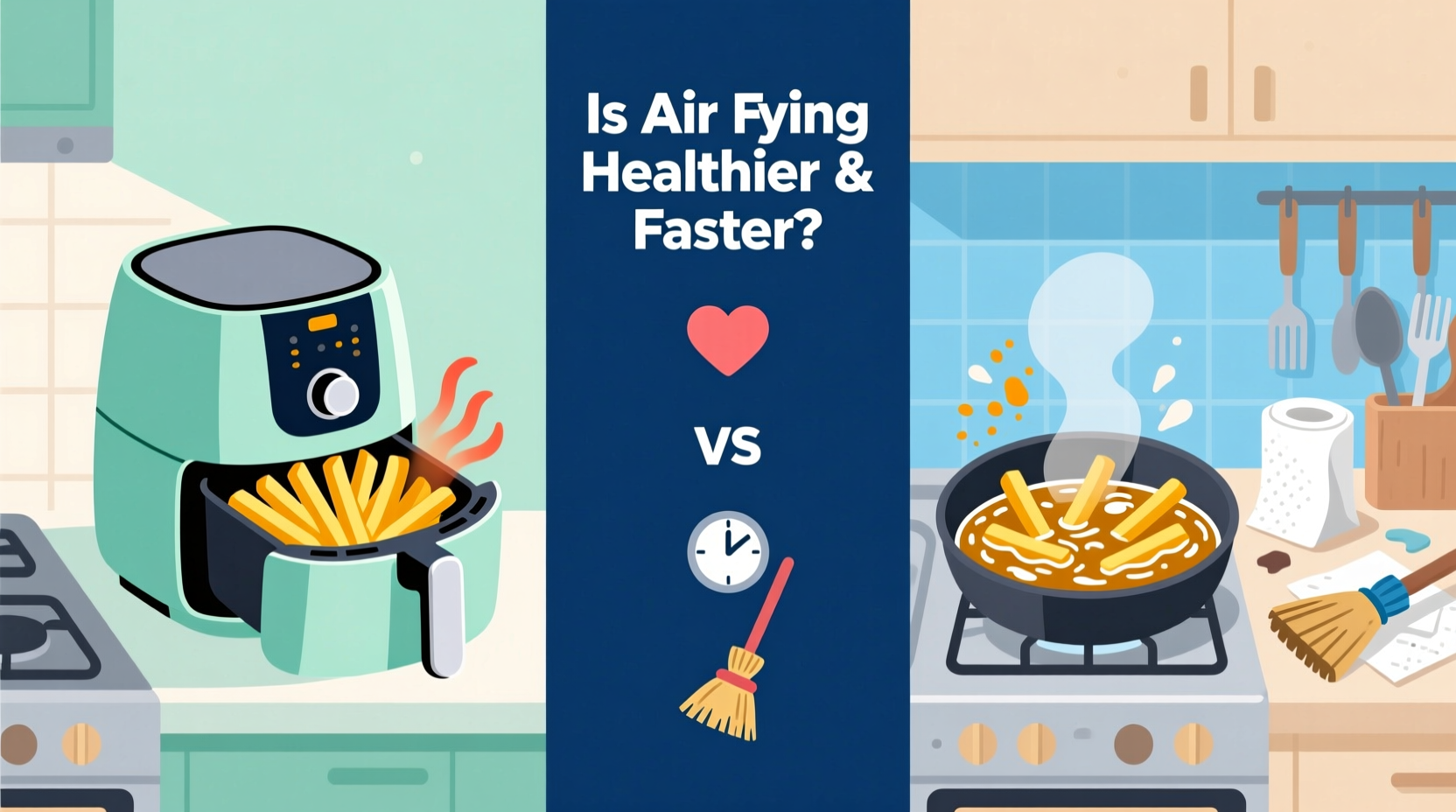
Understanding the mechanics of each method is essential to evaluating their benefits and drawbacks.
Deep frying involves submerging food completely in hot oil—typically between 350°F and 375°F (175°C–190°C). The high heat rapidly cooks the food while forming a crisp exterior through the Maillard reaction and dehydration. Oil penetrates the outer layer, contributing significantly to flavor, texture, and calorie content.
Air frying, by contrast, uses rapid convection heating. A powerful fan circulates superheated air around the food, often enhanced by a small amount of oil (one to two teaspoons) sprayed or brushed onto the surface. This creates a similar browning effect with far less fat absorption. Think of it as an advanced countertop convection oven optimized for crispiness.
The key difference lies in fat usage: deep frying relies on immersion, while air frying mimics frying using minimal oil and intense airflow.
Nutritional Comparison: Fat, Calories, and Health Impact
One of the most cited advantages of air frying is its potential to reduce fat and calorie intake. Let’s examine what the data shows.
When food is deep-fried, it absorbs oil—sometimes up to 40% of its final weight in oil, depending on the item and batter type. For example, a standard serving of deep-fried French fries (100g) can contain 15–20 grams of fat and 300–350 calories. The same portion air-fried may contain only 3–5 grams of fat and 180–220 calories, assuming little added oil.
A 2020 study published in the Journal of Food Science found that air-fried potato strips had 60–70% less fat than their deep-fried counterparts, with comparable texture when properly prepared. Similarly, air-fried chicken wings absorbed up to 85% less oil while still achieving acceptable crispness in blind taste tests.
Reducing dietary fat, especially saturated and trans fats from reused frying oils, lowers risks associated with cardiovascular disease, obesity, and insulin resistance. Additionally, air frying produces lower levels of acrylamide—a potentially carcinogenic compound formed when starchy foods are cooked at high temperatures—compared to deep frying, according to research from the European Food Safety Authority.
“Switching from deep frying to air frying can be a meaningful step toward reducing overall fat intake, especially for people who consume fried foods regularly.” — Dr. Lena Patel, Registered Dietitian and Nutrition Scientist
Cleanup Efficiency: Time, Effort, and Real-World Experience
Beyond health, many consumers choose air fryers for perceived ease of cleanup. So, how much time and effort do they actually save?
Deep frying introduces multiple messy components: large volumes of hot oil to handle, greasy splatters on stovetops and walls, and oil-disposal challenges. After cooking, you’re left with:
- Used oil that must be cooled, strained, stored, or disposed of safely
- A greasy pot or fryer that requires degreasing
- Splatter marks requiring wipe-downs
- Potential smoke residue if oil overheated
In contrast, air frying eliminates bulk oil. Most models use a removable basket and tray that are dishwasher-safe or easily hand-washed. There’s no risk of oil spills, no need for special disposal, and minimal splatter since the cooking chamber is enclosed.
However, air fryers aren’t entirely mess-free. Sticky marinades or breadcrumb coatings can burn onto baskets, requiring soaking or scrubbing. Over time, residue buildup in hard-to-reach corners can become problematic if not cleaned regularly.
| Factor | Deep Frying | Air Frying |
|---|---|---|
| Oil used per session | 3–6 cups | 1–2 tsp |
| Cleanup time (avg.) | 15–25 minutes | 5–10 minutes |
| Dishwasher-safe parts | Rare (fryer baskets sometimes) | Most models include them |
| Risk of oil spills | High | Negligible |
| Residue buildup | Grease on surfaces | Food particles in basket |
For most users, air frying reduces post-cooking labor significantly. It’s particularly advantageous in small kitchens where ventilation is poor or counter space is limited.
Real-World Example: A Week of Fried Chicken
Consider Sarah, a working parent of two, who prepares fried chicken once a week. She used to deep-fry in a cast-iron Dutch oven, which took 45 minutes total—20 minutes prep, 15 minutes frying, and 20 minutes cleaning. Oil storage was inconsistent; she often poured it down the sink (a plumbing hazard), and her stovetop frequently needed degreaser wipes.
Last month, she bought an air fryer. Her new process: coat chicken in seasoned flour and spray lightly with oil. Cook at 380°F for 22 minutes, flipping halfway. Total time: 30 minutes. Cleanup: she removes the basket and tray, rinses under warm water, and loads into the dishwasher. No oil handling. No splatter cleanup.
She reports eating fried chicken more often because “it doesn’t feel like a chore anymore.” While the texture isn’t identical—less juicy crust, slightly drier edges—her family prefers the lighter taste. Calorie tracking shows a 30% reduction per serving.
Sarah’s experience reflects a broader trend: convenience encourages moderation and healthier habits, not just substitution.
Limitations and Considerations
Air frying isn’t a perfect solution. It has notable trade-offs:
- Capacity: Most air fryers cook smaller portions than deep fryers. Cooking for four may require multiple batches.
- Texture: Foods with wet batters (like tempura) don’t fare well—they often dry out or fail to crisp properly.
- Browning inconsistency: Uneven airflow can lead to patchy crisping, especially with overcrowded baskets.
- No flavor infusion: Oil in deep frying carries flavors; air frying lacks this depth unless seasonings are boosted.
Additionally, some air-fried foods can become overly dry due to the dehydrating effect of constant hot air. Pre-marinating proteins or using a light oil coating helps mitigate this.
Step-by-Step Guide to Maximizing Air Fryer Benefits
To get the best results—both in health and efficiency—follow this proven routine:
- Preheat the air fryer (3–5 minutes) for consistent temperature and better searing.
- Dry food thoroughly before seasoning—moisture prevents crisping.
- Use minimal oil: Apply with a spray bottle or brush for even coverage.
- Don’t overcrowd the basket: Leave space for air circulation.
- Flip or shake halfway to promote even cooking.
- Clean immediately after use: Soak the basket if needed to prevent baked-on residue.
- Track oil usage: Even sprays add up—stick to one or two bursts per batch.
This approach ensures optimal texture, minimizes fat intake, and keeps maintenance simple.
Frequently Asked Questions
Can air frying eliminate all the fat from fried foods?
No, but it significantly reduces it. While air frying cuts oil absorption by 70–90%, some fat is still needed for texture and browning. Completely fat-free “fried” food won’t achieve the desired crispness and may taste dry or cardboard-like.
Is air frying safer than deep frying?
Yes, in several ways. There’s no risk of oil fires, burns from splashing, or improper disposal. Air fryers operate at lower external temperatures and have automatic shutoffs. They’re also safer for homes with children or pets.
Do air fryers use less energy than deep fryers?
Generally, yes. Most air fryers use 1200–1500 watts and cook faster due to efficient heat transfer. Deep fryers, especially full-size electric models, can draw 1500–1800 watts and require longer preheating. Over time, this translates to modest energy savings.
Checklist: Is Air Frying Right for You?
Answer these questions to determine if switching makes sense:
- ✅ Do you deep fry more than once a week?
- ✅ Are you looking to reduce dietary fat or calories?
- ✅ Do you dislike handling hot oil or cleaning greasy pots?
- ✅ Do you cook for 1–3 people regularly?
- ✅ Are you willing to accept slight texture differences?
If you answered yes to most, an air fryer could be a worthwhile investment. If you frequently cook large batches or love battered seafood, you might still need a deep fryer occasionally.
Conclusion: A Smarter, Cleaner Way—With Caveats
Air frying is generally healthier than deep frying. It reduces fat and calorie content, lowers exposure to harmful compounds like acrylamide, and supports better long-term eating habits. It also saves significant cleanup time by eliminating bulk oil, minimizing splatter, and simplifying post-cooking chores.
But it’s not a magic bullet. Results vary by food type, model quality, and technique. The best outcomes come from understanding its strengths—speed, efficiency, and reduced fat—and respecting its limits, such as batch size and texture fidelity.
For most home cooks, air frying isn’t about replicating deep frying perfectly—it’s about redefining what “fried” means: lighter, cleaner, and more sustainable. When used wisely, it’s a practical upgrade that supports both health and kitchen sanity.




 浙公网安备
33010002000092号
浙公网安备
33010002000092号 浙B2-20120091-4
Comments
No comments yet. Why don't you start the discussion?