
In recent years, air fryers have taken over kitchen countertops across the world. Marketed as a way to enjoy crispy, golden foods with little to no oil, they promise all the flavor of deep frying without the guilt. But is this just clever marketing, or does air frying genuinely offer meaningful health benefits compared to traditional deep frying? To answer that, we need to look beyond the hype and examine cooking methods, nutritional outcomes, and long-term dietary impacts.
How Air Frying Works: The Science Behind the Crisp
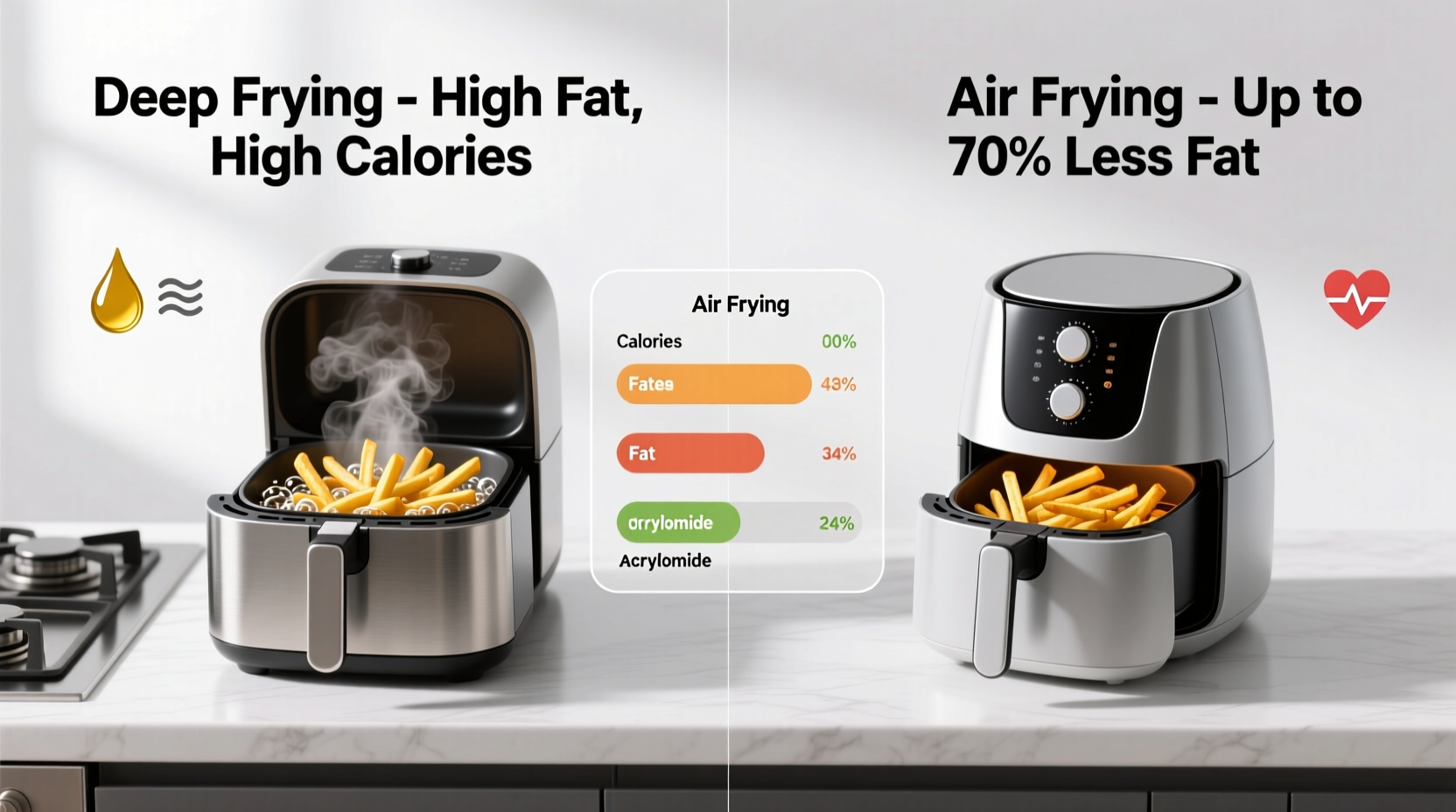
Air fryers use rapid convection technology—essentially a powerful fan circulating hot air around food at high speeds. This creates a Maillard reaction (the browning process responsible for flavor and texture) on the surface of the food, mimicking the crispness achieved by submerging food in oil during deep frying.
Unlike deep frying, which requires immersion in oil heated to 350°F (175°C) or higher, air frying typically uses one to two tablespoons of oil—or sometimes none at all. The result? A fraction of the fat and calorie content found in traditionally fried foods.
The key difference lies in heat transfer efficiency. Oil conducts heat far more effectively than air, which is why deep-fried foods cook faster and develop a deeper crust. Air fryers compensate with high-speed airflow and precise temperature control, but they don’t replicate the exact texture profile—especially for very moist or battered items.
Nutritional Comparison: Fat, Calories, and Beyond
The most immediate benefit of air frying is reduced fat and calorie intake. Consider common examples:
| Dish | Cooking Method | Calories (per serving) | Total Fat (g) | Oil Used |
|---|---|---|---|---|
| French Fries (1 cup) | Deep Fried | 365 | 17g | ~1 cup oil |
| French Fries (1 cup) | Air Fried | 160 | 7g | 1 tbsp oil |
| Chicken Wings (4 pieces) | Deep Fried | 420 | 29g | ~2 cups oil |
| Chicken Wings (4 pieces) | Air Fried | 250 | 16g | 1–2 tsp oil |
| Mozzarella Sticks (3 pcs) | Deep Fried | 400 | 26g | ~1.5 cups oil |
| Mozzarella Sticks (3 pcs) | Air Fried | 280 | 14g | 1 tbsp oil |
As shown, air frying reduces calorie content by 20–40% and cuts fat by nearly half in many cases. For individuals managing weight, cholesterol, or cardiovascular risk, these reductions can be meaningful over time.
However, it’s important to note that air frying doesn’t automatically make food “healthy.” A processed chicken nugget remains high in sodium and preservatives regardless of how it's cooked. The method improves the lipid profile, but ingredient quality still matters most.
Beyond Calories: Acrylamide, Oxidation, and Long-Term Risks
One concern often overlooked in discussions about frying is the formation of harmful compounds such as acrylamide, heterocyclic amines (HCAs), and advanced glycation end products (AGEs). These substances form when starchy or protein-rich foods are exposed to high heat and are linked to increased inflammation and chronic disease risk.
Acrylamide, in particular, forms in carbohydrate-rich foods like potatoes when cooked above 248°F (120°C). Both deep frying and air frying exceed this threshold, so neither method eliminates the issue. However, because air frying generally uses lower oil volumes and shorter cook times, some studies suggest slightly lower acrylamide levels compared to deep frying—though results vary based on temperature and food type.
“While air frying reduces total fat, consumers should still be cautious about charring or overcooking starchy foods, which can generate acrylamide regardless of the appliance.” — Dr. Lena Patel, Food Safety Researcher, Harvard T.H. Chan School of Public Health
Another advantage: air frying minimizes oil degradation. Deep frying involves reheating oil multiple times, leading to oxidation and the formation of trans fats and free radicals. Reused oil becomes increasingly toxic, contributing to oxidative stress in the body. Air fryers avoid this entirely since minimal oil is used and rarely reused.
Real-World Example: A Family’s Transition from Deep Frying to Air Frying
The Thompson family from Portland, Oregon, used to enjoy fried chicken every Sunday. Over time, both parents noticed rising cholesterol levels and their teenage son developed mild hypertension. Their doctor recommended reducing saturated fat intake.
They invested in an air fryer and began experimenting. At first, the kids complained the chicken wasn’t as crispy. But after adjusting seasoning, using a light breadcrumb coating, and spritzing with olive oil, they achieved a satisfying crunch. Within three months, they replaced 80% of their fried meals with air-fried versions.
After six months, both parents saw LDL cholesterol drop by 15%, and the son’s blood pressure normalized. While lifestyle changes—including more vegetables and less processed food—also contributed, the family credits the air fryer with making healthy eating feel less restrictive.
This case illustrates a broader truth: sustainability matters. A diet change only works if it’s enjoyable. For many families, air frying offers a practical compromise between taste and health.
Common Misconceptions About Air Frying
- Myth: Air frying is completely oil-free. While possible, most recipes benefit from a small amount of oil to enhance texture and flavor. The key is moderation.
- Myth: Air-fried food tastes exactly like deep-fried food. It doesn’t. The texture is lighter, less greasy, and sometimes drier. Managing expectations helps with satisfaction.
- Myth: Air fryers cook faster than ovens. They often do, but not always. Cooking time depends on portion size, density, and model efficiency.
- Myth: All frozen “air fryable” foods are healthy. Many are ultra-processed, high in sodium, and contain preservatives. Always read labels.
Step-by-Step Guide to Maximizing Health Benefits with Air Frying
To get the most out of your air fryer while truly improving your diet, follow this practical guide:
- Start with whole ingredients. Use fresh chicken breasts, sweet potatoes, or vegetables instead of pre-packaged frozen items.
- Marinate proteins. Use yogurt, lemon juice, herbs, and spices to add flavor and tenderize without relying on breading.
- Use heart-healthy oils sparingly. A light spray of avocado or olive oil adds richness without excess calories.
- Avoid overcrowding the basket. This ensures even airflow and proper crisping, reducing the need for extended cooking or extra oil.
- Flip or shake halfway through. Promotes uniform browning and prevents uneven texture.
- Pair with nutrient-dense sides. Serve air-fried items with salads, steamed greens, or quinoa to balance the meal.
- Clean regularly. Built-up residue can smoke and affect flavor, potentially creating unwanted compounds.
Checklist: Is Air Frying Right for Your Lifestyle?
Before adopting air frying as a primary cooking method, ask yourself the following:
- ✅ Do I frequently eat fried foods high in unhealthy fats?
- ✅ Am I looking for ways to reduce calorie intake without sacrificing satisfaction?
- ✅ Do I have space and budget for a new appliance?
- ✅ Am I willing to experiment with recipes and adjust cooking habits?
- ✅ Do I prioritize convenience and speed in meal preparation?
If most answers are yes, air frying could be a valuable tool. If you already eat mostly whole, unprocessed foods with minimal frying, the marginal benefit may be smaller.
Expert Insights: What Nutritionists Say
Registered dietitians generally view air frying as a positive shift—for certain populations. “For someone used to eating fast food fries or fried chicken weekly, switching to air frying is a clear upgrade,” says Maria Gonzalez, RD, based in Austin, Texas. “It’s not a magic solution, but it supports better habits.”
She emphasizes that the real win isn’t the appliance itself, but what it enables: cooking at home, controlling ingredients, and avoiding restaurant-style frying oils, which are often hydrogenated and high in trans fats.
“The air fryer won’t fix a poor diet, but it can help people transition toward one that’s more balanced and sustainable.” — Maria Gonzalez, Registered Dietitian
FAQ: Common Questions About Air Frying
Can air frying help with weight loss?
Yes, indirectly. By reducing added fat and calories in fried favorites, air frying can support a calorie deficit. However, weight loss ultimately depends on overall diet quality, portion control, and physical activity.
Are air fryers safe to use every day?
Yes, air fryers are safe for daily use. Unlike deep frying, they don’t produce large amounts of油烟 (oil fumes) or pose fire risks when used properly. Just ensure good ventilation and clean the unit regularly to prevent residue buildup.
Does air frying destroy nutrients?
No more than other high-heat methods. In fact, because cooking times are often shorter and oil exposure is minimal, air frying may preserve more nutrients than deep frying, particularly heat-sensitive vitamins like vitamin C and some B vitamins.
Conclusion: A Smart Tool, Not a Magic Bullet
Air frying is more than just a trend—it’s a practical evolution in home cooking that offers measurable health advantages over deep frying. By significantly reducing fat and calorie content, minimizing harmful oil byproducts, and encouraging home meal preparation, it supports smarter dietary choices.
But it’s not a standalone solution. Health comes from consistent patterns: choosing whole foods, balancing macronutrients, and limiting processed items. An air fryer can fit into that picture beautifully, especially for those transitioning away from frequent deep frying.
The real value lies not in the gadget, but in the behavior change it enables. When used mindfully—with real ingredients and reasonable expectations—it becomes a bridge to a more sustainable, flavorful, and health-conscious way of eating.




 浙公网安备
33010002000092号
浙公网安备
33010002000092号 浙B2-20120091-4
Comments
No comments yet. Why don't you start the discussion?