
In 2025, the wellness landscape continues to evolve rapidly—new diets emerge, old ones fade, and some adapt to stay relevant. Among the most debated lifestyle interventions of the past decade, intermittent fasting (IF) once dominated headlines with promises of weight loss, longevity, and metabolic health. But as we move deeper into the mid-2020s, a critical question arises: Has intermittent fasting retained its credibility and popularity, or has it begun to lose its health halo?
The answer isn’t binary. While the initial viral wave of IF has settled, the practice hasn’t disappeared. Instead, it has matured—shifting from a trendy fad to a more nuanced, science-informed approach adopted by a subset of health-conscious individuals. The difference now is that people are applying it more thoughtfully, often under medical supervision, and with greater awareness of its limitations.
The Rise and Evolution of Intermittent Fasting
Intermittent fasting gained mainstream traction in the early 2020s, fueled by celebrity endorsements, social media influencers, and high-profile advocates like Dr. Jason Fung and Dr. Peter Attia. Methods such as the 16:8 protocol (fasting for 16 hours, eating within an 8-hour window), the 5:2 diet (eating normally five days a week, restricting calories two days), and alternate-day fasting became household terms.
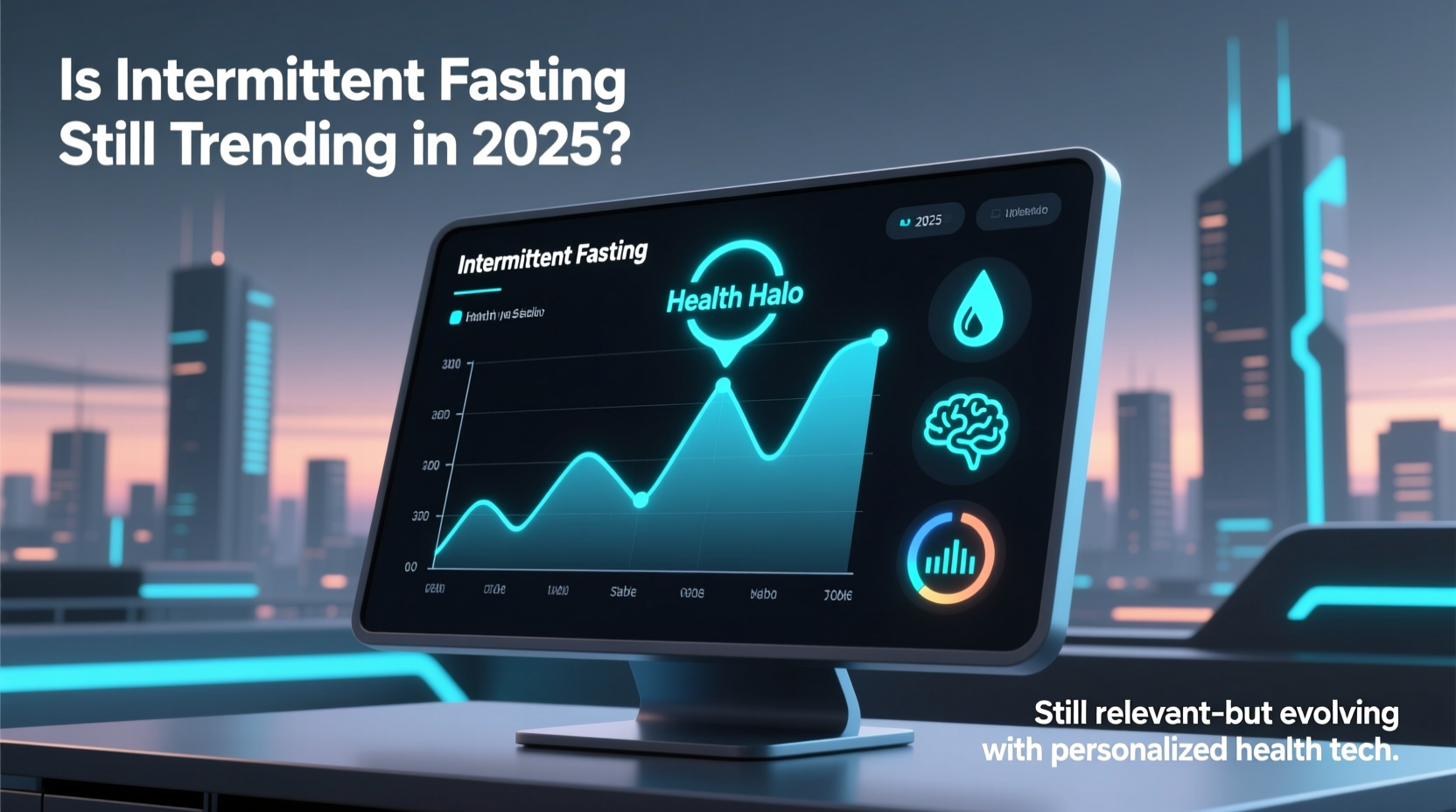
By 2023, Google Trends data showed peak search volume for “intermittent fasting,” followed by a gradual decline. However, a plateau in interest doesn’t necessarily signal irrelevance. In fact, clinical research continued to grow. A 2024 meta-analysis published in Nature Metabolism concluded that time-restricted eating could improve insulin sensitivity and reduce visceral fat in adults with prediabetes—provided the eating window was consistent and nutrient-dense foods were prioritized.
What’s changed in 2025 is not the absence of IF, but its integration into broader metabolic health strategies. It’s no longer seen as a standalone solution but rather one tool among many—including sleep optimization, resistance training, and personalized nutrition—that contribute to long-term well-being.
Scientific Backing vs. Hype: Where Does IF Stand Now?
The scientific community remains cautiously supportive of intermittent fasting, but with important caveats. While animal studies have shown compelling benefits—such as increased autophagy, reduced inflammation, and extended lifespan—human trials are more mixed.
A landmark 2023 study from the University of Illinois followed 130 adults on a 14:10 time-restricted eating schedule for 12 weeks. Participants lost an average of 4.7 pounds more than the control group, even without calorie counting. However, adherence dropped significantly after six weeks, suggesting sustainability is a major challenge.
“Fasting can be a powerful metabolic reset, but it’s not a universal fix. For some, it enhances energy and clarity. For others, it triggers disordered patterns or hormonal imbalances.” — Dr. Lena Torres, Endocrinologist at Cleveland Clinic
The growing consensus in 2025 is that IF works best when personalized. Factors such as age, sex, activity level, and existing health conditions influence outcomes. For example, postmenopausal women may experience disrupted cortisol rhythms with prolonged fasting, while younger men might thrive on structured eating windows.
Fasting in Practice: Who’s Still Doing It in 2025?
Despite declining buzz, intermittent fasting remains embedded in the routines of specific demographics. Tech professionals, biohackers, and fitness enthusiasts continue to use it strategically—for mental clarity, improved focus during work blocks, or enhanced fat oxidation during cutting phases.
A mini case study illustrates this trend:
Real Example: Mark, 38, Software Developer from Austin
Mark began practicing 16:8 fasting in 2022 to manage weight gain from remote work. Initially, he skipped breakfast and ate between noon and 8 PM. He lost 15 pounds in four months and reported better concentration. By 2025, his routine evolved—he now fasts only Monday through Thursday, allowing flexible eating on weekends to maintain social balance. He monitors blood glucose via a wearable and adjusts based on energy dips. “It’s not about restriction anymore,” he says. “It’s about tuning my body’s rhythm.”
This shift—from rigid rules to flexible experimentation—reflects a broader cultural movement toward sustainable health practices over short-term fixes.
Common Pitfalls and Misconceptions in 2025
One reason IF lost some public favor is the prevalence of misuse. Many people interpreted “eat less often” as “eat whatever you want during your window,” undermining potential benefits. Others developed unhealthy relationships with food, using fasting as a form of compensation after overeating.
To clarify best practices, here’s a checklist for responsible intermittent fasting:
✅ Intermittent Fasting Checklist
- Consult a healthcare provider before starting, especially if you have diabetes, hypoglycemia, or a history of eating disorders.
- Prioritize whole, unprocessed foods during eating windows.
- Stay hydrated with water, herbal tea, or electrolyte drinks during fasting periods.
- Monitor energy levels, sleep quality, and mood—stop if you feel chronically fatigued or irritable.
- Avoid combining intense exercise with prolonged fasts unless experienced and well-supported nutritionally.
Equally important is understanding what intermittent fasting is not. It is not a license to ignore nutritional quality. It does not guarantee weight loss without a caloric deficit. And it is not suitable for everyone—pregnant women, adolescents, underweight individuals, and those with certain medical conditions should avoid it.
Comparison: Popular IF Methods in 2025
| Method | Fasting Schedule | Best For | Caution |
|---|---|---|---|
| 16:8 (Time-Restricted Eating) | Fast 16 hrs, eat 8 hrs daily | Beginners, office workers, metabolic health | May disrupt circadian rhythm if eating late |
| 14:10 | Fast 14 hrs, eat 10 hrs | Women, older adults, sustainable habit-building | Milder effect on weight loss |
| 5:2 Diet | Eat normally 5 days, ~500 kcal 2 non-consecutive days | Those comfortable with calorie control | Risk of nutrient deficiency if not planned |
| Alternate-Day Fasting | Fast every other day (or consume <500 kcal) | Experienced fasters, rapid fat loss goals | High dropout rate; not sustainable long-term |
| Warrior Diet (OMAD variant) | 20-hour fast, one large meal | Low-insulin responders, muscle gain phases | Potential digestive strain; poor sleep if eaten late |
Expert Insights: What Medical Professionals Say in 2025
Healthcare providers have become more vocal about tailoring fasting protocols to individual needs. Dr. Anika Patel, a preventive medicine specialist at Johns Hopkins, emphasizes context:
“We’re moving beyond one-size-fits-all recommendations. In our clinic, we pair fasting with continuous glucose monitoring to see how each patient responds metabolically. Some show improved insulin curves; others spike after breaking the fast with refined carbs. Data-driven personalization is the future.” — Dr. Anika Patel, MD
Additionally, registered dietitians caution against isolation. “Fasting shouldn’t disconnect you from intuitive eating cues,” says nutritionist Marcus Lee. “If you’re ignoring hunger, feeling anxious around food, or skipping meals socially, it’s probably doing more harm than good.”
FAQ: Your Top Questions Answered
Can intermittent fasting slow down your metabolism?
Short-term studies suggest that brief fasting periods (up to 24 hours) do not significantly lower metabolic rate. In fact, norepinephrine increases during fasting, which can temporarily boost calorie burning. However, chronic undereating or very long fasts may lead to adaptive thermogenesis—where the body conserves energy. This is why extreme or prolonged fasting is discouraged without medical oversight.
Is it safe to exercise while fasting?
Yes, for many people—but with nuance. Light to moderate activities like walking, yoga, or steady-state cardio are generally safe. High-intensity workouts or heavy strength training may impair performance or recovery if done regularly in a fasted state, especially without adequate protein intake afterward. Listening to your body is key.
Does intermittent fasting help with longevity?
Animal research strongly supports fasting-induced longevity through mechanisms like autophagy and reduced oxidative stress. Human evidence is still emerging. Observational data from populations like Okinawans—who naturally eat in alignment with circadian rhythms—suggest timing matters. While we can’t yet say IF extends human lifespan, it may support healthier aging by improving metabolic markers linked to chronic disease.
How to Use Intermittent Fasting Wisely in 2025
If you're considering intermittent fasting today, treat it as an experiment, not a mandate. Here’s a step-by-step guide to getting started safely:
- Assess your current health status. Speak with your doctor if you have diabetes, thyroid issues, or mental health concerns related to food.
- Choose a gentle entry point. Begin with a 12-hour fast (e.g., 7 PM to 7 AM) for one week to adjust.
- Extend gradually. Move to 14:10 or 16:8 only if you feel energized and not deprived.
- Align with your circadian rhythm. Eat earlier in the day when insulin sensitivity is highest (ideally finishing by 7 PM).
- Track subjective outcomes. Note changes in energy, sleep, cravings, and digestion—not just weight.
- Re-evaluate monthly. If you’re stressed, losing muscle, or dreading meals, it may not be right for you.
Remember, the goal isn’t to maximize fasting duration—it’s to enhance metabolic flexibility, the body’s ability to switch between burning glucose and fat efficiently. That can also be achieved through regular movement, quality sleep, and balanced meals.
Conclusion: Fasting’s Place in the Modern Wellness Toolkit
Intermittent fasting hasn’t vanished in 2025—it’s simply grown up. No longer marketed as a miracle cure, it now occupies a measured space in the broader conversation about metabolic health. Its staying power lies not in virality, but in its physiological plausibility and adaptability.
For some, it remains a valuable strategy. For others, it’s been replaced by more sustainable habits. The key lesson of the past few years is that no single approach works forever—or for everyone. Health is personal, dynamic, and deeply contextual.




 浙公网安备
33010002000092号
浙公网安备
33010002000092号 浙B2-20120091-4
Comments
No comments yet. Why don't you start the discussion?