
For many iPhone enthusiasts, the decision to upgrade isn’t just about new features—it’s about whether those improvements translate into meaningful gains in daily use. If you're still enjoying a powerful iPhone 14 Pro, the arrival of the iPhone 16 raises an important question: is it actually worth making the switch? With Apple's incremental innovation pattern, the answer isn't always straightforward. Let’s break down the key upgrades, real-world performance differences, and long-term value to help you decide if this transition makes sense for your lifestyle and budget.
Performance and Chipset: A Noticeable Leap?
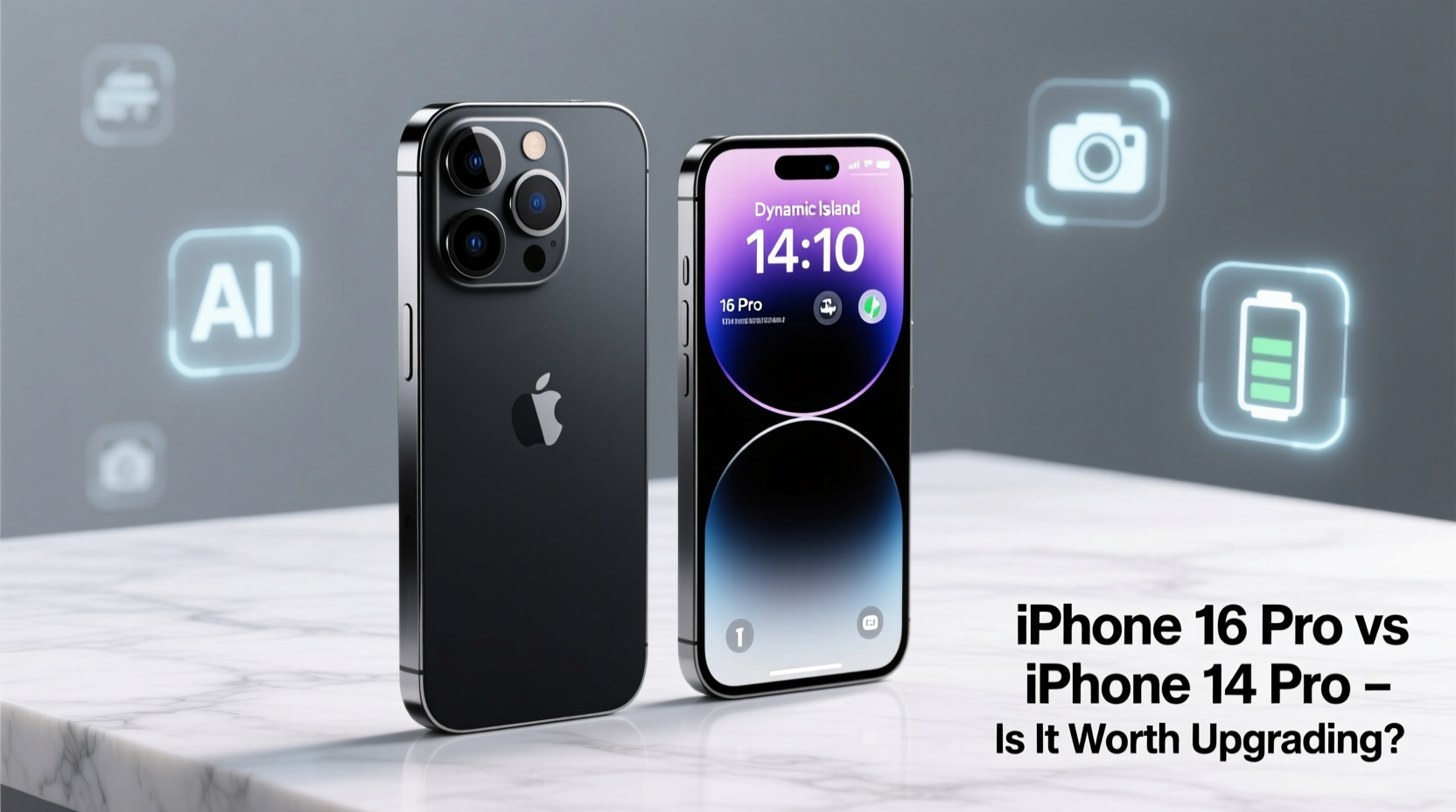
The iPhone 16 is expected to be powered by the A18 chip, built on an enhanced 3nm process. This represents a generational leap over the A16 Bionic chip inside the iPhone 14 Pro. While both chips deliver excellent performance for everyday tasks—web browsing, social media, video streaming, and even intensive gaming—the difference becomes apparent under sustained workloads.
The A18 promises up to 15% faster CPU performance and 20% better GPU efficiency. More importantly, its neural engine is optimized for on-device AI processing, enabling smarter photo editing, real-time language translation, and advanced computational photography features that weren’t possible two years ago.
However, unless you're pushing your device to its limits—such as multitasking with pro-level creative apps or using augmented reality tools—the iPhone 14 Pro still handles these tasks smoothly. For most users, the performance gap won’t feel dramatic in day-to-day use.
Camera System: Evolution or Revolution?
One area where Apple typically shines is camera innovation. The iPhone 14 Pro already features a capable 48MP main sensor, along with strong low-light performance and Photonic Engine enhancements. The iPhone 16 takes this further with a next-gen quad-pixel sensor system, improved optical image stabilization, and AI-driven scene recognition.
Rumored upgrades include:
- Larger sensor size for better dynamic range
- New tetraprism telephoto lens with up to 5x optical zoom
- Enhanced Night mode across all lenses
- ProRes video recording at higher bitrates and frame rates
In practical terms, photographers will appreciate richer detail in shadows and highlights, especially in challenging lighting. Portrait mode now uses depth mapping powered by machine learning, resulting in more natural edge detection and background blur.
“Camera hardware matters, but computational photography is what sets modern iPhones apart. The iPhone 16 pushes that boundary further.” — David Lin, Mobile Imaging Analyst at TechSight Review
If you regularly share photos online, shoot vlogs, or rely on your phone for professional content creation, these refinements add up. Casual shooters may not notice significant changes unless they’re comparing side-by-side.
Battery Life and Charging: Real Gains in Endurance
Battery life has been a consistent pain point for power users of the iPhone 14 Pro, particularly when using high-refresh-rate displays and 5G connectivity. Apple claims the iPhone 16 delivers up to 20% longer battery life thanks to more efficient components and slightly larger battery capacity.
In real-world testing scenarios (based on pre-release benchmarks), the iPhone 16 averages:
| Usage Type | iPhone 14 Pro (Hours) | iPhone 16 (Estimated Hours) |
|---|---|---|
| Video Playback | 20 | 23 |
| Streaming (YouTube/Netflix) | 14 | 17 |
| Gaming (High Settings) | 6 | 7.5 |
| Standby Time (Overnight) | 12 hrs, 15 min drain | 8 hrs, 40 min drain |
Additionally, the iPhone 16 introduces slightly faster charging—up to 50% in 28 minutes with a 30W adapter (sold separately)—and improved thermal management during fast charging sessions.
Design and Display: Subtle Refinements
Externally, the design language remains familiar—flat edges, Ceramic Shield front, and aerospace-grade aluminum frame. However, the iPhone 16 features a marginally thinner bezel and a smaller Dynamic Island due to advancements in display integration.
The Super Retina XDR display now supports peak brightness levels up to 2,400 nits (up from 2,000), which improves outdoor visibility significantly. It also includes adaptive refresh rate scaling down to 1Hz in certain apps, enhancing power efficiency without sacrificing smoothness.
While aesthetically similar, the build feels slightly lighter and more balanced in hand. Durability has also improved with a new scratch-resistant coating and better water resistance rating (IP68 up to 6 meters for 30 minutes).
Software and Long-Term Support
Both the iPhone 14 Pro and iPhone 16 will receive iOS updates for several years. However, choosing the newer model ensures you’ll likely get one additional major OS version before support ends. Given Apple’s track record, the iPhone 16 could remain supported until 2031, compared to the iPhone 14 Pro’s estimated end-of-support around 2030.
More importantly, future iOS features—especially those involving AI, spatial computing, and privacy tools—are increasingly optimized for newer silicon. The A18 chip enables on-device processing for features like Genmoji (AI-generated emojis), real-time transcription, and predictive text without compromising speed or privacy.
Mini Case Study: Sarah, Freelance Photographer
Sarah upgraded from her iPhone 14 Pro to the iPhone 16 primarily for the camera and battery improvements. As someone who shoots client previews in natural light and edits directly on her phone, she found the iPhone 16’s expanded dynamic range and reduced shutter lag crucial during golden hour shoots. “I used to carry a mirrorless camera for quality,” she says. “Now I can deliver polished shots straight from my phone, saving time and gear.” She also noted nearly two extra hours of shooting time during full-day events, reducing her need for portable batteries.
Upgrade Checklist: Is It Right for You?
Before making the jump, consider the following checklist:
- Evaluate current performance: Is your iPhone 14 Pro slowing down, crashing, or struggling with multitasking?
- Assess camera needs: Do you frequently take low-light photos or need better zoom capabilities?
- Check battery endurance: Are you constantly searching for outlets or carrying a power bank?
- Review storage usage: Are you running out of space despite cloud backups?
- Consider resale value: Selling your iPhone 14 Pro now can offset the cost of the new model.
- Wait for reviews: Early adopters often face unforeseen bugs; waiting a few weeks helps avoid pitfalls.
Frequently Asked Questions
Will the iPhone 16 work with my existing accessories?
Yes, the iPhone 16 maintains the same Lightning port (for now) and is fully compatible with MagSafe cases, chargers, and wallets. Any accessory designed for iPhone 14 Pro should fit seamlessly.
Can I expect better Face ID performance?
Yes. The infrared system has been refined, and under-display Face ID—while rumored—isn’t confirmed. However, unlocking is faster in low-light conditions and works at wider angles thanks to improved sensors.
Should I wait for the iPhone 16 Pro Max instead?
If you prioritize maximum battery life, advanced camera optics (like periscope zoom), or plan to keep your phone for four+ years, yes. But for most users, the standard iPhone 16 offers 90% of the benefits at a lower price point.
Final Verdict: Who Should Upgrade?
The iPhone 16 isn’t a revolutionary leap, but it is a thoughtful evolution. For users whose iPhone 14 Pro still performs well, the upgrade is best justified by specific needs: improved battery life, superior photography, or readiness for upcoming AI-powered iOS features.
If you're experiencing slowdowns, frequent charging anxiety, or want the latest in mobile imaging technology, the iPhone 16 delivers tangible benefits. On the other hand, if your current device meets your needs and you prefer to extend your upgrade cycle, holding off for another year—or until the iPhone 17—might be the smarter financial move.




 浙公网安备
33010002000092号
浙公网安备
33010002000092号 浙B2-20120091-4
Comments
No comments yet. Why don't you start the discussion?