
The smartphone market evolves rapidly, and what was once a flagship device can quickly become outdated. The Samsung Galaxy S7 Edge, released in 2016, was a groundbreaking phone in its time—featuring a curved display, water resistance, and a powerful camera. Fast forward to today, and budget models like the LG Journey offer modern connectivity and basic functionality at a fraction of the cost. So, is holding onto your aging S7 Edge still practical, or is it time to switch to something newer like the LG Journey? Let’s break it down with real-world considerations.
Performance: Flagship Power vs. Modern Efficiency
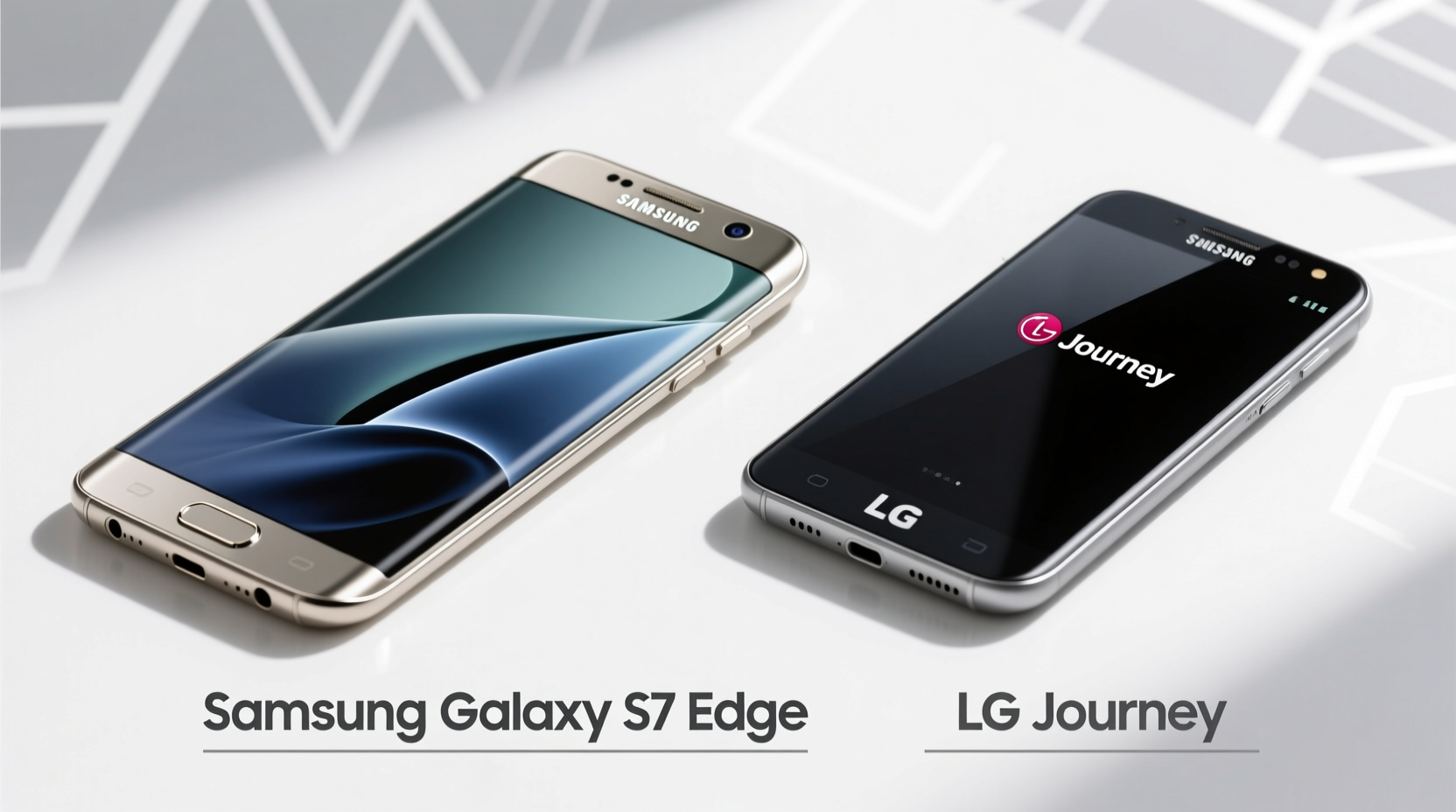
The Samsung S7 Edge was built with high-end hardware for its era: Qualcomm Snapdragon 820 (or Exynos 8890), 4GB of RAM, and a 3,600mAh battery. At launch, it handled multitasking, gaming, and photography with ease. Today, however, that same processor struggles with modern apps. Android updates have increased system demands, and many apps now require more memory and processing power than the S7 Edge can reliably provide.
In contrast, the LG Journey runs on a modest MediaTek chipset, likely a Helio P22 or similar, paired with 2–3GB of RAM. While not a powerhouse, this setup is optimized for lightweight Android Go editions or stock Android versions designed for efficiency. It won’t run high-end games smoothly, but it handles messaging, browsing, and social media without major hiccups.
Software & Security: A Critical Difference
One of the most important factors in deciding whether a phone is “still worth it” is software support. The S7 Edge received its last major Android update with Android 8.0 Oreo and security patches ceased years ago. This means no protection against newly discovered vulnerabilities, leaving the device exposed to malware, phishing, and insecure app behavior.
The LG Journey, even as a budget device, ships with Android 11 or 12 (Go Edition) and may receive minor security updates for up to two years. Google Play Protect, regular Google app updates, and sandboxed app environments make it significantly safer for daily use—especially if you use banking apps, email, or social media.
“Devices without current security patches are among the most vulnerable entry points in personal digital ecosystems.” — Dr. Lena Torres, Mobile Security Researcher at CyberShield Labs
Battery Life and Charging: Degradation vs. Practicality
The S7 Edge had excellent battery life in 2016, but lithium-ion batteries degrade over time. After 7+ years, even a well-maintained S7 Edge likely has 50–60% of its original capacity. You might find yourself charging multiple times a day, and fast charging performance will have diminished.
The LG Journey typically comes with a 3,000–4,000mAh battery. While smaller on paper than the S7 Edge’s original capacity, it’s fresh and efficient. Combined with a lower-resolution screen and optimized software, it often delivers better real-world endurance. Plus, it supports modern USB-C charging, eliminating the need for aging micro-USB cables.
Display and Build Quality Comparison
The S7 Edge featured a stunning 5.5-inch Quad HD Super AMOLED curved display—a standout feature even by today’s standards. Its glass-and-metal design felt premium and had IP68 water and dust resistance. These qualities are still impressive and unmatched in the LG Journey’s price range.
The LG Journey uses a 6.2-inch HD+ IPS LCD screen. It’s larger, which helps with media consumption, but lacks the color depth, contrast, and brightness of the S7 Edge’s AMOLED panel. The build is mostly plastic, and there's no official water resistance rating. While durable enough for everyday use, it doesn’t feel nearly as refined.
| Feature | Samsung S7 Edge | LG Journey |
|---|---|---|
| Release Year | 2016 | 2022 |
| OS Support | Android 8.0 (No updates) | Android 11/12 Go (Limited updates) |
| Processor | Snapdragon 820 / Exynos 8890 | MediaTek Helio P22 |
| RAM | 4GB | 2–3GB |
| Storage | 32/64GB (Expandable) | 32GB (Expandable) |
| Battery | 3,600mAh (Degraded) | 3,000–4,000mAh (Fresh) |
| Display | 5.5\" QHD AMOLED Curved | 6.2\" HD+ IPS LCD Flat |
| Water Resistance | IP68 Rated | None |
| Security Updates | None since 2019 | Ongoing (limited) |
| Price Today | $0 (if already owned) | $80–$120 (new) |
Real-World Example: Maria’s Upgrade Dilemma
Maria has been using her S7 Edge since 2017. She loves the sleek design and vivid screen, but lately, her phone freezes when opening WhatsApp, takes minutes to load maps, and dies by noon. She considered buying another used flagship to save money but found the LG Journey on sale for $99 with a one-year warranty.
After switching, she noticed slower app launches but appreciated consistent performance, faster boot times, and the ability to use Google Pay—something her old phone couldn’t support securely. The larger screen made reading easier, and the new battery lasted all day. While she missed the curved glass aesthetic, the improved reliability made the trade-off worthwhile.
When to Keep the S7 Edge (and When to Let Go)
There are specific scenarios where keeping the S7 Edge makes sense:
- As a secondary device: Use it for music, offline games, or as a dedicated e-reader.
- No internet usage: If it’s only used offline (e.g., storing photos, playing local videos), security risks are minimal.
- Collector’s item: For tech enthusiasts preserving iconic devices.
However, if you rely on it for communication, banking, shopping, or social media, upgrading is strongly advised. The lack of security updates alone poses a significant risk.
Step-by-Step: How to Decide What’s Right for You
- Evaluate your primary use case: Are you texting, browsing, using apps, or just making calls?
- Test current performance: Try opening your most-used apps. Do they crash or lag?
- Check battery health: If it drains below 30% by midday, replacement or upgrade is needed.
- Assess security needs: If you log into accounts or use payment apps, outdated software is a liability.
- Compare costs: Repairing an old phone (e.g., battery replacement) may cost $50–$80—close to the price of a new budget phone.
- Try a short-term rental or demo: Some carriers let you test budget phones before purchase.
- Make the switch: Back up contacts and data, then transition to the new device.
Frequently Asked Questions
Can I still use WhatsApp on the S7 Edge?
Technically, yes—but WhatsApp ended support for Android 8.0 and older devices in 2023. You may experience login issues, missing features, or eventual incompatibility. Upgrading ensures continued access.
Is the LG Journey waterproof?
No, the LG Journey does not have an IP rating for water or dust resistance. Avoid exposure to moisture, unlike the S7 Edge, which can survive brief submersion.
Will my accessories work with the LG Journey?
Most S7 Edge accessories (cases, wireless chargers) won’t be compatible due to different size, shape, and charging standards. The LG Journey uses USB-C, so you’ll need new cables.
Final Verdict: Time to Move On
The Samsung S7 Edge was a masterpiece of its generation—beautiful, innovative, and ahead of its time. But technology isn’t just about nostalgia; it’s about functionality, safety, and usability. In 2024, continuing to rely on a phone without security updates, degraded hardware, and app compatibility issues is more of a liability than a convenience.
The LG Journey may lack the prestige of the S7 Edge, but it offers modern essentials: secure software, reliable connectivity, fresh battery life, and compatibility with today’s digital ecosystem. For under $100, it provides peace of mind and dependable performance.
If you’re still holding onto your S7 Edge out of loyalty or hesitation, consider this your sign to upgrade. Your future self will thank you for smoother experiences, fewer frustrations, and stronger digital security.




 浙公网安备
33010002000092号
浙公网安备
33010002000092号 浙B2-20120091-4
Comments
No comments yet. Why don't you start the discussion?