
For users still holding onto a Galaxy Note 3—released in 2013—the idea of upgrading to a Galaxy Note 10 may feel like stepping into a new technological era. The decade-long gap between these devices spans multiple generations of mobile innovation. But is making this leap in 2024 still meaningful? While the Note 10 itself was discontinued in 2020 and no longer receives major OS updates, its hardware remains vastly superior to the Note 3. Whether the upgrade delivers tangible benefits depends on your usage patterns, expectations, and how much modern smartphone functionality matters to you.
Performance and Hardware: A Quantum Leap
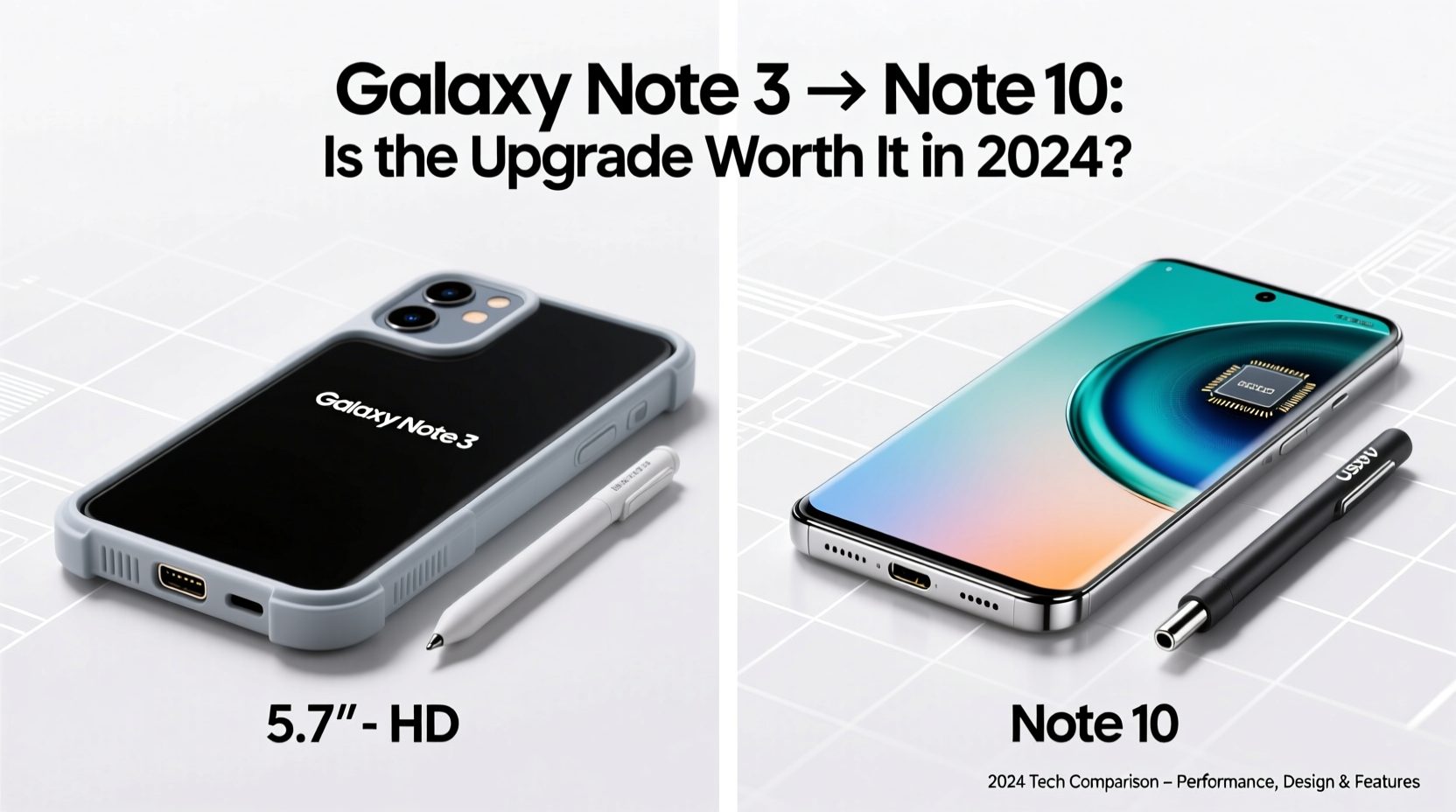
The difference in processing power between the Galaxy Note 3 and Note 10 is nothing short of dramatic. The Note 3 came with a quad-core Snapdragon 800 or an octa-core Exynos 5420, depending on region, paired with 3GB of RAM. By today’s standards, that hardware struggles to run even basic multitasking smoothly. In contrast, the Note 10 launched with the Exynos 9825 or Snapdragon 855—both flagship chips at the time—with 8GB of RAM as standard.
Modern apps, web browsers, and even system navigation are built with far greater computational demands. On a Note 3, loading a single webpage with media-heavy content can take over 30 seconds. Background processes stall, app switching is sluggish, and newer versions of Android simply won’t install. The Note 10, despite being several years old, runs Android 11 (upgradable from its original Android 9) and supports near-instant app launches, fluid animations, and efficient background operations.
Software and Security: The Hidden Risks of Staying Behind
One of the most critical factors in deciding whether to upgrade is software support. The Note 3 last received Android 5.0 Lollipop in 2015. Since then, it has not had any security patches. This leaves the device vulnerable to known exploits, malware, and phishing attacks—especially if used for email, banking, or social media.
In contrast, the Galaxy Note 10 received four years of security updates and reached end-of-life in early 2023. While it no longer gets patches, it ran up-to-date Android versions with Samsung Knox security, biometric authentication (face unlock and ultrasonic fingerprint), and regular firmware improvements during its supported life.
“Using a phone without security updates after 2017 is like leaving your front door unlocked in a high-crime neighborhood.” — David Lin, Mobile Security Analyst at CyberShield Labs
Even though the Note 10 is now unsupported, its final software state was significantly more secure than anything the Note 3 ever had access to.
Camera Capabilities: From Basic Snaps to Professional-Grade Imaging
The camera systems on these two phones represent entirely different philosophies. The Note 3 featured a single 13MP rear camera with basic autofocus and LED flash. Low-light performance was poor, and video maxed out at 1080p at 30fps. Front-facing was a modest 2MP shooter—adequate for early selfies but lacking in detail.
The Note 10 introduced a triple-camera array: a 12MP wide, 12MP telephoto, and a 16MP ultra-wide lens. Combined with advanced HDR, scene optimizer, and AI-powered enhancements, the Note 10 captures richly detailed photos in varied lighting. Its front camera is a 10MP sensor with autofocus, capable of high-resolution selfies and smooth 4K video recording.
| Feature | Galaxy Note 3 | Galaxy Note 10 |
|---|---|---|
| Rear Camera | 13MP, f/2.2, single lens | 12MP+12MP+16MP triple system |
| Video Recording | 1080p @ 30fps | 4K @ 60fps, HDR10+ |
| Front Camera | 2MP | 10MP with autofocus |
| Low-Light Performance | Poor, excessive noise | Strong with Night Mode |
If photography matters—even casually—the upgrade alone justifies the move.
Display and S Pen Evolution
The Note 3 had a 5.7-inch Full HD Super AMOLED display with a 16:9 aspect ratio. While impressive in 2013, it feels cramped and outdated next to the Note 10’s 6.3-inch Dynamic AMOLED display with HDR10+ support, thinner bezels, and a 19:9 cinematic aspect ratio. Brightness, color accuracy, and viewing angles are dramatically improved.
The S Pen also evolved significantly. The Note 3’s stylus offered basic Air Commands and limited pressure sensitivity. The Note 10’s S Pen supports 4,096 levels of pressure sensitivity, Bluetooth LE connectivity, and gesture controls—allowing users to control presentations, capture photos remotely, or navigate videos hands-free.
Real-World Example: Maria’s Upgrade Journey
Maria, a freelance graphic designer from Austin, used her Galaxy Note 3 for nearly eight years, relying on it for sketching concepts with the S Pen. By 2022, she noticed apps crashing frequently, cloud sync failing, and her portfolio images looking pixelated when shared online. After trading up to a second-hand Note 10, she found immediate improvements: her design apps loaded instantly, cloud backups completed reliably, and clients praised the clarity of her digital sketches. “It wasn’t just faster,” she said. “It finally felt like a professional tool again.”
Step-by-Step Guide to Making the Upgrade Decision
- Evaluate your current pain points: Does your Note 3 freeze often? Fail to load websites? Struggle with messaging apps?
- Assess your needs: Do you use mobile banking, streaming, or social media regularly? These demand modern hardware.
- Check availability: Note 10 models are no longer sold new, but refurbished units are available from reputable sellers.
- Compare prices: Refurbished Note 10s range from $150–$250, while Note 3 replacements cost under $50—but offer no long-term value.
- Backup and migrate: Use Samsung Smart Switch to transfer contacts, messages, and photos securely.
- Dispose responsibly: Recycle your old device through certified e-waste programs.
FAQ
Can the Galaxy Note 10 still receive software updates?
No. Samsung ended official software and security updates for the Galaxy Note 10 in early 2023. However, it remains stable for daily use and supports most current apps.
Is the Note 10 waterproof?
Yes. The Galaxy Note 10 has an IP68 rating, meaning it can survive submersion in up to 1.5 meters of water for 30 minutes. The Note 3 lacks any official water resistance.
Will my old accessories work with the Note 10?
Most won’t. The Note 10 uses USB-C instead of micro-USB, and its wireless charging requires compatible pads. Older cases, chargers, and docks are incompatible.
Final Verdict: Is It Worth It?
Despite the Note 10 being a legacy device, upgrading from a Galaxy Note 3 in 2024 is absolutely worthwhile for anyone who relies on their phone for communication, productivity, or creativity. The gains in speed, security, camera quality, and usability are transformative. You’re not just getting a newer phone—you’re gaining access to a decade of mobile progress.
While newer models like the Galaxy S23 or Note 20 Ultra would offer even better experiences, the Note 10 represents a sweet spot: powerful enough for modern tasks, affordable on the secondhand market, and a massive leap from 2013-era technology.
“The Note 10 might be retired, but for someone coming from a Note 3, it’s like going from dial-up to fiber internet.” — Lena Park, Tech Editor at Mobile Horizon
Upgrade Checklist
- ✅ Back up all data from your Note 3
- ✅ Purchase a refurbished or used Note 10 from a trusted source
- ✅ Install latest available firmware upon setup
- ✅ Transfer apps and accounts via Samsung Smart Switch
- ✅ Test camera, S Pen, and connectivity features
- ✅ Recycle your old device responsibly
Conclusion
Holding onto aging technology out of familiarity is understandable, but there comes a point where staying behind hinders more than it helps. Upgrading from a Galaxy Note 3 to a Note 10—even in 2024—delivers real, measurable improvements in every aspect of mobile use. Security, performance, photography, and usability all see exponential gains. If you’ve been hesitating, now is the time to make the jump. Your future self will wonder why you waited so long.




 浙公网安备
33010002000092号
浙公网安备
33010002000092号 浙B2-20120091-4
Comments
No comments yet. Why don't you start the discussion?