
When winter sets in, few decisions feel as consequential as choosing the right snow boots. Among the many factors—insulation, waterproofing, traction, and shaft height—one often overlooked detail can significantly affect your experience: how the boot closes. Lace-up versus zipper designs aren’t just aesthetic choices—they influence fit, warmth, ease of use, and long-term durability. While both styles have loyal followings, understanding their real-world implications helps ensure you don’t compromise comfort or safety for convenience.
Fit and Customization: The Precision of Laces
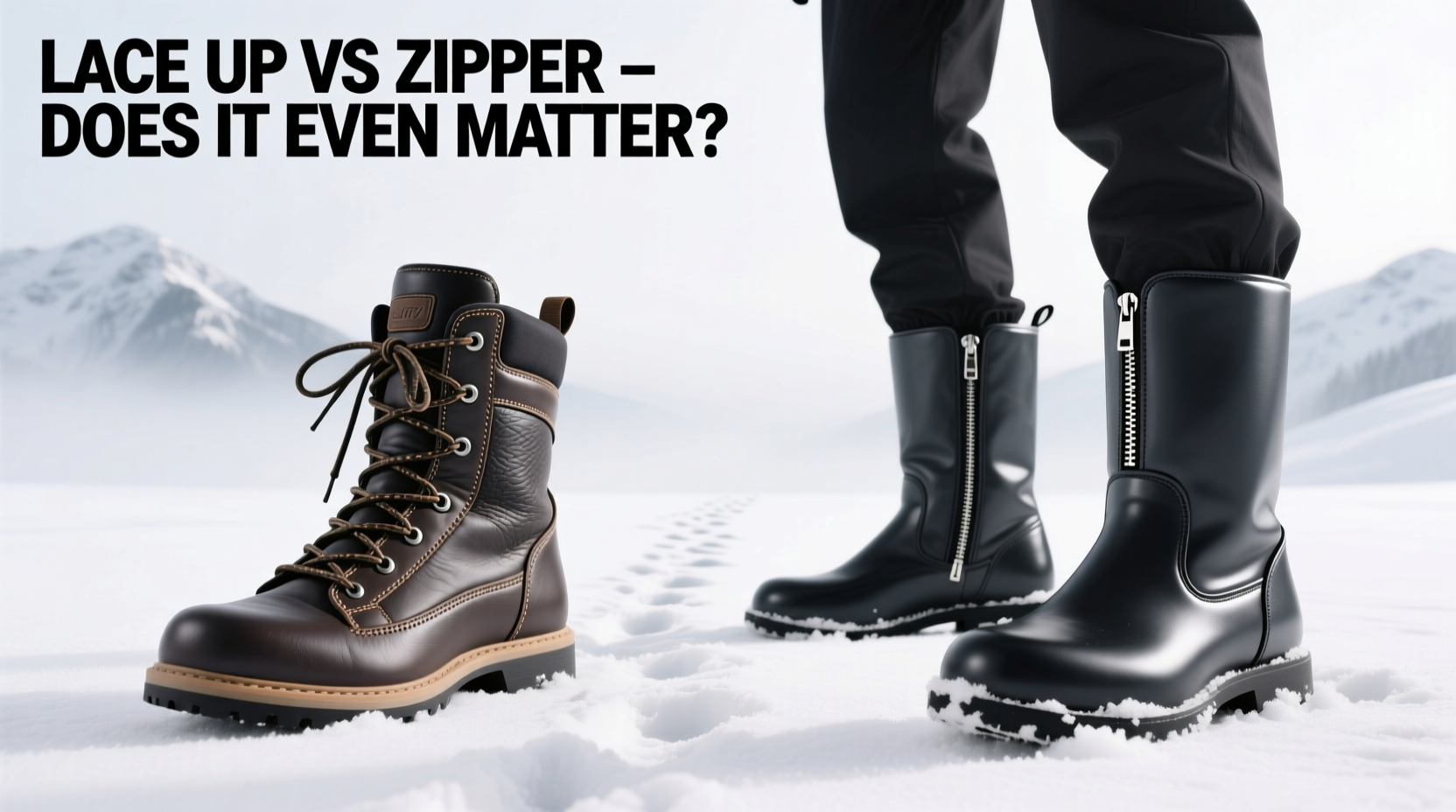
Lace-up snow boots offer a level of fit customization that zippers simply can’t match. By adjusting tension at different eyelets, wearers can fine-tune pressure across the foot, ankle, and instep. This is especially valuable for people with narrow heels, high arches, or swelling feet. A properly laced boot secures the heel, prevents internal slippage, and reduces friction that leads to blisters.
Zippers, on the other hand, provide a uniform closure. Once fastened, there’s little room for micro-adjustments. If the boot is slightly too loose around the ankle, a zipper won’t fix it. Over time, this can lead to inefficient movement, reduced warmth (from air gaps), and discomfort during extended wear.
The Role of Fit in Cold Weather Performance
A snug, secure fit isn’t just about comfort—it’s critical for thermal efficiency. Gaps between the foot and boot allow cold air to circulate and body heat to escape. In lace-ups, you can cinch the midfoot and loosen the top if needed, maintaining circulation while minimizing dead space. Zipper boots rely entirely on the built-in structure of the upper material to conform to your foot, which may not adapt well to non-standard foot shapes.
Durability and Long-Term Reliability
Zippers are inherently more vulnerable than laces. Exposure to snow, ice, salt, and dirt increases the risk of jamming, rusting, or breaking. Even high-quality YKK zippers, commonly used in outdoor gear, require regular cleaning and lubrication to maintain smooth operation. One broken zipper pull or misaligned tooth can render a boot unusable until repaired.
Laces, by contrast, are simple, replaceable, and highly resilient. They don’t corrode or seize up in subzero temperatures. While they can break under extreme stress, replacements are inexpensive and universally available. Additionally, lace systems distribute tension evenly over multiple points, reducing strain on any single component.
“Zippers add convenience but introduce a single point of failure. For serious winter conditions, redundancy and repairability matter.” — Dr. Lena Peterson, Outdoor Footwear Engineer, Cold Climate Research Lab
Convenience and Accessibility
This is where zipper boots shine. For children, elderly users, or anyone with limited dexterity, pulling a zipper is far easier than tying laces. Parents dealing with wriggling kids in freezing weather will appreciate the speed of a one-pull closure. Some models even feature dual zippers or side-entry designs that allow full access without removing socks or insoles.
Lace-ups demand more time and coordination. In deep snow or icy parking lots, bending over to tie boots can be awkward and uncomfortable. However, modern innovations like bungee lacing systems or toggle pulls help reduce this gap, offering near-zipper speed with traditional lace benefits.
Real-World Scenario: Commuting in Chicago Winter
Consider Sarah, a nurse working night shifts in downtown Chicago. Her 15-minute walk to work involves navigating slush-covered sidewalks and icy bus stops. She initially chose zipper boots for quick changes after her shift. But by February, the zipper began sticking due to road salt exposure. On a particularly cold morning, it failed completely, leaving her scrambling to wrap tape around the pull just to get through her commute.
She switched to lace-up winter boots with waterproof Cordura uppers and reflective detailing. Though they took slightly longer to put on, she gained consistent fit, better ankle support, and peace of mind knowing no single mechanical part could strand her in -15°F weather.
Performance in Extreme Conditions
In demanding environments—backcountry hiking, snow shoveling, or prolonged outdoor work—the superiority of lace-up systems becomes more apparent. They allow layered lacing techniques to accommodate thick socks, prevent heel lift on descents, and relieve pressure points. Many mountaineering and expedition-grade boots use complex lacing systems with speed hooks for rapid adjustment.
Zipper boots often sacrifice structural integrity for ease of access. The seam along the zipper track is a potential weak point for water intrusion, especially if the protective flap fails or wears down. While many brands apply waterproof coatings or storm flaps, these degrade faster than solid fabric or leather panels used in lace-up constructions.
Comparative Analysis: Key Features at a Glance
| Feature | Lace-Up Boots | Zipper Boots |
|---|---|---|
| Fit Adjustability | High – customizable tension zones | Low – fixed closure |
| Durability | Very high – minimal moving parts | Moderate – zipper prone to wear/failure |
| Entry/Exit Speed | Moderate to slow (unless using elastic laces) | Fast – ideal for frequent removal |
| Water Resistance | High – fewer seams, robust materials | Variable – depends on zipper seal quality |
| Maintenance Needs | Low – occasional lace replacement | Moderate – zipper cleaning/lubrication required |
| Ideal For | Hiking, heavy snow, wide/narrow feet | Kids, seniors, light urban use |
What Experts Recommend Based on Use Case
The best choice depends on your lifestyle and environment. Outdoor educators and emergency responders often recommend lace-ups for reliability. Pediatricians and occupational therapists, however, frequently suggest zipper boots for young children or individuals with arthritis or mobility challenges.
- For active adults in harsh climates: Prioritize lace-up designs with waterproof membranes and aggressive tread.
- For urban commuters: Consider hybrid models with partial zippers and minimal lacing for balance.
- For children and older adults: Choose wide-calf zipper boots with non-slip soles and insulated linings.
Step-by-Step: Choosing Your Ideal Boot Type
- Assess your daily routine: Will you be standing for hours, walking on ice, or just stepping from car to office?
- Evaluate dexterity needs: Can you comfortably tie laces with gloves on?
- Measure your foot and calf: Ensure the boot accommodates thick socks and your calf width—especially important for zipper models.
- Test both closure types: Try on multiple pairs; simulate putting them on and off.
- Check warranty and repair options: Brands like Sorel, Baffin, and Salomon offer zipper replacements under warranty.
Frequently Asked Questions
Can I replace a broken zipper on snow boots?
Yes, but it’s often costly and may compromise waterproofing. Some manufacturers offer repair services. In many cases, it’s more economical to replace the boot unless it’s a high-end model.
Are lace-up boots harder to waterproof?
No—in fact, laces create fewer entry points for moisture than zippers. Most quality lace-up snow boots use gusseted tongues and sealed seams to block snow ingress effectively.
Do zipper boots stretch over time?
Slightly, depending on the upper material. Synthetic fabrics and faux leather may loosen, causing the ankle to slip. Natural leather molds to the foot but won’t compensate for poor initial fit.
Final Thoughts: It Does Matter—But Not Equally for Everyone
The choice between lace-up and zipper snow boots isn’t trivial, but it’s also not universal. For those prioritizing precision fit, durability, and performance in severe weather, lace-ups remain the gold standard. For families, seniors, or city dwellers who value speed and simplicity, zipper boots offer practical advantages—if maintained carefully.
Rather than defaulting to habit or aesthetics, assess your actual needs: How long are your exposures to cold? What kind of terrain do you face? Do you wear orthotics or bulky socks? Answering these honestly makes the decision clearer—and keeps your feet warmer, drier, and safer all winter long.




 浙公网安备
33010002000092号
浙公网安备
33010002000092号 浙B2-20120091-4
Comments
No comments yet. Why don't you start the discussion?