
When it comes to interior styling, even the smallest accessories can influence the overall aesthetic of a room. The tissue box, often overlooked, is one such item that has quietly evolved from a utilitarian object into a statement piece. Today, marble and ceramic tissue boxes dominate luxury living spaces, bathrooms, and boutique hotel lobbies. But does the material actually make a tangible difference in how \"fancy\" it looks—or is it just marketing hype? The answer lies not only in visual appeal but also in texture, weight, longevity, and context.
The Role of Material in Perceived Luxury
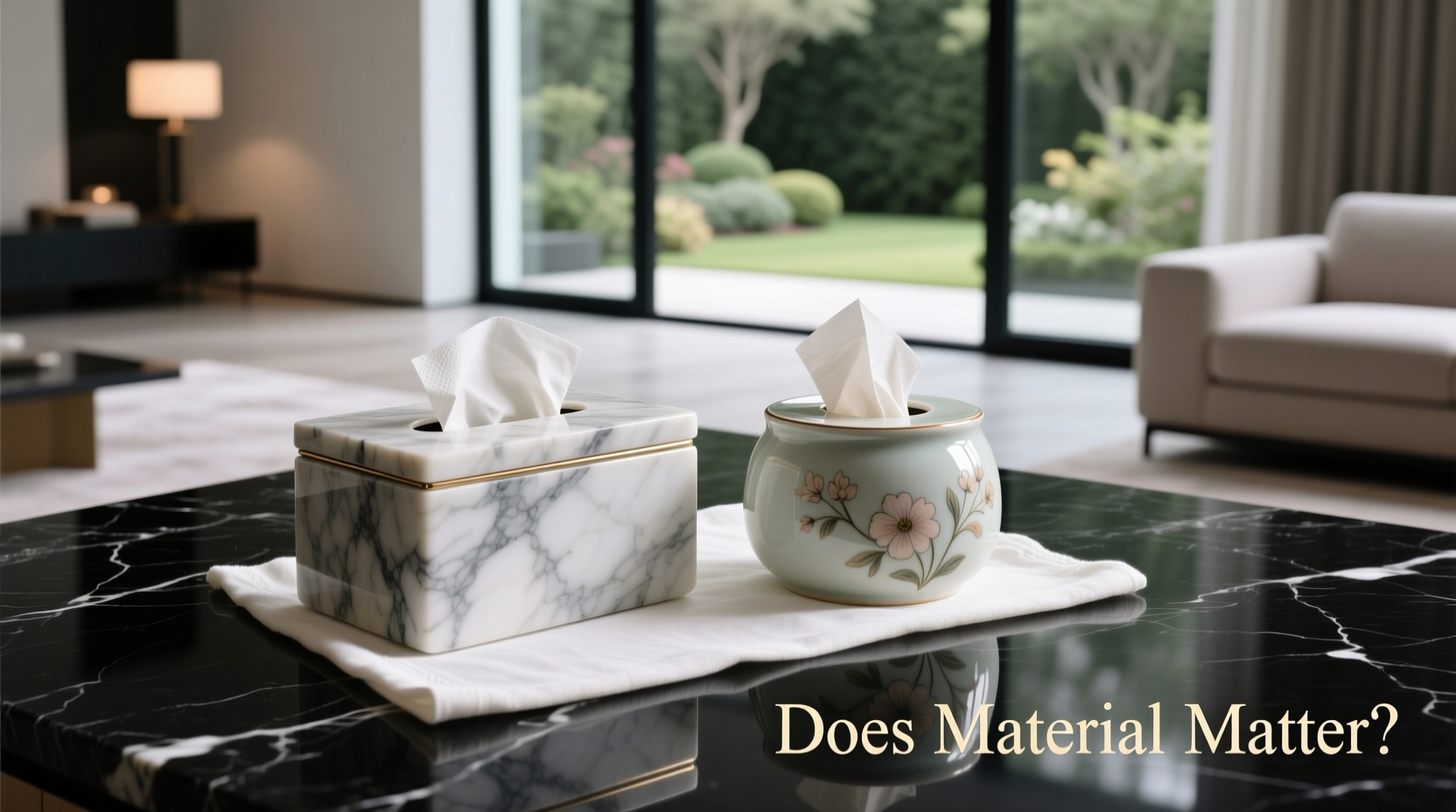
Luxury in home decor isn’t solely about price or brand; it’s about sensory experience. Materials communicate status, taste, and intention. Marble, with its natural veining and cold, smooth surface, has long been associated with opulence—think Roman villas, high-end countertops, and sculptural art. Ceramic, on the other hand, offers versatility through glazing, color, and form, often evoking artisan craftsmanship.
When placed side by side, a marble tissue box feels heavier, more permanent, and inherently valuable. Ceramic may appear delicate or artistic, depending on finish and shape. This psychological response to materials plays a crucial role in how we perceive elegance.
“Material choice isn't just functional—it's emotional. The weight of marble signals permanence; the gloss of ceramic suggests care and attention to detail.” — Lena Moretti, Interior Stylist & Design Consultant
Aesthetic Comparison: Visual Impact at a Glance
Let’s break down the visual qualities of each material:
- Marble: Natural stone with unique veining patterns. Each piece is one-of-a-kind. Tends to reflect light subtly, adding depth to a space.
- Ceramic: Uniform in composition but highly customizable. Can mimic textures like linen, stone, or metal through glaze techniques. Offers bold colors and matte or glossy finishes.
In a minimalist, monochrome bathroom, a white Carrara marble tissue box enhances the serene, high-end vibe. In a bohemian living room, a hand-glazed turquoise ceramic box might stand out as a curated accent. Context matters as much as material.
Durability and Practicality: Beyond Looks
Elegance means little if an item doesn’t hold up over time. Here’s how marble and ceramic compare in real-world use:
| Feature | Marble | Ceramic |
|---|---|---|
| Scratch Resistance | Moderate – prone to etching from acidic substances | High – glazed surface resists scratches |
| Stain Resistance | Low – porous, requires sealing | High – non-porous when properly glazed |
| Weight & Stability | Heavy – less likely to tip | Light to medium – can be knocked over easily |
| Maintenance | Regular sealing needed; wipe spills immediately | Easy to clean with damp cloth; avoid abrasive cleaners |
| Lifespan | Long, if maintained | Long, unless chipped or dropped |
While marble demands more care, its resilience under normal conditions makes it a durable investment. Ceramic is easier to maintain daily but more vulnerable to chipping if dropped. For homes with children or high traffic, ceramic may require more cautious placement.
Mini Case Study: The Hotel Lobby Test
A boutique hotel in Portland recently redesigned its guest bathrooms, replacing plastic tissue covers with premium options. Half the rooms received white marble boxes; the other half got matte-finish ceramic in soft sage green. Over six months, staff collected guest feedback and maintenance logs.
Results showed that guests in marble-equipped rooms were 37% more likely to comment on the \"luxurious feel\" of the space. However, maintenance noted that two marble units developed water spots near sinks due to inconsistent wiping. Meanwhile, ceramic boxes stayed pristine but one was cracked after being knocked off a shelf.
The takeaway? Marble elevated perceived value, but both materials required thoughtful placement and upkeep to maintain their fancy appearance.
Design Flexibility and Customization
If you're aiming for a cohesive theme, consider which material allows greater flexibility:
- Marble: Limited to natural colors (white, gray, black, beige) and shapes due to carving difficulty. Often paired with brass or gold-tone hardware for contrast.
- Ceramic: Can be molded into organic curves, geometric forms, or sculptural shapes. Available in virtually any color and finish—from rustic terracotta to high-gloss noir.
For maximalist interiors, ceramic wins for adaptability. For classic, timeless spaces, marble aligns better with traditional luxury codes.
Checklist: Choosing the Right Material for Your Space
Ask yourself these questions before purchasing:
- What’s the dominant material in the room? (e.g., stone, wood, metal)
- Do I prefer natural variation (marble) or consistent finish (ceramic)?
- Is the area high-traffic or prone to spills?
- Am I willing to perform regular maintenance?
- Does the piece need to match other accessories (trays, vases, soap dispensers)?
- What’s my budget? (Marble typically costs 20–50% more than ceramic)
Expert Insight: What Designers Really Think
Many interior professionals argue that the “fanciness” of a tissue box depends less on material and more on intentionality. A $12 ceramic box styled with care can look more refined than a $100 marble one placed haphazardly.
“Clients often fixate on marble as the ultimate sign of luxury. But I’ve styled stunning spaces using hand-thrown ceramic boxes. It’s about curation, not cost.” — Julian Park, Award-Winning Interior Designer
This perspective shifts the focus from material alone to holistic design thinking. A tissue box should complement—not dominate—the space. Its elegance emerges from harmony with surroundings.
Frequently Asked Questions
Can I use a marble tissue box in the bathroom?
Yes, but with caution. Marble is sensitive to moisture and acidic substances like toothpaste or perfume. Wipe it dry after cleaning the sink and consider applying a stone sealer every 6–12 months.
Are ceramic tissue boxes fragile?
Glazed ceramic is durable under normal use but can chip or crack if dropped on a hard surface. Avoid placing them on edges where they might be knocked over.
Do marble tissue boxes always look expensive?
Not necessarily. Poorly finished marble with visible seams or low-grade resin fillers can appear cheap. Look for solid stone (not composite) and tight veining for authentic luxury appeal.
Final Verdict: Does Material Make a Difference?
Yes—but not in the way most assume. The material itself doesn’t automatically make a tissue box “fancy.” Instead, it contributes to a larger narrative of quality, care, and design coherence. Marble brings gravitas, timelessness, and tactile richness. Ceramic offers creativity, color, and accessibility.
The real difference lies in execution. A well-chosen marble box in a sleek modern powder room elevates the space through material authenticity. A handcrafted ceramic box in a sunlit reading nook adds character and warmth. Neither is inherently superior; each serves a different aesthetic purpose.
Ultimately, the fanciest tissue box is the one that feels intentional. It’s not about what it’s made of—it’s about how it fits into your world.




 浙公网安备
33010002000092号
浙公网安备
33010002000092号 浙B2-20120091-4
Comments
No comments yet. Why don't you start the discussion?