
In high-pressure exam environments, every second counts. While much attention is given to content preparation and time management, one often overlooked factor can dramatically affect performance: handwriting efficiency. Gel pens have become a favorite among students for their smooth ink flow and vibrant visibility. However, using them effectively requires more than just picking up a pen and writing. Mastering gel pen techniques for exam writing can significantly improve both speed and clarity—two critical components of scoring well, especially in subjective papers.
Unlike ballpoint or fountain pens, gel pens use water-based gel ink that glides effortlessly across paper. This reduces hand fatigue and allows for faster writing, but it also introduces challenges like smudging, inconsistent line thickness, and skipping if not used correctly. The goal is to harness the advantages while minimizing drawbacks through deliberate technique, proper tools, and consistent practice.
Understanding Gel Pen Mechanics for Optimal Performance
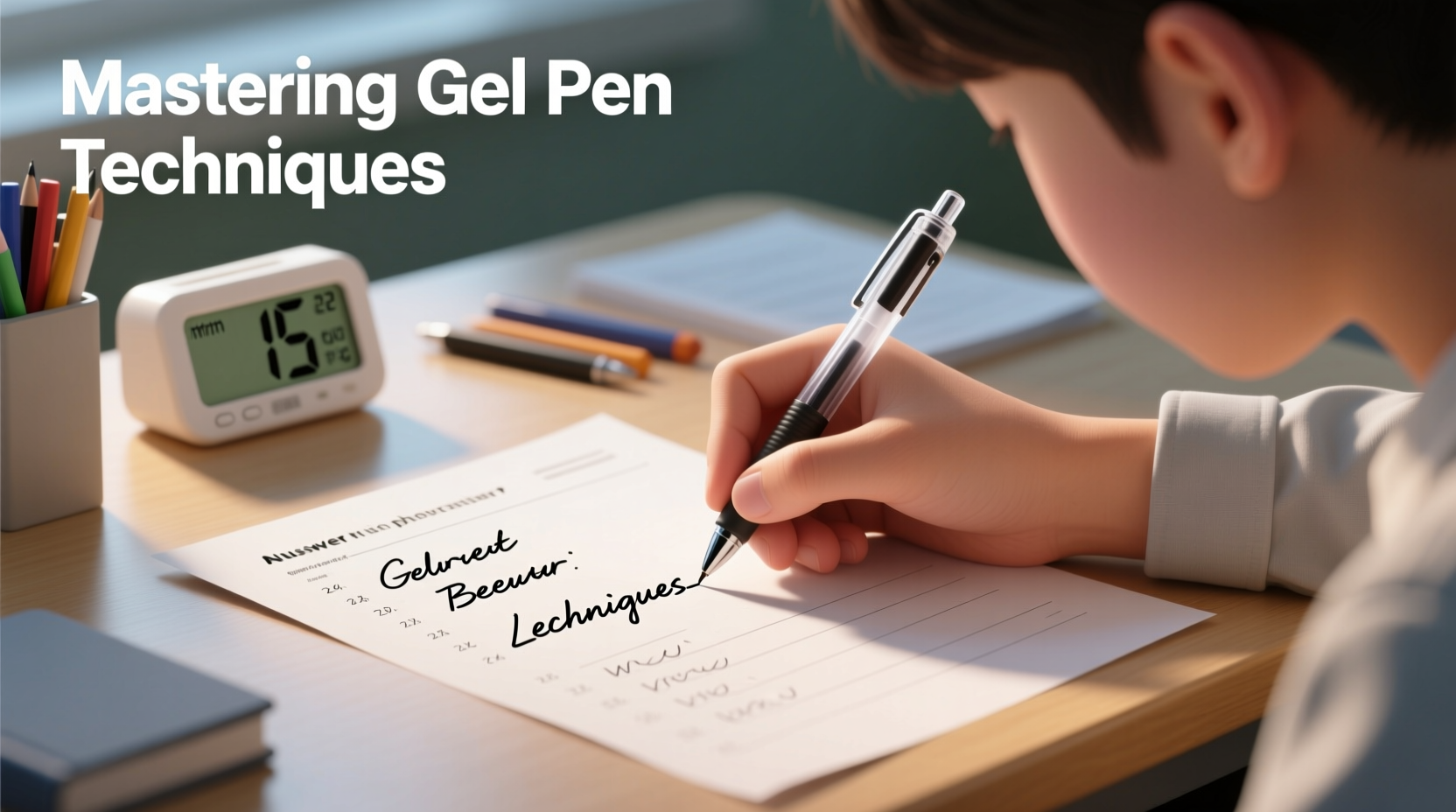
Gel pens operate differently from traditional ballpoints. Their ink is thicker and pigment-rich, allowing for bold, vivid lines even on low-quality paper. Because the ink flows with minimal pressure, users tend to write faster—but this can lead to uncontrolled strokes or overlapping letters if grip and posture aren’t optimized.
The key mechanical advantage lies in reduced friction. A quality gel pen typically has a tungsten carbide or stainless steel ball tip that rotates smoothly, distributing ink evenly. This means you don’t need to press hard—an essential insight for maintaining stamina during long exams.
Moreover, gel ink takes slightly longer to dry than oil-based inks. Left-handed writers are particularly vulnerable to smearing, so choosing quick-drying models and adjusting hand position becomes crucial.
Step-by-Step Guide to Improving Writing Speed and Clarity
Improvement doesn’t come overnight. It requires structured practice focused on form, rhythm, and consistency. Follow this six-step process over two to three weeks to build fluency:
- Choose the Right Pen and Paper: Select a fine-point (0.5mm) gel pen known for fast drying (e.g., Pilot G-2, Uni-ball Signo). Use standard exam-style paper to simulate real conditions.
- Optimize Your Grip: Hold the pen between your thumb and index finger, resting it on the middle finger. Keep joints relaxed. Avoid “death grip” tension.
- Practice Letter Consistency: Write each alphabet in cursive and print forms, focusing on uniform size and spacing. Aim for 3–4 mm height per letter.
- Build Rhythm with Timed Drills: Set a timer for 5 minutes and write continuously—either copying text or summarizing topics. Focus on steady pace, not perfection.
- Reduce Lifting the Pen: Minimize lifting your pen between words. Connect letters fluidly where possible, reducing motion waste.
- Review for Legibility: After each session, read your writing aloud. If you struggle, so will an examiner. Adjust slant, spacing, or size accordingly.
This regimen builds muscle memory and trains your hand to move efficiently without sacrificing readability.
Do’s and Don’ts When Using Gel Pens in Exams
| Do’s | Don’ts |
|---|---|
| Use quick-drying gel pens to prevent smudging | Use glitter or metallic gel pens—they often skip and aren't allowed |
| Maintain a 45–55 degree pen angle for smooth flow | Press too hard—gel pens require almost no pressure |
| Write with slight forward slant (5–10 degrees) for speed | Write vertically upright or excessively slanted |
| Leave consistent spacing (≈2 mm) between lines | Crowd answers to save space—it reduces clarity |
| Blot excess moisture from hands before writing | Rest palm directly on fresh ink trails |
Real Example: How One Student Improved Her Exam Scores
Sophia, a university sophomore preparing for her semester finals, consistently lost marks despite knowing her material well. Professors noted her answers were “difficult to follow” due to cramped handwriting and frequent cross-outs. She switched from a ballpoint to a 0.5mm Uni-ball Signo UM-151 and began daily 10-minute handwriting drills using past exam questions.
Within three weeks, she reduced her writing time per page by 18% while increasing legibility. During her actual exams, she completed all sections with five minutes to spare and received feedback praising her “clear, organized responses.” Her average score rose by half a grade point across courses.
Her breakthrough wasn’t better knowledge—it was better delivery. By mastering her tool, she communicated more effectively under pressure.
Expert Insight: What Handwriting Specialists Recommend
“Speed without clarity is wasted effort in exams. The best students treat handwriting like a skill—not an afterthought. Gel pens can be powerful allies when paired with controlled technique and regular practice.” — Dr. Alan Reeves, Educational Psychologist & Handwriting Researcher, University of Leeds
Dr. Reeves emphasizes that handwriting fluency correlates strongly with cognitive load. When writing becomes automatic, mental resources free up for thinking, organizing ideas, and self-editing—all vital during timed assessments.
Checklist: Preparing Your Gel Pen Strategy Before Exams
- ✅ Test 2–3 gel pen models to find the fastest-drying, most comfortable one
- ✅ Practice writing full answers in exam conditions (timed, no breaks)
- ✅ Train with lined paper to maintain consistent baseline alignment
- ✅ Develop a personal shorthand for common terms (e.g., “w/” for “with,” “→” for “leads to”)
- ✅ Clean pen tips weekly with a damp cloth to prevent ink buildup
- ✅ Pack at least two identical backup pens on exam day
- ✅ Avoid using new pens for the first time during the test
Frequently Asked Questions
Can I use any color gel pen in exams?
Most institutions only allow blue or black ink. Always confirm your exam board’s rules. Red, green, or purple may not be accepted, and some schools disallow gel pens entirely unless specified. Stick to black or royal blue from reputable brands to stay compliant.
Why does my gel pen skip or blob during exams?
Skipping often occurs due to dried ink residue on the ball tip or low-quality paper fibers catching the mechanism. Blobbing happens when you pause too long with the tip on paper. To prevent this, store pens cap-down, avoid letting the tip rest on paper mid-sentence, and gently roll the pen between fingers before writing to redistribute ink.
How can I stop smudging as a left-handed writer?
Left-handed writers benefit from angled desks or rotating the paper 30–45 degrees clockwise. Choose ultra-fast-drying gel pens (look for “smudge-resistant” labels), and consider using a drafting shield or clean scrap paper under your hand to protect finished lines.
Conclusion: Turn Your Pen Into a Precision Tool
Mastering gel pen techniques for exam writing isn’t about fancy scripts or artistic flair—it’s about precision, endurance, and communication. With the right pen, proper form, and disciplined practice, you can write faster, clearer, and with less strain. These small improvements compound under exam pressure, giving you a tangible edge when it matters most.




 浙公网安备
33010002000092号
浙公网安备
33010002000092号 浙B2-20120091-4
Comments
No comments yet. Why don't you start the discussion?