
Hairpins are a timeless styling tool—versatile, elegant, and essential for updos, buns, and half-up styles. Yet, many people struggle with the same frustrating issue: pins that slip out by midday. Whether you have silky strands, coarse curls, or fine hair that refuses to grip, achieving secure, all-day hold is possible with the right technique and tools. This guide breaks down proven strategies used by professional stylists to maximize hairpin security and keep your style intact from morning to night.
Understanding Hairpin Mechanics
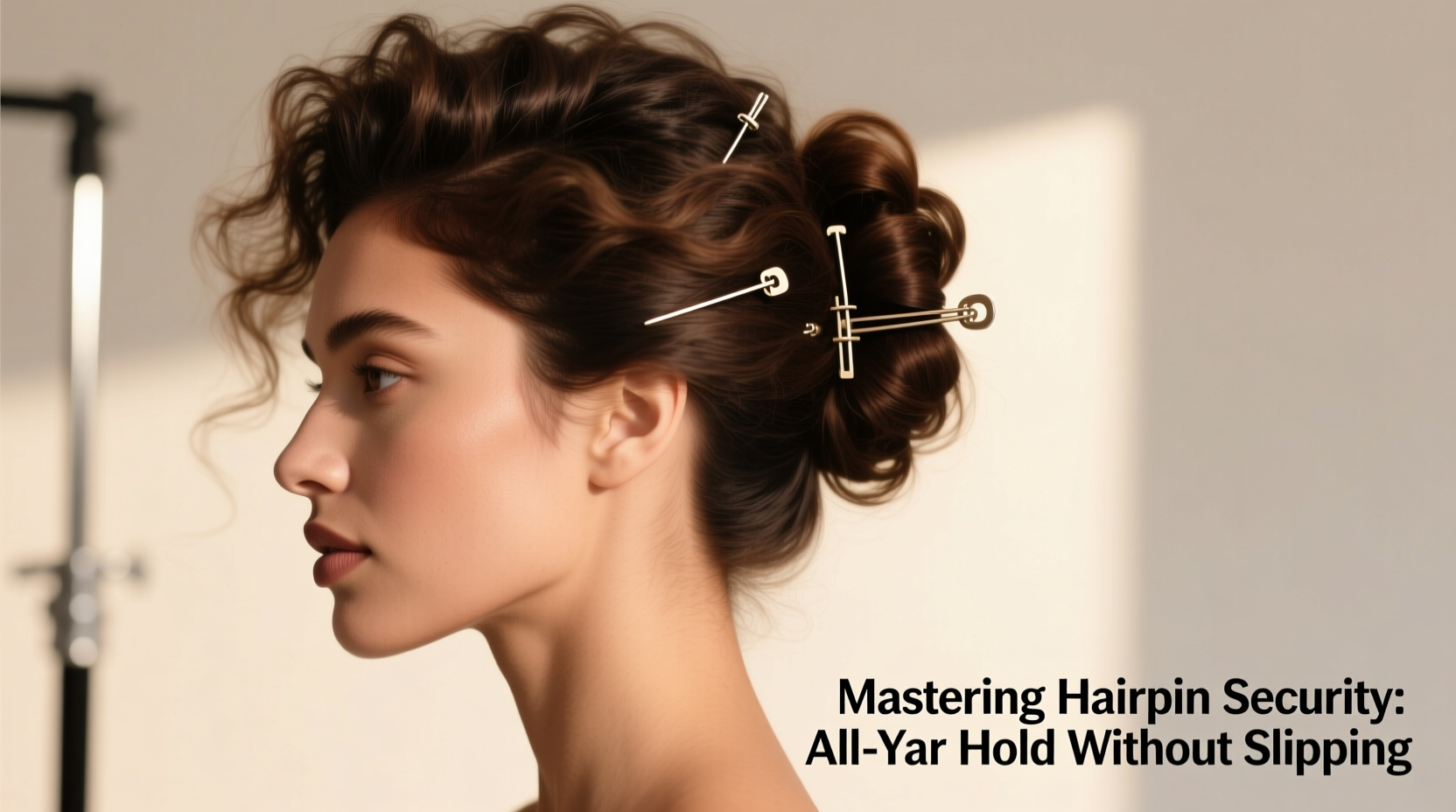
Hairpins aren’t just decorative—they’re engineered tools designed to interlock with hair structure. The most common type, the bobby pin, works best when inserted in the correct orientation and depth. Its ridged surface grips hair only when placed with the wavy side down against the scalp. When flipped incorrectly, it becomes a smooth, slippery barrier that offers little resistance.
The key to lasting hold lies in understanding three factors: hair texture, pin material, and insertion angle. Fine hair requires more friction-based support, while thick or curly hair benefits from longer pins with greater tensile strength. Oily hair reduces grip over time, so pre-styling prep is critical.
Selecting the Right Hairpins for Your Hair Type
Not all hairpins are created equal. Using the wrong type can sabotage even the most precise styling. Below is a comparison of common hairpin materials and their ideal use cases:
| Type | Best For | Hold Duration | Drawbacks |
|---|---|---|---|
| Standard Metal Bobby Pins | Medium-thick hair, temporary styles | 4–6 hours | Can rust; may snag if low quality |
| Coated (Matte Finish) Pins | Fine or slippery hair | 6–8 hours | Slightly thicker profile |
| U-Pins (Nest Pins) | Buns, chignons, thick hair | 8+ hours | Visible if not concealed well |
| T-Pins (Double-pronged) | Heavy sections, braided updos | All day | Harder to remove; need practice |
| Textured Plastic Pins | Daily wear, sensitive scalps | 3–5 hours | Less durable; can break under tension |
For maximum hold, professionals often recommend combining pin types—using T-pins as anchors and coated bobby pins for finishing touches.
Step-by-Step Guide to Secure Hairpin Placement
Technique matters more than quantity. Over-pinning can damage hair and distort shape, while strategic placement ensures stability. Follow this timeline-tested method:
- Prep hair with light texture spray or dry shampoo – Adds grit and reduces slippage, especially on second-day hair.
- Secure the base with an anchor twist or knot – Twisting hair tightly before pinning reduces movement at the root.
- Insert U-pins vertically through the core of the bun – Push halfway, then fold the pin closed like a staple for deep hold.
- Cross bobby pins in an X-shape over high-movement zones – This distributes pressure and prevents single-point failure.
- Tap pins gently with a comb handle – Seats them flush against the scalp without pulling.
- Finish with a flexible-hold hairspray – Avoid oversaturating, which can weigh hair down.
Common Mistakes That Cause Slippage
Even experienced users fall into traps that compromise hold. These errors are easily avoidable:
- Using cold, clean hair – Freshly washed hair lacks natural oils and texture, making it harder for pins to grip.
- Skipping texturizing products – Smooth, sleek hair slides off pins faster than slightly tousled strands.
- Over-relying on clips instead of pins – Clips add bulk but don’t integrate with hair like pins do.
- Pinning too close to the scalp without anchoring volume – Creates tension points that loosen quickly.
- Ignoring humidity and heat – Sweat and moisture reduce friction; consider anti-humidity sprays in summer.
“Most people think more pins mean better hold. In reality, two well-placed U-pins can outlast ten haphazard bobby pins.” — Lena Torres, Celebrity Hairstylist & Educator
Real-World Example: The Wedding Updo That Lasted 14 Hours
A bride with fine, shoulder-length hair wanted a classic chignon for her outdoor summer wedding. Previous trials resulted in partial collapse by the reception. The stylist adjusted the approach:
Instead of relying solely on bobby pins, she began by backcombing the crown section lightly and applying a sea-salt texturizer. The bun was built around a silicone donut for volume, then secured with three matte-finish T-pins driven diagonally through the base. Additional coated bobby pins were crisscrossed along the perimeter. A humidity-resistant finishing spray sealed the style.
The result? The updo remained fully intact throughout the ceremony, photos, dancing, and late-night celebrations—even during a sudden rain shower. The key wasn’t more product or more pins, but smarter mechanics and environmental adaptation.
Checklist for All-Day Hairpin Hold
Before finalizing your style, run through this quick checklist:
- ✅ Hair has some texture (used dry shampoo or texturizing spray)
- ✅ Base is twisted or knotted securely
- ✅ Pins are inserted at a 45-degree angle, ridged side down
- ✅ At least one U-pin or T-pin anchors the core structure
- ✅ Crossed bobby pins reinforce edges and high-movement areas
- ✅ Finished with light-hold, anti-frizz spray
- ✅ Tested with head movement (nodding, shaking) before leaving
Frequently Asked Questions
Why do my bobby pins keep falling out?
This usually happens due to incorrect insertion (smooth side down), lack of texture in the hair, or using worn-out pins with flattened ridges. Replace old pins and ensure you're inserting them with the grooved side against the scalp.
Can I use hairpins on wet hair?
It’s not recommended. Wet hair stretches and shrinks as it dries, which loosens pins and can cause breakage. Style with pins only after hair is completely dry—or use claw clips temporarily during drying.
Are there alternatives to traditional bobby pins for better hold?
Yes. Many stylists prefer U-pins or hair sticks for heavy styles. Silicone-coated pins also offer superior grip on fine or oily hair. Some brands now make “grip-enhanced” pins with micro-teeth or sandblasted surfaces.
Final Thoughts: Confidence Starts with a Secure Style
A hairstyle that stays put isn’t just about aesthetics—it’s about confidence. Knowing your look won’t unravel after an hour allows you to focus on your day, not constant touch-ups. Mastering hairpin security combines the right tools, proper technique, and a bit of insider knowledge. Whether you’re securing a quick ponytail knot or crafting an intricate updo, these principles apply across styles and hair types.




 浙公网安备
33010002000092号
浙公网安备
33010002000092号 浙B2-20120091-4
Comments
No comments yet. Why don't you start the discussion?