
Smooth, precise gear changes are the hallmark of skilled performance driving. Among the most refined techniques is heel and toe shifting—a method that allows drivers to match engine speed during downshifts while braking, ensuring seamless transitions and balanced weight distribution. While often associated with race tracks, this skill enhances everyday spirited driving, improves vehicle control, and reduces drivetrain shock. Despite its reputation for complexity, heel and toe shifting is learnable with structured practice and proper technique.
Understanding Heel and Toe Shifting: The Why Behind the Technique
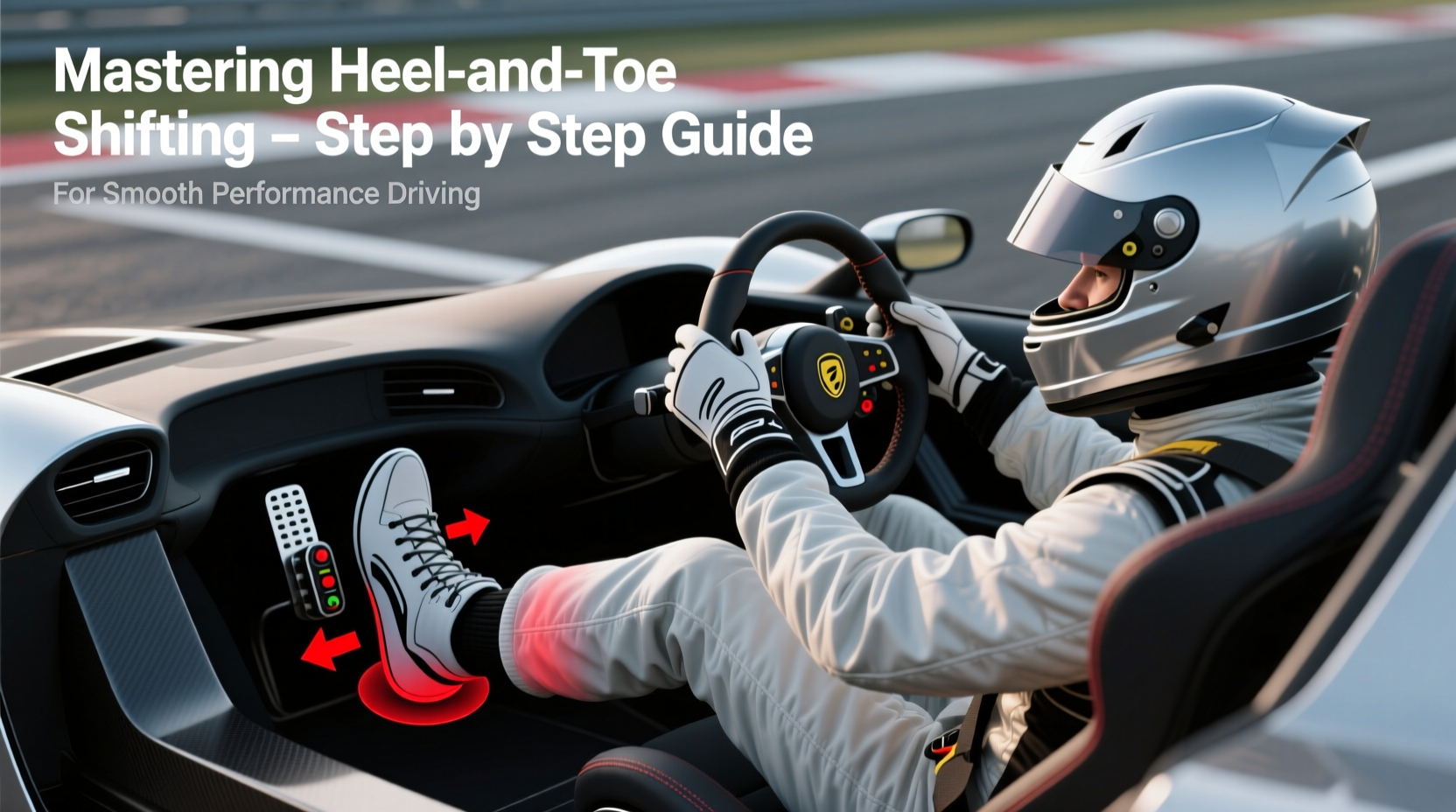
When slowing for a corner, a driver typically brakes with the right foot while preparing to downshift. Without rev-matching, releasing the clutch after a downshift causes the engine RPM to spike abruptly, leading to jerking, rear-wheel chatter, or even loss of traction—especially in rear-wheel-drive or high-torque vehicles. Heel and toe shifting solves this by allowing the driver to simultaneously brake and \"blip\" the throttle to raise engine speed before engaging the lower gear.
The name comes from the foot positioning: the ball of the foot presses the brake pedal while the right heel (or side of the foot) rolls across to tap the throttle. This coordinated motion enables smooth deceleration, accurate rev-matching, and improved balance entering corners.
“Proper heel and toe technique isn’t just about show—it’s about maintaining chassis stability and optimizing exit speed.” — Mark Reynolds, Professional Driving Instructor and Former Track Coach
The Step-by-Step Process of Heel and Toe Shifting
Executing heel and toe shifting effectively requires coordination, timing, and muscle memory. Follow this sequence to build proficiency:
- Approach the braking zone: Identify your turn-in point and begin planning the downshift well in advance. Maintain focus on the road ahead.
- Apply the brakes firmly: Use the ball of your right foot to press the brake pedal progressively, slowing the car with controlled pressure.
- Depress the clutch: With your left foot, fully press the clutch pedal to disengage the transmission.
- Select a lower gear: Move the gear lever toward the desired gear, but do not release the clutch yet.
- Blip the throttle with your heel or foot edge: While maintaining brake pressure, rotate your right foot so the lateral side or heel briefly touches the throttle. The goal is a quick, sharp increase in engine RPM to match the speed of the drivetrain in the lower gear.
- Release the clutch smoothly: Once RPM is matched, release the clutch progressively to engage the gear without shock.
- Transition to acceleration: As you reach the apex, shift your foot entirely to the throttle and begin accelerating out of the corner.
Common Mistakes and How to Avoid Them
Even experienced drivers struggle with consistency when learning heel and toe. Recognizing these frequent errors accelerates improvement:
- Over-revving: Blipping too hard causes unnecessary engine strain and can destabilize the car. Focus on precision, not loudness.
- Brake release during blip: Lifting off the brake momentarily leads to inconsistent deceleration. Keep steady brake pressure throughout.
- Misaligned foot angle: Shoes with thick soles or improper seating position hinder fine control. Wear low-profile driving shoes and adjust seat height for optimal pedal access.
- Rushing the process: Trying to heel and toe at high speed before mastering basics leads to frustration. Begin at low speeds in a safe environment.
Essential Tips for Practicing Safely and Effectively
Like any advanced driving technique, heel and toe shifting should be practiced responsibly. Consider these guidelines to build confidence without risk:
- Choose a manual transmission vehicle with a light clutch and responsive throttle.
- Begin at moderate speeds (25–35 mph) and practice downshifting from third to second gear.
- Use engine braking cues: Listen for a flat or flat-spot sound when downshifting without rev-matching—that’s your signal to improve the blip.
- Record yourself if possible. A dashcam or observer can help identify timing issues.
- Practice daily for 10–15 minutes. Muscle memory develops faster with short, focused sessions.
Checklist: Mastering Heel and Toe Shifting
Use this checklist to track your progress and ensure proper execution:
- ✅ Seat adjusted so both pedals can be reached comfortably with slight knee bend
- ✅ Wearing appropriate footwear (thin-soled, grippy)
- ✅ Clutch fully depressed before gear selection
- ✅ Brake pressure maintained throughout the blip
- ✅ Throttle blip matches target RPM for next gear
- ✅ Smooth clutch release with no jerk or lurch
- ✅ Consistent performance across multiple downshifts (e.g., 4th → 3rd → 2nd)
Real-World Example: Applying Heel and Toe on a Mountain Road
Consider a driver navigating a winding mountain descent in a rear-wheel-drive sports coupe. Approaching a tight right-hand hairpin, they begin braking early in fourth gear. As speed drops from 55 mph to 35 mph, they clutch in and prepare to downshift to third, then second. Without rev-matching, each downshift would cause the rear tires to skip slightly under compression. Instead, using heel and toe, the driver maintains brake pressure with the ball of the foot, blips the throttle mid-braking to 4,000 RPM for third gear, releases the clutch smoothly, then repeats into second gear. The engine supports the braking force, weight stays balanced, and the car turns in cleanly. Upon exit, power delivery is immediate and stable—no correction needed.
This level of control not only boosts safety but also increases confidence when pushing limits in dynamic environments.
Do’s and Don’ts of Heel and Toe Shifting
| Do’s | Don’ts |
|---|---|
| Keep heel on the floor or use it as a pivot point | Lift your foot off the brake during the blip |
| Match RPM to vehicle speed and gear ratio | Blip excessively just to hear the engine noise |
| Practice in low-risk environments first | Attempt complex sequences at high speed prematurely |
| Use the technique to enhance smoothness, not showmanship | Ignore feedback from the vehicle (jolts, noise, instability) |
| Adjust seat and pedal position for optimal control | Wear bulky boots or sandals while practicing |
Frequently Asked Questions
Is heel and toe shifting necessary with modern cars?
While many modern performance vehicles feature electronic rev-matching systems (like Nissan’s SynchroRev Match), mastering the manual technique deepens driver engagement and understanding of vehicle dynamics. It also ensures capability in older or non-assisted cars.
Can I heel and toe in a car with small pedals or limited footwell space?
Yes, though it may require adaptation. Some drivers use the “toe-heel” or “split-throttle” method—using the right edge of the foot instead of the heel. Proper seat positioning is critical in compact cockpits.
Does heel and toe shifting improve fuel efficiency?
Not directly. Its primary benefits are mechanical harmony, reduced wear on drivetrain components, and enhanced control. However, smoother driving habits developed through practice can contribute to better overall efficiency.
Conclusion: Elevate Your Driving Precision
Heel and toe shifting is more than a performance flourish—it’s a discipline that connects driver and machine through precision and anticipation. When executed correctly, it eliminates driveline shock, preserves tire grip, and creates a rhythm in spirited driving that feels both powerful and controlled. Whether you’re navigating canyon roads, improving track times, or simply enjoying a weekend drive, mastering this technique adds a layer of finesse that transforms good driving into great driving.




 浙公网安备
33010002000092号
浙公网安备
33010002000092号 浙B2-20120091-4
Comments
No comments yet. Why don't you start the discussion?