
Cooking a perfect rare steak is an art that balances precision, timing, and understanding of meat science. When done right, a rare steak delivers a buttery texture, rich flavor, and a warm red center that melts in your mouth. Yet, many home cooks struggle with inconsistent results—overcooking, dry edges, or uneven doneness. The key lies not in guesswork but in methodical preparation, accurate temperature control, and proper resting. This guide walks you through the essential steps, tools, and insights needed to achieve restaurant-quality rare steaks at home, consistently.
Selecting the Right Cut for Rare Preparation
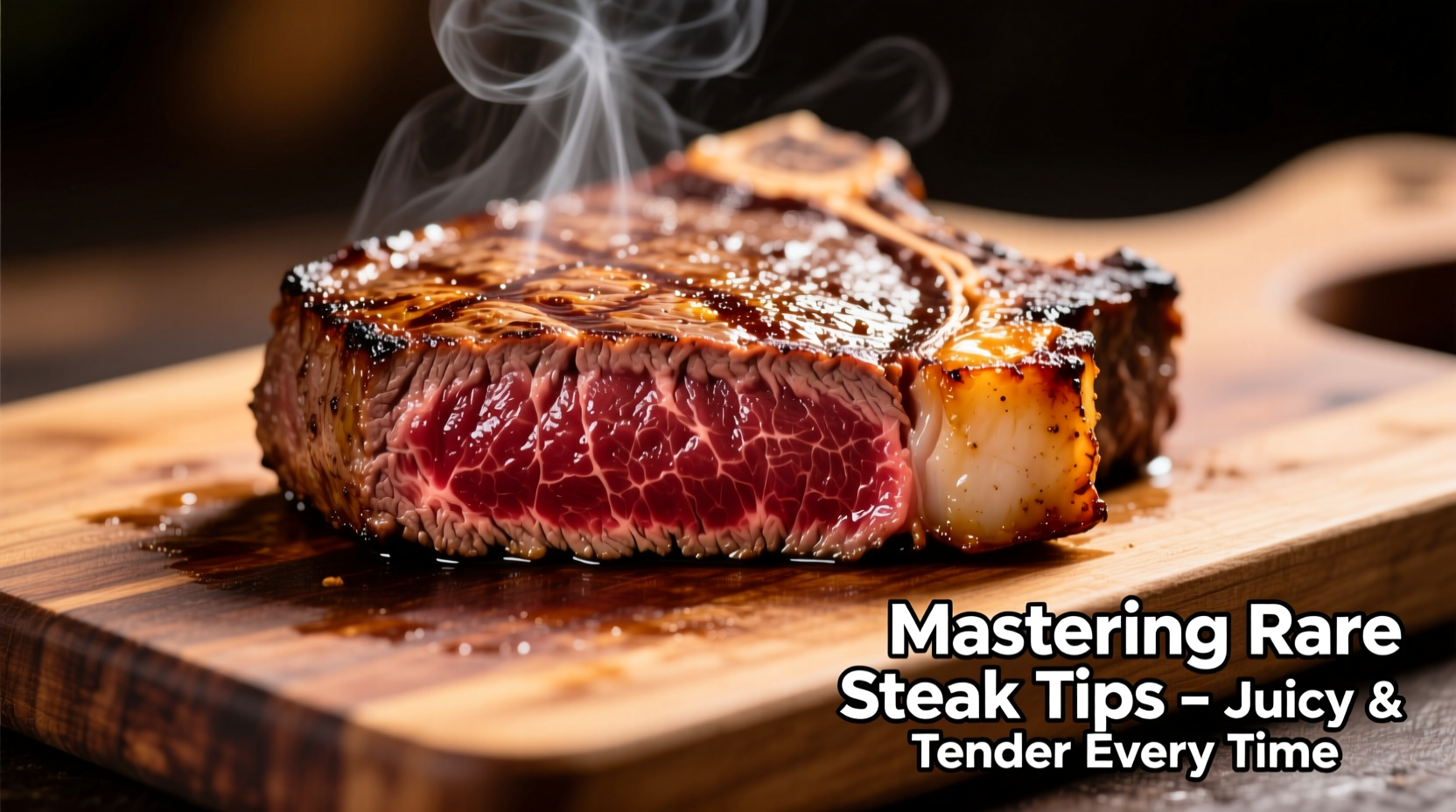
Not all steaks are created equal when it comes to cooking rare. The best cuts for rare doneness are those with abundant marbling, tenderness, and structural integrity. These qualities ensure the meat remains succulent even with minimal internal cooking.
- Ribeye: High fat content and rich marbling make it ideal for rare cooking. The fat renders slightly while the center stays cool and red.
- Filet Mignon: Extremely tender with mild flavor. Best for those who prefer a leaner but velvety bite.
- New York Strip: Balanced marbling and firm texture hold up well under high heat.
- Porterhouse/T-Bone: Offers two textures in one—tender filet and flavorful strip—perfect for rare across both sides.
Avoid lean cuts like round or flank steak for rare preparation—they lack the fat and tenderness to deliver a satisfying rare experience.
The Science Behind Rare: Temperature and Doneness
Rare doneness isn't just about preference—it's defined by internal temperature. For a true rare steak, the internal temperature should reach between 120°F and 125°F (49°C–52°C). At this range, the myoglobin (the protein responsible for red color) remains largely unaltered, resulting in a deep red, cool-to-warm center.
After removing the steak from heat, carryover cooking will raise the internal temperature by 5–10°F. That’s why pulling the steak at 115°F–120°F ensures it lands perfectly within the rare zone after resting.
“Temperature control is everything. A steak pulled at 120°F and rested properly will have a consistent, ruby-red core with no gray band.” — Chef Marcus Reed, Executive Butcher & Culinary Instructor
Internal Temperatures for Steak Doneness
| Doneness | Internal Temp (°F) | Internal Temp (°C) | Visual Center |
|---|---|---|---|
| Rare | 120–125°F | 49–52°C | Red, cool center |
| Medium Rare | 130–135°F | 54–57°C | Warm red center |
| Medium | 140–145°F | 60–63°C | Pink center |
| Medium Well | 150–155°F | 65–68°C | Slight pink |
| Well Done | 160°F+ | 71°C+ | Brown throughout |
Step-by-Step Guide to Cooking the Perfect Rare Steak
Follow this proven sequence to achieve juicy, tender rare results every time.
- Bring steak to room temperature: Remove from fridge 30–60 minutes before cooking. Cold meat cooks unevenly.
- Season simply: Use coarse kosher salt and freshly ground black pepper. Avoid heavy marinades that can interfere with searing.
- Preheat your cooking surface: Whether using cast iron, carbon steel, or grill, get it smoking hot (around 500°F). High heat creates a Maillard reaction—crucial for flavor.
- Sear the steak: Place steak on the hot surface. Do not move it for 2–3 minutes to form a crust. Flip and repeat.
- Add butter and aromatics (optional): In the last 1–2 minutes, add unsalted butter, crushed garlic, rosemary, or thyme. Tilt pan and baste the steak continuously.
- Monitor internal temperature: Insert a digital meat thermometer into the side of the steak, aiming for the center. Pull the steak at 115°F–120°F.
- Rest the steak: Transfer to a warm plate or cutting board. Tent loosely with foil. Rest for 5–10 minutes. This allows juices to redistribute.
- Slice against the grain: Especially important for strip or ribeye. Enhances tenderness with each bite.
Common Mistakes That Ruin Rare Steaks
Even experienced cooks fall into traps that compromise rare steak quality. Avoid these pitfalls:
- Skipping the rest period: Cutting too soon releases accumulated juices onto the plate instead of staying in the meat.
- Using a cold pan: Results in steaming rather than searing, leading to gray, tough exteriors.
- Over-seasoning or sugary rubs: Sugar burns quickly at high heat, creating bitterness.
- Guessing doneness: Relying on touch alone is unreliable. A digital thermometer removes doubt.
- Cooking thin steaks rare: Anything under ¾ inch thick will overcook before a proper crust forms.
Rare Steak: Do’s and Don’ts
| Do | Don't |
|---|---|
| Use a thick-cut, well-marbled steak | Use thin or lean cuts |
| Preheat your pan or grill thoroughly | Start with a cold surface |
| Use a digital instant-read thermometer | Guess doneness by touch only |
| Rest the steak for 5–10 minutes | Cut into it immediately |
| Sear without moving for a full crust | Poke or flip repeatedly |
Real Example: From Overcooked to Perfect Rare
James, a home cook from Denver, used to serve gray, dry steaks despite aiming for rare. He’d season generously, throw the steak on a medium-hot grill, and flip every minute. He judged doneness by pressing the steak, mistaking medium for rare. After learning about carryover cooking and investing in a Thermapen-style thermometer, he adjusted his method. Now, he preheats his cast iron skillet until smoking, sears each side for 3 minutes, bastes with garlic butter, and pulls the steak at 118°F. After a 7-minute rest, he slices into a uniformly red, juicy ribeye. “It was the thermometer and the rest time that changed everything,” he says.
Frequently Asked Questions
Is rare steak safe to eat?
Yes, when handled properly. Bacteria reside primarily on the surface of whole cuts. Searing kills surface pathogens, making rare steak safe. However, never serve rare ground beef or mechanically tenderized steaks, as bacteria can be introduced internally.
Can I cook frozen steak rare?
It’s not recommended. Frozen steaks take longer to develop a proper sear and often result in uneven doneness. Thaw steaks in the refrigerator overnight for best results.
Why does my rare steak taste bloody?
Rare steak shouldn’t taste “bloody.” What people perceive as blood is actually myoglobin mixed with water. If the flavor is metallic or off-putting, the steak may be past its prime or improperly stored. Fresh, high-quality beef has a clean, rich taste even when rare.
Final Checklist for Perfect Rare Steak Success
- Choose a thick, well-marbled cut (ribeye, filet, strip).
- Bring steak to room temperature before cooking.
- Season with salt and pepper only.
- Preheat pan or grill to high heat.
- Sear without moving for 2–4 minutes per side.
- Use a digital thermometer; pull at 115°F–120°F.
- Rest for 5–10 minutes before slicing.
- Slice against the grain for maximum tenderness.
Mastery Starts Tonight
Cooking a flawless rare steak isn’t reserved for professional kitchens. With attention to detail, the right tools, and a commitment to technique, you can achieve tender, juicy results every time. It starts with selecting quality meat, respecting temperature, and honoring the rest. The next time you fire up the stove or grill, apply these principles with confidence. Your palate—and dinner guests—will notice the difference.




 浙公网安备
33010002000092号
浙公网安备
33010002000092号 浙B2-20120091-4
Comments
No comments yet. Why don't you start the discussion?