
Dressing well isn’t just about wearing expensive clothes—it’s about harmony. The most polished people don’t rely on trends; they understand how to combine colors and coordinate styles in a way that feels natural, intentional, and timeless. Whether you're building a capsule wardrobe or simply want to stop staring at your closet every morning, mastering the art of color and style matching transforms dressing from a chore into an instinct.
The key lies not in memorizing rigid rules, but in developing a visual intuition grounded in principles of color theory, proportion, texture, and personal expression. With practice, assembling cohesive, confident outfits becomes second nature.
Understanding Color Theory: The Foundation of Matching
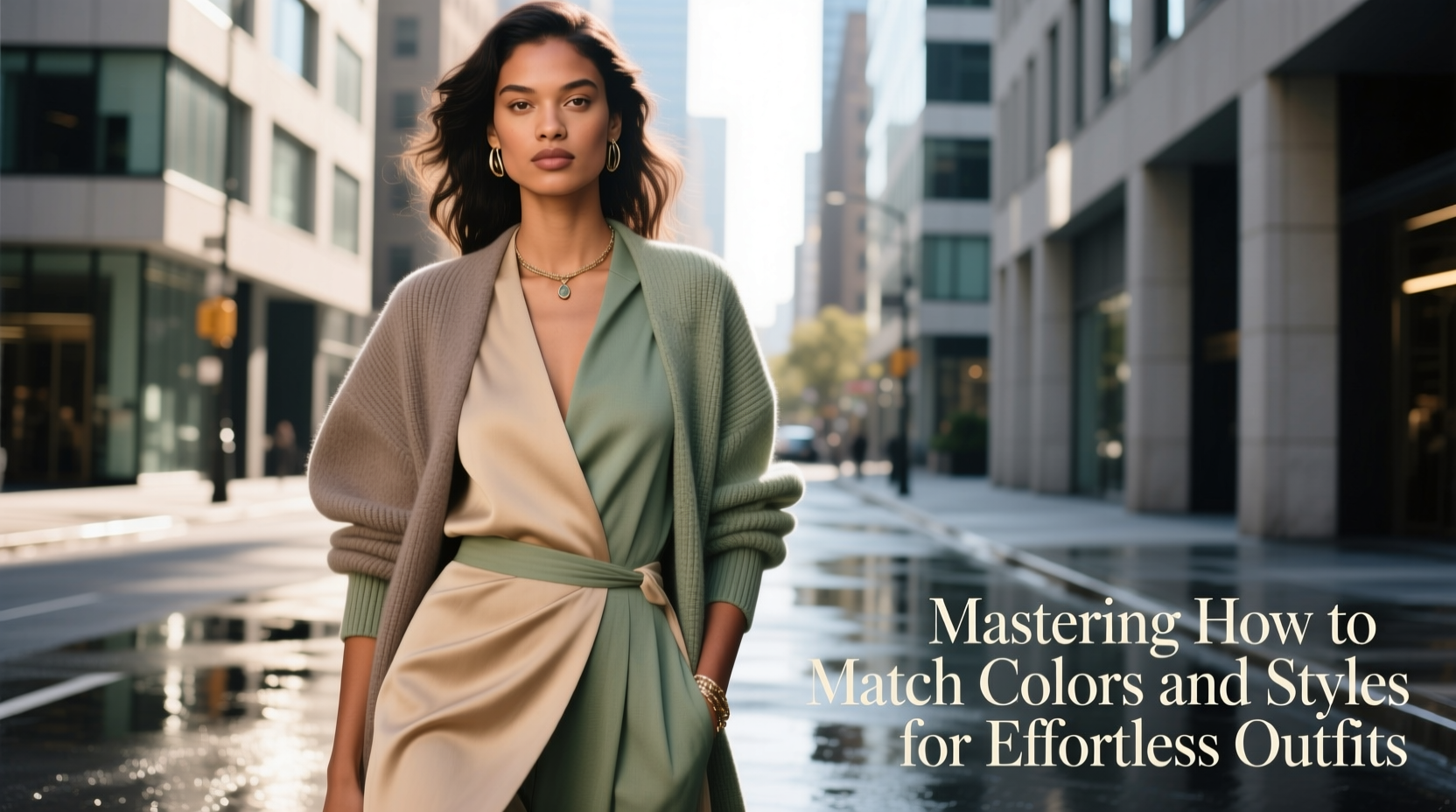
Color is the first thing people notice. A strong grasp of basic color theory allows you to pair hues that complement rather than clash. The color wheel is your roadmap—divided into primary, secondary, and tertiary colors—and it reveals effective combinations through defined relationships.
- Analogous colors sit next to each other on the wheel (e.g., blue, blue-green, green). They create calm, harmonious looks ideal for everyday wear.
- Complementary colors are opposites (e.g., red and green, blue and orange). When balanced correctly, they add vibrancy without chaos.
- Triadic schemes use three evenly spaced colors (e.g., red, yellow, blue), offering bold contrast while maintaining balance.
- Neutral-based palettes rely on black, white, gray, beige, and navy as anchors, allowing one or two accent colors to stand out.
A common mistake is overloading on saturated tones. Instead, vary intensity: pair a deep burgundy with soft taupe, or a bright cobalt with light gray. This creates depth and avoids visual fatigue.
Creating Cohesion Through Style Consistency
Matching colors is only half the equation. Equally important is aligning garment styles to maintain a unified aesthetic. A tailored blazer looks out of place with ripped streetwear jeans unless intentionally styled for contrast. Style cohesion means ensuring all pieces “speak the same language.”
Consider these categories:
| Style Type | Key Characteristics | Best Paired With |
|---|---|---|
| Classic | Tailored cuts, neutral colors, minimal detailing | Other classics, smart-casual pieces |
| Casual | Comfort-focused, relaxed fits, cotton/jeans | Denim, sneakers, knitwear |
| Edgy | Leather, asymmetry, dark tones, hardware | Minimalist basics to balance intensity |
| Elegant | Silky fabrics, draping, refined silhouettes | Simple jewelry, heels, clean lines |
Mixing styles can work—but only when done deliberately. For example, pairing a silk blouse (elegant) with dark-wash jeans (casual) and loafers (classic) strikes a sophisticated yet approachable tone. The trick is grounding bolder elements with simpler ones.
“Style isn’t about following fashion. It’s about creating rhythm between what you wear so everything feels connected.” — Lena Park, Fashion Stylist & Editor at *Mode Quarterly*
Step-by-Step Guide to Building Effortless Outfits
Follow this five-step process to assemble coordinated looks quickly and confidently:
- Start with a foundation piece. Choose one item that sets the tone—your favorite pair of trousers, a dress, or a jacket. Build outward from there.
- Select a color palette of 3–4 colors. One dominant, one secondary, one accent, and a neutral. Use a phone app or physical swatch if needed.
- Balance proportions. Pair loose tops with fitted bottoms, or vice versa. Avoid overwhelming your frame with bulk on both top and bottom.
- Layer with intention. Add a cardigan, blazer, or scarf to introduce texture and depth. Ensure layers don’t compete—e.g., don’t wear a busy print under a patterned coat.
- Finish with accessories. Shoes, bag, belt, and jewelry should echo one of the colors already in play. Limit metallic finishes to one type (gold, silver, or gunmetal) unless mixing is intentional.
Real Example: From Closet Chaos to Confidence
Take Sarah, a marketing professional who used to dread mornings. Her closet was full of clothes, yet she felt she had “nothing to wear.” After working with a stylist, she identified her core palette: navy, ivory, moss green, and rust. She donated items outside this scheme and invested in versatile staples—a tailored trench, dark jeans, a cream turtleneck, and a structured handbag.
Now, she builds outfits in under five minutes. A navy midi skirt with a rust sweater and tan ankle boots? Balanced. White shirt, moss green pants, navy blazer, and gold earrings? Polished. By limiting choices and focusing on compatibility, getting dressed became stress-free.
Essential Checklist for Daily Coordination
Before leaving the house, run through this checklist to ensure your outfit works:
- ✅ Are my colors within the same family or purposefully contrasted?
- ✅ Do my top and bottom proportions balance each other?
- ✅ Is my footwear appropriate for the occasion and color-coordinated?
- ✅ Are my accessories enhancing, not overwhelming, the look?
- ✅ Does the overall style match the event (work, casual, evening)?
- ✅ Have I considered fabric weight and texture? (e.g., no wool socks with sandals)
Common Mistakes and How to Avoid Them
Even experienced dressers make missteps. Here are frequent errors and their fixes:
| Mistake | Solution |
|---|---|
| Over-matching (e.g., red top + red pants + red shoes) | Vary shades or replace one element with a neutral |
| Mixing too many patterns | Pair one bold print with solids; keep scale varied (small stripe + large floral) |
| Ignoring skin undertones | Warm skin glows in earth tones; cool skin suits jewel tones |
| Wearing ill-fitting clothes | Alter garments or choose better sizes—fit trumps trend |
| Carrying a bag that clashes | Stick to neutrals or repeat a color from your outfit |
“The best-dressed people aren’t always wearing designer labels—they’re wearing confidence born from knowing what works.” — Marcus Reed, Wardrobe Consultant
FAQ
Can I wear black and navy together?
Yes, but be mindful. Black and navy can look mismatched under certain lighting. To blend them successfully, separate them with a neutral (like gray or white) or use black shoes with navy pants, which is widely accepted.
How do I know which colors suit me?
Assess your skin’s undertone. If veins appear greenish, you likely have warm undertones and shine in warm hues like terracotta, olive, or peach. If veins look blue, cool undertones favor sapphire, rose, or emerald. Neutral tones like beige, gray, and ivory flatter nearly everyone.
Is it okay to mix formal and casual pieces?
Absolutely—it’s a hallmark of modern style. Try a silk camisole with denim jeans and heels, or a blazer over a graphic tee with sneakers. The contrast creates interest, as long as the overall look feels intentional.
Conclusion
Mastering how to match colors and styles isn’t about perfection—it’s about consistency, awareness, and personal evolution. When you understand the principles of harmony, you stop chasing trends and start curating a wardrobe that reflects who you are. Over time, the right combinations will come naturally, and getting dressed will feel less like effort and more like expression.




 浙公网安备
33010002000092号
浙公网安备
33010002000092号 浙B2-20120091-4
Comments
No comments yet. Why don't you start the discussion?