
Puff pastry is one of the most elegant and technically satisfying achievements in home baking. Its light, airy texture and crisp, golden layers are the result of precise technique and patience. While store-bought versions exist, nothing compares to homemade puff pastry—flakier, richer, and made entirely on your terms. The process may seem daunting, but with careful attention to temperature, timing, and technique, you can master it in your own kitchen.
The magic of puff pastry lies in its structure: hundreds of alternating layers of dough and butter that expand dramatically when baked, thanks to steam created during the heating process. This guide breaks down each stage—from ingredient selection to final bake—so you can produce consistent, restaurant-quality results at home.
The Science Behind the Layers
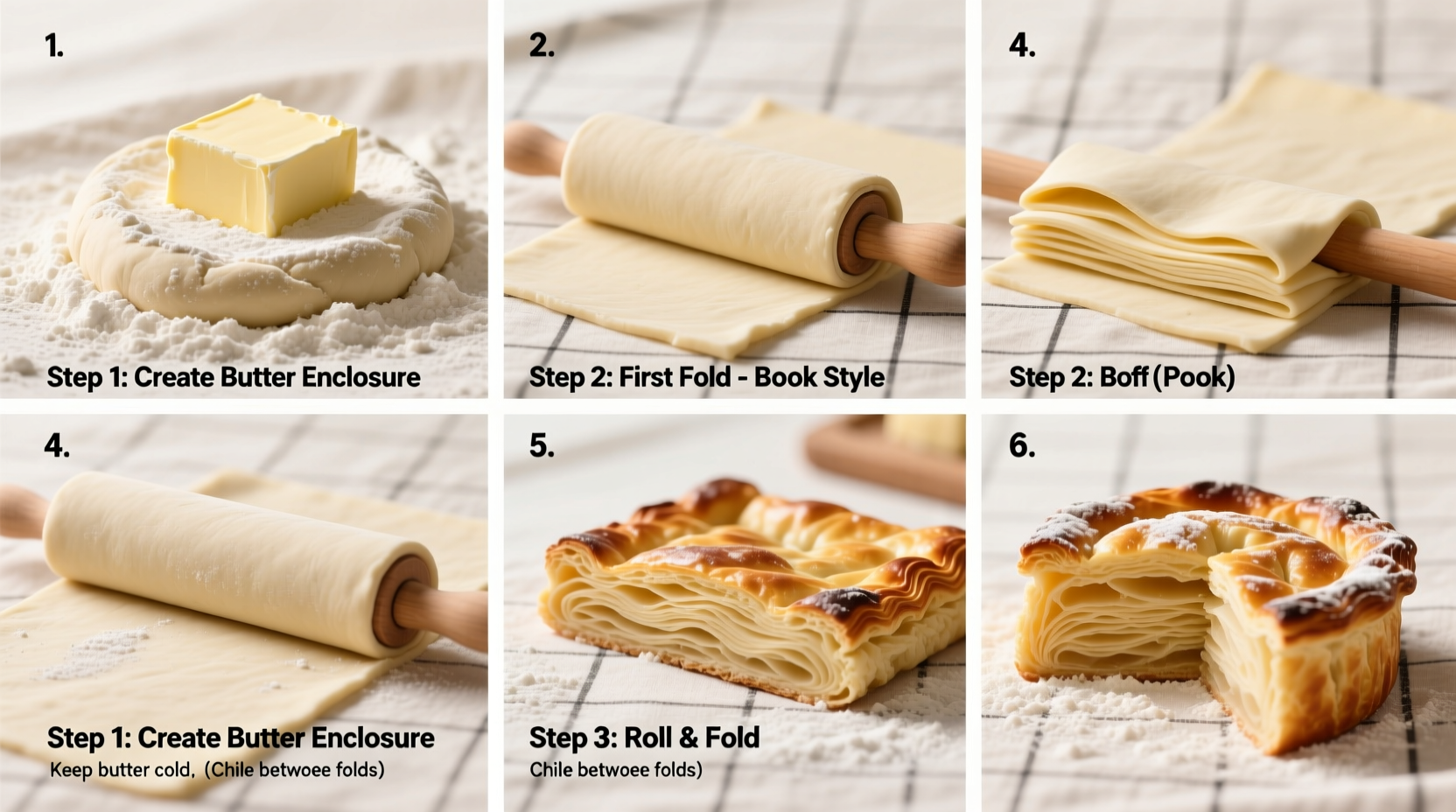
Puff pastry relies on physics as much as it does on ingredients. When cold butter is enclosed within a flour-and-water dough (called the détrempe), and then repeatedly folded and rolled, it forms thin, alternating sheets. During baking, the water in the butter turns to steam, forcing the dough layers apart. As the dough sets, these gaps become permanent, resulting in a delicate, shattering crust.
Temperature control is critical. If the butter melts into the dough before baking, the layers will fuse and the pastry won’t rise. Conversely, if the butter is too hard, it cracks during rolling, creating uneven distribution. The ideal state is firm yet pliable—cold enough to hold its shape, soft enough to roll without resistance.
“Puff pastry isn’t about speed—it’s about rhythm and restraint. Let the dough tell you when it’s ready.” — Jacques Lemoine, Pastry Chef & Instructor, Le Cordon Bleu Paris
Essential Ingredients and Equipment
High-quality ingredients make a measurable difference. Since puff pastry contains only a few components, each one must perform flawlessly.
Ingredients
- All-purpose flour: Provides structure. Bread flour can be used for slightly more strength, but all-purpose offers better balance.
- Unsalted butter: Must be high-fat (82% or higher). European-style butters like Plugson or Kerrygold yield superior results.
- Cold water: Hydrates the dough without warming the butter.
- Salt: Enhances flavor and controls gluten development.
Equipment Checklist
- Large mixing bowl
- Pastry scraper
- Rolling pin (preferably French-style)
- Bench knife or dough cutter
- Plastic wrap
- Baking parchment
- Ruler (for consistent folding)
- Pastry brush (for egg wash later)
Step-by-Step Guide to Making Puff Pastry
This method follows the classic six-fold technique, producing 727 distinct layers. Each fold doubles the previous count, starting from one butter block and multiplying through lamination.
Phase 1: Prepare the Détrempe (Dough)
- In a bowl, mix 250g flour and 1/2 tsp salt.
- Add 125ml ice water gradually, mixing until a shaggy dough forms.
- Knead briefly on a floured surface until smooth—about 1 minute.
- Shape into a flat rectangle, wrap in plastic, and chill for 30 minutes.
Phase 2: Laminate the Butter Block
- Place 200g cold butter between two sheets of parchment paper.
- Roll into a 7x7 inch square, about 1/2 inch thick. It should feel firm but malleable.
- Chill again for 15 minutes to stabilize.
Phase 3: Enclose and Begin Folding
- Roll the chilled dough into a 10x10 inch square.
- Center the butter block diagonally on the dough so corners align.
- Fold the four triangular flaps over the butter, sealing completely.
- Roll gently into a 8x24 inch rectangle. Do not rush—apply even pressure.
- Perform the first turn: Fold one-third of the dough inward, then the other third over it (like a letter).
- Wrap and chill for 30 minutes.
Phase 4: Complete the Laminations
- Repeat the rolling and folding process five more times, chilling 30 minutes between each.
- After every second fold, rotate the dough 90 degrees to maintain even thickness.
- After the sixth fold, give the dough a final 1-hour rest in the refrigerator before using.
Common Pitfalls and How to Avoid Them
Even experienced bakers encounter setbacks. Recognizing early warning signs ensures recovery before it’s too late.
| Issue | Causes | Solutions |
|---|---|---|
| Butter leaks during baking | Dough too warm; butter not properly sealed | Chill thoroughly before baking; crimp edges well |
| Pastry doesn’t rise | Oven too cool; insufficient lamination | Bake at 400°F (200°C) minimum; ensure proper folds |
| Dense or tough texture | Over-handling; too much flour added | Handle minimally; use just enough flour to prevent sticking |
| Uneven browning | Inconsistent oven heat; lack of egg wash | Use oven thermometer; apply wash evenly |
A Real Example: From Failure to Flawless
When Sarah, an avid home baker in Portland, first attempted puff pastry, her dough collapsed in the oven, releasing pools of melted butter. Discouraged, she reviewed her process and realized she had skipped chilling steps to save time. She also used standard American butter (80% fat), which lacked the firmness needed for clean layering.
On her second try, she upgraded to European-style butter, strictly observed chilling intervals, and rotated the dough correctly between folds. The result? A batch of palmiers with over 500 visible layers and a crackle so loud it startled her cat. “It wasn’t genius,” she said. “It was just consistency.”
Storing and Using Your Homemade Puff Pastry
Homemade puff pastry can be frozen for up to 6 months. After the final chill, divide the dough into portions, wrap tightly in plastic, then place in a freezer bag. Thaw overnight in the refrigerator before use.
For best baking results:
- Preheat oven to 400–425°F (200–220°C).
- Brush with egg wash (1 egg + 1 tbsp water) for shine and color.
- Bake on a parchment-lined baking sheet—never greased.
- Avoid opening the oven during the first 20 minutes to prevent steam loss.
Use your pastry for classics like vol-au-vents, beef Wellington, or simple cheese straws. The versatility makes the effort worthwhile.
Frequently Asked Questions
Can I reduce the number of folds?
Yes, but with trade-offs. Four folds yield good lift; six deliver maximum flakiness. Fewer than three will result in poor layering and minimal rise.
Why did my pastry shrink during baking?
Likely due to insufficient resting. Always allow the shaped pastry to rest in the fridge for 15–20 minutes before baking to relax the gluten.
Is it possible to make puff pastry without butter?
Technically yes, using vegetable shortening or margarine, but the flavor and texture suffer significantly. Butter provides both taste and structural moisture essential for lift.
Mastery Through Practice
Perfect puff pastry doesn’t happen overnight. Even professionals go through batches that underperform. What separates success from failure is persistence and attention to detail. Every fold teaches you something new about dough elasticity, temperature sensitivity, and timing.
Start small. Make half-batches. Take notes. Adjust based on outcomes. Soon, you’ll develop an instinct for when the dough feels right, when it needs more chill, and how your oven behaves.




 浙公网安备
33010002000092号
浙公网安备
33010002000092号 浙B2-20120091-4
Comments
No comments yet. Why don't you start the discussion?