
Sideburns are more than just a detail—they're a defining feature of your facial grooming. When well-maintained, they frame the face, enhance symmetry, and elevate your overall appearance. Yet, many men struggle with uneven lines, awkward lengths, or styles that don’t suit their face shape. The good news? You don’t need a professional barber every time. With the right tools, techniques, and understanding of proportions, you can master sideburns from the comfort of your bathroom.
The Importance of Proportion and Face Shape
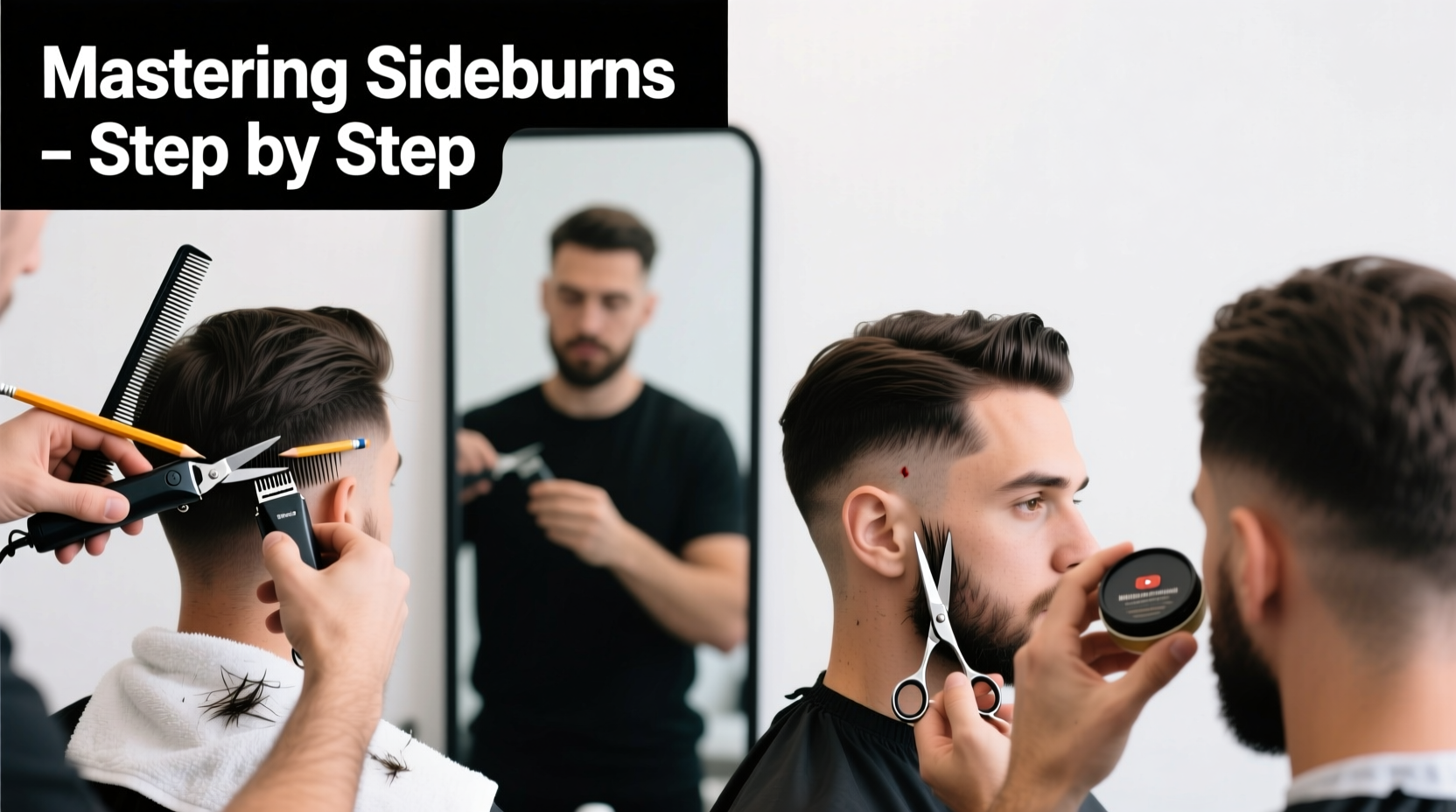
Before picking up clippers, it’s essential to understand how sideburns interact with your facial structure. A style that works for a square jaw may overwhelm a narrow face. The goal is balance—sideburns should complement, not dominate.
Here’s a quick breakdown of ideal sideburn length by face shape:
| Face Shape | Recommended Sideburn Length | Style Notes |
|---|---|---|
| Square | Middle to lower earlobe | Add softness; avoid overly thick or boxy cuts |
| Oval | Mid-earlobe | Most styles work; aim for clean, tapered edges |
| Round | Lower earlobe | Longer sideburns create vertical emphasis, slimming the face |
| Long / Rectangular | Upper to mid-earlobe | Avoid elongating further; keep shorter and fuller |
| Diamond | Mid-earlobe, slightly wider | Balances narrow chin and wide cheekbones |
“The sideburn is like a curtain—it should open to reveal the best version of your face, not block it.” — Marcus Reed, Master Barber & Grooming Educator
Essential Tools for Home Grooming
Cutting sideburns isn’t just about trimming stray hairs. Precision matters. Using improper tools leads to jagged lines and asymmetry. Here’s what you’ll need:
- Trimming scissors (5–6 inches): For detailed snipping and cleaning edges.
- Adjustable clipper with guards: Choose one with precision blades (e.g., #1 to #3 guard).
- Comb or detailing brush: To detangle and align hairs before cutting.
- Mirror (preferably magnifying): Dual-angle visibility prevents missed spots.
- Styling product (optional): Light pomade or wax for taming flyaways post-cut.
- Wet towel or pre-shave oil: Softens hair and cleanses skin before trimming.
Step-by-Step Guide to Cutting Sideburns at Home
Follow this sequence for consistent, professional-quality results:
- Wash and dry your face. Clean skin ensures better grip and visibility. Pat dry—slightly damp skin helps prevent irritation.
- Define your natural sideburn line. Use a comb to pull downward the hair growing near your temples. The point where the hair naturally stops is your baseline. Mark it lightly with a washable marker or mentally note it.
- Determine ideal length. Align the bottom edge with the midpoint of your earlobe. Avoid going lower unless you’re aiming for a vintage Elvis or ’70s rockstar aesthetic.
- Choose your guard size. For a faded look, start with a #3 near the top, transitioning to a #1 or unguarded blade at the bottom. For uniform thickness, use a single guard (usually #2).
- Clip from top to bottom. Hold the clipper at a slight angle, moving upward from the jawline toward the temple. Use short, controlled strokes. Don’t press too hard—let the blade do the work.
- Refine the front edge. This is critical. The front boundary should follow an imaginary line from the back of your sideburn, extending forward through the middle of your ear canal. It should not cross into the mustache zone.
- Use scissors for precision. Trim any stragglers that the clippers missed, especially near the ear. Snip individual hairs vertically to avoid blunt lines.
- Check symmetry. Compare both sides in the mirror. Tilt your head slightly side to side. If one side looks heavier, remove small amounts incrementally—never overcut.
- Clean up the neckline. Wipe away loose hairs with a damp cloth. Use a shaver to define the underside if needed, creating a crisp transition from sideburn to clean-shaven neck.
- Style and set. Apply a pea-sized amount of matte pomade to smooth the hairs into place, especially if you have coarse or curly texture.
Mini Case Study: James’ Transformation
James, a 32-year-old software developer, had been trimming his sideburns haphazardly for years—sometimes too long, sometimes uneven. After following this method for two months, he reported noticeable improvements. “I used to just buzz them quickly in the shower,” he said. “Now I take ten minutes with proper tools, and people actually compliment my grooming. My sideburns finally look intentional, not accidental.”
Common Mistakes and How to Avoid Them
Even experienced groomers make errors. Here are the most frequent pitfalls—and how to fix them:
- Over-trimming the front edge: Cutting too far forward makes sideburns look like disconnected patches. Stick to the natural ear-to-mouth guideline.
- Ignoring hair texture: Curly or coarse hair shrinks when dry. Trim slightly longer than desired, then reassess after 10 minutes.
- Skipping the symmetry check: Always compare both sides under natural light. Turn your head slowly to catch subtle imbalances.
- Using dull blades: This causes pulling and uneven cuts. Replace or sharpen blades every 6–8 weeks with regular use.
- Matching sideburns to outdated trends: Thick, bushy sideburns may look out of place in modern corporate settings. Adapt style to context.
“A man’s sideburns are the punctuation mark of his facial expression. Get them wrong, and the whole sentence feels off.” — Lena Torres, Editorial Director, *Gentleman’s Quarterly Grooming*
Checklist: Perfect Sideburn Routine
Keep this checklist handy for every grooming session:
- ✅ Wash and dry face thoroughly
- ✅ Comb sideburn hair downward to find natural line
- ✅ Mark ideal length (mid-earlobe)
- ✅ Select appropriate clipper guard
- ✅ Clip in upward motions with steady pressure
- ✅ Define front edge using ear alignment rule
- ✅ Trim stray hairs with scissors
- ✅ Check symmetry from multiple angles
- ✅ Clean neckline and remove loose hairs
- ✅ Style with light product if needed
Frequently Asked Questions
How often should I trim my sideburns?
Every 5 to 7 days for a clean, polished look. Hair grows approximately ¼ inch per week, so weekly maintenance keeps lines sharp and prevents overgrowth.
Can I grow sideburns if I have thin facial hair?
Yes, but manage expectations. Thin hair may not support bold, full sideburns. Opt for a narrow, well-defined strip instead. Use a tinted beard balm to add visual density without looking unnatural.
What if my sideburns are uneven due to past mistakes?
Let them grow out slightly—about ¼ inch—then re-establish symmetry using the step-by-step method. Focus on gradual correction rather than drastic changes. One bad trim doesn’t ruin your grooming game; consistency does.
Final Thoughts: Confidence Starts with Care
Mastering sideburns isn’t about chasing trends—it’s about mastering control over your appearance. Every small adjustment, from blade selection to edge definition, contributes to a sharper, more confident image. Whether you prefer a classic taper or a bold, defined statement, the process remains the same: measure, cut, refine, repeat.
You don’t need a salon appointment to achieve clean, balanced sideburns. With patience and practice, you’ll develop a routine that takes less than ten minutes and delivers lasting impact. Your face is your signature—make sure it’s well-edited.




 浙公网安备
33010002000092号
浙公网安备
33010002000092号 浙B2-20120091-4
Comments
No comments yet. Why don't you start the discussion?