
In recent years, wearable technology has moved beyond fitness trackers and smartwatches into specialized athletic domains. Among the most promising innovations is the integration of smart glasses in baseball training and gameplay. These advanced eyewear devices offer real-time data overlays, visual tracking, and cognitive feedback that can sharpen reaction times, improve pitch recognition, and refine swing mechanics. While still emerging, smart glasses are already being adopted by elite programs and forward-thinking players looking for an edge. This guide breaks down how to effectively use smart glasses to elevate your baseball performance—without overcomplicating your routine or losing focus on fundamentals.
Understanding Smart Glasses in Baseball Context
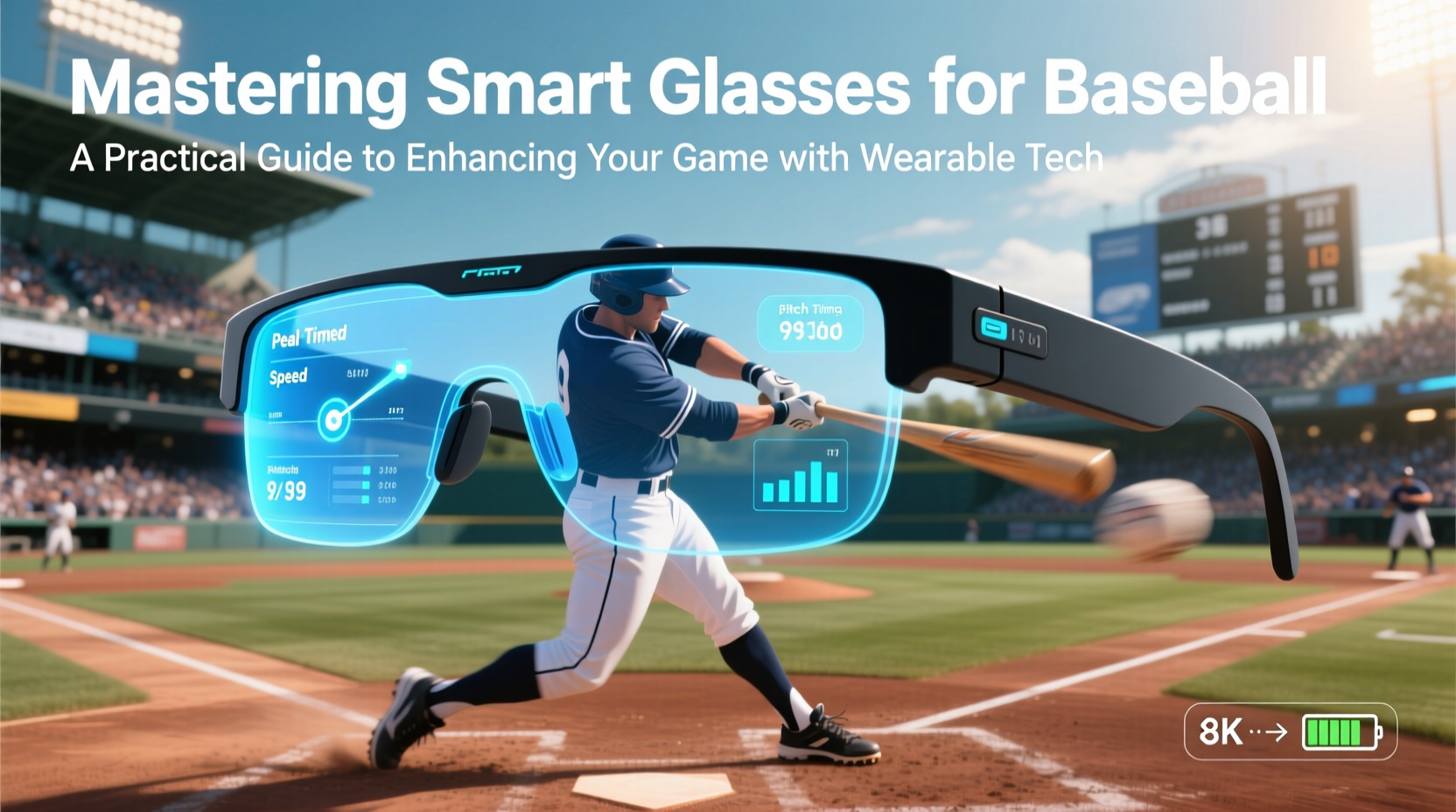
Smart glasses designed for sports typically feature transparent displays, embedded sensors, and connectivity to mobile apps or cloud platforms. In baseball, their primary function is to deliver contextual information directly into the player’s line of sight without obstructing vision. For example, during batting practice, a hitter might see pitch type predictions, release point markers, or swing plane analytics overlaid on the field. Pitchers can receive biomechanical feedback on arm angle or stride length. Fielders may get cues about positioning based on spray charts or batter tendencies.
The key advantage lies in immediacy. Traditional video analysis happens post-practice. Smart glasses provide insights in real time, enabling rapid adjustments. However, they are not meant to replace coaching or muscle memory—they augment them. As Dr. Lena Torres, a sports technologist at the National Institute of Athletic Performance, explains:
“Wearable optics don’t teach mechanics; they illuminate patterns. The athlete still needs discipline and repetition. But now, they can see what was once invisible.” — Dr. Lena Torres, Sports Technologist
Key Features That Benefit Baseball Players
Not all smart glasses are built for athletics. When selecting a model suitable for baseball, prioritize these capabilities:
- Low-latency display: Delays in visual feedback disrupt timing, which is critical in hitting and pitching.
- Head-tracking precision: Accurate orientation sensing ensures data aligns correctly with the field of view.
- Durability and fit: Must withstand sweat, impact, and movement while staying securely positioned.
- Battery life: At least 90 minutes of continuous use for full practice sessions.
- Integration with analytics platforms: Compatibility with tools like Rapsodo, TrackMan, or Blast Motion enhances utility.
Popular models such as the Everysight Raptor or Solos Air Advantage have gained traction among collegiate and minor league programs due to their sport-specific design and robust data layering.
Practical Applications by Position
Different roles on the field benefit from distinct applications of smart glass technology. Here's how various players can leverage the tech:
Batters: Enhancing Pitch Recognition
Hitters using smart glasses can train with augmented reality (AR) simulations where pitch types are color-coded or labeled upon release. Over time, this conditions the brain to identify spin and trajectory faster. Some systems highlight the “decision zone” — the moment when a batter must commit to swinging — helping players refine their timing.
Pitchers: Monitoring Mechanics and Sequencing
For pitchers, smart glasses can overlay release metrics or suggest optimal pitch sequences based on scouting reports. During bullpen sessions, real-time feedback on head movement or landing position helps maintain consistency. One pitcher in the Arizona Diamondbacks’ farm system reported reducing his head drift by 27% after two weeks of daily AR-guided drills.
Outfielders and Infielders: Improving Reaction and Positioning
Fielders can use predictive trajectory lines shown through smart glasses to anticipate ball flight. Coaches can program simulated hit scenarios, allowing defenders to react to virtual line drives or bunts while receiving immediate feedback on first-step efficiency and route optimization.
Catchers: Framing and Game Management
While less common, catchers can benefit from discreet pitch-type confirmation or framing angle guidance. Some experimental setups include subtle haptic alerts when glove movement exceeds ideal parameters during pitch framing.
Step-by-Step Guide to Integrating Smart Glasses Into Training
Adopting new technology requires structure. Follow this five-phase timeline to integrate smart glasses effectively without disrupting your core development:
- Phase 1: Familiarization (Week 1)
Wear the glasses during light drills with no data overlay. Focus on comfort, balance, and peripheral awareness. - Phase 2: Passive Data Viewing (Week 2)
Enable basic overlays (e.g., pitch speed, strike zone boundaries) but do not act on them. Let your brain absorb the visual input. - Phase 3: Targeted Skill Drills (Weeks 3–4)
Use AR cues for specific goals—such as delaying swing initiation or improving backswing path. Limit sessions to 20 minutes to avoid cognitive overload. - Phase 4: Live Simulations (Week 5)
Incorporate glasses into scrimmage settings. Disable non-essential data to maintain situational awareness. - Phase 5: Evaluation & Adjustment (Ongoing)
Review session logs weekly. Identify trends in reaction time, decision accuracy, or mechanical consistency. Adjust training focus accordingly.
Do’s and Don’ts of Using Smart Glasses in Practice
| Do’s | Don’ts |
|---|---|
| Start with short, focused sessions to avoid sensory fatigue. | Don’t wear them during high-pressure games until thoroughly acclimated. |
| Pair smart glass data with coach feedback for balanced insight. | Don’t rely solely on visual cues—maintain auditory and kinesthetic awareness. |
| Use manufacturer-recommended cleaning solutions to protect lenses. | Don’t share uncalibrated devices between players. |
| Sync data with video review for deeper analysis. | Don’t ignore discomfort or eye strain—take breaks as needed. |
Mini Case Study: A Collegiate Outfielder’s Breakout Season
Jalen Reed, a junior outfielder at Coastal Carolina University, struggled with late reactions to fly balls despite strong physical tools. His coaches introduced him to smart glasses equipped with trajectory prediction software during fall ball. Initially skeptical, Jalen used the device for 15-minute daily sessions focusing on first-step direction and angle calculation.
Within six weeks, his average reaction time improved from 0.48 seconds to 0.39 seconds—a significant gain in baseball terms. More importantly, he began internalizing the visual patterns, eventually performing equally well without the glasses. By spring season, he led the conference in outfield assists and reduced errors by 60%. “It wasn’t about seeing more,” Jalen said. “It was about learning to trust what I saw faster.”
FAQ
Are smart glasses allowed in official games?
No, current NCAA and professional rules prohibit any real-time data transmission during competition. Smart glasses should be used exclusively for training and skill development.
Can smart glasses help young players develop faster?
Yes, especially in pitch recognition and spatial awareness. However, they should complement—not replace—fundamental instruction. Young athletes need proper coaching alongside tech-assisted drills.
How expensive are baseball-ready smart glasses?
Entry-level models start around $500, while advanced systems with integrated analytics can exceed $1,200. Many teams purchase units collectively, and some manufacturers offer educational discounts.
Final Thoughts: Technology as a Tool, Not a Crutch
Smart glasses represent one of the most exciting frontiers in baseball training. They offer unprecedented access to real-time visual feedback, transforming abstract concepts like “early break” or “launch angle” into tangible, visible elements. Yet their true value emerges only when integrated thoughtfully into a broader development plan. They cannot compensate for poor conditioning, lack of preparation, or weak fundamentals. But when used wisely, they can accelerate mastery, deepen understanding, and unlock levels of precision once reserved for elite scouts and analysts.
The future of baseball isn’t just stronger arms or faster bats—it’s smarter players who leverage every tool available. If you’re serious about elevating your game, now is the time to explore how smart glasses can become part of your routine. Start small, stay consistent, and let the data guide—not dictate—your progress.




 浙公网安备
33010002000092号
浙公网安备
33010002000092号 浙B2-20120091-4
Comments
No comments yet. Why don't you start the discussion?