
In today’s hyper-connected world, having reliable internet access on the go is no longer a luxury—it’s a necessity. Whether you're traveling, working remotely, or simply away from Wi-Fi, turning your smartphone into a personal hotspot can keep you online seamlessly. For users of SFR, one of France’s leading telecom providers, leveraging the built-in hotspot feature offers a powerful way to stay connected across devices. This guide walks you through everything you need to know to set up, optimize, and troubleshoot your SFR hotspot on any smartphone—regardless of brand or operating system.
Understanding the SFR Hotspot: What It Is and Why It Matters
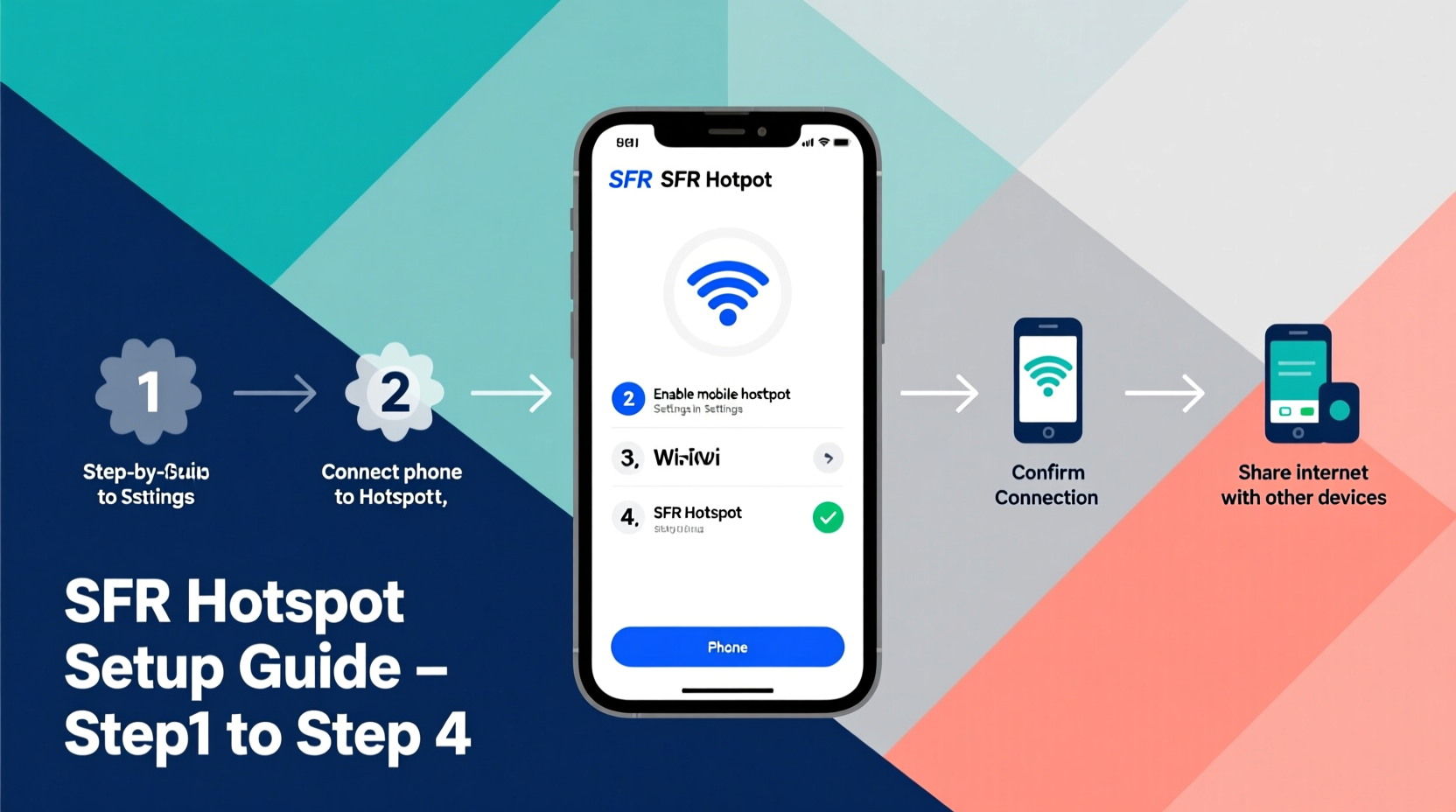
The SFR hotspot transforms your smartphone into a portable Wi-Fi router, allowing other devices like laptops, tablets, or even secondary phones to share your mobile data connection. Unlike public Wi-Fi networks, which can be slow or insecure, your personal hotspot provides encrypted, high-speed internet under your control.
SFR offers competitive 4G and 5G coverage across France and international roaming options in over 100 countries, making their hotspot functionality ideal for both daily commutes and extended travel. The key advantage? You’re not tied to physical infrastructure. Wherever your phone has signal, you can create a secure network.
“Personal hotspots are redefining mobile productivity—especially for remote workers and digital nomads who need consistent connectivity.” — Laurent Moreau, Telecom Analyst at ConnectReport Europe
Step-by-Step Guide to Activating Your SFR Hotspot
Setting up your SFR hotspot takes just a few minutes. Follow this universal process regardless of whether you’re using an iPhone, Android, or another platform.
- Verify Your Data Plan: Log into your SFR customer portal or app to confirm that your plan includes tethering (hotspot) usage. Some older plans may restrict or charge extra for hotspot access.
- Check Network Signal: Ensure your phone has strong 4G or 5G reception. A weak signal will result in poor hotspot performance.
- Navigate to Hotspot Settings:
- Android: Go to Settings > Network & Internet > Hotspot & Tethering > Wi-Fi Hotspot.
- iOS (iPhone): Open Settings > Personal Hotspot. If unavailable, contact SFR support to enable it on your line.
- Configure Your Hotspot: Tap “Set Up” or “Edit” to customize:
- Network Name (SSID): Choose something recognizable but not personally identifiable.
- Password: Use at least 8 characters with numbers and symbols for security.
- Security Type: Always select WPA2 or WPA3 encryption.
- Turn On the Hotspot: Toggle the switch to activate. Your phone will now broadcast a Wi-Fi signal.
- Connect Devices: On your laptop or tablet, open Wi-Fi settings, find your hotspot name, enter the password, and connect.
Optimizing Performance Across Different Phones
While the setup process is largely similar, performance can vary significantly depending on your phone model and OS. Here’s how to get the best results on major platforms:
| Phone Type | Best Practice | Common Pitfall |
|---|---|---|
| iPhone (iOS) | Enable “Maximum Compatibility” mode in Personal Hotspot settings for older devices. | Carrier settings outdated; update via Settings > General > About. |
| Android (Samsung, Pixel, etc.) | Use “Smart Network Switch” off to prevent automatic disconnections. | Battery optimization may turn off hotspot; disable in App Battery settings. |
| Older Models (Pre-2018) | Limited to 4G/LTE; avoid HD streaming with multiple devices. | Overheating during prolonged use; take breaks every 60–90 minutes. |
Real-World Example: Remote Work During Travel
Marie, a freelance graphic designer based in Lyon, frequently travels to rural areas for inspiration. Last month, while staying in a cottage with no broadband, she relied entirely on her SFR hotspot using a Samsung Galaxy S23. She connected her MacBook Pro and iPad simultaneously, using cloud-based design tools. By positioning her phone near a window and limiting background app refresh, she maintained stable upload speeds of 12 Mbps—enough to sync large files and attend video calls without lag. Her success came down to preparation: checking data balance beforehand, using a power bank, and optimizing device settings.
Managing Data Usage and Battery Life
One of the biggest challenges with hotspot use is balancing performance against resource consumption. Streaming, downloads, and video calls consume data quickly and drain battery life. Consider these strategies:
- Monitor Data in Real-Time: Use the SFR & Moi app to track daily hotspot usage and set alerts at 75% and 90% of your limit.
- Limit Connected Devices: Each additional device increases load. Stick to one or two essential gadgets.
- Reduce Background Activity: Disable auto-updates, cloud sync, and push email on connected devices while using the hotspot.
- Use Power-Saving Mode: Enable battery saver on your phone and plug into a charger or power bank during extended sessions.
- Switch to USB Tethering When Possible: Connecting via cable reduces battery drain and often provides faster, more stable speeds than Wi-Fi.
Frequently Asked Questions
Can I use my SFR hotspot abroad?
Yes, if your plan includes EU roaming or international data. As of 2024, most SFR “Red by SFR” and “SFR Libre” plans offer unlimited data in EU countries. Outside the EU, check destination-specific allowances in the SFR app before departure. Note: Roaming speeds may be throttled after a certain threshold.
Why won’t my device connect to the SFR hotspot?
Common causes include incorrect password entry, maximum device limits reached (usually 5–10), or software glitches. Try restarting both the host phone and connecting device. Also, ensure Bluetooth isn’t interfering—turn it off temporarily if needed.
Is using a hotspot safer than public Wi-Fi?
Yes. A password-protected SFR hotspot uses WPA encryption, making it far more secure than open networks in cafes or airports. Avoid transmitting sensitive information (like banking details) over public Wi-Fi; your personal hotspot is the safer alternative.
Essential Checklist Before Using Your SFR Hotspot
- ☐ Confirm hotspot eligibility:
- Check your SFR plan supports tethering.
- ☐ Update carrier settings:
- Ensure your phone has the latest APN and firmware updates.
- ☐ Set a strong password:
- Use a mix of letters, numbers, and symbols.
- ☐ Position for optimal signal:
- Place phone near a window or elevated surface.
- ☐ Charge or connect to power:
- Hotspot use accelerates battery drain.
- ☐ Limit connected devices:
- Prioritize only necessary gadgets to maintain speed.
- ☐ Monitor usage:
- Track data consumption via the SFR & Moi app.
Conclusion: Take Control of Your Connectivity
Your smartphone is more than a communication tool—it’s a gateway to uninterrupted productivity, entertainment, and freedom. With SFR’s robust network and simple hotspot functionality, you can transform any location into a connected workspace or entertainment hub. By following the steps outlined here, from initial setup to advanced optimization, you’ll make the most of your mobile experience without compromising speed, security, or data efficiency.




 浙公网安备
33010002000092号
浙公网安备
33010002000092号 浙B2-20120091-4
Comments
No comments yet. Why don't you start the discussion?