
For individuals experiencing hot flashes—whether due to menopause, hormonal changes, or medical conditions—the quality of sleep often hinges on one critical factor: temperature regulation. A mattress that traps heat can turn a night of rest into a cycle of discomfort, sweating, and frequent awakenings. As memory foam and hybrid mattresses dominate the modern sleep market, choosing between them becomes more than a matter of comfort—it's a decision about thermal performance. While memory foam is praised for its pressure relief, it has long been criticized for heat retention. Hybrids, combining coils with foam layers, promise better airflow. But which truly sleeps cooler when hot flashes strike?
This article breaks down the construction, cooling technologies, breathability, and user experiences of both mattress types to help you determine which option supports a cooler, more restful night during episodes of sudden body heat.
How Mattress Construction Affects Sleep Temperature
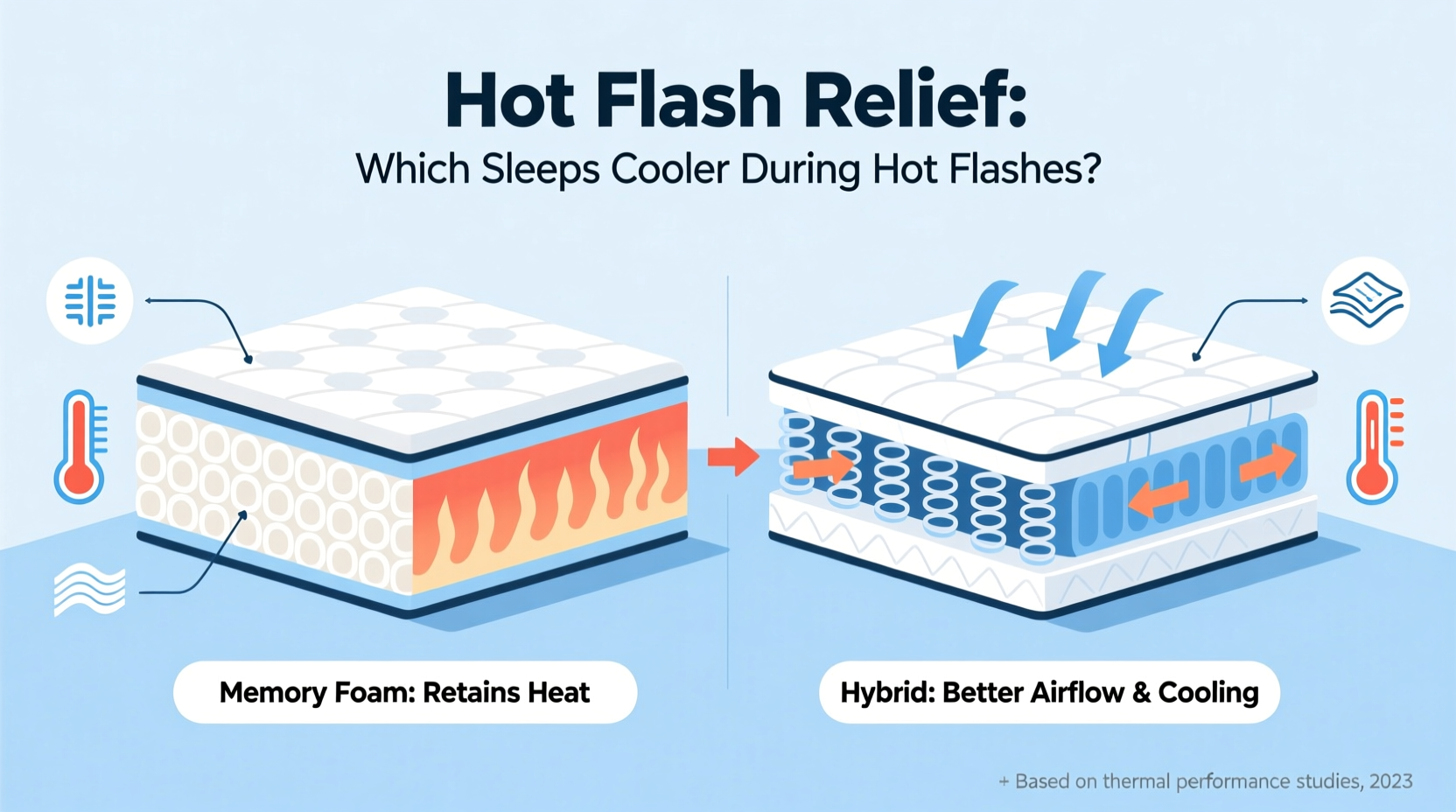
The way a mattress is built directly influences how much heat it retains. Materials, layering techniques, and internal structure all play a role in whether your bed acts like a radiator or a ventilated surface.
Memory foam mattresses are typically made from viscoelastic polyurethane foam that responds to body heat and weight by conforming closely to the sleeper’s shape. This close contouring provides excellent support and motion isolation but also creates a snug microclimate around the body. Traditional memory foam has dense cell structures that limit airflow, trapping body heat and making it harder to dissipate during hot flashes.
In contrast, hybrid mattresses combine an innerspring or pocketed coil base with one or more layers of foam (often including memory foam) and sometimes latex or gel-infused materials. The presence of coils introduces natural ventilation channels, allowing air to circulate beneath the sleeping surface. This structural advantage gives hybrids a distinct edge in breathability, especially when paired with breathable covers and open-cell foams.
Cooling Performance: Memory Foam vs Hybrid
To evaluate which mattress sleeps cooler, consider three key factors: airflow, material responsiveness, and moisture management.
- Airflow: Coils in hybrid mattresses create vertical gaps that promote air circulation. This passive ventilation helps carry heat away from the body. Memory foam, unless specifically engineered with open-cell technology, lacks these channels and relies solely on surface-level breathability.
- Heat Responsiveness: Memory foam softens with heat, meaning the warmer you get, the deeper you sink. During hot flashes, this can intensify the feeling of being “stuck” in a warm pocket. Hybrid models resist excessive sinkage and maintain a more neutral feel even as temperatures rise.
- Moisture Wicking: Many newer models—especially hybrids—feature moisture-wicking fabric covers (such as Tencel, CoolMax, or cotton blends). These fabrics pull sweat away from the skin and evaporate it quickly, reducing clamminess.
Recent advancements have led to \"cooling memory foam\" variants infused with gel beads, copper, or plant-based oils. While these improve thermal conductivity, they don’t fully overcome the inherent insulation properties of solid foam blocks. In independent lab tests conducted by the International Sleep Products Association (ISPA), hybrid mattresses consistently recorded lower surface temperatures over eight-hour cycles compared to all-foam equivalents—even those marketed as “cooling.”
“During perimenopause, women report up to 70% more nighttime awakenings linked to thermal discomfort. Choosing a mattress with active heat dissipation features can significantly reduce these disruptions.” — Dr. Lena Patel, Sleep Medicine Specialist at Cleveland Clinic
Comparative Analysis: Key Features Side-by-Side
| Feature | Memory Foam Mattress | Hybrid Mattress |
|---|---|---|
| Core Structure | Dense viscoelastic foam layers | Coil system + foam/latex comfort layers |
| Air Circulation | Limited; depends on open-cell design | High; natural airflow through coils |
| Heat Retention | Moderate to high (unless gel-infused) | Low to moderate (better dispersion) |
| Response to Hot Flashes | May trap heat near body | Better heat dissipation due to ventilation |
| Sinkage & Hugging Feel | Pronounced; conforms closely | Less sinkage; balanced support |
| Edge Support | Varies; often softer edges | Stronger due to reinforced coils |
| Lifespan | 7–10 years | 8–12 years (with proper care) |
| Best For | Pain relief, motion isolation | Cool sleepers, couples, hot flash sufferers |
Real-World Experience: A Case Study in Thermal Comfort
Susan, a 52-year-old teacher from Portland, began experiencing frequent night sweats during early menopause. She had been using a high-density memory foam mattress for six years, which she initially loved for its plush support. However, over time, she noticed increasing discomfort during nighttime hot flashes—waking up drenched, struggling to cool down, and unable to fall back asleep.
After consulting her primary care physician and researching sleep solutions, Susan switched to a hybrid mattress featuring individually wrapped coils, a breathable organic cotton cover, and a top layer of gel-infused memory foam. Within two weeks, she reported fewer awakenings and a noticeable drop in perceived sleep temperature. “It’s not that I don’t still get hot flashes,” she said, “but now I don’t feel like I’m baking in a foam oven. The air moves through the bed. I actually wake up dry.”
Susan’s experience reflects broader consumer trends. According to a 2023 survey by the National Sleep Foundation, 68% of menopausal women who switched from all-foam to hybrid mattresses reported improved thermal comfort and reduced nocturnal sweating.
What to Look for in a Cooler-Sleeping Mattress
Not all memory foam or hybrid mattresses perform equally when it comes to cooling. To maximize temperature control, focus on specific design elements regardless of category.
- Ventilated Coil Systems: Opt for hybrids with pocketed coils that allow vertical airflow. Avoid units with solid foam encasements that block air movement.
- Open-Cell Foam Layers: Even in memory foam, open-cell structures let heat escape more efficiently than closed-cell alternatives.
- Cooling Infusions: Gel, copper, or graphite particles embedded in foam help conduct heat away from the body.
- Breathable Cover Fabrics: Tencel, bamboo-derived rayon, and moisture-wicking polyester blends enhance surface cooling.
- Zoned Support: Some advanced hybrids use zoned coil systems that increase airflow in high-heat zones like the torso.
- Phase-Change Materials (PCM): Found in premium models, PCMs absorb excess heat during spikes and release it slowly as temperatures normalize.
Step-by-Step Guide to Choosing the Right Mattress for Hot Flashes
Selecting a mattress that minimizes heat buildup requires research and intentional evaluation. Follow this sequence to make an informed decision:
- Assess Your Symptoms: Track how often you experience hot flashes and whether they occur primarily in the upper body or throughout the night.
- Test Mattress Types In-Person: Visit showrooms to lie on both memory foam and hybrid models for at least 10–15 minutes. Pay attention to warmth buildup.
- Read Verified Reviews: Focus on feedback from users with similar concerns (e.g., “menopause,” “night sweats,” “sleeps hot”).
- Check Return Policies: Choose brands offering at least a 100-night trial so you can evaluate long-term thermal performance.
- Look Beyond Marketing Claims: Terms like “cooling technology” are often vague. Ask what specific materials or designs contribute to temperature regulation.
- Pair with Cooling Bedding: Use moisture-wicking sheets, lightweight blankets, and consider a cooling pad or airflow-enhancing foundation.
Frequently Asked Questions
Can memory foam be cool enough for someone with hot flashes?
Yes, but only if it incorporates advanced cooling features such as gel infusion, open-cell structure, and breathable covers. Even then, it may not match the airflow efficiency of a well-designed hybrid. For severe hot flashes, most experts recommend starting with a hybrid option.
Do hybrid mattresses eliminate night sweats?
No mattress can stop hot flashes at their source—these are physiological events driven by hormonal fluctuations. However, a hybrid mattress can significantly reduce the secondary discomfort by improving heat dissipation and minimizing moisture buildup, helping you recover faster after an episode.
Is a firmer mattress cooler?
Not necessarily. Firmness relates to support, not temperature. A firm memory foam mattress can still trap heat, while a soft hybrid with good airflow may sleep cooler. Prioritize construction and materials over firmness when addressing heat issues.
Final Checklist Before Buying
- ✅ Does the mattress feature a coil-based support core? (Hybrids only)
- ✅ Is the cover made from breathable, moisture-wicking fabric?
- ✅ Are cooling technologies clearly defined (gel, copper, PCM)?
- ✅ Does the brand offer a sleep trial of 100 nights or more?
- ✅ Are there third-party certifications (CertiPUR-US, OEKO-TEX) for material safety?
- ✅ Can you return it easily if it feels too warm after extended use?
Conclusion: Making the Right Choice for Cooler, More Restful Nights
When managing hot flashes, every degree matters. While traditional memory foam offers unmatched contouring and pressure relief, its tendency to retain heat makes it less ideal for those prone to night sweats. Hybrid mattresses, with their superior airflow, responsive support, and strategic cooling layers, generally provide a cooler sleeping environment—making them the preferred choice for thermal comfort during hormonal transitions.
That said, innovation continues to close the gap. High-end memory foam models with advanced cooling tech can perform well, but they require careful selection. Ultimately, prioritize breathability, verified user feedback, and trial periods when making your decision.




 浙公网安备
33010002000092号
浙公网安备
33010002000092号 浙B2-20120091-4
Comments
No comments yet. Why don't you start the discussion?