
When choosing a backpack for daily use—especially in unpredictable weather—the material matters more than most realize. Two popular options, mesh and canvas, serve very different purposes and respond to moisture in distinct ways. While mesh is often praised for breathability and lightweight comfort, canvas earns respect for its ruggedness and classic appeal. But when rain hits, which one truly performs better? The answer isn’t just about water resistance—it involves drying speed, structural integrity, mold prevention, and long-term wear.
This article breaks down the real-world performance of mesh and canvas backpacks in wet conditions, using practical insights, expert opinions, and direct comparisons. Whether you're commuting through city showers or hiking on damp trails, understanding how each fabric behaves in the rain helps you make a smarter, longer-lasting choice.
Material Basics: What Are Mesh and Canvas?
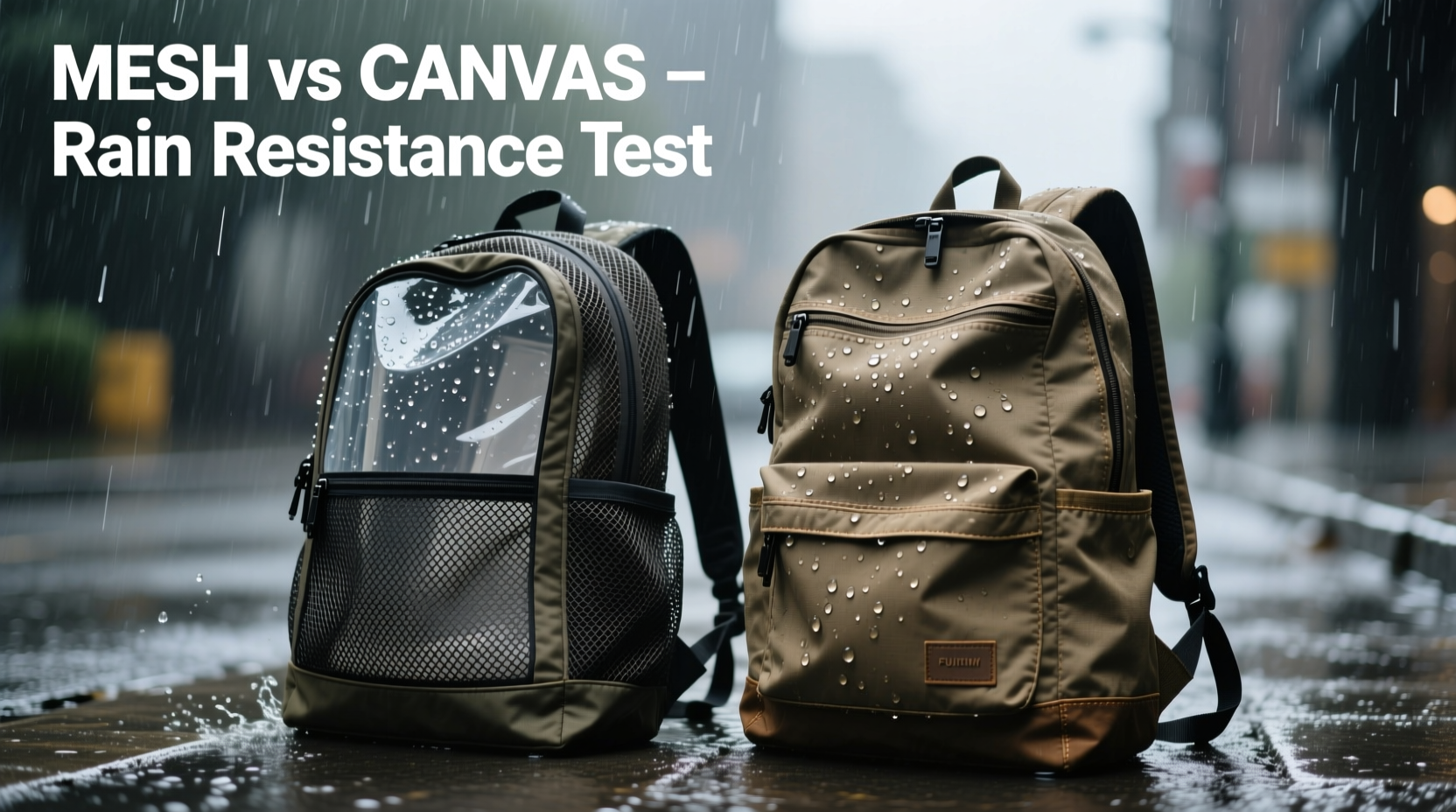
Before diving into performance, it’s essential to understand what each material is made of and how that influences its behavior when wet.
Mesh is typically constructed from synthetic fibers like polyester or nylon woven into an open-grid pattern. This design allows air to flow freely, making it ideal for ventilation—commonly used in sports backpacks, running vests, and school bags with padded back panels. However, this openness also means water can pass through easily.
Canvas, on the other hand, is a heavy-duty fabric usually made from cotton or cotton-polyester blends. It's tightly woven, giving it strength and density. Traditional canvas lacks inherent water resistance but can be treated with wax or polymer coatings to improve performance. Its weight and thickness provide structure, making it a favorite for urban commuters and minimalist travelers.
Water Resistance: How Each Fabric Reacts to Rain
The key difference between mesh and canvas lies in their immediate interaction with water.
Mesh offers almost no barrier against rainfall. Because of its open weave, light drizzle quickly soaks through, and heavy rain will saturate both the exterior and interior within minutes. Even water-repellent mesh treatments wear off quickly due to abrasion and washing. Once wet, the fabric stays damp until airflow removes the moisture.
Canvas, while not inherently waterproof, resists water penetration better due to its tight weave. Untreated cotton canvas absorbs water slowly compared to mesh, meaning it can withstand short bursts of rain without fully soaking through. Treated canvas—such as waxed or silicone-coated versions—performs even better, shedding water like a duck’s back. However, once saturated, canvas takes much longer to dry and may transfer moisture to contents inside.
In terms of initial protection, canvas clearly outperforms mesh. But resistance is only part of the equation—what happens after the rain stops matters just as much.
Drying Time and Moisture Retention Compared
One of mesh’s biggest advantages is rapid drying. Because it holds less water by volume and allows airflow, a wet mesh panel can dry in under two hours in warm, breezy conditions. This quick evaporation reduces the risk of mildew and odors—a major benefit for users who don’t have time to wait days for a bag to dry.
Canvas, especially untreated cotton, retains water deeply within its fibers. After a downpour, a soaked canvas backpack might take 24–48 hours to dry completely, depending on humidity and airflow. During this time, trapped moisture creates an environment conducive to mold and musty smells, particularly if stored indoors or in enclosed spaces.
Treated canvas fares better but still dries slower than mesh. Waxed canvas, for example, repels water well but requires careful maintenance to prevent cracking and delamination over time.
“Materials that dry quickly are often underrated in backpack design. Fast-drying fabrics reduce microbial growth and extend product life.” — Dr. Lena Patel, Textile Durability Researcher at MIT Materials Lab
Structural Integrity After Repeated Exposure
Rain doesn’t just test a backpack’s surface—it challenges its overall durability over time.
Mesh tends to degrade faster with prolonged exposure to moisture and UV light. The synthetic fibers can weaken, especially at stress points like seams and straps. Stretching and sagging are common after repeated wetting and drying cycles. Additionally, dirt and pollutants carried by rainwater can embed in mesh pores, leading to discoloration and odor retention.
Canvas, particularly high-thread-count varieties, maintains shape and strength far longer. Its dense weave resists stretching and tearing, even when wet. However, untreated canvas may shrink or stiffen when dried improperly (e.g., near heat sources). Over time, constant saturation without proper drying leads to fiber breakdown and rot—though this typically takes months or years of neglect.
For users facing frequent rain, canvas generally offers superior longevity, provided it’s allowed to dry thoroughly and stored correctly.
Protection of Contents: What Stays Dry?
No matter how durable the exterior, a backpack’s ultimate job is protecting what’s inside. Here, neither mesh nor canvas excels without additional features—but canvas starts from a stronger position.
Mesh backpacks rarely include full linings or sealed zippers, leaving laptops, books, and electronics vulnerable. Some models add internal sleeves with minimal splash protection, but true waterproofing is absent. If caught in rain, expect contents to get damp unless placed in separate waterproof cases.
Canvas backpacks often come with partial or full polyester linings and sturdier zippers. Higher-end versions include storm flaps, rubberized backing, or roll-top closures that enhance weather resistance. While not fully waterproof, they offer meaningful protection during brief exposure.
Side-by-Side Comparison: Mesh vs Canvas in Rain Conditions
| Feature | Mesh Backpack | Canvas Backpack |
|---|---|---|
| Initial Water Resistance | Poor – water passes through quickly | Moderate to Good – slows water penetration |
| Drying Time (after light rain) | 1–3 hours | 12–48 hours |
| Mold & Mildew Risk | Low if dried promptly | High if left damp |
| Long-Term Durability in Wet Climates | Fair – degrades with repeated exposure | Good to Excellent – with proper care |
| Content Protection | Poor – minimal internal shielding | Fair to Good – often includes lining |
| Maintenance Needs | Low – easy to rinse and dry | Moderate – requires conditioning (if waxed) |
| Best Use Case | Ventilation-focused activities (running, gym) | Commuting, urban travel, light outdoor use |
Real-World Scenario: Commuting Through Seattle Winter
Jamal, a graphic designer in Seattle, uses his backpack daily for the 30-minute bike commute to work. Last winter, he alternated between a ventilated mesh daypack and a waxed canvas tote. After three months, the differences became undeniable.
The mesh pack stayed breathable during rides but soaked through within ten minutes of steady rain. His sketchbook got slightly damp twice, and by February, the shoulder strap padding began to smell despite regular airing. He found himself carrying a plastic bag to cover it mid-commute.
The canvas bag, though heavier, handled drizzle with ease. Light rain beaded on the surface, and even during heavier storms, his laptop stayed dry thanks to the internal sleeve and flap closure. The downside? On rainy weeks, he had to hang it by a fan overnight to avoid stiffness. Still, after five months, it looked nearly new—while the mesh bag showed fraying at the seams.
He now uses the canvas bag year-round and reserves the mesh version for dry summer hikes. “I underestimated how much I’d care about drying time,” Jamal said. “But durability won out.”
How to Extend Lifespan in Wet Conditions
Regardless of material, smart habits dramatically improve performance in rain. Follow this checklist to protect your investment:
- Always dry thoroughly: Never store a damp backpack. Hang it in a well-ventilated area away from direct heat.
- Use a rain cover: Many brands sell lightweight, packable covers that fit over any backpack—ideal for sudden storms.
- Apply protective sprays: For canvas, use silicone-based water repellents; for mesh, consider nano-coating sprays (reapply monthly).
- Avoid machine washing: Hand clean with mild soap and lukewarm water to preserve coatings and stitching.
- Inspect seams and zippers: Reinforce weak points with seam sealant or replace worn zippers before they fail in rain.
Step-by-Step: Drying a Wet Backpack Safely
- Remove all contents immediately.
- Wipe exterior with a dry towel to absorb surface moisture.
- Unzip all compartments to maximize airflow.
- Hang upside down in a dry, airy room—preferably with a fan nearby.
- For canvas: Avoid radiators or hairdryers; slow drying prevents cracking.
- Check after 12 hours; rotate position if needed for even drying.
- Once fully dry, lightly brush canvas to restore texture or wipe mesh with damp cloth to remove residue.
FAQ: Common Questions About Backpacks and Rain
Can I make my mesh backpack waterproof?
You can improve water resistance with spray-on treatments like Scotchgard or NanoProof, but these won’t make mesh fully waterproof. The open structure will still allow some seepage. For reliable protection, pair it with an internal dry bag.
Is waxed canvas better than regular canvas in rain?
Yes. Waxed canvas is specifically designed for wet environments. The paraffin or beeswax coating creates a hydrophobic barrier that sheds water effectively. However, it requires re-waxing every 6–12 months and should not be machine washed.
Which is lighter when wet—mesh or canvas?
Despite absorbing less water, canvas becomes significantly heavier when saturated due to its density. Mesh, though it soaks through quickly, adds far less weight when wet—making it preferable for active use in rain, assuming contents are protected separately.
Final Verdict: Which Holds Up Better?
If the sole criterion is performance in rain, **canvas outperforms mesh** in almost every category except drying speed. It resists water better, protects contents more effectively, and maintains structural integrity over time. With proper care, a quality canvas backpack can last for years in rainy climates.
Mech, while fast-drying and breathable, is fundamentally unsuited for unprotected use in precipitation. It excels in ventilation and comfort but fails as a standalone solution for wet weather. It works best when paired with waterproof liners or reserved for dry-season activities.
The ideal choice depends on usage. For urban commuting, student life, or travel in variable weather, go with treated or waxed canvas. For athletic pursuits where breathability is critical—and rain exposure is short or anticipated—mesh remains viable with supplemental protection.
“Material choice isn’t about finding the ‘best’ fabric—it’s about matching function to environment. In persistent rain, structure and density win over airflow.” — Marcus Tran, Outdoor Gear Designer at Alpineward
Take Action: Choose Smart, Stay Dry
Your backpack shouldn’t leave you scrambling for shelter every time clouds gather. Understanding how mesh and canvas behave in rain empowers you to pick the right tool for your lifestyle. Invest in a durable canvas model for everyday reliability, or embrace mesh wisely—with backups for wet days. Either way, practice good drying habits and protect your gear like the valuable asset it is.




 浙公网安备
33010002000092号
浙公网安备
33010002000092号 浙B2-20120091-4
Comments
No comments yet. Why don't you start the discussion?