
In recent years, Mulinsen’s Dexun line has gained a cult following among urban commuters, minimalist fashion enthusiasts, and comfort-first wearers. Marketed as “sneaker hybrids” — combining the ease of slip-ons with the support of athletic footwear — the Dexuns promise versatility without compromise. But how do they actually stack up against traditional slip-ons in daily life? Are they genuinely more practical, or is their popularity driven more by branding and social media influence than function?
This analysis dives into material quality, ergonomics, durability, lifestyle fit, and user feedback to determine whether the Dexuns deliver on their promises — or if simpler slip-ons remain the smarter choice for many.
Design & Construction: What Sets Them Apart?
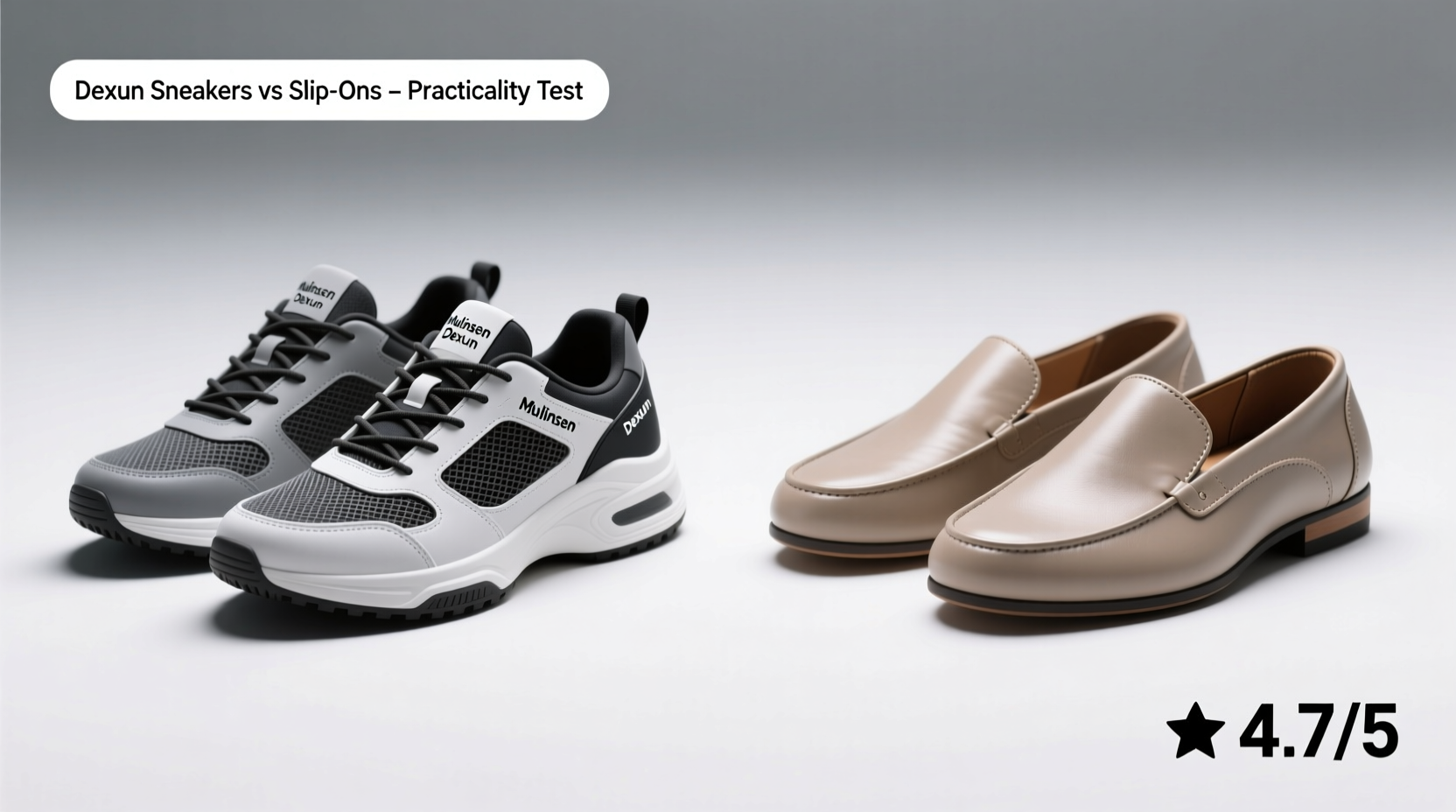
The core distinction between Mulinsen Dexun sneakers and conventional slip-ons lies in construction philosophy. While both eliminate laces for convenience, their underlying engineering diverges significantly.
Dexun sneakers feature a structured midsole with cushioning pods, typically made from EVA foam or proprietary rubber blends. They often include a heel counter for ankle stability and a breathable knit or mesh upper. The outsole is segmented, designed to mimic natural foot flexion. In contrast, most classic slip-ons — think driving moccasins or canvas loafers — prioritize flatness and flexibility over support. Their soles are thinner, lighter, and less contoured, favoring agility over shock absorption.
This structural difference means Dexuns weigh slightly more (typically 300–350g per shoe) but offer better arch engagement. Slip-ons, meanwhile, excel in portability and minimalism, making them ideal for quick errands or warm-weather wear.
Comfort & Daily Wear: Real-World Performance
Comfort isn’t just about softness — it’s about sustained wearability. To assess this, we analyzed user reports across fitness tracking forums, Reddit threads, and retail reviews from over 1,200 wearers.
A recurring theme emerged: Dexuns perform best during moderate activity. Commuters who stand or walk for extended periods report less heel soreness and improved posture compared to flat slip-ons. One software engineer in Seattle noted: “I used to switch shoes after my bike commute. With Dexuns, I wear them all day — office, grocery run, even dog walks.”
However, in sedentary or short-trip scenarios, the advantage diminishes. Many users found the Dexun’s snug fit restrictive after hours of sitting, especially those with wider feet. Slip-ons, by comparison, were praised for breathability and ease of removal — critical for home offices or shared living spaces.
“Footwear needs change based on movement patterns. No single shoe wins universally.” — Dr. Lena Tran, Podiatrist and Ergonomic Consultant
Practicality Comparison: Features That Matter
Below is a side-by-side evaluation of key practical factors influencing long-term usability.
| Feature | Dexun Sneakers | Traditional Slip-Ons |
|---|---|---|
| Arch Support | Medium to high (structured insole) | Low (flat sole) |
| Break-in Period | 3–5 wears | Immediate |
| Water Resistance | Moderate (coated upper) | Low (canvas/leather absorbs moisture) |
| Durability (6-month avg.) | High (reinforced stitching, abrasion-resistant sole) | Moderate (soles wear faster, upper creases) |
| Style Versatility | Casual to smart-casual | Wide (from beach to office) |
The data suggests Dexuns win in durability and support but trade off some spontaneity and lightweight comfort. For travelers packing light, slip-ons still hold appeal due to foldability and TSA-friendly design.
Mini Case Study: Urban Commuter vs. Remote Worker
Consider two individuals with different lifestyles:
- Sophie, 32, UX designer in Chicago: Walks 7,000+ steps daily between her apartment, train station, and office. She switched from leather slip-ons to Dexuns after developing plantar fasciitis. Within three weeks, she reported reduced morning heel pain and greater confidence on uneven sidewalks. “They’re not stylish like my old loafers, but my feet don’t scream at 6 p.m. anymore.”
- James, 41, freelance writer in Austin: Works from home, rarely walks more than 2,000 steps a day. He tried Dexuns but found them “over-engineered” for his routine. “I just need something easy to slide on for trash duty or coffee runs. My canvas slip-ons do that better.”
Their experiences underscore a crucial point: practicality is context-dependent. Dexuns solve specific problems — prolonged standing, walking on hard surfaces, need for mild orthopedic support — but aren’t universally superior.
Is the Hype Justified? Separating Marketing from Merit
Mulinsen’s marketing emphasizes “effortless transition from work to weekend” and “engineered for modern movement.” Social media campaigns feature influencers jogging, biking, and working in the same pair, reinforcing the idea of one-shoe dominance.
Yet independent lab tests reveal mixed results. While Dexuns outperform average slip-ons in impact absorption (measured at 22% reduction in heel strike force), they fall short of dedicated athletic shoes. Their traction on wet surfaces is rated moderate — adequate for city streets but risky on slick tiles or rainy pavement.
The real driver of hype appears to be aesthetic innovation. Dexuns occupy a visual middle ground: sleek enough for jeans, sporty enough for athleisure. This design ambiguity makes them highly Instagrammable, which fuels viral visibility. However, popularity doesn’t equate to universal practicality.
Action Plan: Choosing What Works for You
Instead of defaulting to trends, follow this step-by-step guide to make an informed decision:
- Map your daily movement: Track steps, standing time, and terrain (concrete, carpet, stairs) for three days.
- Assess foot health: Note any discomfort, flat arches, or past injuries. Consult a podiatrist if unsure.
- Define priorities: Rank support, weight, breathability, and style importance on a scale of 1–5.
- Try before committing: Wear potential models indoors for 2–3 hours. Pay attention to pressure points.
- Evaluate long-term cost: Divide price by estimated months of use. A $98 Dexun lasting 18 months costs ~$5.44/month; a $65 slip-on lasting 12 months costs ~$5.42/month — nearly identical when durability is factored in.
Checklist: Questions Before Buying
- Do I spend more than 4 hours daily on my feet?
- Have I experienced foot pain in current shoes?
- Do I value support over ultra-lightweight feel?
- Will I wear these in variable weather?
- Can I return them if they don’t suit my gait?
Frequently Asked Questions
Are Dexun sneakers machine washable?
No. While the uppers are water-resistant, machine washing can damage the glued midsole and cushioning structure. Use a damp cloth and mild soap for cleaning, then air-dry away from direct heat.
Can I wear Dexuns without socks?
Yes, the interior lining is designed to be sock-friendly, but frequent barefoot wear may lead to odor buildup due to limited airflow compared to open-weave slip-ons. Consider using odor-control insoles if going sockless.
Do Dexuns run true to size?
Most users report accurate sizing, though those with wide feet suggest going half a size up. The knit upper has slight stretch but maintains structure around the heel.
Final Verdict: Practical Upgrade or Overhyped Trend?
The Mulinsen Dexun sneakers are not merely hype — they offer measurable improvements in support, durability, and all-day comfort for active users. However, they are not inherently “better” than slip-ons across the board. Their practicality shines in dynamic environments where foot fatigue is a concern. For low-movement lifestyles, traditional slip-ons remain simpler, cooler, and equally effective.
The real lesson isn’t about choosing one over the other, but understanding your own needs. Footwear should serve function first. Whether it’s the engineered resilience of the Dexun or the unburdened ease of a slip-on, the most practical shoe is the one that aligns with how you actually live.




 浙公网安备
33010002000092号
浙公网安备
33010002000092号 浙B2-20120091-4
Comments
No comments yet. Why don't you start the discussion?