
The mustard seed appears in several key passages of the New Testament, not as a culinary ingredient but as one of the most potent symbols in Christian theology. Though tiny in size, it carries immense spiritual weight—representing the paradoxical power of small beginnings, the inevitability of growth under divine care, and the transformative nature of genuine faith. For readers seeking to understand the deeper meaning behind Jesus’ use of this humble seed, its presence across the Gospels offers profound insight into how spiritual life unfolds: quietly, organically, and with unexpected magnitude. This article explores the biblical context, theological implications, historical background, and enduring relevance of the mustard seed in Christian thought.
Definition & Overview
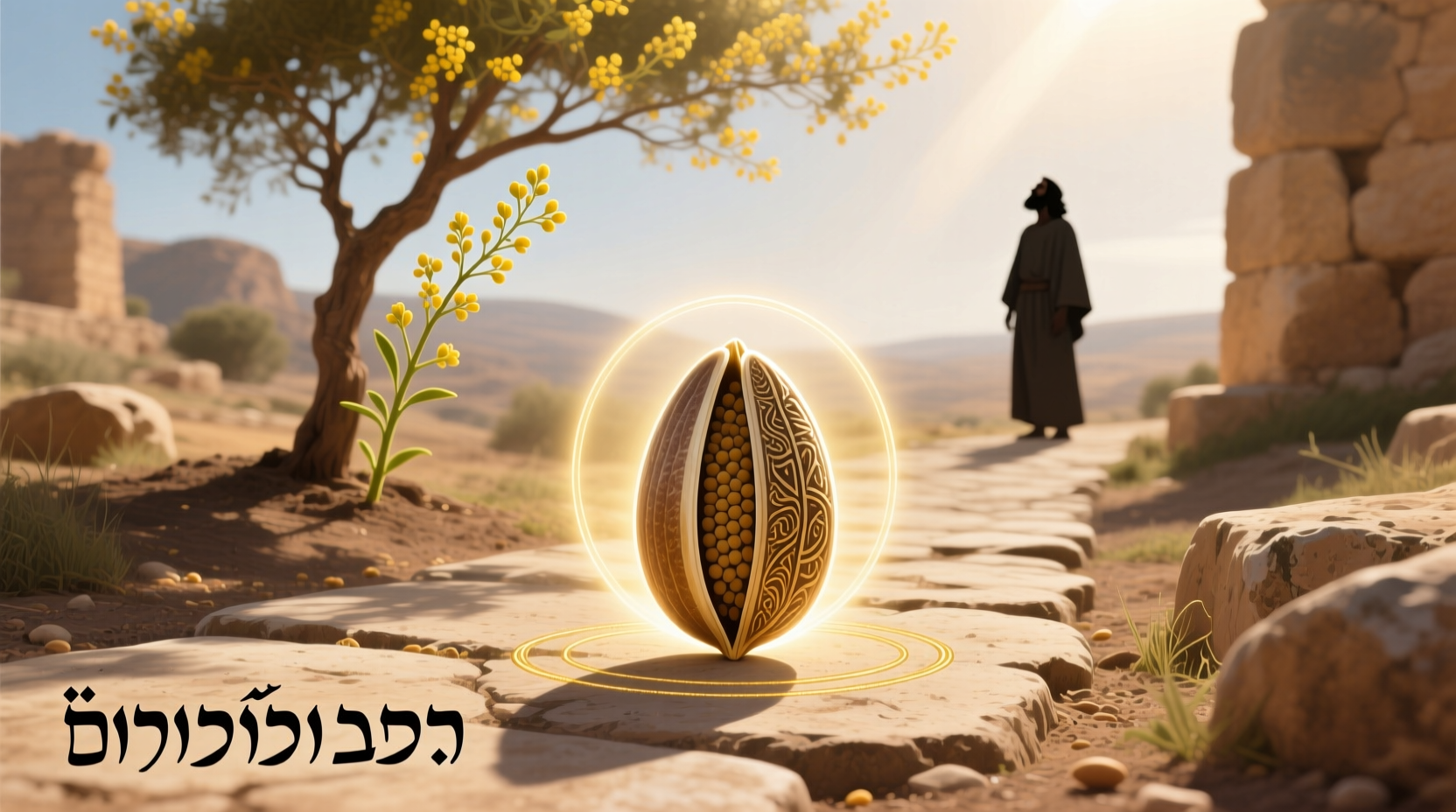
In biblical literature, the mustard seed is referenced not for its gastronomic properties but for its symbolic value. It appears primarily in three Synoptic Gospels—Matthew, Mark, and Luke—as part of parables taught by Jesus. The term refers to the seed of the Brassica nigra or possibly Sinapis alba plant, both common in the ancient Near East. These plants grow from seeds smaller than a pea yet can mature into shrubs reaching heights of 8 to 10 feet, providing shelter for birds.
The mustard seed was widely recognized in first-century Palestine for its rapid growth and hardiness. Its inclusion in Jesus’ teachings was neither arbitrary nor merely poetic—it drew upon familiar agricultural knowledge to convey counterintuitive truths about the Kingdom of God. Unlike grand political movements or institutional religions, the Kingdom begins inconspicuously, like a single seed planted in soil, yet expands beyond expectation.
Key Characteristics of the Mustard Seed in Scripture
- Size: Referred to as the smallest of all seeds known to farmers at the time (though botanically not the absolute smallest, it was proverbially so).
- Growth Pattern: Rapid germination and expansive development into a large plant or tree-like shrub.
- Habitat Function: Mature mustard plants provide shade and nesting space for birds—a detail emphasized in each Gospel account.
- Cultural Familiarity: Commonly cultivated in backyard gardens and field borders in ancient Israel.
- Symbolic Weight: Represents humility, potential, divine initiative, and organic expansion.
| Attribute | Description |
|---|---|
| Scriptural References | Matthew 13:31–32; Mark 4:30–32; Luke 13:18–19 |
| Literary Form | Parable (similitude) |
| Primary Symbolism | Faith, Kingdom of God, exponential growth from small origins |
| Botanical Identity | Most likely Brassica nigra (black mustard) |
| Mature Size | Up to 10 feet tall, bushy structure |
| Ecological Role | Shelter for birds, often considered invasive if unmanaged |
Practical Usage: Interpreting the Mustard Seed Parable Today
The mustard seed parable functions as a master metaphor for understanding how spiritual realities operate differently from human expectations. In practical terms, this means that believers are encouraged to recognize the value of small acts of faith, consistent prayer, quiet service, and faithful obedience—even when results seem invisible.
For example, consider a person who begins a modest ministry in their neighborhood: hosting weekly meals, offering tutoring, or leading a small Bible study. There may be no immediate recognition, funding, or measurable success. Yet, according to the logic of the mustard seed, such efforts mirror the way God’s Kingdom grows—not through spectacle, but through steady, rooted cultivation.
Congregations and religious educators often use the mustard seed illustration to encourage perseverance during seasons of doubt or slow progress. A pastor might say, “You don’t need a megachurch to make an impact—start with one conversation, one act of kindness. That’s your mustard seed.”
TIP: When applying the mustard seed principle personally, focus on consistency over scale. Plant your 'seed' daily through intentional actions—prayer, generosity, forgiveness—and trust the process of growth without demanding instant outcomes.
Professional and Theological Applications
In academic theology and homiletics (the art of preaching), the mustard seed parable is frequently analyzed for its subversive message. Scholars note that Jesus deliberately contrasted the grand empires of Rome with the seemingly insignificant arrival of God’s reign. Where earthly kingdoms rise through conquest and centralization, the Kingdom of Heaven spreads rhizomatically—like weeds taking root in cracks.
Preachers often structure sermons around the trajectory of the parable: planting → growing → flourishing → sheltering. Each stage becomes a framework for discussing stages of spiritual maturity:
- Planting: Initial decision to follow Christ, baptism, conversion experience.
- Germination: Early struggles, learning, discipleship, vulnerability.
- Growth: Deepening roots through community, scripture, worship.
- Flourishing: Bearing fruit—service, leadership, mentorship.
- Sheltering: Becoming a refuge for others, extending grace and hospitality.
This progression allows congregants to reflect on where they are spiritually and what conditions support further growth.
Variants & Types: Different Forms of the Parable Across Gospels
While the core imagery remains consistent, each Gospel writer presents slight variations in wording, emphasis, and context. Understanding these differences enriches interpretation:
| Gospel | Passage | Unique Emphasis |
|---|---|---|
| Matthew | 13:31–32 | Focuses on the Kingdom of Heaven; uses “least of all seeds” and highlights birds nesting in branches. |
| Mark | 4:30–32 | More vivid description: “becomes the greatest of shrubs”; emphasizes hearing and response (“He who has ears…”). |
| Luke | 13:18–19 | Set in context of healing; follows story of woman released from infirmity—underscoring liberation and restoration. |
Additionally, Luke includes a separate saying about faith “as small as a mustard seed” in Luke 17:6, where Jesus tells his disciples that even minimal authentic faith can uproot trees and cast them into the sea. This distinct usage shifts the symbol from the Kingdom's growth to the individual believer’s capacity for miraculous action through trust in God.
Comparison with Similar Ingredients: Mustard Seed vs. Other Biblical Symbols
The mustard seed is often compared to other agricultural metaphors in Scripture due to shared themes of growth and potential. However, important distinctions exist:
| Symbol | Scripture Reference | Meaning | Contrast with Mustard Seed |
|---|---|---|---|
| Leaven (Yeast) | Matthew 13:33; Luke 13:20–21 | Hidden influence that permeates entirely | Leaven works invisibly within; mustard seed grows visibly outward |
| Fig Tree | Mark 11:12–14, 20–25 | National judgment, fruitlessness, cursing | Fig tree represents failure; mustard seed exemplifies surprising success |
| Vine and Branches | John 15:1–8 | Abiding relationship with Christ | Vine imagery focuses on connection; mustard seed on expansion |
| Wheat and Tares | Matthew 13:24–30 | Coexistence of good and evil until final judgment | Wheat parable separates righteous/unrighteous; mustard seed welcomes all (birds included) |
Unlike leaven—which spreads internally—or the fig tree, which bears moral consequences, the mustard seed stands out for its inclusivity. Birds nesting in its branches suggest that the Kingdom provides sanctuary not only for the chosen few but for outsiders, Gentiles, and the marginalized—an early foreshadowing of the universal scope of salvation.
Practical Tips & FAQs
What kind of mustard plant did Jesus refer to?
Scholars generally identify it as black mustard (Brassica nigra), native to the Mediterranean and Middle East. It grows rapidly, reaches significant height, and self-seeds aggressively—making it a fitting image for something that starts small but quickly dominates a landscape.
Is the mustard seed really the smallest of all seeds?
Not literally. Orchid seeds and certain grasses are smaller. However, in the context of Palestinian agriculture, the mustard seed was proverbially the smallest commonly sown seed. Jesus used hyperbole familiar to his audience to emphasize contrast between origin and outcome.
Why do birds nest in the tree?
This image draws from Old Testament visions of empires as great trees sheltering nations (e.g., Daniel 4:10–12, Ezekiel 17:23, 31:6). By applying this language to a mustard shrub—an unimpressive plant—Jesus subverts imperial imagery. The Kingdom of God is not a cedar of Lebanon but a weedy shrub that still manages to house the birds of the air, symbolizing unexpected inclusiveness and divine provision.
Can I apply the mustard seed principle to my personal goals?
Yes, though cautiously. While modern motivational speakers sometimes secularize the metaphor into a generic “think small, win big” mantra, the biblical context centers on faith and divine sovereignty. The growth is not guaranteed by effort alone but by God’s power working through faithful initiative. Apply it spiritually first—then ethically extend it to endeavors aligned with justice, compassion, and service.
How does the mustard seed relate to faith that moves mountains?
In Luke 17:6, Jesus says, “If you had faith like a mustard seed, you could say to this mulberry tree, ‘Be uprooted and planted in the sea,’ and it would obey you.” Here, the seed symbolizes not quantity but quality—authentic, trusting faith, no matter how small, possesses extraordinary efficacy when aligned with God’s will.
Was the mustard plant considered valuable or problematic?
Both. While useful for seasoning and oil, ancient farming manuals warned against letting mustard spread uncontrollably because it could invade crop fields. Some scholars suggest Jesus’ audience would have found the idea of a garden seed becoming a wild, bird-filled shrub slightly scandalous—much like the Kingdom welcoming tax collectors and sinners. The parable thus contains a subtle challenge to religious purity systems.
“The genius of the mustard seed parable lies in its offense to conventional wisdom. Great things do not always come from great places. The Kingdom grows best in forgotten soils.” — Dr. Miriam Chen, Theological Anthropologist
Historical and Cultural Background
To fully appreciate the parable, one must understand first-century agrarian life. Most people lived off the land, knew seasonal cycles intimately, and valued proverbs drawn from nature. Jesus spoke in images they already understood—seeds, soil, harvests—but infused them with new meaning.
Jewish rabbis of the era used the phrase “as small as a mustard seed” idiomatically to describe anything minuscule. Talmudic writings reference the mustard seed in discussions about ritual purity and measurement. Thus, when Jesus invoked it, listeners immediately grasped the comparison: something negligible in appearance yet capable of dramatic change.
Moreover, the fact that the resulting plant becomes a haven for birds introduces an ecological realism rare in ancient texts. Birds were often pests in agriculture, eating newly sown grain. But here, they are welcomed—not as destroyers, but as beneficiaries. This reversal underscores a theme throughout Jesus’ ministry: those excluded are invited in.
Modern Implications and Applications
The mustard seed continues to inspire movements grounded in grassroots change. Social justice initiatives, microfinance programs, trauma-informed ministries, and community gardens often adopt the metaphor to describe their mission: starting small, serving locally, trusting in organic growth.
Church planters, especially in urban or unreached areas, cite the parable when explaining why they begin with house churches or street-level outreach rather than building large sanctuaries. One missionary in Southeast Asia noted, “We started with four believers meeting under a market awning. Three years later, there are 14 house fellowships. That’s our mustard seed moment.”
Even in personal spiritual disciplines, the metaphor holds. Daily meditation on Scripture, five minutes of silence, a single act of forgiveness—each can function as a spiritual seedling. Over time, compounded by consistency and grace, they develop into resilient inner lives capable of sheltering others.
Summary & Key Takeaways
The mustard seed in biblical teachings transcends its botanical identity to become one of the most enduring symbols of hope, potential, and divine economy. Its significance rests on several foundational truths:
- The Kingdom of God begins humbly but grows inevitably under divine stewardship.
- Authentic faith, however small, has transformative power when rooted in trust.
- Growth is organic, not engineered—dependent more on soil readiness than human strategy.
- The final form of the Kingdom is inclusive, offering refuge to all who seek shelter.
- What appears weak or marginal in human eyes may be central to God’s redemptive plan.
Call to Action: Identify one “mustard seed” action you can take this week—something small but meaningful toward spiritual growth or service. Plant it intentionally. Revisit it monthly to observe signs of growth. Share your experience with someone else to multiply its effect.




 浙公网安备
33010002000092号
浙公网安备
33010002000092号 浙B2-20120091-4
Comments
No comments yet. Why don't you start the discussion?