
Traveling long distances by plane, train, or car often means contending with stiff necks and poor sleep. A reliable neck pillow can make all the difference—but choosing between memory foam and inflatable options leaves many wondering: Is the inflatable one really too uncomfortable? The answer isn’t as straightforward as it seems. While memory foam has long been praised for its plush support, inflatable pillows offer unmatched portability and adjustability. This article breaks down both types in detail, evaluates their real-world performance, and answers whether inflatables are truly a compromise in comfort or a smart alternative for modern travelers.
Understanding Neck Pillow Types: Memory Foam vs Inflatable
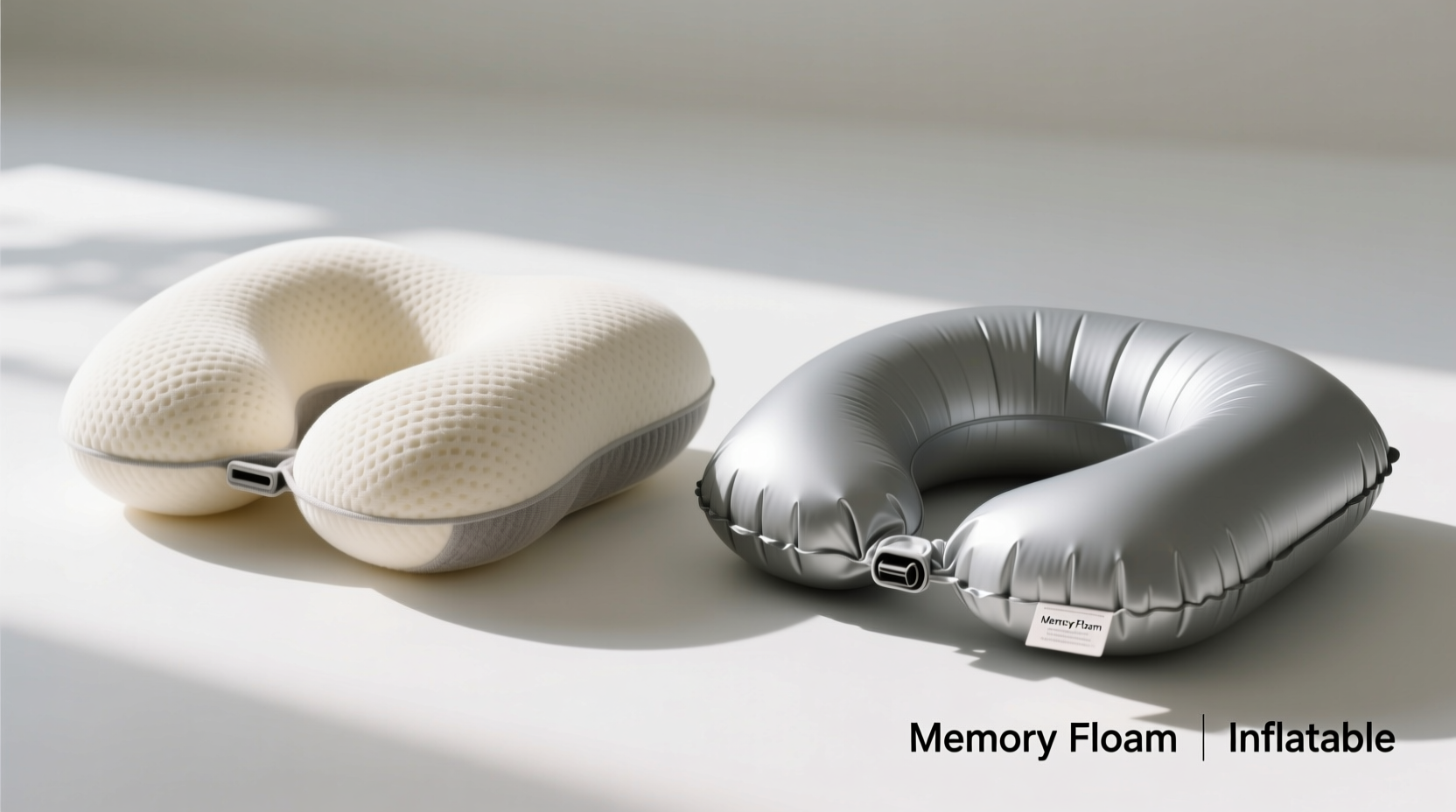
Before comparing comfort levels, it’s essential to understand how each type functions and what materials they’re made from.
Memory foam neck pillows are typically constructed from viscoelastic polyurethane foam, a material originally developed by NASA. This foam responds to body heat and pressure, molding around the contours of your neck and head. Once shaped, it provides consistent support throughout use. Most memory foam pillows come pre-formed into a U-shape and are covered with soft, removable fabric—often cotton or polyester blends.
Inflatable neck pillows, on the other hand, rely on air-filled chambers to provide support. They usually feature a plastic or rubber bladder encased in a fabric shell. These pillows can be inflated manually via a valve or pump and deflated for compact storage. Some newer models include micro-beads or hybrid filling to enhance feel, but most remain purely air-based.
The core distinction lies in structure: memory foam offers passive, shape-conforming support, while inflatables deliver customizable firmness through adjustable air volume. This flexibility gives inflatables a unique edge—but also raises questions about consistency and long-term comfort.
Comfort Comparison: Support, Pressure Relief, and Stability
Comfort is subjective, but several measurable factors determine how well a neck pillow performs: support quality, pressure distribution, stability during movement, and adaptability to different sleeping positions.
| Feature | Memory Foam | Inflatable |
|---|---|---|
| Neck Support | Excellent – conforms to natural curvature | Fair to Good – depends on inflation level |
| Pressure Relief | High – evenly distributes weight | Moderate – may create pressure points if over-inflated |
| Stability | High – maintains shape regardless of position | Low to Moderate – shifts easily when moved |
| Adjustability | Low – fixed density and shape | High – user-controlled firmness |
| Packability | Poor – bulky even when compressed | Excellent – folds flat when deflated |
Memory foam excels in maintaining consistent support. Its ability to absorb and respond to body heat allows it to cradle the neck without collapsing under pressure. For side sleepers or those who shift positions frequently, this stability is invaluable.
In contrast, inflatable pillows depend heavily on user input. Under-inflation leads to insufficient support; over-inflation creates a hard, balloon-like surface that can strain muscles. However, when properly adjusted, some high-end inflatables mimic moderate-density foam, offering surprisingly adequate cushioning.
“While memory foam remains the gold standard for ergonomic support, modern inflatable designs have closed the gap significantly—especially for travelers prioritizing space and convenience.” — Dr. Lena Torres, Sleep Ergonomics Researcher at the Institute for Postural Health
Real-World Use: When Inflatables Shine (and Fail)
To assess actual comfort, consider real usage scenarios rather than lab conditions. One traveler’s experience illustrates the trade-offs clearly.
Mini Case Study: Sarah’s Cross-Country Flight
Sarah, a frequent business traveler, uses both pillow types regularly. On a recent red-eye flight from New York to Los Angeles, she opted for her compact inflatable pillow to save space in her carry-on. Initially, she found it comfortable after adjusting the air pressure to a medium firmness. However, after two hours, the pillow began to deflate slightly—a common issue with cheaper valves—and lost structural integrity. Her head tilted forward, causing mild stiffness upon arrival.
On her return trip, she brought her memory foam pillow wrapped in a compression sack. Though bulkier, it retained its shape throughout the flight. She reported deeper rest and no neck pain, despite limited recline in economy class.
This example highlights a key limitation: inflatables are prone to gradual air loss, especially on longer journeys. Additionally, their lightweight construction offers less resistance against gravity when used upright—a common seated position during travel.
Choosing Based on Travel Style and Needs
The best neck pillow depends on your priorities. Below is a checklist to help determine which type suits your lifestyle.
Checklist: Which Neck Pillow Is Right for You?
- ✅ Do you travel frequently with limited luggage space? → Inflatable preferred
- ✅ Do you prioritize deep, uninterrupted sleep during transit? → Memory foam recommended
- ✅ Are you sensitive to neck pain or have existing posture issues? → Memory foam advised
- ✅ Do you value customization in firmness? → Inflatable offers more control
- ✅ Will you use the pillow at home or in a stationary setting? → Memory foam ideal
- ✅ Do you share travel gear with others? → Inflatable easier to clean and sanitize
Backpackers, digital nomads, and minimalist packers benefit greatly from inflatable pillows. Their ability to compress into pockets or clip onto bags makes them indispensable for ultralight setups. Meanwhile, individuals with chronic neck tension, older adults, or those recovering from injury generally gain more relief from the consistent support of memory foam.
Improving Inflatable Pillow Comfort: Practical Tips
Many complaints about inflatable neck pillows stem not from inherent flaws, but from improper use. With a few adjustments, their comfort can rival lower-tier memory foam models.
- Find the Ideal Inflation Level: Inflate only until the pillow feels firm yet yielding—similar to a tennis ball. Over-inflation turns it into a rigid obstacle rather than a supportive cushion.
- Use a Cover: Many inflatables come with removable fleece or bamboo covers. These add softness and reduce the “plastic” feel against the skin.
- Combine with Additional Support: Place a rolled-up sweater or scarf behind your lower back to improve posture, reducing strain on the neck even with suboptimal pillow support.
- Choose Hybrid Models: Some premium inflatables integrate memory foam trim or microbead inserts along the inner rim for enhanced contouring.
- Check Valve Quality: Opt for pillows with twist-lock or screw-top valves instead of simple flaps, which are more prone to slow leakage.
Brands like Cabeau and Trtl have introduced advanced inflatable designs featuring ergonomic shaping and multi-chamber systems that distribute pressure more evenly. These represent a significant evolution from basic dollar-store versions.
Frequently Asked Questions
Are inflatable neck pillows bad for your neck?
Not inherently. Poorly designed or improperly inflated models can fail to support the cervical spine, potentially leading to strain. However, well-constructed inflatables used correctly pose no greater risk than low-density foam pillows. The key is ensuring the pillow keeps your head aligned with your spine, not letting it tilt forward or sideways.
Can I wash an inflatable neck pillow?
Most can be cleaned, but not submerged. Wipe the surface with a damp cloth and mild soap. Remove the cover (if available) and launder separately according to instructions. Never machine-wash the entire unit, as water can enter the valve and cause mold.
Do memory foam pillows lose their shape over time?
Yes, but slowly. High-density memory foam resists sagging for years with proper care. Avoid exposing it to direct sunlight or moisture, which accelerates breakdown. If the pillow develops permanent dents or feels lumpy, it’s time to replace it—typically after 18–36 months of regular use.
Final Verdict: Is the Inflatable One Too Uncomfortable?
The notion that inflatable neck pillows are universally uncomfortable is outdated. While they generally don’t match the deep ergonomic support of quality memory foam, they are far from unusable. For many travelers, especially those focused on efficiency and mobility, inflatables offer a practical balance of comfort and convenience.
The discomfort often associated with inflatables stems from three main issues: poor design, incorrect inflation, and unrealistic expectations. When users treat them like foam substitutes rather than adaptive tools, disappointment follows. But when chosen wisely and used appropriately, inflatables can provide sufficient support for short to moderate trips.
That said, if you suffer from chronic neck pain, require maximum support, or plan extended periods of seated rest, memory foam remains the superior option. Its proven ability to maintain alignment and absorb motion makes it the safer bet for health-conscious users.




 浙公网安备
33010002000092号
浙公网安备
33010002000092号 浙B2-20120091-4
Comments
No comments yet. Why don't you start the discussion?