
When it comes to sparking genuine joy, few debates in gaming are as quietly profound as the one between Nintendo DS classics and modern mobile games. One era offered tactile cartridges, dual screens, and a sense of physical ownership. The other delivers instant access, social connectivity, and algorithm-driven engagement. But beyond convenience and technology, what really matters is how these experiences make us feel—whether they stir excitement, foster nostalgia, or create lasting memories.
The answer isn’t simply about graphics or innovation. It’s about emotional resonance, accessibility, and the subtle ways games shape our daily lives. For many, the scratch of a stylus on the DS screen evokes childhood summers and weekend marathons of *Mario Kart DS*. For others, the gentle chime of a mobile notification signals a quick escape into *Stardew Valley* or *Monument Valley* during a stressful workday. Both have merit—but only one tends to linger in the heart long after the device is put down.
The Emotional Weight of Nostalgia
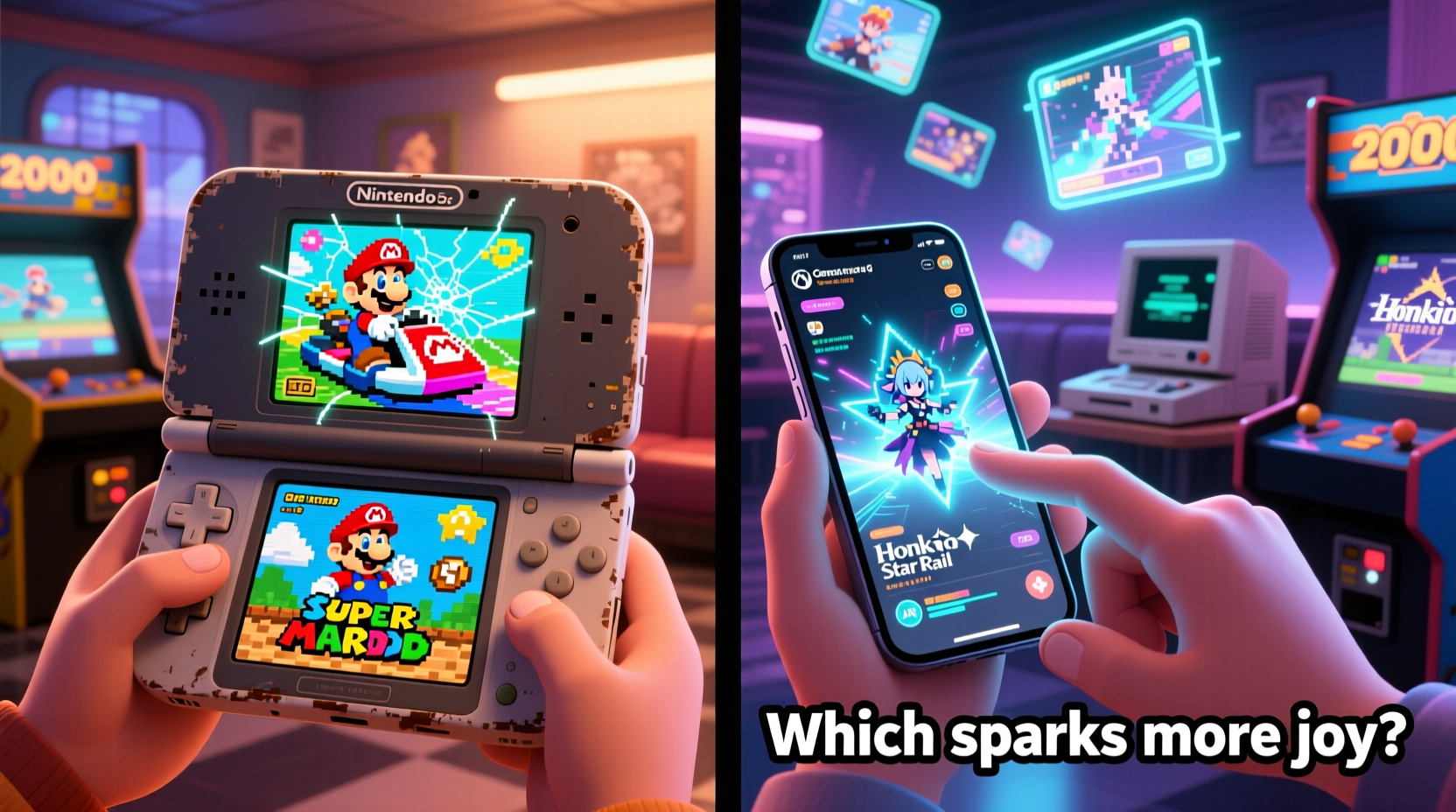
Nostalgia is not just a sentimental indulgence—it’s a powerful psychological force that shapes how we perceive value and enjoyment. The Nintendo DS, launched in 2004, arrived at a pivotal moment in digital entertainment. It bridged the gap between handheld simplicity and console-like depth. Titles like *The Legend of Zelda: Phantom Hourglass*, *New Super Mario Bros.*, and *Animal Crossing: Wild World* weren’t just games; they were companions through adolescence, road trips, and rainy afternoons.
What made these experiences emotionally rich was their deliberate pacing and limited accessibility. You couldn’t play them everywhere. You had to carry the device, insert the cartridge, and commit time. That friction created intentionality. There was no autoplay, no endless scroll—just you, your game, and a finite battery life. This scarcity elevated each session into something meaningful.
“Games from the DS era didn’t distract us—they absorbed us. That kind of deep focus is rare today.” — Dr. Lena Torres, Cognitive Psychologist & Game Studies Researcher
Modern Mobile Games: Convenience at a Cost?
Fast forward to today’s mobile landscape, where over 3 billion people play games on smartphones. The accessibility is unprecedented. With a single tap, you can jump into *Genshin Impact*, match candies, or manage a virtual farm. Many modern mobile games excel in polish, audiovisual fidelity, and social integration. They’re designed for micro-sessions—perfect for waiting in line or commuting.
But beneath the sleek interfaces lies a design philosophy rooted in behavioral psychology. Push notifications, reward loops, and energy systems are engineered to keep players engaged, often blurring the line between enjoyment and compulsion. While some titles like *Alto’s Odyssey* or *GRIS* deliver artistic depth, many prioritize retention metrics over emotional payoff.
The result? Joy becomes transactional. You don’t play because you want to—you play because the app reminds you it’s been three hours since your last login bonus. This isn’t to dismiss mobile gaming entirely. Its ability to reach casual players, older adults, and underserved communities is revolutionary. But when measured against the metric of pure joy—unprompted, sustained delight—mobile games often fall short of the emotional highs delivered by DS-era titles.
A Comparative Look: Gameplay, Design, and Longevity
To understand where joy originates, it helps to compare core aspects of both platforms. The table below outlines key differences in design philosophy and player experience.
| Aspect | Nintendo DS Classics | Modern Mobile Games |
|---|---|---|
| Pacing | Deliberate, story-driven or level-based progression | Frequent interruptions, timed waits, or session limits |
| Input Method | Tactile buttons + stylus (physical interaction) | Touchscreen-only (less haptic feedback) |
| Monetization | Upfront purchase, no ads or in-app purchases | Frequent IAPs, ads, loot boxes, subscriptions |
| Lifespan | Years of replayability; no expiration | Often sunsetted or altered via updates |
| Social Play | Local multiplayer via wireless (e.g., *Mario Kart DS*) | Global leaderboards, guilds, but less face-to-face interaction |
| Emotional Depth | Strong narratives (*Elite Beat Agents*, *Phoenix Wright*) | Limited storytelling; focus on mechanics and rewards |
The data suggests a trade-off: modern mobile games offer broader access and smoother integration into daily routines, but DS classics provided deeper immersion and longer-term satisfaction. Joy, in this context, correlates more strongly with autonomy and narrative richness than with convenience.
Real Example: Two Gamers, Two Experiences
Consider Sarah, 34, who recently rediscovered her old DS in a closet. She loaded up *Nintendogs* and spent an entire evening training her virtual puppy, laughing at its quirky barks and stylus-based grooming mechanics. “It felt silly,” she said, “but also peaceful. No pressure to level up or watch an ad. I just… played.”
In contrast, her brother James, 29, plays *Candy Crush Saga* daily during his lunch break. He enjoys the bright colors and quick wins, but admits he often feels anxious when he runs out of lives. “I know I should stop,” he says, “but the app keeps telling me I’m ‘one move away’ from a big reward. It’s hard to walk away.”
Sarah’s experience reflects intrinsic motivation—playing for the sake of enjoyment. James’s illustrates extrinsic motivation—playing to receive rewards. Research consistently shows that intrinsic motivation leads to greater well-being and lasting satisfaction. This distinction is central to understanding why DS classics often spark more authentic joy.
How to Maximize Joy in Your Gaming Life
It’s possible to enjoy both worlds without falling into the traps of compulsive mobile design. The key is intentionality. Below is a checklist to help you cultivate more meaningful play, regardless of platform.
🎮 Joy-Driven Gaming Checklist
- Choose games with clear endings or self-contained stories
- Limit daily play sessions using phone timers or app limits
- Seek out offline-capable games with no ads or IAPs
- Replay beloved DS titles via original hardware or emulation
- Play with friends in person when possible (e.g., local DS wireless)
- Avoid games that use guilt (“You’ll lose your streak!”) to retain players
- Keep a journal of games that made you genuinely happy
Expert Insight: What Science Says About Game Enjoyment
Dr. Alan Reyes, a behavioral scientist specializing in digital wellness, explains: “Joy in gaming arises from mastery, autonomy, and relatedness—not from dopamine spikes triggered by random rewards. The DS era aligned better with these principles because the games were designed to be completed, not endlessly consumed.”
“Mobile games aren’t inherently bad, but their business model conflicts with sustainable joy. When fun is monetized, it becomes fragile.” — Dr. Alan Reyes, Behavioral Scientist
This insight underscores a critical point: joy is not just about the momentary thrill of winning a level or unlocking a character. It’s about the lasting impression a game leaves—the way it fits into your life, enhances your mood, and invites return visits without obligation.
FAQ: Common Questions About Gaming Joy
Can modern mobile games ever be as joyful as DS classics?
Yes—but selectively. Indie titles like *Sky: Children of the Light* or *Leo’s Fortune* offer emotional depth and artistic design comparable to DS games. The challenge is finding them amid the sea of freemium titles optimized for addiction rather than enjoyment.
Is nostalgia distorting our perception of DS games?
Partially. Nostalgia amplifies positive memories, but it doesn’t invent them. The structural integrity of DS games—clear goals, satisfying controls, and narrative closure—was objectively stronger than many current mobile titles. The fondness is rooted in real design quality.
Can I still buy and play Nintendo DS games today?
Original hardware and cartridges are available secondhand. Nintendo 3DS systems are backward compatible with DS games. Alternatively, some titles have been re-released on Switch Online or adapted for mobile (e.g., *Dr. Kawashima’s Brain Training*), though often with reduced functionality.
Conclusion: Choosing Joy Over Habit
The debate between Nintendo DS classics and modern mobile games isn’t about declaring a winner—it’s about reclaiming agency over how we spend our attention. Joy isn’t found in the most downloaded app or the flashiest graphics. It emerges from experiences that respect your time, trust your judgment, and leave you smiling after you power down.
If you find yourself scrolling through mobile games without purpose, try revisiting a DS classic. Feel the rhythm of a turn-based battle in *Pokémon Platinum*, solve puzzles in *Professor Layton*, or build a town in *Animal Crossing*. These games don’t demand constant attention. They wait for you—and when you return, they welcome you back with warmth, not guilt.
Ultimately, the games that spark the most joy are those we choose freely, play deeply, and remember fondly. In a world of infinite distractions, that kind of joy is worth protecting.




 浙公网安备
33010002000092号
浙公网安备
33010002000092号 浙B2-20120091-4
Comments
No comments yet. Why don't you start the discussion?