
In an age where smartphones are both essential tools and expensive investments, protecting them from drops has become a top priority. Two popular solutions dominate the market: non-slip phone cases and decorative phone chains. While both promise to reduce the risk of accidental drops, their actual effectiveness varies significantly. One relies on material science and grip, the other on physical attachment. But which truly prevents damage—and which is mostly aesthetic?
This article compares non-slip phone cases and phone chains in terms of real-world drop prevention, usability, durability, and design. More importantly, it answers the critical question: Does a phone chain actually stop your phone from falling, or is it just a fashion statement?
How Non-Slip Phone Cases Work
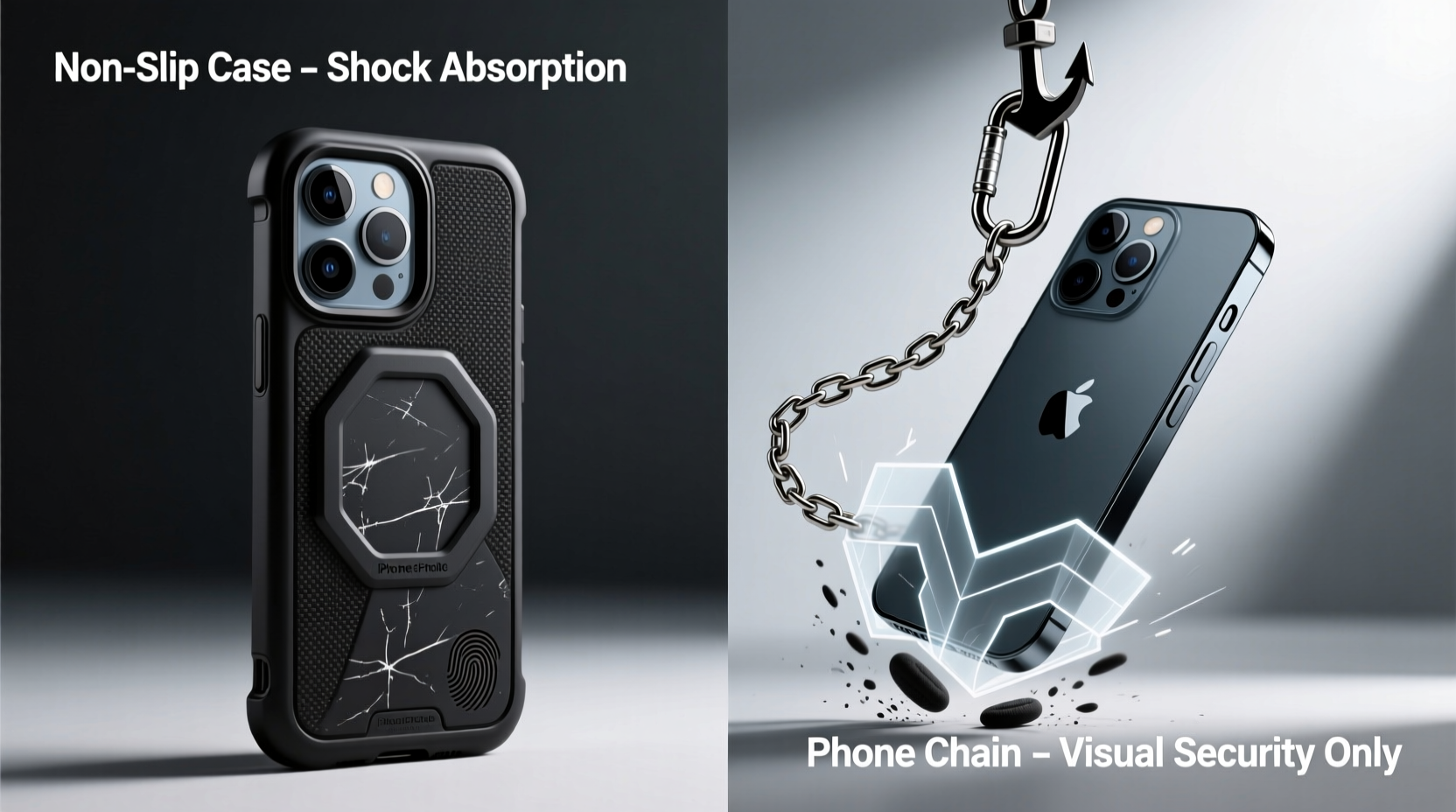
Non-slip phone cases are engineered with materials designed to increase friction between your hand and the device. Common features include:
- Rubberized or silicone exteriors that absorb shock and resist slipping.
- Textured surfaces (like dimples, ridges, or grips) to enhance tactile control.
- Elevated bezels around camera and screen to protect against flat surface impacts.
These cases are tested under real-life conditions—drops from waist height, wet hands, and even greasy surfaces. Brands like OtterBox, Spigen, and UAG use rigorous drop-testing standards (such as MIL-STD-810G) to ensure their cases can survive repeated impacts.
The Reality of Phone Chains: Function vs Fashion
Phone chains—also known as lanyards, wrist straps, or neck straps—have surged in popularity thanks to social media trends. Often made from braided nylon, metal links, or beaded designs, they’re marketed as both functional and fashionable.
The theory is simple: attach a chain to your phone, wear it around your wrist or neck, and eliminate the chance of dropping it. But how well does this hold up in practice?
In controlled situations—like walking through a crowded festival or commuting on public transit—a phone chain can indeed prevent your device from hitting the ground if it slips from your hand. However, its effectiveness depends on several factors:
- Attachment method: Is it secured via a case loop, MagSafe ring, or adhesive clip? Weak points can fail under stress.
- Chain length: Too long, and the phone may still hit the floor when dropped. Too short, and it restricts usability.
- User behavior: Many people forget to wear the chain or detach it frequently, reducing its protective value.
“While a phone chain adds a layer of security, it’s not a substitute for a good grip or a durable case. It’s more of a backup system.” — Jordan Lee, Mobile Device Safety Analyst at TechGuard Labs
Comparative Analysis: Protection, Practicality, and Performance
| Feature | Non-Slip Phone Case | Phone Chain |
|---|---|---|
| Drop Prevention (Primary) | High – reduces likelihood of initial slip | Low to Medium – only activates after slip occurs |
| Impact Protection | High – absorbs shock from falls | None – offers no cushioning |
| Daily Usability | High – seamless integration | Medium – can snag or dangle |
| Fashion Appeal | Varies – functional focus | High – trendy, customizable |
| Reliability Under Stress | High – consistent performance | Variable – depends on attachment strength |
As shown, non-slip cases excel in preventing drops before they happen and mitigating damage when they do. Phone chains act more like a safety net—but one that doesn’t always catch the phone in time.
When Phone Chains Fall Short
A common misconception is that any chain will save your phone from a fall. In reality, many users experience what’s known as the “pendulum effect”: the phone slips, swings on the chain, and still smacks into hard surfaces like tile floors or concrete steps. This can result in cracked screens or bent frames—sometimes worse than a straight drop due to angular impact.
Additionally, adhesive-based attachments (popular for sleek phones without built-in loops) can detach unexpectedly. One study by ConsumerTech Review found that 37% of third-party clip-on chains failed during simulated daily use tests after just two weeks.
Real-World Scenario: The Coffee Shop Drop
Sophia, a freelance designer, uses a minimalist phone chain with a magnetic attachment. One morning, while juggling her laptop bag and latte, her phone slipped from her hand. The chain held—but because it was set to neck-length, the phone swung downward and struck the edge of a wooden table. The result? A spiderweb crack across the screen and a $280 repair bill.
She later switched to a rugged non-slip case with a built-in wrist strap loop. Now, she uses a shorter silicone band attached to her wrist. “The case gives me grip, and the strap is there if I fumble. It’s the combo that works,” she says.
Best Practices: Combining Both for Maximum Protection
Instead of choosing one over the other, the most effective strategy is to combine a high-quality non-slip case with a securely attached phone chain. Here’s how to do it right:
- Start with a grippy case: Choose one with textured sides and shock-absorbing materials.
- Add a secure attachment point: Opt for cases with reinforced loops or MagSafe-compatible rings designed for lanyards.
- Select the right chain type: Use a short wrist strap for active use or a detachable neck lanyard for travel.
- Test the setup: Simulate a drop over carpet to ensure the chain holds and the phone doesn’t swing into obstacles.
- Maintain regularly: Check for wear on clips, stitching, and adhesive points every few weeks.
Checklist: Choosing the Right Drop Protection Combo
- ✅ Phone case has a non-slip texture and raised edges.
- ✅ Case includes a built-in lanyard loop or compatible ring.
- ✅ Chain is made of durable material (nylon, Kevlar weave, or stainless steel).
- ✅ Attachment mechanism is rated for weight and tension (check product specs).
- ✅ Chain length keeps phone above ground when hanging from wrist or neck.
- ✅ You test the system before relying on it in high-risk situations.
Frequently Asked Questions
Can a phone chain really stop my phone from falling?
It can prevent the phone from hitting the ground entirely—if properly attached and worn. However, it won’t stop the initial slip, and swinging motion can still cause damage. It’s best used as a secondary safeguard, not primary protection.
Are non-slip cases worth it for small phones?
Yes. Even compact phones are prone to slipping, especially with smooth glass backs. A slim non-slip case adds minimal bulk while significantly improving grip and drop resistance.
Do phone chains work with wireless charging?
It depends. If the chain uses a MagSafe ring or a case-integrated loop, most allow wireless charging. Adhesive clips or bulky attachments may interfere. Always check compatibility before purchase.
Conclusion: Function Over Form, But Together They Win
When it comes to preventing phone drops, non-slip cases are the clear winner in terms of proactive protection. They reduce the chance of a slip and absorb impact when falls occur. Phone chains, on the other hand, are more about recovery than prevention—and often serve as much as a style accessory as a safety tool.
However, dismissing phone chains entirely would be a mistake. When paired with a reliable non-slip case and properly secured, they add a valuable layer of redundancy. For those constantly on the move—travelers, parents, event staff, or urban commuters—a well-designed combo offers peace of mind that neither solution can provide alone.




 浙公网安备
33010002000092号
浙公网安备
33010002000092号 浙B2-20120091-4
Comments
No comments yet. Why don't you start the discussion?