
In kitchens across the country, a quiet but impactful choice happens daily: reach for a paper towel or grab a cloth? While it may seem trivial, this decision accumulates over time—both in household expenses and environmental impact. Paper towels are convenient, yes, but at what long-term cost? Reusable cloths require laundering, but they promise sustainability and savings. So which option truly wins when you look beyond convenience—when you consider years of use, financial outlay, and ecological footprint?
This article breaks down the real costs and consequences of each option. We’ll examine upfront and ongoing expenses, environmental tolls including deforestation and waste, and practical usability in real homes. With data, expert insights, and real-life examples, we’ll answer the core question: Which choice saves more money—and more trees—over time?
The Financial Breakdown: Upfront vs Long-Term Costs
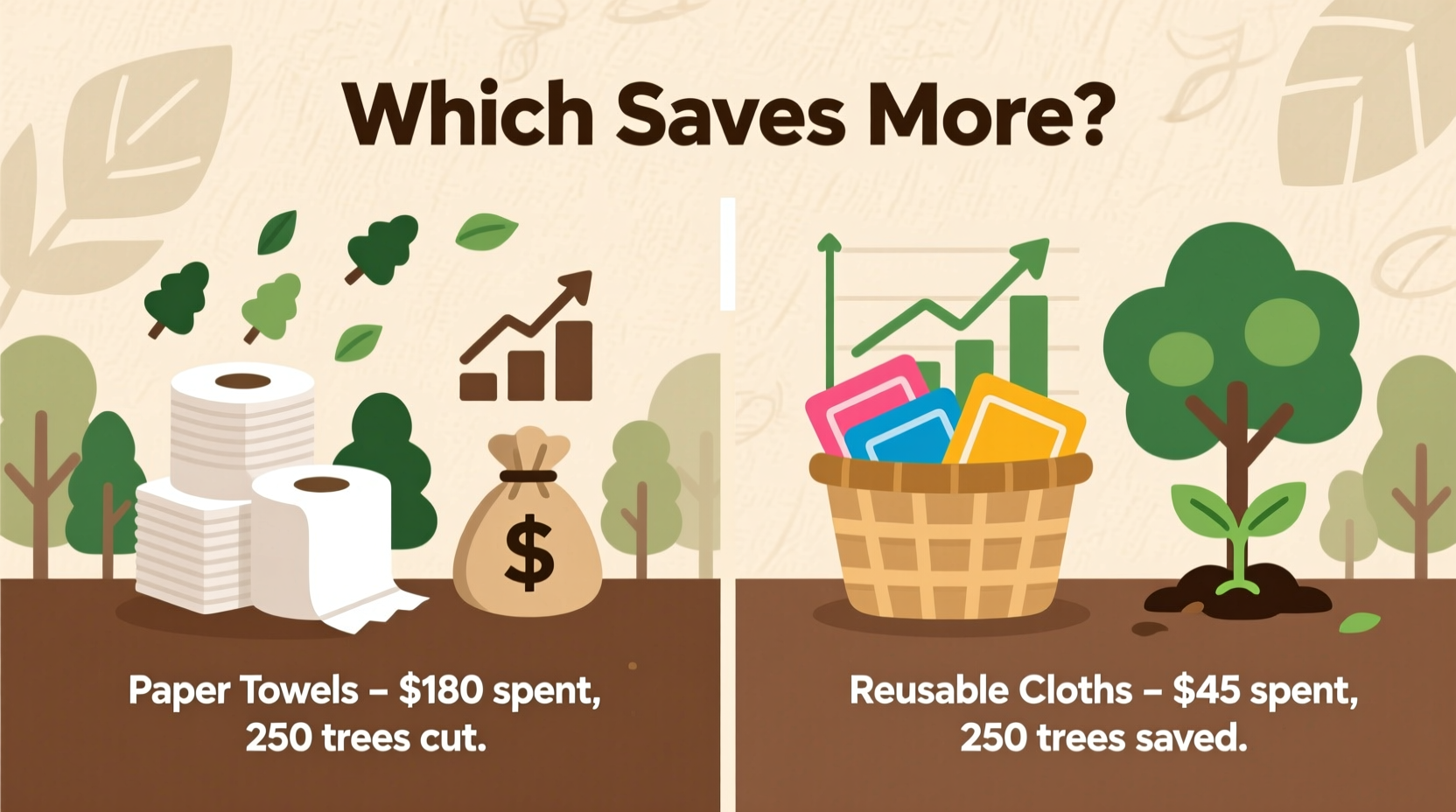
At first glance, paper towels appear inexpensive. A roll might cost $1–$2, and bulk packs offer even lower per-roll prices. But frequency of use changes the equation dramatically. The average American household uses about 13 billion sheets of paper towels annually—roughly 4,000 sheets per household. At an average cost of $35 per year (and often much more for premium brands), that adds up.
Reusable cloths, by contrast, have a higher initial investment. A set of six to ten high-quality cotton or bamboo cloths ranges from $25 to $50. However, if properly cared for, these cloths can last three to five years—or longer. When amortized over time, the cost drops significantly.
| Item | Initial Cost | Lifespan | Total 5-Year Cost |
|---|---|---|---|
| Paper Towels (avg. household) | $0 | Roll-by-roll purchase | $175–$250 |
| Reusable Cloths (set of 8) | $35 | 5 years | $35 + ~$15 laundry |
| Hybrid Approach (50% reduction) | $35 cloths | 5 years | $90 + $35 + $7.50 laundry |
The numbers speak clearly: even with added laundry costs, reusable cloths cost less than half of continued paper towel use over five years. And those savings grow if your household consumes above-average quantities.
Environmental Impact: Trees, Waste, and Carbon Footprint
Beyond dollars, the environmental toll is where the difference becomes stark. Paper towels are single-use products made primarily from virgin wood pulp. According to the Natural Resources Defense Council (NRDC), the U.S. consumes over 3,000 tons of paper towels daily—equivalent to cutting down nearly 51,000 trees every day.
Most paper towels aren’t recyclable due to food contamination and short fibers. They end up in landfills, where they contribute to methane emissions as they decompose. Even “eco-friendly” versions made from recycled content still require energy-intensive processing and transportation.
Reusable cloths, typically made from cotton, hemp, or bamboo, require resources too—but spread over hundreds of uses. A life cycle analysis by the Environmental Protection Agency (EPA) found that reusable textiles generate 60–80% less greenhouse gas emissions per use compared to disposables when laundered efficiently.
“Switching to reusables isn't just about reducing trash—it’s about rethinking consumption. Every paper towel avoided is a small victory for forests and climate.” — Dr. Lena Patel, Environmental Scientist, University of Oregon
While cotton farming has water and pesticide concerns, modern organic and regenerative practices mitigate many issues. Bamboo, a fast-growing renewable resource, requires no irrigation and minimal pesticides. When sourced responsibly, reusable cloths represent a far more sustainable model.
Practical Usability: Hygiene, Convenience, and Real-Life Fit
Cost and ecology matter, but so does practicality. Many people stick with paper towels because they’re quick, hygienic for messes involving raw meat or illness, and require no maintenance. These are valid concerns—especially in households with young children or frequent cooking.
However, reusable cloths can meet these needs with smart habits. Designating color-coded cloths—for example, red for raw meat cleanup, green for general wiping—helps maintain hygiene. Washing them in hot water (140°F or higher) kills most bacteria, making them safe for repeated use.
One common complaint is inconvenience: remembering to wash, dry, and rotate cloths takes effort. But like any habit, it becomes routine. Families who adopt reusable systems often report that within a few weeks, it feels natural.
Mini Case Study: The Miller Family’s Switch
The Millers, a family of four in Portland, used two rolls of paper towels per week—about $100 annually. After learning about the environmental impact, they decided to switch. They invested $40 in eight organic cotton cloths and began using one roll of paper towels per month for biohazard messes only.
They assigned tasks: the kids hung used cloths on hooks after meals, and the parents washed them weekly with regular laundry. After one year, they saved $60 and reduced their paper towel waste by 75%. Over five years, they estimate saving $300 and preventing over 1,000 paper towels from entering landfills.
“It wasn’t perfect at first,” says Sarah Miller. “We forgot to hang them once and had to rewash a mildewed batch. But now it’s second nature. The kids even remind us when someone reaches for a paper towel unnecessarily.”
Step-by-Step Guide to Transitioning to Reusable Cloths
Making the switch doesn’t have to be overwhelming. Follow this timeline to integrate reusable cloths smoothly into your home:
- Week 1: Assess Your Usage
Track how many paper towels you use daily. Note the types of tasks: drying hands, wiping counters, cleaning spills, etc. - Week 2: Purchase Starter Set
Buy 6–8 reusable cloths. Choose absorbent materials like cotton terry, bamboo, or Swedish design cloths that air-dry quickly. - Week 3: Designate Roles
Assign specific cloths for different tasks (e.g., kitchen counter, stove, hand drying). Use colors or labels if helpful. - Week 4: Create a Routine
Hang a small basket or hook near the sink for used cloths. Wash weekly with other laundry using eco-friendly detergent. - Month 2+: Refine and Expand
Replace paper rolls with a dispenser of reusable cloths. Keep one roll of paper towels on hand only for contaminated messes.
Checklist: Building a Sustainable Wiping System
- ☐ Audit current paper towel usage for one week
- ☐ Buy 6–10 high-quality reusable cloths
- ☐ Label or color-code cloths by use case
- ☐ Install a designated spot for used cloths
- ☐ Schedule weekly washing (with regular laundry)
- ☐ Store clean cloths in an accessible container
- ☐ Keep one backup roll of paper towels for emergencies
- ☐ Review savings and waste reduction every 3 months
FAQ: Common Questions About Reusable Cloths
Don’t reusable cloths harbor bacteria?
Only if not cleaned properly. Washing in hot water (above 140°F) and drying fully eliminates most pathogens. For extra safety, replace cloths every 12–18 months or bleach occasionally if fabric allows.
Is the water and energy for washing worse than using paper towels?
No. Studies show that even with frequent washing, the total environmental impact—including water, energy, and emissions—is still lower than producing and disposing of equivalent paper towels. Efficiency improves further when washing with full loads.
Can I use reusable cloths for raw meat cleanup?
Yes, but with caution. Use a dedicated cloth for such tasks and wash it immediately in the hottest safe setting. Many prefer to use paper for these specific messes and reserve reusables for everyday wiping.
Final Verdict: Which Saves More Money and Trees?
Over the long term, reusable cloths win decisively on both fronts: cost and conservation. A typical household will save $150–$200 over five years by switching, even accounting for laundering. That number grows with larger families or heavy users.
Ecologically, the benefit is even greater. Each ton of paper towels not produced saves approximately 17 trees and prevents 3.5 tons of CO₂ emissions. By switching, an average household can prevent the destruction of 10–15 trees over five years and keep thousands of non-recyclable sheets out of landfills.
Does this mean eliminating paper towels entirely? Not necessarily. A hybrid approach—using reusables for 80–90% of tasks and reserving paper for biohazards—offers a balanced, realistic path. It reduces waste without demanding perfection.
“The goal isn’t zero waste overnight. It’s consistent progress. One reusable swap today leads to dozens tomorrow.” — Mark Tran, Sustainability Director at Green Home Alliance
Conclusion: Make the Switch, Save More Than Just Money
Choosing between paper towels and reusable cloths isn’t just about wiping a countertop—it’s about shaping daily habits that ripple outward. Every roll avoided means fewer trees cut, less waste generated, and more money retained in your wallet. The initial shift requires mindfulness, but the long-term rewards are tangible and lasting.
You don’t need to overhaul your entire home at once. Start with one area—the kitchen sink, perhaps—and build from there. Track your savings, notice the reduction in trash, and celebrate small wins. Over time, these choices compound into meaningful change.




 浙公网安备
33010002000092号
浙公网安备
33010002000092号 浙B2-20120091-4
Comments
No comments yet. Why don't you start the discussion?