
When choosing between patchwork leather boots and solid-leather boots, one concern consistently surfaces: do the seams on patchwork designs compromise durability? It’s a fair question. The visible stitching, multiple leather pieces, and intricate patterns of patchwork boots can make them appear more fragile than their uniform counterparts. But appearances can be misleading. Understanding how construction, materials, and care influence longevity reveals that well-made patchwork boots are not inherently less durable—provided they’re built and maintained correctly.
The Anatomy of Patchwork vs Solid Leather Boots
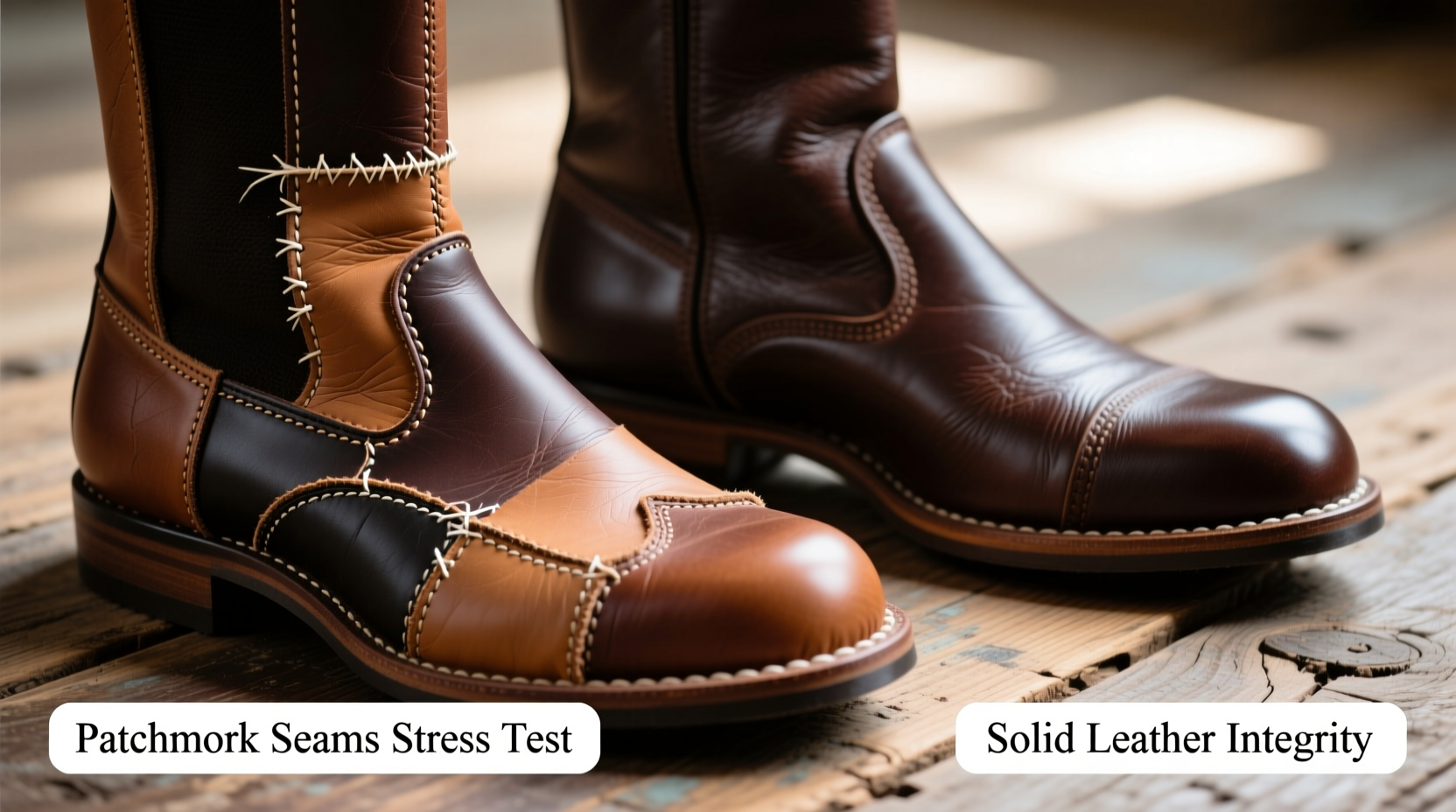
Patchwork leather boots are crafted from multiple pieces of leather sewn together to form the upper. These pieces may vary in texture, color, or grain, creating a distinctive aesthetic. In contrast, solid leather boots use a single piece—or fewer, larger panels—of leather for the upper, resulting in a sleek, consistent appearance.
The key difference lies in seam density. Patchwork boots naturally have more seams due to the number of joined panels. Each seam is a potential stress point, especially if poorly executed. However, modern manufacturing techniques and high-quality craftsmanship ensure these seams are reinforced with durable thread (often waxed polyester or nylon) and double-stitched for strength.
Solid leather boots minimize seams by design, reducing the number of junctions where wear might occur. Yet, even these boots require some stitching—for example, along the side or back—to shape the footbox and accommodate fit. The absence of decorative seams doesn’t eliminate risk; it simply redistributes it.
Do Seams on Patchwork Boots Actually Fall Apart?
The short answer: not if they’re well made. The misconception that patchwork boots are prone to seam failure stems from two sources: low-cost imitations and improper care.
Mass-market brands often cut corners by using thin thread, insufficient stitch density, or subpar adhesives. In such cases, seams may begin to separate after just months of regular use, particularly around high-movement areas like the flex zone near the ball of the foot. But this isn’t a flaw of patchwork design—it’s a failure of execution.
In contrast, artisanal or heritage bootmakers treat each seam as a structural element. They use lockstitch or Goodyear welt techniques, which mechanically bind layers together without relying solely on glue. These methods create seams that can withstand years of wear and, in many cases, be resoled or repaired when needed.
“Seams are only as weak as their weakest link. With proper tension, quality thread, and skilled handwork, multi-panel uppers can outlast monolithic ones.” — Daniel Reeves, Master Bootmaker at Timber & Thread Co.
Comparative Durability: Patchwork vs Solid Leather
| Feature | Patchwork Leather Boots | Solid Leather Boots |
|---|---|---|
| Number of Seams | High (5–10+ depending on design) | Low (2–4 main seams) |
| Stress Distribution | Distributed across multiple panels | Concentrated at major seams |
| Repairability | Moderate to high (individual panels replaceable) | High (standard repair protocols) |
| Vulnerability to Cracking | Lower (smaller panels resist tension cracks) | Higher (large spans may crack over time) |
| Aesthetic Longevity | Unique aging pattern; patina develops unevenly | Uniform aging; consistent patina |
Interestingly, patchwork construction can offer advantages in flexibility and resistance to large-scale cracking. Because each leather piece is smaller, tension from foot movement is absorbed incrementally rather than straining one continuous panel. This makes patchwork boots surprisingly resilient in dynamic conditions, such as hiking or urban walking.
Care Practices That Prevent Seam Failure
No matter the construction, neglect accelerates wear. Seams fail most often not because of design flaws but due to moisture buildup, lack of conditioning, or exposure to extreme conditions.
Leather expands and contracts with humidity. Repeated swelling and drying—especially if water penetrates through stitching holes—can weaken thread over time. To prevent this:
- Apply a waterproofing treatment every 4–6 weeks during wet seasons.
- Condition leather monthly to maintain suppleness and prevent dry rot.
- Avoid direct heat sources (radiators, hairdryers) when drying wet boots.
- Rotate your footwear to allow adequate drying and recovery time.
Step-by-Step: Monthly Seam Inspection Routine
- Clean the surface: Wipe down boots with a damp cloth to remove dirt.
- Inspect stitching: Run a finger along each seam. Feel for fraying, lifting, or soft spots.
- Check for separation: Look closely where leather meets thread. Gaps indicate adhesive failure or stretched material.
- Treat vulnerable areas: Apply a small amount of seam sealant or wax along high-stress zones.
- Condition leather: Use a soft brush to work conditioner into both leather and stitching.
Real-World Example: A Hiker’s Experience
Mark T., an avid trail hiker from Colorado, purchased a pair of patchwork leather hiking boots from a small European brand known for handcrafted footwear. After two years of regular weekend hikes—including river crossings and rocky terrain—he noticed minor scuffing but no seam separation.
“I was skeptical at first,” he said. “The boots had at least eight different leather pieces on the upper. But the craftsmanship was obvious—the stitches were tight, and the edges were neatly finished. I’ve had cheaper ‘solid’ boots fall apart in half the time.”
When one toe cap began to lift after 26 months, Mark sent the boots back to the manufacturer under warranty. They replaced the front panel and re-stitched the area, returning the boots in better condition than new. This level of reparability is often easier with patchwork designs, where individual components can be swapped.
FAQ: Common Concerns About Patchwork Boot Seams
Can patchwork leather boots last as long as solid ones?
Yes, provided they are made with high-quality materials and construction. Many handmade patchwork boots exceed 5–7 years of regular use with proper maintenance. The key factors are stitch type, thread quality, and leather thickness—not the number of panels.
Are the seams on patchwork boots weaker than other parts of the boot?
Not inherently. While seams are always potential weak points, modern techniques like double-stitching, edge-binding, and seam taping significantly reinforce them. In fact, the leather itself often wears out before the stitching fails in well-made boots.
What should I do if a seam starts to come apart?
Stop wearing the boot immediately. Minor seam lifts can often be repaired with a leather-specific adhesive like Barge Cement. For deeper separation, take the boot to a cobbler. Avoid sewing it yourself unless you have the right tools and thread—improper stitching can worsen damage.
Final Checklist Before Buying Patchwork Boots
- ✅ Check stitch density: Aim for 8–10 stitches per inch.
- ✅ Confirm thread type: Waxed polyester or nylon is ideal.
- ✅ Examine seam finish: Edges should be smooth, not raw or frayed.
- ✅ Ask about construction method: Goodyear welt or Blake stitch preferred.
- ✅ Verify return policy: Ensure coverage for seam defects within the first year.
Conclusion: Seams Don’t Define Strength—Craftsmanship Does
The idea that patchwork leather boots are doomed to seam failure is outdated and oversimplified. While they feature more seams than solid boots, those seams don’t automatically make them less durable. What truly matters is the skill behind the needle, the quality of materials, and how well you care for them.
Whether you choose patchwork or solid, prioritize craftsmanship over aesthetics alone. Inspect the build, understand the construction, and commit to routine maintenance. With the right approach, your boots—no matter how many pieces they’re made from—can walk thousands of miles without a single seam giving way.




 浙公网安备
33010002000092号
浙公网安备
33010002000092号 浙B2-20120091-4
Comments
No comments yet. Why don't you start the discussion?